Diamond-Studded Bands Overview: Popular Patterns and Craftsmanship
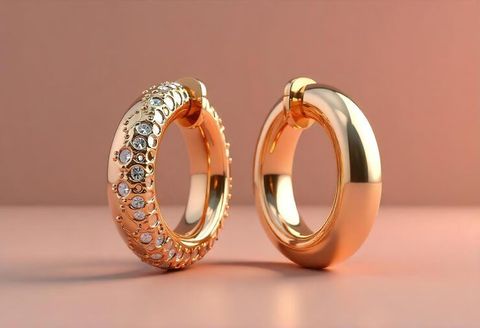
Diamond-studded bands are jewelry rings featuring multiple diamonds arranged along a metal band. They are commonly worn as wedding bands, anniversary rings, fashion accessories, and commemorative jewelry. Unlike traditional solitaire rings, which generally feature one prominent center diamond, studded bands distribute smaller diamonds across the ring's surface.
These bands are available in different widths, profiles, metal types, diamond shapes, and setting arrangements. Their appearance can range from simple and understated to detailed designs featuring diamonds around the entire circumference.
Diamond-studded bands are manufactured using precious metals such as:
Platinum: A naturally white metal valued for its durability and density.
White Gold: Gold alloyed with other metals to create a white appearance, often finished with rhodium plating.
Yellow Gold: A traditional gold alloy with a warm, recognizable appearance.
Rose Gold: A gold alloy containing copper, which produces a pinkish tone.
Palladium: A platinum-group metal used in certain fine jewelry designs.
Common Types of Diamond-Studded Bands
Different construction methods influence the appearance, durability, and maintenance requirements of these rings.
Band Type | Main Characteristics |
|---|---|
Eternity Band | Diamonds extend around the entire circumference |
Half-Eternity Band | Diamonds cover approximately half the ring |
Channel-Set Band | Diamonds sit between protective metal edges |
Pavé Band | Small diamonds are positioned closely together |
Prong-Set Band | Individual diamonds are held by small metal claws |
Bezel-Set Band | Metal surrounds the edges of each diamond |
Shared-Prong Band | Adjacent diamonds share supporting prongs |
Understanding Diamond Shapes and Arrangements
Round brilliant diamonds are widely used because their cutting pattern is designed to maximize light reflection. Other popular shapes include princess, oval, emerald, pear, and baguette.
The arrangement also influences the overall design. Straight rows create a consistent appearance, while alternating shapes and mixed settings introduce additional visual detail.
Why Diamond-Studded Bands Matter in Modern Jewelry
Changing Jewelry Preferences
Diamond-studded bands have become an important category within contemporary fine jewelry. Their versatility allows them to serve as wedding jewelry, anniversary pieces, personal accessories, and family keepsakes.
Modern jewelry preferences increasingly include combinations of traditional craftsmanship and contemporary design. Some individuals prefer narrow bands with smaller diamonds, while others choose wider designs with multiple rows of stones.
Different Occasions and Uses
These bands are associated with several personal and cultural occasions:
Wedding Celebrations: Diamond bands are commonly used as wedding rings or complementary wedding jewelry.
Anniversaries: Different diamond arrangements can represent significant relationship milestones.
Personal Milestones: Graduations, achievements, and memorable events may be commemorated through jewelry.
Everyday Jewelry: Low-profile settings can provide a practical option for regular wear.
Family Traditions: Diamond bands may be preserved and passed between generations.
Important Quality Considerations
Understanding diamond quality helps individuals compare different designs and characteristics.
The traditional Four Cs provide a standardized framework for evaluating diamonds:
Cut: Refers to how effectively a diamond interacts with light.
Color: Measures the presence or absence of noticeable body color.
Clarity: Describes internal inclusions and external blemishes.
Carat Weight: Measures the weight of an individual diamond.
For diamond-studded bands, the quality of individual stones and their consistency are both important. Matching diamond color, clarity, and dimensions can create a more uniform appearance.
Recent Developments and Diamond-Studded Band Trends
Diamond Jewelry Developments in 2025–2026
The diamond jewelry industry has continued to evolve through changes in manufacturing technology, consumer preferences, diamond grading, and jewelry design. Natural and laboratory-grown diamonds are increasingly discussed as separate categories within the modern jewelry market.
One important development is the growing use of laboratory-grown diamonds in wedding bands and eternity rings. These diamonds have essentially the same chemical, physical, and optical properties as natural diamonds, although their origins and production methods differ.
According to BriteCo's 2026 jewelry industry data, laboratory-grown diamonds represented 28.7% of newly appraised eternity bands in 2025. Their share across all newly appraised diamond jewelry reached 42.5% during the same year. These figures reflect BriteCo's appraisal data rather than the entire global market.
Emerging Design Trends
Several design directions are influencing diamond-studded bands:
Minimalist Diamond Bands: Narrow rings with small, carefully positioned diamonds remain an important contemporary design category.
Mixed-Metal Designs: Combinations of yellow gold, white gold, and platinum create contrasting visual effects.
Oval and Baguette Diamonds: Alternative diamond shapes provide different patterns and proportions.
Stackable Rings: Multiple narrow bands are worn together to create customized combinations.
Colored Diamond Accents: Champagne, yellow, and other naturally colored diamonds introduce additional design possibilities.
Laboratory-Grown Diamond Bands: These designs are becoming more visible in contemporary jewelry collections.
Selected diamond jewelry industry indicators
Industry indicator | Reported figure |
|---|---|
Lab-grown share of eternity band appraisals in 2025 | 28.7% |
Lab-grown share of wedding band appraisals in 2025 | 18.5% |
Lab-grown share of anniversary band appraisals in 2025 | 23.6% |
Lab-grown share of all diamond jewelry appraisals in 2025 | 42.5% |
Source: BriteCo appraisal data, January 2019–June 2026. Figures represent its reported 2025 category data.
Consumer Preferences and Market Research
In June 2026, De Beers Group published findings from its US Diamond Acquisition Study covering 18,500 women aged 18–74. The research highlighted increased interest in natural diamond jewelry, younger consumer participation, and demand extending beyond traditional bridal occasions.
The findings also indicated that non-bridal purchases represented approximately 75% of natural diamond demand value in the US during 2025. This reflects a broader range of occasions for diamond jewelry, including personal milestones and gifting.
These developments demonstrate how diamond-studded bands are increasingly associated with personal style and everyday jewelry preferences, rather than only weddings and anniversaries.
Laws, Regulations, and Jewelry Industry Standards
Diamond Disclosure and Consumer Protection
Diamond-studded bands are affected by regulations governing gemstone descriptions, precious metal content, product representation, and consumer protection. Requirements differ between countries, so manufacturers and jewelry businesses must understand the rules applicable to their markets.
In the United States, the Federal Trade Commission (FTC) Jewelry Guides provide guidance on accurate diamond descriptions. Laboratory-created diamonds should be clearly identified using terms such as laboratory-grown or laboratory-created so consumers can distinguish them from mined diamonds.
The FTC also addresses misleading descriptions involving gemstone quality, treatments, and precious metal content. These guidelines are included in the 2026 Code of Federal Regulations, Title 16, Part 23.
Precious Metal Hallmarking in India
In India, the Bureau of Indian Standards (BIS) administers hallmarking requirements for covered precious metal jewelry.
Gold jewelry hallmarking helps communicate the purity of gold used in an article. Consumers should understand that gold hallmarking and diamond grading are different processes. A gold hallmark does not independently certify the quality, clarity, or origin of diamonds set within a band.
The BIS also issued revised jeweller registration guidelines in July 2026, addressing aspects of hallmark verification, HUID records, and surveillance procedures.
International Diamond Traceability
The Kimberley Process Certification Scheme is an international framework designed to prevent conflict diamonds from entering the legitimate rough diamond trade.
It applies to rough diamond shipments rather than directly grading finished diamond-studded bands. Nevertheless, responsible sourcing and traceability remain important considerations throughout the diamond supply chain.
Important Compliance Considerations
Industry participants should pay attention to:
Accurate identification of natural and laboratory-grown diamonds.
Correct disclosure of gemstone treatments where applicable.
Transparent precious metal purity descriptions.
Reliable diamond grading documentation.
Accurate descriptions of diamond weight and dimensions.
Applicable import, export, and product labeling requirements.
These measures support consumer confidence and reduce the risk of misleading jewelry descriptions.
Tools and Resources for Diamond-Studded Bands
Diamond Grading and Certification Resources
Several professional organizations and digital resources help individuals understand diamond quality, metal purity, and jewelry documentation.
Tool or Resource | Main Purpose |
|---|---|
Gemological Institute of America (GIA) | Diamond grading education and laboratory reports |
International Gemological Institute (IGI) | Diamond identification and grading reports |
BIS Care App | Verification of applicable Indian hallmarking information |
Kimberley Process | Information about rough diamond trade certification |
Rapaport Research | Diamond industry information and market analysis |
Diamond Clarity Charts | Understanding diamond inclusions and clarity grades |
Helpful Jewelry Calculators
The following tools can help with diamond-studded band research and evaluation:
Diamond Carat Calculator: Helps understand diamond weight and measurements.
Ring Size Calculator: Estimates the appropriate ring size using finger measurements.
Diamond Proportion Calculator: Helps evaluate diamond dimensions and proportions.
Metal Purity Calculator: Explains gold purity measurements, including 14K, 18K, and 22K.
Diamond Jewelry Insurance Calculator: Helps estimate potential jewelry insurance requirements.
Diamond Ring Appraisal Resources: Provide information about professional jewelry valuation and documentation.
Important Documents to Understand
Individuals researching diamond-studded bands may encounter several types of documentation:
Diamond grading reports describing individual gemstone characteristics.
Jewelry appraisal documents describing the complete ring.
Precious metal hallmark information identifying metal purity.
Laboratory-grown diamond disclosure documents where applicable.
Insurance documentation describing coverage conditions and exclusions.
Understanding these resources can make comparisons between platinum diamond bands, gold eternity rings, and custom diamond wedding bands more informed.
Frequently Asked Questions
1. What Is the Difference Between Diamond-Studded Bands and Solitaire Rings?
Diamond-studded bands contain multiple diamonds arranged along the ring, while solitaire rings generally feature one prominent center diamond. Bands can have different settings, widths, and diamond arrangements, making them suitable for various jewelry styles.
2. Are Laboratory-Grown Diamonds Used in Diamond-Studded Bands?
Yes. Laboratory-grown diamonds are increasingly used in eternity bands, wedding rings, anniversary bands, and other fine jewelry designs. They have essentially the same chemical, physical, and optical properties as natural diamonds, but their origins differ.
3. Which Metal Is Commonly Used for Diamond-Studded Bands?
Platinum, white gold, yellow gold, and rose gold are commonly used. Platinum is valued for its density, while gold alloys provide different colors and design possibilities. The appropriate metal depends on personal preferences, durability requirements, and maintenance considerations.
4. What Does the Four Cs System Mean for Diamond Bands?
The Four Cs represent cut, color, clarity, and carat weight. These characteristics help describe and evaluate individual diamonds. For diamond-studded bands, consistency between multiple stones is also important for achieving a balanced appearance.
5. How Can Diamond-Studded Bands Be Maintained?
Regular maintenance helps preserve their appearance and structural condition.
Recommended practices include:
Clean the ring using an appropriate jewelry-cleaning solution.
Avoid exposing the ring to harsh chemicals.
Have prongs and settings inspected periodically.
Store diamond bands separately to reduce scratching.
Remove jewelry during activities that may cause physical damage.
Seek professional inspection if a diamond appears loose.
Conclusion
Diamond-studded bands represent an important category of contemporary fine jewelry, combining diamond craftsmanship, precious metal selection, and different setting techniques. Their applications extend beyond wedding ceremonies to anniversaries, personal milestones, and everyday jewelry.
Developments in laboratory-grown diamond technology, modern manufacturing methods, and changing consumer preferences continue to influence the industry. At the same time, diamond grading, precious metal hallmarking, gemstone disclosure, and responsible sourcing remain important considerations.
Understanding diamond shapes, the Four Cs, metal characteristics, setting styles, and jewelry documentation helps individuals make informed decisions. As the industry evolves through 2025 and 2026, diamond-studded bands are expected to remain an interesting subject within fine jewelry design, gemological research, and luxury jewelry trends.

Related Post...
Finnish Minimalist Rings: Insights Into Scandinavian Craftsmanship and Modern Trends
Updated: November 24, 2026
Read More
Beginner’s Guide to Gold Tennis Bracelets: Styles, Materials, and Key Details
Updated: November 04, 2026
Read More
Discover the Art of Beaded Statement Necklaces and Their Cultural Significance
Updated: November 25, 2026
Read More