Gold Hoops Insights: Exploring Materials, Finishes, and Design Variations
Gold hoops are circular or semi-circular earrings designed to pass through pierced ears. They are among the most recognisable jewellery designs and have remained popular across different cultures, generations, and fashion movements. Their simple shape makes them suitable for everyday outfits, formal occasions, and traditional clothing.
Gold hoop earrings are available in different sizes, thicknesses, finishes, and metal compositions. Some designs feature smooth, polished surfaces, while others include textured patterns, gemstones, engraved details, or decorative elements.
The term gold hoops can describe earrings made from solid gold, gold alloys, or other metals with a gold-plated surface. Understanding these differences is important because the appearance, durability, maintenance requirements, and metal composition can vary considerably.
Common gold hoop variations include:
Classic gold hoops: Simple circular earrings with a traditional polished finish.
Small gold hoops: Compact designs suitable for everyday styling.
Large gold hoops: Larger circular earrings that create a noticeable appearance.
Chunky gold hoops: Thick designs with rounded or sculptural shapes.
Huggie earrings: Small hoops that sit closely around the earlobe.
Textured gold hoops: Designs featuring hammered, twisted, ribbed, or patterned surfaces.
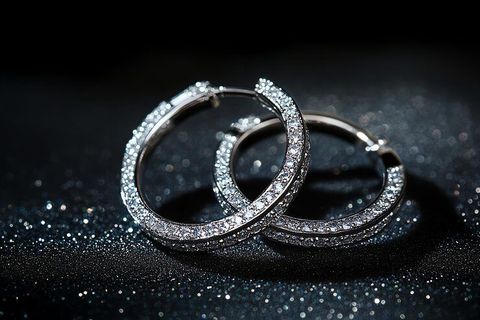
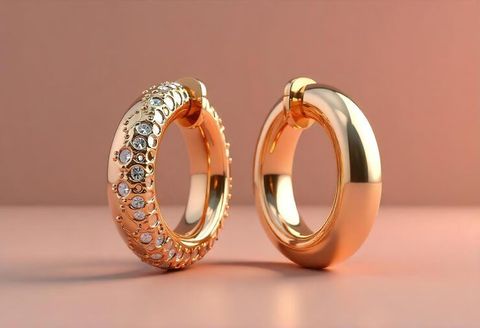
Diamond gold hoops: Earrings incorporating diamonds or other decorative stones.
Gold hoops are available in yellow, white, and rose gold finishes. Each colour offers a different appearance, depending on the metals used in the alloy and the finishing process.
Why Gold Hoops Remain Important in Modern Jewellery
Gold hoops continue to have an important place in the global jewellery industry because they combine traditional design with contemporary fashion preferences. Their versatility allows people to incorporate them into different clothing styles without requiring complicated accessories.
They are also relevant to jewellery manufacturers, designers, retailers, precious-metal specialists, and consumers interested in understanding gold quality.
Everyday Versatility
Small and medium-sized hoops are frequently incorporated into everyday clothing. Their relatively simple shapes can complement casual outfits, professional clothing, and formal combinations.
Larger designs are often associated with fashion-focused styling, while delicate hoops provide a more understated appearance.
Different Jewellery Preferences
Gold hoops accommodate different personal preferences through variations in:
Diameter and thickness.
Gold purity and alloy composition.
Earring weight and fastening mechanisms.
Surface texture and finishing.
Gemstone placement and decorative details.
Yellow, white, and rose gold colours.
Understanding Gold Purity
Gold purity is an important consideration when examining gold hoop earrings. Pure gold is relatively soft, so jewellery manufacturers commonly combine it with other metals to improve its physical properties.
Gold purity | Gold content | General characteristics |
|---|---|---|
24K | 99.9% approximately | Very pure and relatively soft |
22K | 91.7% | High gold content |
18K | 75% | Balance of gold content and durability |
14K | 58.5% | Commonly used in durable jewellery |
10K | 41.7% | Lower gold content and greater alloy proportion |
The suitability of each purity depends on the design, intended use, and individual preferences. Higher purity does not automatically mean that an earring is more appropriate for every situation.
Recent Gold Hoop Jewellery Trends and Developments
During 2025 and 2026, gold hoop designs have continued to evolve as jewellery designers explore larger proportions, unusual shapes, handcrafted finishes, and more personalised details.
The latest fashion direction combines traditional hoop silhouettes with modern construction techniques. Rather than relying exclusively on simple circular shapes, contemporary designs incorporate sculptural forms and distinctive surface treatments.
Important jewellery trends
Chunky gold hoops: Thicker profiles are gaining attention, particularly in statement jewellery collections.
Sculptural designs: Irregular curves, fluid shapes, and architectural forms are becoming more prominent.
Oval gold hoops: Elongated circular designs provide an alternative to traditional round earrings.
Twisted gold hoops: Rope-inspired and braided textures introduce additional visual detail.
Mixed-metal jewellery: Combining gold and silver tones creates contrast within contemporary jewellery styling.
Personalised earrings: Initials, small charms, and individual decorative elements support more distinctive designs.
Lightweight statement earrings: Designers are exploring ways to maintain larger appearances while improving wearing comfort.
Fashion coverage published in December 2025 highlighted oversized, sculptural, oval, and handcrafted hoop designs. Publications covering 2026 jewellery collections have also identified chunky silhouettes and textured finishes as important directions.
Notable developments in 2026
The Spring/Summer 2026 fashion direction has placed greater attention on statement accessories. Wider gold hoops and forward-facing designs complement structured clothing and larger silhouettes.
Another development is the continued interest in handcrafted jewellery techniques. Hammered surfaces, irregular textures, and sculptural metalwork create distinctive appearances without depending entirely on gemstones.
Jewellery trend | Main design characteristic | Common styling direction |
|---|---|---|
Chunky hoops | Thick metal profiles | Contemporary outfits |
Oval hoops | Elongated circular shapes | Minimalist styling |
Twisted hoops | Rope-like surface details | Everyday jewellery |
Sculptural hoops | Irregular artistic shapes | Statement styling |
Huggie hoops | Compact circular profiles | Everyday wear |
Gemstone hoops | Decorative stone settings | Formal occasions |
These developments demonstrate how traditional gold hoop earrings continue to adapt to changing jewellery preferences.
Laws, Regulations, and Gold Hallmarking Standards
Gold hoop earrings are affected by precious-metal regulations, product descriptions, consumer protection standards, and jewellery marking requirements. The specific rules depend on the country where the jewellery is manufactured, imported, or sold.
Understanding these regulations helps consumers distinguish between solid gold jewellery, gold-plated products, and other gold-coloured materials.
Gold hallmarking in India
India regulates gold jewellery through the Bureau of Indian Standards (BIS). Mandatory hallmarking requirements apply to specified gold jewellery and artefacts in notified districts.
The BIS hallmarking framework recognises several gold purity grades:
9K (375)
14K (585)
18K (750)
20K (833)
22K (916)
23K (958)
24KS (995)
The six-digit Hallmark Unique Identification (HUID) code helps identify individual hallmarked jewellery articles. Consumers can use the BIS Care application to verify applicable hallmark information.
In March 2026, the Indian government announced the sixth phase of mandatory gold hallmarking, adding seven districts and bringing the announced coverage to 380 districts.
A revised BIS guideline dated 2 July 2026 also introduced changes concerning verification of jewellery photographs and hallmark information, including HUID details.
International jewellery regulations
Other countries maintain their own precious-metal standards.
United States: Federal Trade Commission jewellery guidance addresses accurate descriptions of gold content, gold-plated materials, and precious-metal products.
European Union: REACH chemical regulations can affect jewellery components, particularly restrictions involving nickel release and certain hazardous substances.
United Kingdom: Hallmarking legislation establishes requirements for qualifying precious-metal articles, with exemptions and thresholds depending on the applicable rules.
Consumers should understand that a gold-coloured appearance does not establish the actual gold content. Accurate metal descriptions and recognised testing standards are important when assessing jewellery authenticity.
Helpful Tools and Resources for Gold Hoop Jewellery
Several digital tools and professional resources help people understand gold purity, jewellery composition, design characteristics, and maintenance requirements.
Gold purity calculators
Gold purity calculators help convert karat measurements into approximate gold percentages. They are useful for comparing 14K, 18K, 22K, and 24K jewellery.
For example, an 18K gold hoop contains approximately 75% gold, while the remaining composition consists of other alloy metals.
Hallmark verification applications
The BIS Care application helps consumers in India check applicable BIS hallmark and HUID information. It is particularly relevant when examining hallmarked gold hoop earrings.
Jewellery design software
Computer-aided design (CAD) tools help jewellery designers create and examine hoop shapes before manufacturing.
Common applications include:
Rhino 3D for detailed jewellery modelling.
MatrixGold for specialised jewellery design.
Blender for three-dimensional modelling and visualisation.
Adobe Illustrator for jewellery sketches and design concepts.
Jewellery measurement tools
Digital callipers, jewellery scales, and ring or earring measurement guides help evaluate physical dimensions.
Useful measurements include:
Outer diameter of the hoop.
Inner diameter and opening width.
Metal thickness.
Individual earring weight.
Closure and fastening dimensions.
Gold quality and testing resources
Professional assaying and hallmarking centres help assess precious-metal purity. These facilities can be useful when jewellery markings are unclear or independent verification is required.
Frequently Asked Questions About Gold Hoops
1. What are gold hoop earrings made from?
Gold hoop earrings can be manufactured using solid gold alloys, gold-plated metals, or gold-filled materials. Solid gold designs contain a specified proportion of gold, such as 14K or 18K, while plated designs have a thin gold layer over another metal.
2. What is the difference between 14K and 18K gold hoops?
14K gold contains approximately 58.5% pure gold, whereas 18K contains 75%. The remaining composition consists of other metals. Generally, 14K offers greater hardness, while 18K has a higher gold proportion.
3. Are gold hoops suitable for everyday wear?
Small and medium-sized gold hoops can be suitable for everyday wear. Lightweight construction, comfortable fastening mechanisms, appropriate metal composition, and secure clasps are important considerations.
4. How should gold hoop earrings be maintained?
Gold hoops should be cleaned gently using lukewarm water, mild soap, and a soft cloth. Avoid harsh chemicals, abrasive materials, and unnecessary exposure to cosmetics. Store earrings separately to minimise scratches and tangling.
5. How can the authenticity of gold hoops be checked?
Examine the purity marking and applicable hallmark information. In India, consumers can check the six-digit HUID through the BIS Care application. Professional assaying can provide additional information about gold purity.
Conclusion
Gold hoops remain an important part of the international jewellery landscape because of their versatility, distinctive shapes, and long-standing cultural significance. From traditional circular earrings to contemporary sculptural designs, their appearance continues to evolve alongside fashion preferences and jewellery manufacturing techniques.
Understanding gold purity, alloy composition, hallmarking standards, fastening mechanisms, and maintenance requirements provides a useful foundation for evaluating different gold hoop designs.
Developments during 2025 and 2026 also demonstrate growing interest in chunky silhouettes, handcrafted textures, oval shapes, and personalised jewellery. At the same time, accurate product descriptions and precious-metal regulations remain important for transparency and consumer awareness.
Whether examining classic yellow gold hoops, modern white gold designs, or decorative rose gold earrings, knowledge of materials, craftsmanship, and quality standards helps create a clearer understanding of this enduring jewellery category.

Related Post...
Gold Hoops Insights: Exploring Materials, Finishes, and Design Variations
Updated: November 25, 2026
Read More
A Complete Guide to Pearl Earrings: Styles, Shapes, and Designs
Updated: November 03, 2026
Read More
Explore Animal-Shaped Brooches: Popular Designs, Styles, and Fashion Trends
Updated: November 04, 2026
Read More