Beginner’s Guide to Gold Tennis Bracelets: Styles, Materials, and Key Details
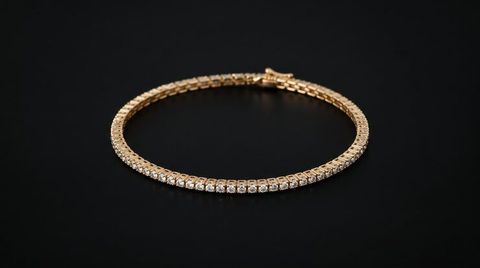
Gold tennis bracelets are elegant pieces of fine jewellery featuring a continuous arrangement of gemstones, usually diamonds, set along a flexible metal chain. They are recognised for their symmetrical appearance, refined design and ability to complement both everyday clothing and formal outfits.
The term tennis bracelet became widely recognised following an incident involving professional tennis player Chris Evert during the 1987 US Open. Her diamond bracelet reportedly broke during a match, leading to the popular use of the name.
Today, gold tennis bracelets combine traditional jewellery craftsmanship with modern diamond setting techniques. They are available in yellow gold, white gold and rose gold, with different gemstone shapes, metal weights and design configurations.
Common Types of Gold Tennis Bracelets
Several design variations are available, depending on gemstone preferences, metal composition and personal style.
Classic Diamond Tennis Bracelet: Features individually arranged round diamonds in a continuous pattern.
Yellow Gold Tennis Bracelet: Combines warm gold tones with diamonds or other gemstones.
White Gold Tennis Bracelet: Offers a bright metallic appearance that complements colourless diamonds.
Rose Gold Tennis Bracelet: Uses a gold alloy with a pinkish tone.
Emerald-Cut Tennis Bracelet: Features rectangular gemstones arranged in a symmetrical sequence.
Lab-Grown Diamond Tennis Bracelet: Uses laboratory-created diamonds with the same fundamental crystal structure as natural diamonds.
Each design has different visual characteristics, making it important to understand gemstone quality, setting construction and metal composition before evaluating a particular bracelet.
How Gold Purity Influences Bracelet Design
Gold purity is measured in karats (K). It indicates the proportion of pure gold within a metal alloy. Since pure gold is relatively soft, jewellery manufacturers combine it with other metals to improve strength and durability.
Gold purity | Pure gold content | Common characteristics |
|---|---|---|
24K | 99.9% | Very soft and less common for bracelets |
22K | 91.6% | Rich yellow colour, relatively soft |
18K | 75% | Balance of gold content and strength |
14K | 58.5% | Greater hardness and everyday practicality |
10K | 41.7% | Lower gold content and increased hardness |
For diamond tennis bracelets, 14K and 18K gold are commonly considered because their alloy compositions provide additional strength for gemstone settings.
The choice depends on the bracelet's construction, gemstone arrangement and intended frequency of use.
Understanding Diamond Quality in Tennis Bracelets
Diamond quality is an important consideration when examining luxury diamond tennis bracelets. The traditional 4Cs grading system provides a framework for understanding the characteristics of individual diamonds.
Cut: Describes how effectively a diamond interacts with light.
Colour: Measures the degree of colourlessness in colour-graded diamonds.
Clarity: Evaluates internal inclusions and external blemishes.
Carat: Measures the weight of an individual diamond.
The total carat weight (TCW) of a tennis bracelet represents the combined weight of its gemstones. It should not be confused with the weight of a single diamond.
For example, a bracelet containing 30 diamonds weighing 0.10 carats each has a total diamond weight of 3.00 carats.
Other important design characteristics include:
Prong settings, which hold gemstones using small metal projections.
Bezel settings, which surround gemstones with a metal border.
Shared-prong settings, which use adjoining prongs between neighbouring stones.
Four-prong settings, which provide individual support for each gemstone.
The setting influences the bracelet's flexibility, appearance and gemstone security.
Why Gold Tennis Bracelets Remain Relevant
Gold tennis bracelets occupy an interesting position in the fine jewellery industry because they combine traditional precious-metal craftsmanship with relatively simple, versatile designs.
Their relevance extends across different age groups, personal styles and jewellery preferences.
Everyday jewellery: Lightweight designs can complement office clothing, casual outfits and formal wear.
Special occasions: Diamond tennis bracelets are frequently associated with anniversaries, celebrations and important personal milestones.
Jewellery collections: Their symmetrical appearance allows them to complement diamond earrings, gold necklaces and other fine jewellery pieces.
Changing fashion preferences: Contemporary jewellery styling increasingly includes combinations of traditional gold designs and modern gemstone arrangements.
A well-constructed bracelet also provides an opportunity to understand how precious-metal purity, diamond grading and jewellery manufacturing work together.
Recent Updates and Jewellery Trends
Gold Jewellery Trends During 2025–2026
The fine jewellery industry has continued to experience changes in metal preferences, gemstone sourcing and personal styling.
One notable development is the renewed interest in yellow gold. BriteCo's 2026 jewellery industry data, covering recorded jewellery and appraisal trends, indicates that yellow gold represented approximately 39% of jewellery pieces in its 2025 data, slightly ahead of white gold at 38%. Rose gold accounted for approximately 3.3% of settings.
Several developments are relevant to gold tennis bracelets.
1. Renewed Interest in Yellow Gold
Yellow gold tennis bracelets have gained attention as consumers explore warmer metal tones. Their appearance can create a noticeable contrast with colourless diamonds.
2. Mixed Jewellery Styling
Combining gold tennis bracelets with traditional bangles, watches and delicate chain bracelets is a continuing styling direction. Mixed-metal combinations also provide additional flexibility.
3. Lab-Grown Diamond Designs
Laboratory-grown diamonds remain an important part of the modern diamond jewellery industry. They have essentially the same chemical composition and crystal structure as natural diamonds, although their origin differs.
Clear disclosure of gemstone origin is important when comparing natural and laboratory-grown diamond bracelets.
4. Alternative Gemstone Shapes
Although round brilliant diamonds remain a familiar choice, emerald-cut, oval and princess-cut gemstones provide alternative visual arrangements.
5. Greater Attention to Jewellery Documentation
Consumers increasingly consider diamond grading information, metal purity documentation, gemstone identification and hallmark verification when evaluating fine jewellery.
Key Industry Developments
Development | Period | Relevance |
|---|---|---|
Renewed yellow gold interest | 2025 | Influences metal colour preferences |
Mixed-metal styling | 2025–2026 | Encourages flexible jewellery combinations |
Lab-grown diamond adoption | 2025–2026 | Expands gemstone design choices |
Digital jewellery documentation | Ongoing | Supports product identification |
HUID hallmark verification in India | 2025–2026 | Improves gold purity traceability |
These developments describe broader industry directions rather than guaranteed changes in every jewellery market.
Laws, Regulations and Jewellery Standards
Gold tennis bracelets are affected by regulations concerning precious-metal purity, gemstone descriptions, consumer protection and product identification. Requirements differ between countries.
Gold Hallmarking Regulations in India
India regulates gold jewellery through the Bureau of Indian Standards (BIS) under the BIS Act, 2016, and the Hallmarking of Gold Jewellery and Gold Artefacts Order, 2020.
The hallmarking framework is designed to help consumers identify the declared purity of gold jewellery.
A standard HUID-based hallmark contains three important elements:
BIS standard mark.
Gold purity expressed in karats and fineness.
Six-digit alphanumeric Hallmark Unique Identification (HUID) number.
The BIS CARE mobile application includes a feature for checking the HUID information associated with hallmarked gold jewellery.
Important Hallmarking Developments in 2026
On 2 March 2026, India introduced the sixth phase of mandatory gold hallmarking, adding seven districts and bringing the reported total coverage to 380 districts.
The framework includes six mandatory purity grades: 14K, 18K, 20K, 22K, 23K and 24K. Nine-karat hallmarking is also available as a voluntary grade under the relevant Indian standard.
For gold tennis bracelets, these requirements are relevant to the metal composition of the bracelet. Diamond grading and gemstone authenticity are separate matters and are not established by a gold hallmark.
International Jewellery Regulations
Different countries have additional rules governing precious-metal descriptions and gemstone representations.
In the United States, the Federal Trade Commission's Jewelry Guides address truthful descriptions of gold, precious metals, natural gemstones, laboratory-created gemstones and imitation materials.
These guidelines help prevent misleading descriptions concerning jewellery composition, quality and gemstone origin.
Consumers examining international jewellery information should understand that hallmarking systems and permitted purity descriptions may differ between jurisdictions.
Tools and Resources for Gold Tennis Bracelets
Several digital tools and professional resources can help individuals understand gold purity, diamond characteristics and jewellery maintenance.
Helpful Jewellery Tools
1. BIS CARE App
The BIS CARE application is useful for checking the HUID details of eligible hallmarked gold jewellery in India. It helps consumers verify the identification information associated with a gold item.
2. Diamond Grading Reports
Gemological reports provide information about diamond characteristics, including cut, colour, clarity and carat weight. Recognised gemological laboratories include the Gemological Institute of America (GIA) and the International Gemological Institute (IGI).
3. Gold Purity Calculator
A gold purity calculator helps convert karat measurements into gold percentages.
For example:
An 18K bracelet therefore contains 75% pure gold by weight.
4. Diamond Carat Weight Calculator
These calculators help estimate gemstone weight using measurements and diamond shape. However, estimates are not substitutes for professional gemstone weighing.
5. Jewellery Insurance Calculators
Jewellery insurance assessment tools help individuals understand documentation requirements, appraisal values and coverage considerations.
Jewellery Maintenance Resources
Proper maintenance helps preserve the appearance and structural condition of gold tennis bracelets.
Useful practices include:
Store bracelets separately to reduce scratching.
Avoid exposing jewellery to harsh household chemicals.
Have gemstone settings periodically examined by a qualified jewellery professional.
Use appropriate cleaning methods recommended for the specific metal and gemstones.
Keep grading reports, hallmark information and appraisal documents safely stored.
Frequently Asked Questions
1. What Is a Gold Tennis Bracelet?
A gold tennis bracelet is a flexible jewellery piece featuring a continuous arrangement of gemstones, commonly diamonds, mounted in a gold setting. It is recognised for its symmetrical appearance and versatile design.
2. Which Gold Purity Is Commonly Used for Diamond Tennis Bracelets?
14K and 18K gold are commonly used for diamond tennis bracelets. Both contain alloy metals that provide additional strength compared with pure gold. The appropriate choice depends on the design and construction.
3. What Is the Difference Between Natural and Lab-Grown Diamond Tennis Bracelets?
Natural diamonds form through geological processes over long periods, while laboratory-grown diamonds are created using controlled technological processes. Both have essentially the same chemical composition and crystal structure, but their origins differ.
4. How Can Gold Tennis Bracelet Purity Be Verified in India?
Consumers can examine the BIS hallmark, declared purity and six-digit HUID number. The HUID can be checked through the Verify HUID feature in the BIS CARE application.
5. How Should a Gold Tennis Bracelet Be Maintained?
Regular inspection, careful storage and appropriate cleaning help maintain its appearance. Gemstone settings should also be examined periodically to identify loose stones or damaged components.
Conclusion
Gold tennis bracelets represent a combination of precious-metal craftsmanship, gemstone design and changing jewellery preferences. Their appeal comes from their balanced appearance, flexible styling possibilities and availability in different gold purities and diamond configurations.
Understanding the differences between 14K and 18K gold, diamond grading standards, gemstone settings and hallmarking regulations helps individuals evaluate these jewellery designs more confidently.
Developments during 2025 and 2026, including renewed interest in yellow gold, mixed-metal styling and laboratory-grown diamonds, demonstrate how traditional jewellery designs continue to evolve.
Whether examining classic diamond tennis bracelets or contemporary gold gemstone designs, knowledge of material composition, authenticity documentation and maintenance remains important for understanding the fine jewellery industry.

Related Post...
Discover Ruby Rings: Types, Characteristics, and Design Details
Updated: November 02, 2026
Read More
Discover Diamond Hoops: A Complete Overview of Designs and Trends
Updated: November 03, 2026
Read More