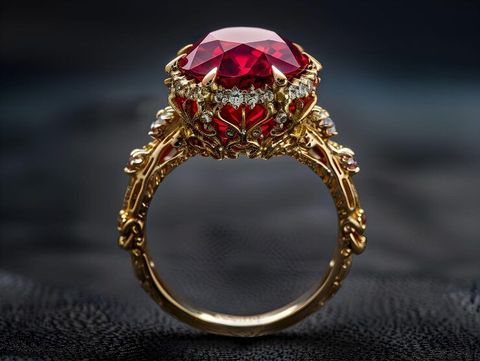
Tips for Understanding Black Enamel Jewellery Styles and Finishes
Black enamel jewellery is a distinctive category of decorative jewellery known for its deep colour, smooth surface, and contrast with precious metals. It combines traditional metalworking techniques with a specialised glass-like coating to create visually striking designs. The dark finish can appear glossy, matte, textured, or highly polished, depending on the materials and manufacturing process.
Black enamel has been used in jewellery for centuries, particularly in decorative objects, rings, pendants, brooches, bracelets, and watch components. Today, it appears in both traditional craftsmanship and contemporary jewellery collections. Its visual simplicity makes it suitable for different design preferences, from minimal geometric patterns to detailed ornamental arrangements.
Understanding black enamel jewellery involves exploring its composition, production methods, durability, design applications, and the standards that influence jewellery manufacturing. These factors help consumers, designers, collectors, and manufacturers understand how this decorative material fits into the wider jewellery industry.
Understanding Black Enamel Jewellery
What Is Black Enamel?
Enamel is a decorative coating generally created by fusing powdered glass to a metal surface through controlled heating. Once cooled, the material forms a hard, smooth layer that can provide colour and surface decoration.
Black enamel is produced using pigments or compounds that create a dark finish. Depending on the formulation, it may have a deep black appearance, a slightly reflective surface, or a softer charcoal-like tone.
Common characteristics include:
A smooth and decorative surface.
Strong visual contrast with gold, silver, and platinum.
Availability in glossy and matte finishes.
Compatibility with different jewellery shapes.
Potential for detailed patterns and artistic designs.
Common Metals Used
Black enamel is applied to different metal bases. The choice of metal influences the appearance, manufacturing requirements, and overall durability of the finished jewellery.
Metal | Common application | Design characteristics |
|---|---|---|
Gold | Rings, pendants, earrings | Warm contrast and traditional appearance |
Sterling silver | Bracelets, necklaces, brooches | Bright metallic contrast |
Platinum | Fine jewellery and detailed settings | Naturally light-coloured metal |
Stainless steel | Contemporary accessories | Modern and industrial appearance |
Copper | Decorative enamel work | Traditional craftsmanship |
Not every enamel formulation is suitable for every metal. Manufacturers must consider the metal's melting behaviour, expansion characteristics, and compatibility with the enamel coating.
Types of Black Enamel Finishes
Different finishing techniques create different visual effects.
Glossy black enamel: Reflects light and produces a smooth, polished appearance.
Matte black enamel: Creates a softer surface with limited reflection.
Translucent black enamel: Allows some underlying metal or decorative detail to remain visible.
Opaque black enamel: Produces a solid and consistent dark appearance.
Textured enamel: Incorporates surface variations to create decorative patterns.
Importance of Black Enamel Jewellery in the Modern Jewellery Industry
Why Black Enamel Jewellery Matters
Black enamel jewellery has an important place in the modern jewellery market because it combines traditional metal craftsmanship with contemporary design preferences. Its neutral colour makes it adaptable to different occasions, clothing styles, and jewellery combinations.
The material also provides designers with opportunities to create distinctive visual effects without depending entirely on gemstones.
Its importance can be understood through several factors:
Design versatility: Black enamel complements yellow gold, white gold, silver, and platinum.
Traditional craftsmanship: Enamelling preserves specialised decorative techniques used by jewellery artisans.
Contemporary aesthetics: Minimalist, geometric, and architectural designs frequently incorporate dark enamel details.
Personal expression: Black jewellery can represent simplicity, individuality, and artistic preferences.
Material combinations: It can be combined with diamonds, pearls, coloured gemstones, and other decorative elements.
Applications Across Jewellery Categories
Black enamel is used in different jewellery categories, depending on the intended design and manufacturing technique.
Jewellery category | Common design applications |
|---|---|
Black enamel rings | Geometric bands, decorative patterns, and gemstone settings |
Black enamel earrings | Studs, hoops, drops, and sculptural designs |
Black enamel necklaces | Pendant details and decorative metalwork |
Black enamel bracelets | Bangles, cuffs, and patterned surfaces |
Black enamel wedding bands | Minimalist bands and contrasting metal designs |
Brooches and pins | Artistic motifs and vintage-inspired decoration |
Black Enamel Compared with Other Black Jewellery Materials
Black enamel is sometimes confused with black gemstones and dark metal coatings. However, these materials have different compositions and characteristics.
Material | Composition | Main characteristic |
|---|---|---|
Black enamel | Glass-based coating or specialised enamel formulation | Smooth decorative surface |
Black onyx | Natural or treated chalcedony | Opaque black gemstone |
Black spinel | Natural mineral gemstone | Hardness and reflective appearance |
Black rhodium | Rhodium-based metallic coating | Dark metallic finish |
Black ceramic | Engineered ceramic material | Hard, modern surface |
Understanding these differences is useful when examining luxury black jewellery collections, gemstone settings, and precious metal designs.
Durability and Maintenance Considerations
Black enamel can provide a durable decorative surface, but its performance depends on the formulation, application method, thickness, and construction of the jewellery.
Traditional vitreous enamel is generally hard but can chip or crack if exposed to strong impacts. Cold enamel and resin-based coatings may have different resistance characteristics.
Important maintenance practices include:
Store enamel jewellery separately from harder jewellery pieces.
Avoid dropping rings, bracelets, and pendants onto hard surfaces.
Clean gently using a soft, slightly damp cloth.
Keep jewellery away from strong household chemicals.
Avoid abrasive polishing compounds on enamel surfaces.
Follow the manufacturer's cleaning recommendations.
Arrange professional inspection if the enamel becomes chipped or separated from the metal.
These precautions help preserve the appearance of black enamel jewellery over time.
Recent Updates and Jewellery Trends in 2025–2026
Growing Interest in Black Jewellery
Black jewellery has received renewed attention in contemporary fashion during 2026. Designers and jewellery publications have highlighted black enamel, onyx, blackened metals, and other dark materials as important elements in modern jewellery styling.
In April 2026, South China Morning Post reported growing interest in monochromatic jewellery designs, including enamel and black gemstones. The trend reflects an interest in pieces that combine understated colour with strong visual structure.
Enamel Jewellery Developments During 2025
Enamel also received attention in 2025 as jewellery designers explored colourful finishes, graphic patterns, and heritage-inspired craftsmanship.
On 1 October 2025, Vogue India highlighted the renewed popularity of enamel jewellery, including contemporary geometric designs and decorative rings. This coverage demonstrated how traditional enamelling techniques were being adapted for modern jewellery aesthetics.
Major Design Directions in 2026
Several developments are relevant to black enamel jewellery:
Monochromatic styling: Black jewellery is increasingly combined with similarly dark accessories and neutral clothing.
Mixed-metal designs: Black enamel is paired with yellow gold, white gold, and silver for contrasting visual effects.
Sculptural jewellery: Designers are exploring larger shapes, curved structures, and architectural forms.
Heritage-inspired techniques: Traditional enamel craftsmanship is being incorporated into contemporary collections.
Minimalist jewellery: Small enamel details are being used in rings, earrings, and everyday accessories.
The spring and summer 2026 fashion collections also brought renewed attention to black jewellery, including glossy enamel and dark gemstone combinations.
Important Industry Developments
Period | Development | Relevance |
|---|---|---|
January 2025 | Increased attention to enamel craftsmanship | Renewed interest in decorative jewellery |
August 2025 | Heritage-inspired meenakari designs received attention | Greater visibility for traditional techniques |
October 2025 | Enamel jewellery featured in contemporary fashion coverage | Expansion of modern enamel aesthetics |
March 2026 | High jewellery collections highlighted traditional enamel techniques | Continued interest in specialist craftsmanship |
April 2026 | Black jewellery received renewed fashion coverage | Increased visibility of monochromatic designs |
These developments indicate changing design interests rather than a guarantee of future market performance.
Laws, Regulations, and Jewellery Industry Standards
Jewellery Regulations in India
In India, jewellery manufacturing and precious metal purity are influenced by the Bureau of Indian Standards (BIS) and applicable consumer protection requirements.
Black enamel jewellery may contain gold or silver beneath its decorative coating. The enamel itself does not establish the purity of the underlying precious metal.
Important regulatory considerations include:
BIS hallmarking: Gold and silver jewellery are covered by relevant Indian hallmarking standards.
Hallmark identification: Hallmarked gold jewellery carries the BIS logo, purity information, and a six-digit Hallmark Unique Identification (HUID) number.
Metal purity: Applicable gold fineness grades include 14K, 18K, 20K, 22K, 23K, and 24KS.
Product descriptions: Precious metal content and decorative enamel should be described accurately.
Consumer protection: Jewellery descriptions should not misrepresent the metal composition, purity, or decorative materials.
An important development occurred on 2 March 2026, when India's sixth phase of mandatory hallmarking came into effect, adding seven districts and bringing the total coverage to 380 districts, according to the Ministry of Consumer Affairs.
International Jewellery Standards
Different countries have additional requirements affecting jewellery composition and product descriptions.
European Union
European chemical safety requirements, including REACH restrictions, regulate certain hazardous substances in consumer products. Jewellery manufacturers must consider restrictions concerning nickel release, lead, and cadmium where applicable.
These requirements are particularly relevant to metal components, coatings, and decorative materials.
United States
The Federal Trade Commission (FTC) Jewelry Guides provide guidance on truthful descriptions of precious metals, gemstones, treatments, and other jewellery characteristics.
Manufacturers and advertisers should accurately represent whether a piece contains solid gold, gold alloys, plating, enamel, or imitation materials.
Why Compliance Matters
Jewellery standards help establish confidence in product descriptions and manufacturing quality.
For black enamel jewellery, important considerations include:
Accurate identification of the underlying metal.
Appropriate precious metal hallmarking.
Chemical safety of materials and coatings.
Clear descriptions of enamel and gemstone components.
Compliance with relevant advertising and consumer protection rules.
Regulatory requirements differ between countries, so manufacturers should check the applicable national standards before distributing jewellery internationally.
Tools and Resources for Black Enamel Jewellery
Several technical resources can help jewellery designers, manufacturers, researchers, and consumers understand enamel materials and precious metal standards.
Jewellery Design and Manufacturing Tools
1. CAD Jewellery Design Software
Computer-aided design software helps create digital jewellery models before manufacturing. Designers can examine ring structures, pendant shapes, metal thickness, and enamel placement.
2. 3D Jewellery Modelling
Three-dimensional modelling supports the development of complex jewellery shapes and allows designers to evaluate proportions and structural details.
3. Enamel Kilns and Temperature Controllers
Professional enamel kilns provide controlled heating conditions for vitreous enamel applications. Temperature control is important because different enamel formulations and metals require specific processing conditions.
4. Jewellery Inspection Equipment
Magnification tools, digital microscopes, and specialised inspection equipment help examine enamel surfaces, metal joints, and decorative details.
Useful Industry Resources
Resource | Main purpose |
|---|---|
Bureau of Indian Standards (BIS) | Precious metal hallmarking and Indian standards |
BIS CARE App | Verification of hallmarked gold through HUID |
FTC Jewelry Guides | Jewellery description and advertising guidance |
CAD jewellery software | Digital jewellery design and modelling |
Gemological reference materials | Understanding gemstones and their properties |
Jewellery testing laboratories | Material and composition testing |
These resources support jewellery education, quality assessment, manufacturing research, and regulatory awareness.
Frequently Asked Questions
What Is Black Enamel Jewellery Made Of?
Black enamel jewellery generally consists of a metal base covered with a decorative black enamel layer. Traditional vitreous enamel uses powdered glass fused to metal through heating. Other products may use cold enamel or specialised resin-based formulations.
Is Black Enamel Jewellery Durable?
Black enamel can be durable when properly manufactured and maintained. However, traditional enamel can chip or crack following strong impacts. Its durability depends on the enamel formulation, application technique, and jewellery construction.
What Is the Difference Between Black Enamel and Black Onyx?
Black enamel is a decorative coating applied to a metal surface, while black onyx is a gemstone belonging to the chalcedony family. They have different compositions, manufacturing requirements, and physical characteristics.
Can Black Enamel Be Used in Gold Jewellery?
Yes. Black enamel can be incorporated into gold jewellery, including rings, bracelets, necklaces, and earrings. It creates a strong visual contrast with yellow, white, and rose gold. The enamel formulation must be compatible with the selected metal and manufacturing process.
How Should Black Enamel Jewellery Be Cleaned?
Use a soft, slightly damp cloth to remove everyday dirt and surface residue. Avoid abrasive materials, harsh chemicals, and ultrasonic cleaning unless specifically approved by the manufacturer. Professional inspection is advisable when the enamel becomes damaged.
Conclusion
Black enamel jewellery represents an interesting combination of traditional craftsmanship, decorative materials, and contemporary jewellery design. Its distinctive dark appearance creates opportunities for creative combinations with gold, silver, platinum, gemstones, and different metal finishes.
Recent developments during 2025 and 2026 demonstrate renewed interest in enamel craftsmanship and monochromatic jewellery aesthetics. At the same time, developments in jewellery manufacturing, digital design, material testing, and precious metal regulations continue to influence the industry.
Understanding enamel composition, manufacturing methods, durability, maintenance, and hallmarking requirements provides a useful foundation for examining this jewellery category. Whether used in minimalist rings, statement earrings, decorative bracelets, or luxury fine jewellery, black enamel remains a distinctive material within the evolving jewellery landscape.

Related Post...
Minimalist Pearl Drops Tips for Everyday Wear and Special Occasions
Updated: October 29, 2026
Read More
Insights Into Gold Beaded Mala Necklaces and Their Cultural Significance
Updated: October 28, 2026
Read More
Explore Wedding Band Trends 2026: Latest Diamond Wedding Ring Designs
Updated: October 31, 2026
Read More