The concept of the pallet jack emerged alongside the standardization of pallets in industrial supply chains. As palletized storage became widespread, there was a need for a basic tool that could navigate narrow aisles, operate in confined spaces, and reduce physical strain on workers. Unlike larger lifting equipment, pallet jacks are ground-operated, making them accessible and practical for everyday operations.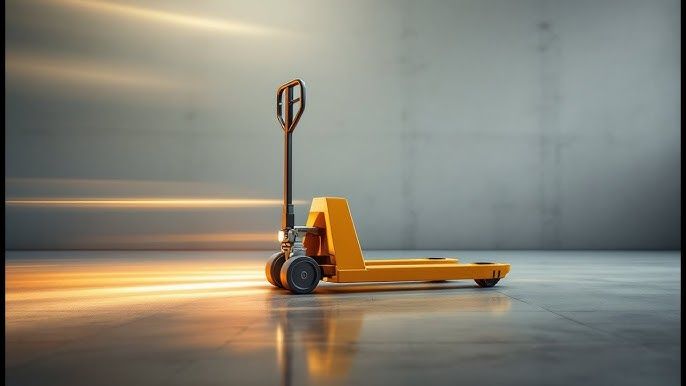
Over time, pallet jacks have evolved in design, load capacity, and operating mechanism. While the fundamental principle remains unchanged, modern variations reflect improvements in ergonomics, durability, and operational efficiency.
Why Pallet Jacks Matter Today
Pallet jacks continue to play an essential role in material movement, particularly in environments where space, speed, and safety are critical. Their relevance has increased with the growth of e-commerce, fast-moving consumer goods distribution, and just-in-time inventory systems.
Key reasons pallet jacks remain important include:
-
Supporting safe handling of heavy pallet loads
-
Reducing manual lifting injuries and physical fatigue
-
Allowing quick movement of goods in tight or congested spaces
-
Enabling efficient loading and unloading at ground level
-
Improving workflow continuity in storage and dispatch areas
These tools affect a wide range of stakeholders, including warehouse staff, inventory managers, logistics planners, safety officers, and operations supervisors. Pallet jacks help solve common operational problems such as congestion, slow internal movement, and strain-related workplace risks.
In many facilities, pallet jacks act as the first point of material movement before goods are transferred to racking systems, conveyor lines, or larger lifting equipment. Their simplicity makes them dependable in both small-scale and large-scale operations.
Types of Pallet Jacks and How They Are Used
Pallet jacks come in several forms, each designed for specific handling conditions. Selection depends on load characteristics, floor conditions, and operational frequency.
Manual pallet jacks
These are operated by pumping a handle to raise the forks and manually pushing or pulling the load. They are widely used due to their simplicity and low maintenance needs.
Electric pallet jacks
Powered by batteries, these models reduce operator effort and are suitable for longer distances or higher load frequencies.
High-lift pallet jacks
Designed to raise pallets to a greater height, often used for workstation positioning or light assembly tasks.
Weighing pallet jacks
Equipped with built-in scales to measure load weight during movement, useful for inventory verification and shipping preparation.
Narrow-aisle pallet jacks
Built with slim profiles to maneuver in tight storage layouts.
Table: Common Pallet Jack Variations and Typical Use
| Pallet Jack Type | Typical Application | Practical Advantage |
|---|---|---|
| Manual | Small warehouses, retail backrooms | Simple operation |
| Electric | Distribution centers | Reduced operator effort |
| High-lift | Packing or sorting areas | Improved working height |
| Weighing | Shipping and logistics | Weight verification |
| Narrow-aisle | Dense storage zones | Improved maneuverability |
Recent Updates and Industry Trends
Over the past year, pallet jack development has reflected broader changes in warehousing and logistics operations.
Notable trends observed during 2024–2025 include:
-
Increased adoption of electric pallet jacks in medium-sized warehouses
-
Focus on ergonomic handle design to reduce repetitive strain
-
Improved wheel materials for smoother movement on uneven floors
-
Integration of digital load indicators in advanced models
-
Growing use in micro-fulfillment centers supporting last-mile delivery
-
Emphasis on durability for high-cycle usage environments
Automation has also influenced pallet jack usage. While automated guided vehicles are expanding in large facilities, pallet jacks remain relevant due to their flexibility, lower space requirements, and adaptability to dynamic layouts.
Regulations, Safety Rules, and Policy Considerations
Pallet jack usage is governed by workplace safety regulations rather than product-specific legislation. These rules are designed to minimize injury risks and ensure safe handling practices.
Common regulatory considerations include:
-
Occupational safety guidelines for manual material handling
-
Weight limit adherence to prevent overloading
-
Floor-condition requirements to avoid slipping or tipping
-
Operator training expectations for safe maneuvering
-
Maintenance and inspection routines for wheels and hydraulics
-
Clear aisle marking and traffic management policies
In many countries, workplace safety authorities require employers to assess manual handling risks and provide appropriate equipment. Pallet jacks are often recommended as part of ergonomic risk-reduction strategies.
While regulations may vary by region, the core principle remains consistent: pallet jacks should be used in a manner that protects both operators and surrounding personnel.
Tools, Resources, and Supporting Knowledge
Understanding pallet jack usage is supported by various tools and reference materials that help improve efficiency and safety.
Helpful resources include:
-
Load capacity charts for pallet dimensions and weight limits
-
Ergonomic handling guides for warehouse environments
-
Maintenance checklists for wheels, forks, and hydraulic systems
-
Floor layout planning templates to optimize movement paths
-
Safety training manuals for material-handling equipment
-
Industry standards related to pallet sizes and storage practices
These resources help operations teams align pallet jack usage with broader warehouse planning and safety frameworks.
Practical Knowledge and Handling Tips
Using pallet jacks effectively requires attention to technique, environment, and load condition. Practical knowledge improves both safety and productivity.
Key handling insights include:
-
Position forks fully under the pallet before lifting
-
Keep loads balanced and centered to prevent tipping
-
Push rather than pull when possible for better control
-
Maintain clear visibility in travel direction
-
Avoid sudden turns, especially with heavy loads
-
Inspect wheels and forks regularly for wear
-
Use smooth, steady motion when raising or lowering loads
-
Keep travel paths clear of debris and obstacles
These practices reduce the likelihood of accidents and extend the usable life of the equipment.
FAQs
What is a pallet jack used for?
A pallet jack is used to lift and move palletized goods over short distances within warehouses, retail spaces, and industrial facilities.
How much weight can a pallet jack handle?
Load capacity varies by model, but standard pallet jacks typically handle loads within a defined weight range specified by the manufacturer.
What is the difference between manual and electric pallet jacks?
Manual pallet jacks rely on human effort for movement, while electric versions use battery power to reduce physical strain and improve efficiency.
Are pallet jacks suitable for uneven floors?
They perform best on smooth, level surfaces. Specialized wheels may help on slightly uneven floors, but consistent floor quality improves safety.
How often should pallet jacks be inspected?
Routine visual checks before use and periodic maintenance inspections help ensure safe and reliable operation.
Conclusion
Pallet jacks remain a fundamental tool in modern material handling. Their simple design, adaptability, and effectiveness make them indispensable across a wide range of industries. From small storage rooms to large distribution centers, pallet jacks support the steady flow of goods while reducing physical strain and improving operational efficiency.
Understanding how pallet jacks work, where they are best used, and how to operate them safely allows organizations to maintain smooth internal logistics. Despite advancements in automation, pallet jacks continue to offer practical value due to their flexibility, accessibility, and ease of integration into existing workflows.