Unlike mechanical presses that rely on flywheels or hydraulic presses that use fluid pressure, pneumatic presses convert air pressure into linear motion through cylinders and valves. This approach allows smoother force control, faster cycle times for small components, and easier integration with factory automation systems. Pneumatic power press machines are frequently found in electronics assembly, sheet metal processing, plastic forming, packaging lines, and laboratory-based production environments.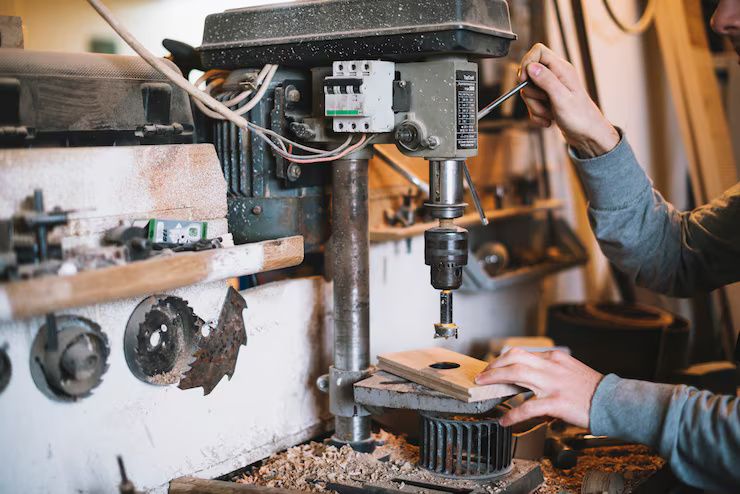
The existence of pneumatic presses is tied to the growth of compressed air infrastructure in factories. As industrial plants adopted air compressors for tools and automation, engineers leveraged this energy source to power pressing operations. Over time, digital controls, programmable logic controllers, and sensor feedback improved accuracy and operational consistency.
Why Pneumatic Power Press Technology Matters Today
Modern manufacturing emphasizes consistency, energy efficiency, automation compatibility, and workplace safety. Pneumatic power presses contribute to these objectives by enabling controlled force application with minimal mechanical complexity.
Key reasons this technology remains relevant include:
-
Reliable force generation for repetitive operations
-
Fast actuation cycles suitable for high-throughput assembly lines
-
Compact footprint compared with heavy hydraulic equipment
-
Easy integration with robotics, conveyors, and automated feeders
-
Lower vibration and noise relative to mechanical press systems
-
Precise stroke control for delicate components
-
Compatibility with smart manufacturing and digital monitoring
Industries influenced by pneumatic power press adoption include automotive components, electrical fittings, medical device assembly, consumer electronics, packaging machinery, and light metal fabrication. Operators benefit from predictable cycle timing, while production planners gain better throughput consistency.
From a process standpoint, pneumatic presses solve problems related to inconsistent force delivery, operator fatigue from manual pressing, and alignment errors in repetitive tasks. They also support standardized quality control by maintaining uniform pressure profiles across production batches.
How a Pneumatic Power Press Works
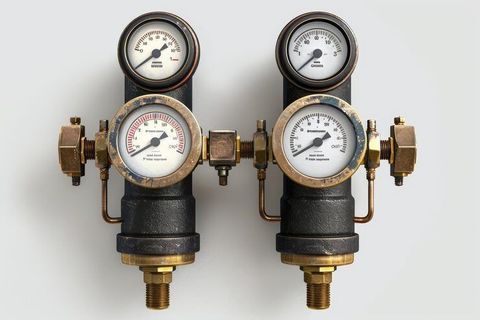
At its core, a pneumatic press converts compressed air energy into mechanical motion. The system typically includes an air compressor, pressure regulator, directional valves, cylinders, sensors, and a control interface.
Working sequence overview
-
Compressed air enters the system through filtration and regulation units.
-
The regulator adjusts pressure to match required pressing force.
-
Directional control valves route air into the cylinder chamber.
-
The piston moves linearly, transmitting force to the press ram.
-
Sensors confirm stroke position and pressure status.
-
The return stroke occurs when air flow reverses or vents.
The press can operate in manual, semi-automatic, or fully automated modes depending on control architecture. Modern systems often integrate programmable controllers and human-machine interfaces for parameter adjustment, diagnostics, and safety monitoring.
Core Components and Their Roles
-
Air compressor: Supplies compressed air to the system
-
FRL unit (filter, regulator, lubricator): Cleans and stabilizes air pressure
-
Pneumatic cylinder: Converts air pressure into linear motion
-
Directional valves: Control air flow direction and timing
-
Pressure sensors: Monitor force consistency
-
Stroke sensors: Validate position accuracy
-
Control panel: Allows operator configuration and diagnostics
-
Safety interlocks: Prevent unintended activation
Table: Pneumatic Press vs Other Press Types
| Feature | Pneumatic Press | Hydraulic Press | Mechanical Press |
|---|---|---|---|
| Force Range | Light to medium | Medium to very high | Medium to high |
| Speed Control | Fast response | Moderate | Very fast |
| Energy Medium | Compressed air | Hydraulic fluid | Flywheel |
| Maintenance Complexity | Moderate | Higher | Higher |
| Automation Compatibility | High | Medium | Medium |
| Precision Control | Good | Excellent | Good |
Recent Developments and Industry Trends (2024–2025)
Manufacturing modernization continues to influence press technology. Over the past year, several patterns have emerged across industrial automation and compressed air systems:
-
Increased integration of digital pressure sensors for predictive maintenance
-
Wider adoption of IoT-enabled monitoring dashboards for machine health
-
Growth of servo-assisted pneumatic control for enhanced precision
-
Expansion of energy-optimized air management to reduce compressor load
-
Adoption of safety-rated controllers aligned with international machine safety frameworks
-
Greater focus on modular tooling systems for flexible production layouts
-
Rising interest in data analytics for cycle optimization and downtime reduction
In 2024, multiple industrial automation exhibitions highlighted hybrid pneumatic-electrical control systems that combine air power with intelligent feedback loops. By 2025, factories increasingly emphasize interconnected machines that report performance metrics directly to centralized manufacturing execution systems.
These trends demonstrate a shift toward smarter, data-driven pneumatic press operations rather than standalone mechanical functionality.
Regulatory Environment and Safety Governance
Pneumatic power press operation is guided by industrial machinery safety standards and workplace compliance frameworks. Although regulations differ by country, common principles apply globally.
Key regulatory areas include:
-
Machine guarding requirements for moving components
-
Emergency stop circuit validation
-
Electrical safety for control panels and sensors
-
Compressed air system pressure limits
-
Lockout and isolation procedures during maintenance
-
Operator training documentation
-
Periodic inspection and calibration protocols
In many regions, manufacturing plants must align with occupational safety codes, industrial electrical standards, and machinery conformity assessments. These frameworks ensure safe interaction between human operators and automated equipment.
Environmental guidelines may also apply where compressed air generation efficiency and energy optimization targets are promoted under national sustainability initiatives.
Table: Typical Safety Controls in Pneumatic Press Systems
| Safety Feature | Function | Operational Benefit |
|---|---|---|
| Two-hand control | Prevents accidental actuation | Reduces injury risk |
| Light curtains | Detect intrusion in press area | Automatic machine stop |
| Pressure relief valve | Limits overpressure | Protects components |
| Emergency stop circuit | Immediate shutdown | Rapid hazard response |
| Interlocked guards | Blocks access during motion | Compliance assurance |
Tools and Resources for Understanding and Managing Pneumatic Press Systems
A range of technical resources supports engineers, students, and operations teams working with pneumatic presses.
Helpful tools and references include:
-
Pneumatic force calculators for cylinder sizing and pressure estimation
-
Air flow calculators for compressor capacity planning
-
CAD platforms for tooling and fixture modeling
-
PLC simulation environments for control logic testing
-
Digital maintenance logs for inspection tracking
-
Industrial sensor calibration reference guides
-
Compressed air efficiency benchmarking tools
-
Machine documentation templates for audit readiness
-
Safety risk assessment checklists
These resources improve system design accuracy, operational reliability, and long-term asset management.
Practical Insights and Operational Tips
Efficient pneumatic press operation depends on correct configuration, monitoring discipline, and preventive practices.
Helpful guidance
-
Maintain stable air pressure to ensure consistent force output
-
Inspect filters regularly to avoid contamination buildup
-
Verify sensor calibration to maintain accurate stroke control
-
Balance air consumption with compressor capacity planning
-
Document cycle parameters for repeatability
-
Monitor temperature and moisture levels in air lines
-
Review vibration and noise changes as early indicators
-
Apply standardized tooling alignment procedures
-
Use data logs to identify cycle inefficiencies
Consistent observation and data-driven adjustments support higher productivity and reduced unplanned downtime.
FAQs
What materials can a pneumatic power press handle?
Common materials include thin sheet metal, plastic components, rubber parts, electronic fittings, and light composite materials depending on force capacity and tooling design.
How is force calculated in a pneumatic press?
Force equals air pressure multiplied by piston area. Accurate cylinder sizing ensures sufficient pressing capability.
Can pneumatic presses operate continuously in automated lines?
Yes. With proper air supply stability and sensor monitoring, pneumatic presses integrate smoothly into automated production cells.
What limits the maximum force of pneumatic systems?
Compressed air pressure limits and cylinder diameter define achievable force. For heavy-duty forming, alternative press technologies may be required.
How does digital monitoring improve reliability?
Sensors track pressure, stroke, and cycle consistency, enabling early detection of deviations and predictive maintenance planning.
Conclusion
Pneumatic power press technology plays a vital role in modern industrial automation. By utilizing compressed air to generate controlled motion, these machines deliver reliable performance for precision-driven manufacturing processes. Their compatibility with digital control systems, modular tooling, and safety architectures positions them well within smart factory environments.
Recent developments emphasize intelligent monitoring, energy optimization, and automation connectivity, reflecting broader trends in industrial machinery modernization. Regulatory frameworks continue to guide safe deployment while encouraging consistent operational discipline.
For learners, engineers, and operational planners, understanding pneumatic press fundamentals supports better equipment selection, improved workflow design, and stronger safety culture. As manufacturing evolves toward data-driven production ecosystems, pneumatic power presses remain an adaptable and dependable solution for controlled forming and assembly applications.