Read About Industrial Mixers: An Overview of Basics, Types, and Uses
Industrial mixers are machines designed to combine, blend, or homogenize materials on a large scale. They are used to process solids, liquids, powders, pastes, or slurries into a uniform mixture suitable for further manufacturing steps. The need for industrial mixers arose as production volumes increased and manual mixing became inefficient, inconsistent, and unsuitable for controlled industrial processes.
In early manufacturing environments, mixing was often performed manually or with simple mechanical tools. As industries expanded and product formulations became more complex, consistent mixing quality became essential. Industrial mixers were developed to ensure repeatability, uniformity, and controlled processing across batches. Today, they form a foundational part of many production lines, supporting industries that rely on precise material composition.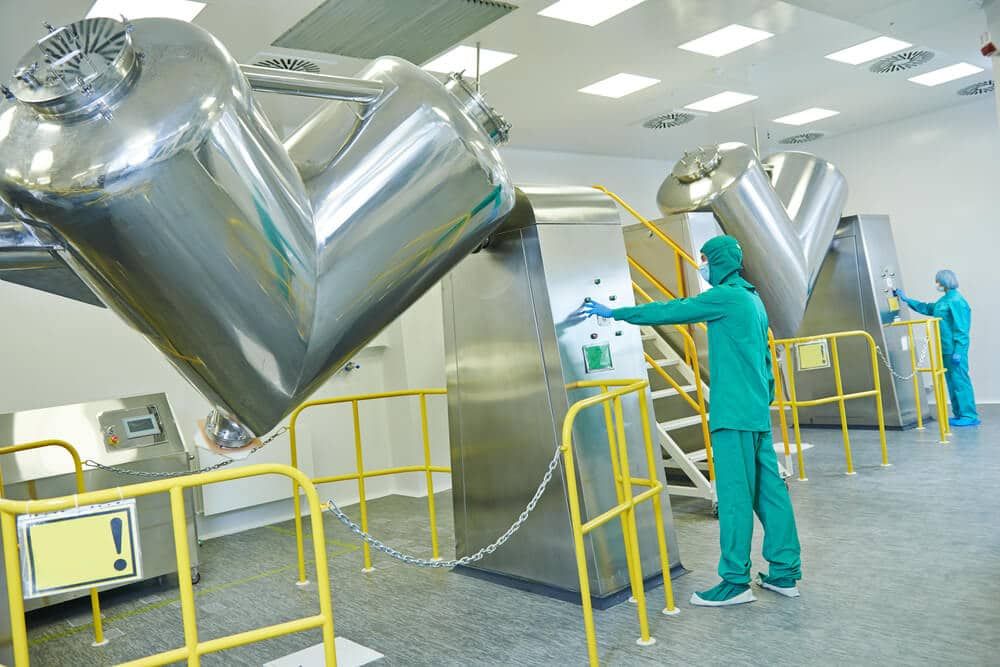
Industrial mixers exist to solve the challenge of achieving uniform material distribution while handling varying viscosities, densities, and material behaviors in industrial-scale operations.
Importance
Industrial mixers matter because they directly influence product quality, process efficiency, and operational reliability. They affect manufacturers, process engineers, quality teams, and operations managers across a wide range of sectors.
Their importance can be understood through the following aspects:
-
Product consistency: Proper mixing ensures uniform texture, composition, and performance of finished products.
-
Process efficiency: Automated mixing reduces manual effort and improves throughput.
-
Material utilization: Effective mixing minimizes segregation and material waste.
-
Process control: Controlled mixing parameters support predictable outcomes across batches.
-
Operational safety: Enclosed industrial mixers reduce exposure to dust, fumes, or reactive materials.
Industries such as chemicals, food processing, pharmaceuticals, construction materials, cosmetics, and polymers depend on industrial mixers to maintain production standards and process stability.
Recent Updates
Recent developments in industrial mixers focus on efficiency, adaptability, and integration with modern manufacturing systems. Rather than fundamental design changes, improvements emphasize control, monitoring, and flexibility.
Key trends observed in recent periods include:
-
Automation and digital controls: Modern industrial mixers increasingly integrate programmable controls for speed, timing, and torque.
-
Energy-efficient designs: Improved motor and blade designs reduce energy consumption during mixing operations.
-
Process monitoring: Sensors are used to monitor temperature, load, and mixing consistency in real time.
-
Flexible mixer configurations: Modular designs allow the same mixer to handle multiple material types.
-
Integration with production lines: Mixers are more commonly linked directly with upstream and downstream processes.
These updates align industrial mixers with broader manufacturing goals such as efficiency, repeatability, and data-driven process optimization.
Laws or Policies
Industrial mixers are influenced by regulations and standards related to safety, environmental protection, and industry-specific compliance. While requirements vary by country and sector, several common policy areas apply.
Key regulatory considerations include:
-
Industrial safety standards: Mixers must comply with machinery safety regulations related to guarding, emergency stops, and operator protection.
-
Environmental regulations: Dust control, noise limits, and emissions requirements affect mixer design and enclosure.
-
Hygiene and material standards: In sectors such as food and pharmaceuticals, mixers must meet sanitation and material compatibility guidelines.
-
Workplace regulations: Occupational safety rules influence installation, maintenance, and operation procedures.
-
Manufacturing compliance frameworks: Industry standards define acceptable performance and documentation practices.
Understanding these policies helps ensure that industrial mixers are used in a safe, compliant, and sustainable manner.
Tools and Resources
Several tools and resources support the selection, operation, and evaluation of industrial mixers. These resources help engineers and decision-makers understand process requirements and optimize mixer performance.
Commonly referenced tools and materials include:
-
Process simulation software: Used to model material flow and mixing behavior.
-
Mixer selection guides: Technical documents that match mixer types to material properties.
-
Power and capacity calculators: Tools that estimate motor size and mixing load.
-
Maintenance planning templates: Resources for scheduling inspections and component checks.
-
Technical standards documentation: References outlining safety, hygiene, and performance guidelines.
These tools support informed planning and effective use of industrial mixing equipment in diverse production environments.
Types of Industrial Mixers
Industrial mixers are available in several configurations, each suited to specific materials and processes.
| Mixer Type | Primary Use | Key Characteristic |
|---|---|---|
| Paddle mixers | Powders and granules | Gentle, uniform blending |
| Ribbon mixers | Dry bulk materials | Efficient horizontal mixing |
| High-shear mixers | Viscous materials | Rapid dispersion and emulsification |
| Planetary mixers | Pastes and heavy materials | Multi-directional mixing |
| Drum mixers | Batch processing | Simple rotating motion |
Selecting the appropriate type depends on material behavior, batch size, and desired mixing outcome.
Common Uses of Industrial Mixers
Industrial mixers are used across multiple sectors, often forming a critical step in production.
Typical use cases include:
-
Blending raw materials before processing
-
Homogenizing formulations for consistent quality
-
Preparing compounds for molding or shaping
-
Mixing additives into base materials
-
Conditioning materials for packaging or transport
These applications highlight how industrial mixer types support both simple and complex manufacturing workflows.
FAQs
What is an industrial mixer used for?
An industrial mixer is used to combine materials uniformly during large-scale manufacturing or processing operations.
How do industrial mixers differ from laboratory mixers?
Industrial mixers handle larger volumes, higher loads, and continuous operation, while laboratory mixers are designed for small-scale testing.
What factors affect mixing performance?
Material properties, mixer type, blade design, speed, and mixing duration all influence performance.
Are all industrial mixers suitable for every material?
No. Different materials require specific mixer designs to achieve proper blending without degradation.
Why is mixer selection important in manufacturing?
Proper selection ensures consistent product quality, efficient processing, and stable operations.
Conclusion
Industrial mixers play a vital role in modern manufacturing by enabling consistent, efficient, and controlled material blending. From basic powder mixing to complex high-viscosity processing, these machines support a wide range of industrial activities. Their continued evolution reflects the growing need for precision, efficiency, and integration within production environments. By understanding the basics, types, and uses of industrial mixers, organizations can better appreciate their role within broader manufacturing systems.

You may also like...
Horizontal Machining Centers Guide: Explore Basics, Operations, and Key Insights
Last Update: April 08, 2026
Read
Expert Monitoring Service Explained: Basics, Key Facts, Advice and Helpful Resources
Last Update: April 08, 2026
Read
Overhead Line Insulators Insights: Key Facts Every Electrical Engineer Should Know
Last Update: April 08, 2026
Read