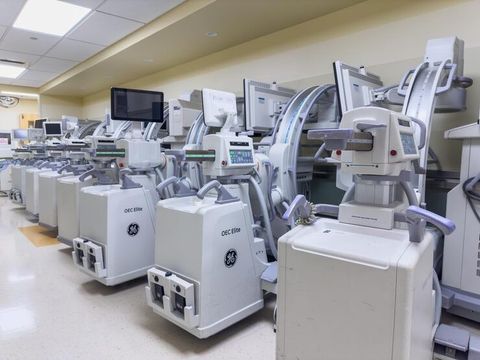
Medical Imaging Equipment Vendors Explore Solutions for Better Diagnostic Workflows
Medical imaging plays a central role in modern healthcare, helping clinicians examine internal structures, identify abnormalities, and monitor treatment outcomes.
However, diagnostic efficiency depends on more than the imaging machine itself. Equipment reliability, image quality, software integration, and workflow coordination all influence how effectively healthcare teams deliver care.
Hospitals, diagnostic imaging centers, and specialized clinics increasingly need imaging systems that work smoothly with electronic health records, radiology information systems, and picture archiving and communication systems. Selecting appropriate equipment and a capable vendor can help facilities manage growing workloads while maintaining consistent diagnostic processes.
Understanding medical imaging equipment vendors helps healthcare decision-makers evaluate technologies, service capabilities, integration requirements, and long-term operational needs. A well-informed selection process can support efficient examinations, dependable equipment performance, and better coordination between imaging departments and clinicians.
How Medical Imaging Equipment Vendors Support Diagnostic Workflows
Medical imaging equipment vendors supply technologies used to capture diagnostic images and, depending on their business model, provide installation, maintenance, training, software integration, and technical support. Their offerings may include complete imaging systems, replacement components, accessories, and workflow-related software.
The equipment required depends on the clinical applications and the facility's patient population. Radiography systems support routine X-ray examinations, while computed tomography (CT) produces cross-sectional images. Magnetic resonance imaging (MRI) uses magnetic fields and radio waves, and ultrasound systems generate images using high-frequency sound waves.
Some facilities also require mammography, fluoroscopy, or specialized imaging technologies. Each modality has different space, infrastructure, staffing, maintenance, and clinical requirements.
A suitable vendor should understand these operational differences rather than simply supplying hardware. Equipment selection should reflect the facility's diagnostic priorities, expected examination volumes, available infrastructure, and integration requirements.
Imaging Technologies That Influence Workflow Efficiency
Different imaging technologies contribute to diagnostic workflows in different ways. Selecting the appropriate modality can help facilities match clinical needs with operational capacity.
Digital radiography systems can streamline routine examinations by producing digital images that are readily transferred to compatible viewing systems. CT scanners support detailed cross-sectional imaging, but their installation and operation require careful attention to radiation safety, patient preparation, and equipment maintenance.
MRI systems can provide detailed soft-tissue imaging without using ionizing radiation. However, they require specialized infrastructure, magnetic-field safety procedures, and appropriate screening for patients and equipment entering the scanning environment.
Ultrasound systems offer real-time imaging and portability in many clinical settings. Their workflow benefits depend on examination requirements, operator expertise, image quality, and integration with reporting systems.
When comparing equipment, facilities should assess image quality, examination time, patient comfort, throughput, serviceability, and compatibility with existing infrastructure. The most appropriate technology is the one that meets clinical requirements without introducing unnecessary operational complexity.
Why Software Integration Matters for Diagnostic Workflows
Modern imaging workflows depend on the movement of patient information and diagnostic images between systems. A technically capable scanner may still create operational bottlenecks if its software does not communicate reliably with the facility's existing infrastructure.
Picture archiving and communication systems (PACS) store and distribute medical images, while radiology information systems (RIS) help manage imaging orders, scheduling, reporting, and departmental workflows. Electronic health records (EHRs) connect imaging information with broader patient records.
Integration between these systems can reduce manual data entry, support image availability, and help clinicians access relevant diagnostic information. Facilities should evaluate compatibility with existing PACS, RIS, and EHR environments before selecting equipment.
Digital Imaging and Communications in Medicine (DICOM) is an established standard for exchanging medical imaging information. Health Level Seven (HL7) standards support the exchange of clinical and administrative information between healthcare systems. However, nominal support for a standard does not guarantee seamless interoperability.
Vendors should clarify supported interfaces, configuration requirements, licensing considerations, migration processes, and responsibilities for resolving integration problems. Testing representative workflows before deployment can reveal issues that might otherwise disrupt clinical operations.
Evaluating Medical Imaging Equipment Vendors
Vendor evaluation should extend beyond equipment specifications. Healthcare facilities need to understand how each supplier will support the system throughout installation, clinical use, maintenance, and eventual replacement.
Several factors deserve particular attention:
Clinical suitability: Confirm that the proposed equipment supports the required examinations, patient groups, and diagnostic applications.
Technical specifications: Evaluate image quality, scanning capabilities, software functionality, and compatibility with clinical workflows.
Installation requirements: Assess room dimensions, electrical capacity, shielding where applicable, cooling, network connectivity, and other infrastructure needs.
Service and maintenance: Review preventive maintenance schedules, service response arrangements, spare-parts availability, and escalation procedures.
Staff training: Determine how radiographers, clinicians, biomedical engineers, and IT teams will receive appropriate training.
Regulatory compliance: Verify applicable device approvals, safety requirements, quality documentation, and local regulatory obligations.
Facilities should also examine the vendor's implementation plan. Clear responsibilities for equipment delivery, installation, acceptance testing, staff training, and system integration can reduce confusion during deployment.
Reference checks and documented service commitments may help assess whether a vendor can support the facility's actual operating requirements. Claims about uptime, response times, or performance should be evaluated against written commitments and relevant evidence.
Comparing Equipment Manufacturers, Distributors, and Service Providers
Not every medical imaging equipment vendor operates in the same way. Understanding the distinction helps healthcare organizations identify the appropriate type of supplier.
Vendor category | Primary role | Key evaluation factor |
|---|---|---|
Equipment manufacturers | Develop and supply imaging systems | Product capabilities, technical support, and product lifecycle |
Authorized distributors | Supply equipment and coordinate local services | Manufacturer authorization, local availability, and support arrangements |
Independent service providers | Maintain or repair eligible imaging equipment | Technical qualifications, compatibility, and service scope |
Imaging software providers | Supply workflow, image management, or integration tools | Interoperability, security, and implementation support |
Some organizations combine several of these roles. Others depend on partnerships between equipment manufacturers, software vendors, and local service providers.
Before entering an agreement, confirm who is responsible for installation, software updates, warranty coverage, repairs, cybersecurity support, and replacement parts. Responsibility should be documented rather than assumed from the vendor's general service description.
Managing Equipment Reliability and Long-Term Operations
Diagnostic workflows can be disrupted when imaging systems experience unexpected downtime. Even a short interruption may require rescheduling examinations, redirecting patients, or adjusting departmental capacity.
Preventive maintenance, routine quality assurance, staff training, and timely software updates can help manage operational risks. Facilities should establish procedures for reporting faults, prioritizing repairs, documenting maintenance activities, and communicating service interruptions.
Equipment lifecycle planning also matters. Imaging systems may remain in service for many years, so buyers should assess the availability of spare parts, software support, cybersecurity updates, and technical expertise over the expected service period.
Interoperability and data security require ongoing attention after installation. Facilities should coordinate with vendors and internal IT teams to manage access controls, system updates, network security, data backups, and applicable privacy requirements.
A dependable operating plan considers not only the initial installation but also the resources needed to keep the equipment safe, functional, and compatible with evolving clinical systems.
Frequently Asked Questions
What should hospitals consider when choosing medical imaging equipment vendors?
Hospitals should assess clinical suitability, image quality, software compatibility, installation requirements, service support, staff training, regulatory compliance, and long-term maintenance arrangements. Vendor selection should reflect the facility's clinical workload and infrastructure.
Why is PACS integration important for imaging equipment?
PACS integration allows diagnostic images to be stored, retrieved, and distributed through compatible imaging workflows. Reliable integration can improve image availability and reduce manual handling, although implementation quality and system compatibility remain essential.
Should healthcare facilities prioritize equipment features or vendor support?
Both matter. Equipment must satisfy clinical requirements, while vendor support influences reliability, maintenance, training, and long-term usability. A strong purchasing decision evaluates the complete operational arrangement rather than specifications alone.
How can facilities reduce imaging equipment downtime?
Facilities can establish preventive maintenance schedules, monitor equipment performance, train staff, maintain clear fault-reporting procedures, and agree on service-response arrangements. Spare-parts availability and escalation procedures should also be reviewed.
Conclusion
Medical imaging equipment vendors influence diagnostic workflows through their technology, integration capabilities, installation services, and long-term technical support. Selecting suitable equipment requires a clear understanding of clinical needs, infrastructure, interoperability, and operational responsibilities.
Healthcare facilities should compare vendors using consistent criteria and verify important service commitments before deployment. By considering the complete equipment lifecycle rather than hardware specifications alone, organizations can build more dependable imaging workflows and support efficient diagnostic services.

Related Post...
Automated Optical Inspection Machines: Insights Into Automated Quality Control
Updated: October 02, 2026
Read More
EPS Recycling Machines and Foam Recycling Systems: Explore Recycling Basics
Updated: September 08, 2026
Read More
Fluid Pump Systems Discover How Modern Industries Improve Flow Efficiency
Updated: July 22, 2026
Read More