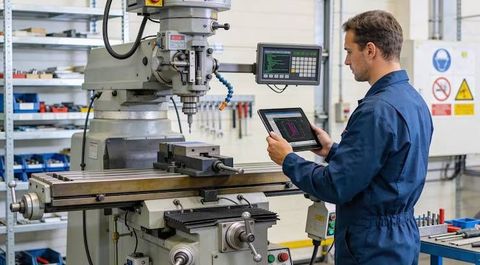
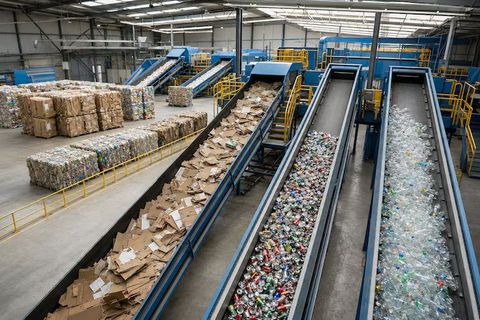
Industrial Equipment Insights for Smarter Operations and Better Productivity
Industrial equipment plays a central role in manufacturing, warehousing, construction, processing, and other operational environments.
From material handling systems to automated production machinery, the right equipment helps businesses maintain consistent workflows, manage resources, and meet production requirements.
As industrial operations become more demanding, businesses must consider more than equipment capacity alone. Reliability, energy consumption, operator safety, maintenance requirements, and compatibility with existing systems all influence how effectively machinery performs over time.
Understanding industrial equipment helps decision-makers identify operational improvements, evaluate suitable technologies, and make informed investments. A practical approach considers how equipment fits into the entire workflow rather than treating each machine as an isolated asset.
How Industrial Equipment Influences Operational Productivity
Industrial equipment supports the physical processes that keep production and logistics operations running. Machinery may perform cutting, forming, packaging, lifting, conveying, mixing, or inspection, depending on the industry and application.
Productivity depends on how well these activities work together. A high-capacity machine may offer limited value if upstream processes cannot supply materials quickly enough or downstream operations cannot handle its output. Effective equipment planning therefore considers production flow, cycle times, changeovers, and bottlenecks across the facility.
Equipment reliability also affects operational continuity. Frequent breakdowns can interrupt production schedules, increase maintenance workloads, and create delays for connected departments. Businesses can reduce these disruptions by monitoring performance, maintaining critical components, and selecting equipment suited to actual operating conditions.
Choosing Equipment That Matches Operational Requirements
Selecting industrial equipment begins with understanding the task it must perform. Businesses should identify required capacity, material characteristics, operating conditions, available floor space, and expected production volumes before comparing machinery options.
Equipment specifications provide a starting point, but advertised maximum capacity does not necessarily represent sustainable everyday performance. Actual output may depend on material variation, operator experience, setup time, maintenance intervals, and environmental conditions.
Compatibility is equally important. New machinery may need to integrate with existing conveyors, control systems, production software, electrical infrastructure, or safety equipment. Evaluating these requirements early helps prevent expensive modifications and operational interruptions after installation.
Businesses should also distinguish between essential capabilities and optional features. Automated controls or advanced monitoring may improve consistency in some environments, while simpler equipment may be more appropriate for straightforward tasks with limited production complexity.
Automation and Smart Industrial Technologies
Automation allows industrial equipment to perform repetitive or precisely controlled activities with less direct manual intervention. Depending on the application, automated systems can improve repeatability, reduce handling errors, and maintain more consistent production processes.
Programmable logic controllers (PLCs), industrial robots, sensors, and supervisory control and data acquisition (SCADA) systems are common components of industrial automation. These technologies help coordinate machine operations, monitor process conditions, and provide operators with useful production information.
Connected equipment can also support predictive maintenance. Sensors may track variables such as vibration, temperature, pressure, or motor current to identify unusual operating patterns. Maintenance teams can investigate developing problems before they cause major interruptions, although monitoring systems do not eliminate the need for inspections or preventive maintenance.
Automation decisions should reflect the actual process. Businesses need to assess integration requirements, workforce training, cybersecurity, system reliability, and the consequences of equipment failure. The most sophisticated solution is not always the most practical choice.
Maintenance Strategies That Reduce Downtime
Maintenance directly influences equipment availability, service life, and operating reliability. A structured maintenance program helps businesses identify deterioration, replace worn components, and address problems before they become serious failures.
Preventive maintenance follows planned intervals based on manufacturer recommendations, operating hours, usage patterns, and environmental conditions. Typical activities include lubrication, cleaning, alignment checks, filter replacement, and inspection of safety mechanisms.
Predictive maintenance uses condition data to help determine when intervention may be necessary. It can be particularly useful for expensive or critical equipment where unexpected failure would significantly disrupt operations. However, it requires suitable monitoring capabilities, reliable data, and staff who can interpret the results.
Corrective maintenance addresses faults after they occur. Although unavoidable in some circumstances, relying exclusively on reactive repairs can create unpredictable downtime and increase the risk of secondary damage.
Businesses should select a maintenance strategy according to equipment criticality, failure consequences, repair complexity, and available resources. Keeping accurate maintenance records also helps identify recurring faults and determine whether equipment needs repair, refurbishment, or replacement.
Improving Energy Efficiency and Workplace Safety
Energy consumption can significantly influence the ongoing performance of industrial equipment. Motors, compressors, pumps, heating systems, and material handling machinery may consume substantial energy depending on their duty cycles and operating conditions.
Businesses can identify improvement opportunities by examining idle running, unnecessary operating hours, compressed-air leaks, poor motor loading, and inefficient process settings. Variable-frequency drives may help control motor speed in suitable applications, while properly maintained equipment can reduce avoidable energy losses.
Efficiency improvements should be evaluated against production requirements. Operating machinery at reduced power is not beneficial if it compromises product quality, throughput, or process stability.
Workplace safety is equally important. Equipment selection and operation should account for guarding, emergency stops, safe access, lifting limits, lockout procedures, and operator training. Applicable machinery safety requirements and workplace regulations must be considered during installation, operation, and maintenance.
A productive industrial environment is one where equipment performs reliably without exposing workers to unnecessary hazards.
Evaluating Industrial Equipment Suppliers and Service Providers
Selecting a supplier involves more than comparing machine specifications. Businesses also need to consider installation support, spare-parts availability, maintenance capabilities, training, warranty conditions, and access to technical assistance.
A suitable supplier should be able to explain how the proposed equipment matches the intended application and identify relevant limitations. Buyers should request clear technical documentation and verify claims concerning capacity, compatibility, safety features, and expected operating conditions.
For complex machinery, commissioning and operator training can influence how quickly a facility achieves stable production. Ongoing service support may become especially important when equipment operates continuously or depends on specialized components.
Before making a commitment, evaluate the complete ownership requirements. These may include installation, energy consumption, maintenance labor, consumables, replacement parts, software support, and eventual disposal. Comparing these factors provides a more useful assessment than focusing solely on the initial purchase.
Frequently Asked Questions
What industrial equipment is commonly used in manufacturing?
Manufacturing facilities may use CNC machines, presses, conveyors, industrial robots, compressors, packaging machinery, pumps, and inspection systems. The appropriate equipment depends on the materials, production process, required capacity, and quality standards.
How can businesses improve industrial equipment productivity?
Businesses can improve productivity by reducing bottlenecks, maintaining machinery, training operators, monitoring downtime, and selecting equipment that matches production requirements. Coordinating connected processes is often as important as improving an individual machine.
What is the difference between preventive and predictive maintenance?
Preventive maintenance follows scheduled service intervals, while predictive maintenance uses equipment condition data to help identify when maintenance is needed. Both approaches can support reliability, and many facilities combine them.
When should industrial equipment be replaced?
Replacement may be appropriate when breakdowns become frequent, spare parts are difficult to obtain, safety requirements cannot be met economically, or operating performance no longer meets production needs. Repair costs should be evaluated alongside reliability, efficiency, and future requirements.
What should businesses consider when selecting industrial equipment?
Important considerations include capacity, compatibility, safety, energy use, maintenance requirements, supplier support, operator training, and long-term ownership requirements. The right choice depends on the specific application rather than equipment specifications alone.
Conclusion
Industrial equipment contributes to productivity when it matches operational requirements, integrates effectively with surrounding processes, and receives appropriate maintenance. Automation, condition monitoring, energy management, and supplier support can further improve reliability when applied to genuine operational needs.
Businesses that evaluate equipment across its full operating life are better positioned to control disruptions, protect workers, and maintain consistent production. Smarter operations begin with understanding how each machine contributes to the performance of the entire facility.

Related Post...
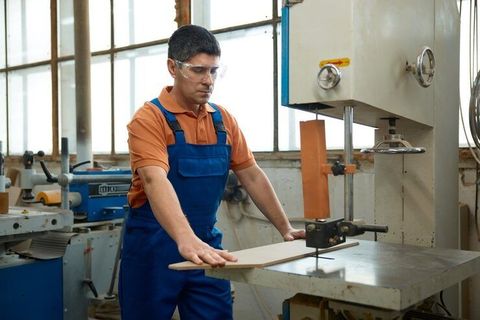
Sheet Cutting Machines Explore How Industrial Cutting Methods Work
Updated: September 07, 2026
Read More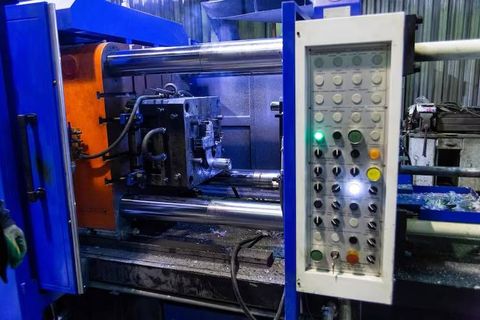
Die Casting Manufacturing Equipment: Explore Machines and Production Processes
Updated: October 02, 2026
Read More
Printed Circuit Board Assembly Plants: Explore the Electronics Manufacturing Process
Updated: October 02, 2026
Read More