Industrial Edge Computing and Its Applications in India
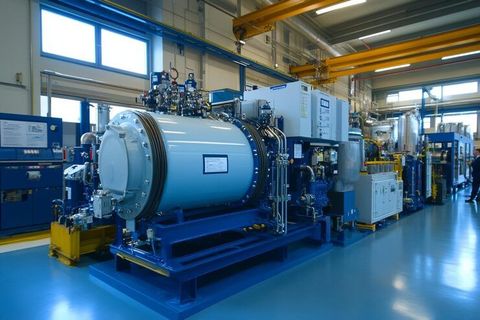
Industrial edge computing is a technology approach that processes and analyses data close to where it is generated rather than sending all information to a distant cloud server or central data centre.
In industrial environments, data is continuously generated by machines, sensors, production equipment, robots, and monitoring systems. Processing this information near the equipment allows organisations to make faster decisions and respond to changing conditions.
For example, a manufacturing machine may use sensors to monitor temperature, vibration, and operating speed. An edge computing device can analyse this information locally and identify unusual activity without waiting for data to travel to a remote cloud platform.
Industrial edge computing combines several technologies, including:
Industrial Internet of Things (IIoT).
Edge servers and computing gateways.
Artificial intelligence and machine learning.
Industrial automation systems.
Real-time data analytics.
Cloud computing and network connectivity.
Why Was Edge Computing Introduced?
Traditional cloud computing sends information from connected devices to centralised data centres for processing and storage. Although this approach supports large-scale data management, it can introduce delays when applications require immediate responses.
Industrial operations often need decisions within milliseconds or seconds. Sending every sensor reading to a distant server may also increase network traffic and create unnecessary dependence on continuous internet connectivity.
Edge computing addresses these challenges by bringing computing resources closer to industrial equipment.
It does not replace cloud computing. Instead, both technologies can work together. Edge devices handle immediate processing, while cloud platforms support long-term storage, large-scale analytics, and centralised management.
Importance of Industrial Edge Computing in Modern Industries
Why Industrial Edge Computing Matters Today
Industrial operations generate large volumes of data every second. Traditional cloud-based systems may struggle to support applications that require immediate responses, especially when network connectivity is limited or unreliable.
Edge computing helps address these challenges by processing information locally. This improves responsiveness and allows industrial systems to continue performing certain tasks even when their connection to a central cloud platform is interrupted.
Its importance is increasing because industries are adopting automation, connected machinery, robotics, and artificial intelligence.
The main benefits include:
Low latency: Data is processed near the equipment, reducing communication delays.
Real-time decision-making: Machines can respond quickly to changing operating conditions.
Reduced network traffic: Only relevant information needs to be transferred to central platforms.
Improved reliability: Local applications can continue operating during certain network interruptions.
Better data management: Sensitive operational information can be analysed locally.
Predictive maintenance: Equipment data can help identify possible failures before major breakdowns.
Operational visibility: Industrial teams can monitor machinery and production activities more effectively.
Who Uses Industrial Edge Computing?
Industrial edge computing is relevant to organisations that depend on connected equipment, automated processes, and continuous data collection.
Industry | Typical application |
|---|---|
Manufacturing | Automated production and quality inspection |
Automotive | Robotics and assembly-line monitoring |
Energy | Smart grid monitoring and equipment analytics |
Oil and gas | Pipeline monitoring and sensor analysis |
Healthcare | Connected medical equipment monitoring |
Agriculture | Smart irrigation and equipment monitoring |
Logistics | Warehouse automation and asset tracking |
Mining | Remote equipment monitoring and worker safety |
How Edge Computing Solves Industrial Problems
Consider a manufacturing facility with hundreds of machines operating simultaneously. Each machine generates information about temperature, speed, vibration, and energy consumption.
If all this information is transferred to a central cloud platform, the network may experience unnecessary traffic. Applications that require immediate responses may also experience delays.
With edge computing, a local gateway or industrial server can analyse the information and identify unusual machine behaviour.
The system can then notify operators or trigger an approved response according to predefined operational rules.
This approach supports faster decisions and more efficient industrial monitoring.
Recent Updates and Trends in Industrial Edge Computing
Industrial edge computing is developing alongside artificial intelligence, advanced manufacturing, robotics, and industrial Internet of Things technologies. Several developments during 2025 and 2026 demonstrate this direction.
India's Advanced Manufacturing Roadmap
On 29 October 2025, NITI Aayog unveiled its report titled Reimagining Manufacturing: India's Roadmap to Global Leadership in Advanced Manufacturing.
The roadmap identified artificial intelligence, machine learning, digital twins, advanced materials, and robotics as important technologies for India's manufacturing development.
These technologies can work alongside industrial edge computing to support connected production environments, local data processing, and intelligent automation.
Industrial AIoT Development in India
On 27 May 2026, the Technology Development Board under the Department of Science and Technology announced support for an indigenous Industrial AIoT project in Nagpur.
The initiative focuses on developing industrial artificial intelligence and Internet of Things devices for applications such as:
Predictive maintenance.
Energy optimisation.
Resource efficiency.
Industrial productivity.
Connected manufacturing.
This development reflects India's growing interest in domestic industrial digital technologies.
Growth of Edge AI and Real-Time Intelligence
On 20 February 2026, HCLTech announced VisionX 2.0, an updated multimodal AI edge platform developed with NVIDIA technologies.
The platform incorporates computer vision, vision-language models, and edge-based AI processing for industrial environments.
This development illustrates how edge computing is moving beyond basic sensor monitoring towards more advanced applications involving visual inspection, workplace safety, and real-time operational analysis.
Increasing Use of Digital Twins
Digital twins are virtual representations of physical machines, production lines, or industrial facilities.
They use information from sensors and connected equipment to represent real-world conditions.
Combining digital twins with edge computing can help industrial teams analyse local equipment data, monitor performance, and understand potential operational problems.
Edge AI as an Emerging Technology
Edge AI combines artificial intelligence with local computing infrastructure.
Instead of sending every image, video, or sensor reading to a central server, an edge device can run trained AI models near the source of the information.
This is particularly useful for industrial applications that require quick analysis and continuous monitoring.
Laws and Policies Affecting Industrial Edge Computing in India
Industrial edge computing in India is influenced by data protection legislation, cybersecurity requirements, information technology policies, and industrial standards.
There is currently no single Indian law specifically governing every aspect of industrial edge computing. Applicable requirements depend on the organisation, industry, information being processed, and type of infrastructure involved.
Digital Personal Data Protection Act, 2023
The Digital Personal Data Protection Act, 2023, establishes a legal framework for processing digital personal data in India.
It is relevant to industrial edge computing when systems collect or process personal information, such as employee identification records, workplace monitoring information, or biometric data.
Organisations should consider:
Appropriate legal grounds for processing personal information.
Transparency about data collection and usage.
Reasonable security safeguards.
Data retention and deletion requirements.
Applicable individual rights.
Responsibilities of data fiduciaries.
The Digital Personal Data Protection Rules, 2025, were notified on 13 November 2025 and provide a phased implementation framework. Organisations should consider the commencement dates of individual provisions when assessing their obligations.
Information Technology Act, 2000
The Information Technology Act, 2000, provides the broader legal foundation for electronic information and cybersecurity in India.
Its provisions are relevant when industrial computing environments experience unauthorised access, damage to computer resources, or other covered cyber-related offences.
CERT-In Cybersecurity Directions
CERT-In issued cybersecurity directions on 28 April 2022.
Covered organisations must follow applicable requirements, including reporting specified cybersecurity incidents within six hours of noticing them or being informed about them.
The directions also address log retention and the appointment of a designated point of contact.
These requirements are relevant to organisations operating industrial edge infrastructure and connected information systems.
National Critical Information Infrastructure Protection Centre
NCIIPC works to protect India's critical information infrastructure.
Its activities are relevant to important sectors such as energy, transportation, telecommunications, and other designated critical infrastructure.
Industrial organisations operating in these sectors should consider applicable NCIIPC guidance and security requirements.
IndiaAI Mission and Digital Manufacturing Initiatives
The IndiaAI Mission, approved in March 2024, supports the development and adoption of artificial intelligence in India.
Although it is not an industrial edge computing law, AI development can support technologies such as local machine learning, intelligent automation, and industrial data analytics.
Similarly, advanced manufacturing initiatives encourage the adoption of digital technologies across Indian industrial sectors.
Tools and Resources for Industrial Edge Computing
Industrial edge computing depends on hardware, software, communication networks, and data management platforms. Different tools support device connectivity, local processing, monitoring, and industrial automation.
Popular Industrial Edge Computing Tools
Tool or platform | Main application |
|---|---|
NVIDIA Jetson | Edge AI and machine learning |
Azure IoT Edge | Local processing and IoT management |
AWS IoT Greengrass | Local device communication and processing |
Siemens Industrial Edge | Industrial applications and machine data processing |
KubeEdge | Kubernetes-based edge computing |
EdgeX Foundry | Industrial IoT integration |
Eclipse Mosquitto | MQTT messaging and device communication |
Node-RED | Visual programming and data integration |
Docker | Application containerisation |
Kubernetes | Container orchestration |
Important Technologies Used in Edge Computing
1. Industrial IoT Sensors
Sensors collect information about temperature, pressure, vibration, humidity, and machine performance. This information provides the foundation for industrial data analytics.
2. Edge Gateways
Edge gateways connect industrial equipment with local computing systems. They collect information from connected devices and help transfer relevant data to other platforms.
3. Edge Servers
Edge servers provide computing power close to industrial operations. They can run applications for monitoring, analytics, and artificial intelligence.
4. AI and Machine Learning
AI models analyse industrial information to identify patterns, detect unusual behaviour, and support predictive maintenance.
5. Communication Technologies
Technologies such as Ethernet, Wi-Fi, 5G, and industrial communication protocols help connected devices exchange information.
Helpful Standards and Educational Resources
Organisations exploring industrial edge computing should understand these technical frameworks:
IEC 62443: Industrial automation and control system cybersecurity.
ISO/IEC 27001: Information security management.
NIST Cybersecurity Framework: Cybersecurity risk identification and management.
MQTT: Lightweight messaging protocol for connected devices.
OPC UA: Industrial communication and interoperability.
Kubernetes: Application deployment and container management.
These resources help technical teams understand system architecture, communication, security, and operational requirements.
Frequently Asked Questions About Industrial Edge Computing
1. What is industrial edge computing in simple terms?
Industrial edge computing means processing information close to the machines and equipment that generate it. Instead of sending all data to a distant cloud server, local computing devices analyse information and support faster decisions.
2. What are the main applications of industrial edge computing?
Its major applications include predictive maintenance, automated quality inspection, industrial robotics, smart manufacturing, energy monitoring, equipment tracking, and real-time production analysis.
3. What is the difference between edge computing and cloud computing?
Edge computing processes information near its source, while cloud computing processes information through centralised remote infrastructure.
Edge computing is useful for applications requiring quick responses. Cloud computing is useful for large-scale storage, advanced analytics, and centralised data management. Both can operate together.
4. Is industrial edge computing important for Industry 4.0?
Yes. Industry 4.0 involves connected machines, automation, intelligent manufacturing, and data-driven operations. Edge computing supports these technologies by enabling local data processing, machine communication, and real-time analysis.
5. Is industrial edge computing secure?
Industrial edge computing can support secure operations, but its security depends on proper implementation. Organisations should use access controls, encryption, network segmentation, regular security updates, device monitoring, and appropriate cybersecurity policies.
Conclusion
Industrial edge computing is becoming an important part of modern industrial digital transformation. By processing information closer to connected machines and equipment, it helps organisations improve response times, monitor operations, and support intelligent automation.
Its applications extend across manufacturing, automotive production, energy, healthcare, agriculture, logistics, and other industries.
In India, growing interest in advanced manufacturing, industrial AIoT, robotics, and digital infrastructure is creating new opportunities for edge-based technologies. Government initiatives and evolving data protection requirements also highlight the importance of responsible technology adoption.
As industrial systems become more connected, edge computing will continue to play an important role in real-time data processing, predictive maintenance, industrial analytics, and smart manufacturing.
The most effective approach is to combine edge computing with cloud infrastructure, appropriate cybersecurity measures, and well-planned data management. This combination can help build reliable, efficient, and intelligent industrial environments.

Related Post...
Robotics in Manufacturing Industries: Applications, Benefits & Future Trends
Updated: November 26, 2026
Read More
Industrial Cybersecurity and Data Protection in India: Laws, Trends and Security
Updated: November 26, 2026
Read More
Artificial Intelligence in Industries: Applications, Benefits and Future Trends
Updated: November 26, 2026
Read More