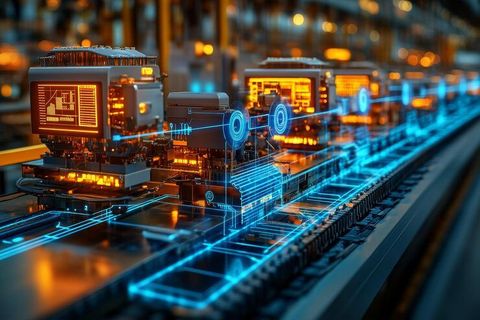
Industrial Cybersecurity and Data Protection in India: Laws, Trends and Security
Industrial cybersecurity refers to the technologies, policies, and practices used to protect industrial systems, computer networks, operational technology (OT), and sensitive information from cyber threats. It focuses on keeping essential industrial operations safe, reliable, and available.
Modern industries depend on connected technologies to manage production, monitor equipment, control machinery, and exchange information. These technologies include Industrial Control Systems (ICS), Supervisory Control and Data Acquisition (SCADA), Programmable Logic Controllers (PLCs), sensors, and industrial Internet of Things (IIoT) devices.
As industrial environments become more connected, they also become exposed to cybersecurity risks. An unauthorised person accessing an industrial network could potentially interrupt production, change equipment settings, or access confidential information.
What Is Data Protection?
Data protection involves safeguarding digital information against unauthorised access, misuse, alteration, loss, and disclosure. Industrial organisations handle different types of information, including:
Employee records and personal information.
Manufacturing processes and production data.
Business and financial records.
Customer and supplier information.
Equipment performance and operational records.
Research, engineering, and intellectual property.
Industrial cybersecurity and data protection work together. Cybersecurity protects the systems that store and process information, while data protection focuses on how information is collected, accessed, used, retained, and secured.
Why Did These Practices Become Necessary?
The growth of automation, cloud computing, remote monitoring, and smart manufacturing has increased connections between industrial equipment and business networks.
Previously, many industrial machines operated through isolated networks. Today, production systems often communicate with enterprise applications, external platforms, and remote monitoring systems.
This creates additional opportunities for efficiency but also introduces security challenges. Industrial cybersecurity has therefore become an important part of modern infrastructure management.
Why Industrial Cybersecurity and Data Protection Matter Today
Growing Cybersecurity Risks in Industrial Environments
Industrial organisations increasingly depend on digital infrastructure to maintain production and manage everyday activities. This dependence makes cybersecurity an important part of operational planning.
Cyberattacks can affect industrial environments in several ways. For example, ransomware can make important systems unavailable, phishing can expose employee credentials, and insecure remote connections can create opportunities for unauthorised access.
Some common industrial cybersecurity threats include:
Ransomware attacks: Malicious software that prevents access to systems or data until certain demands are met.
Phishing attacks: Fraudulent messages designed to obtain passwords or other confidential information.
Insider threats: Security incidents involving employees, contractors, or other authorised users.
Supply chain attacks: Attacks that exploit weaknesses in third-party software, hardware, or technology providers.
Industrial network attacks: Attempts to interfere with communication between machines, controllers, and monitoring systems.
Data breaches: Incidents involving unauthorised access to sensitive business or personal information.
Who Is Affected?
Industrial cybersecurity affects organisations of different sizes and across multiple industries.
Industry | Important security concerns |
|---|---|
Manufacturing | Production interruptions and machinery security |
Energy and electricity | Power system reliability and infrastructure protection |
Healthcare | Medical equipment and patient information |
Transportation | Control systems and operational continuity |
Oil and gas | Industrial equipment and pipeline monitoring |
Water management | Treatment facilities and distribution systems |
Telecommunications | Network availability and information security |
Small manufacturers and large industrial organisations can both experience cybersecurity incidents. Smaller organisations may have limited security resources, while larger organisations often manage more complicated networks and technology environments.
Problems Industrial Cybersecurity Helps Address
A structured cybersecurity approach helps organisations identify risks before they develop into serious incidents.
Its main objectives include:
Protecting industrial control systems against unauthorised access.
Maintaining production continuity during security incidents.
Preventing the loss or exposure of confidential information.
Improving visibility into network activity.
Supporting regulatory and industry compliance.
Reducing the impact of malware and ransomware.
Strengthening disaster recovery and business continuity planning.
An effective approach considers both digital security and physical safety because industrial equipment can directly influence real-world operations.
Recent Updates and Developments in Industrial Cybersecurity
Increasing Attention to Critical Infrastructure Protection
During 2025 and 2026, cybersecurity preparedness remained an important priority in India. Government initiatives increasingly focused on incident response, security assessments, infrastructure resilience, and public awareness.
On 23 January 2026, the Government of India reported that CERT-In had handled more than 29.44 lakh cyber incidents during 2025. It also reported issuing 1,530 alerts, 390 vulnerability notes, and 65 advisories.
These figures demonstrate the continuing importance of cybersecurity monitoring and incident management across India's digital environment.
Development of Cybersecurity Audit Practices
Security audits are becoming an important part of organisational risk management.
CERT-In's Comprehensive Cyber Security Audit Policy Guidelines, published in July 2025, established a more structured approach to cybersecurity audits. Government information published in December 2025 also highlighted the role of CERT-In and the National Critical Information Infrastructure Protection Centre (NCIIPC) in conducting security and vulnerability assessments.
The guidelines identify regular security audits as an important measure, including for critical infrastructure environments.
Greater Attention to Software and Hardware Security
Another important development is the increasing focus on software supply chain security.
Organisations are paying more attention to the components used in their digital systems, including software libraries, firmware, hardware devices, and connected applications.
A Software Bill of Materials (SBOM) helps identify software components and their dependencies. Similar approaches can improve visibility into hardware and other technology components.
These practices can help organisations understand which systems may be affected when a vulnerability is discovered.
Artificial Intelligence and Industrial Security
Artificial intelligence is becoming increasingly relevant to industrial cybersecurity.
Security teams can use AI-assisted systems to analyse network activity, identify unusual behaviour, and prioritise potential security incidents.
However, AI also introduces concerns such as inaccurate alerts, manipulated data, and misuse of automated systems. Human oversight remains important when evaluating security findings and making decisions that affect industrial operations.
Laws and Government Policies Affecting Industrial Cybersecurity in India
India has several laws, regulations, and government initiatives that influence cybersecurity and data protection. Organisations should understand which requirements apply to their industry and operations.
Information Technology Act, 2000
The Information Technology Act, 2000, provides an important legal foundation for cybersecurity and electronic information in India.
It addresses several areas, including:
Unauthorised access to computer systems.
Damage to computer resources.
Certain cyber-related offences.
Protection of sensitive information.
Government powers relating to cybersecurity and information security.
Section 70A provides for the protection of critical information infrastructure through the designated national authority.
CERT-In Directions
The Indian Computer Emergency Response Team (CERT-In) operates under the Ministry of Electronics and Information Technology.
Its cybersecurity directions issued in April 2022 establish requirements for covered organisations, including:
Reporting specified cybersecurity incidents within six hours of noticing them or being informed about them.
Maintaining ICT system logs securely for a rolling period of 180 days within Indian jurisdiction.
Designating a point of contact for CERT-In communications.
Maintaining relevant information for incident investigation.
These requirements are particularly important for organisations managing significant digital infrastructure.
Digital Personal Data Protection Act, 2023
The Digital Personal Data Protection (DPDP) Act, 2023, establishes a framework for processing digital personal data in India.
It covers important principles such as lawful data processing, transparency, consent, data minimisation, security safeguards, and individual rights.
The Digital Personal Data Protection Rules, 2025, were notified on 13 November 2025. Their implementation follows a phased schedule.
As of November 2026, the consent manager registration provisions have commenced, while several major obligations concerning data fiduciaries are scheduled to take effect on 13 May 2027.
Industrial organisations handling employee, customer, or other digital personal information should consider these requirements when developing their data governance practices.
National Critical Information Infrastructure Protection Centre
NCIIPC is responsible for protecting India's critical information infrastructure.
Its work covers important sectors such as energy, banking, telecommunications, transportation, and government infrastructure.
It promotes cybersecurity awareness, risk assessment, security coordination, and protective measures for critical systems.
Organisations operating within designated critical infrastructure environments should pay particular attention to applicable NCIIPC guidance and requirements.
Tools and Resources for Industrial Cybersecurity and Data Protection
Industrial organisations can use different cybersecurity tools and frameworks to monitor systems, manage vulnerabilities, protect sensitive information, and improve incident response.
Important Cybersecurity Tools
Tool or framework | Main purpose |
|---|---|
Wireshark | Network traffic analysis |
Microsoft Defender | Endpoint security and threat detection |
Wazuh | Security monitoring and log analysis |
Snort | Network intrusion detection |
Nessus | Vulnerability assessment |
MITRE ATT&CK | Understanding attacker techniques |
NIST Cybersecurity Framework | Cybersecurity risk management |
ISO/IEC 27001 | Information security management |
IEC 62443 | Industrial automation and control system security |
Helpful Government and Educational Resources
CERT-In: Government cybersecurity alerts, advisories, incident reporting information, and security guidance.
NCIIPC: Guidance concerning critical information infrastructure protection.
MeitY: Government information about digital technology, cybersecurity, and data protection policies.
NIST: Cybersecurity frameworks, technical publications, and risk management guidance.
CISA: Educational material about industrial control system security and infrastructure protection.
Basic Industrial Cybersecurity Checklist
Organisations can use the following checklist to review their security practices:
Frequently Asked Questions About Industrial Cybersecurity and Data Protection
1. What is the main purpose of industrial cybersecurity?
The main purpose is to protect industrial networks, machines, control systems, and operational information from cyber threats. It helps maintain production reliability, prevent unauthorised access, and support the safe operation of industrial environments.
2. What is the difference between IT security and OT security?
IT security focuses on protecting business information, computers, applications, and communication networks. OT security focuses on protecting physical equipment, industrial control systems, and automated processes. Both are important because modern industrial environments increasingly connect IT and OT networks.
3. Which Indian law governs digital personal data protection?
The Digital Personal Data Protection Act, 2023, together with the Digital Personal Data Protection Rules, 2025, provides India's primary framework for digital personal data protection. Its provisions are being implemented according to a phased commencement schedule.
4. Why is industrial cybersecurity important for manufacturing companies?
Manufacturing companies depend on connected machines, automated production systems, and digital monitoring technologies. Cybersecurity helps protect these systems against disruptions, data theft, unauthorised changes, and other incidents that could affect production and workplace safety.
5. How can organisations improve industrial cybersecurity?
Organisations can improve security through regular risk assessments, network segmentation, access management, employee awareness, vulnerability monitoring, secure backups, and incident response planning. They should also review applicable government regulations and recognised industrial security standards.
Conclusion
Industrial cybersecurity and data protection have become essential elements of modern industrial operations. As manufacturing, energy, transportation, healthcare, and other sectors adopt connected technologies, protecting digital systems and sensitive information becomes increasingly important.
India's cybersecurity framework, including the Information Technology Act, CERT-In directions, NCIIPC initiatives, and Digital Personal Data Protection Act, provides an important foundation for organisational security and accountability.
A practical cybersecurity strategy should combine technology, employee awareness, regular assessments, data governance, and effective incident response. By understanding emerging threats and following relevant security practices, industrial organisations can strengthen operational resilience and support a safer digital environment.
Ultimately, industrial cybersecurity is not only about protecting computers and networks. It is also about maintaining the reliability, safety, and trustworthiness of the systems that support everyday life.

Related Post...


Solar Energy in Industrial Applications: Benefits, Uses & Policies in India
Updated: November 26, 2026
Read More
Internet of Things (IoT) in Industries: Applications, Benefits & Future Trends
Updated: November 26, 2026
Read More