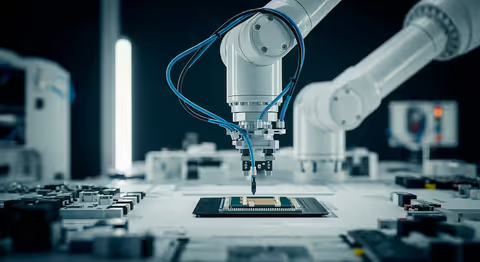
Internet of Things (IoT) in Industries: Applications, Benefits & Future Trends
The Internet of Things (IoT) is a technology that connects physical devices, machines, sensors and equipment to the internet or other communication networks. These connected devices collect, exchange and analyse data to support monitoring, automation and decision-making.
In industrial environments, IoT is commonly known as the Industrial Internet of Things (IIoT). It connects manufacturing equipment, production systems, industrial sensors and digital platforms to create more intelligent and connected industrial operations.
Traditionally, many industrial processes have depended on manual inspections and separate control systems. Workers often had to check equipment conditions, record production information and identify machinery problems through physical inspections.
IoT technology changes this approach by allowing machines and sensors to communicate automatically. Industrial managers can monitor equipment performance, production conditions and energy consumption through connected systems.
The main components of industrial IoT include:
- Sensors: Measure temperature, pressure, vibration, humidity and other operating conditions.
- Connectivity: Uses Wi-Fi, Ethernet, Bluetooth, cellular networks and industrial communication protocols to transfer information.
- IoT Gateways: Collect information from connected devices and transfer it to processing platforms.
- Cloud Computing: Stores and processes industrial data through remote computing infrastructure.
- Edge Computing: Processes information near the machines where it is generated.
- Data Analytics: Identifies patterns, performance changes and possible equipment problems.
- Automation Systems: Use collected information to support automatic control of industrial processes.
Industrial IoT is closely connected with Industry 4.0, which focuses on digitalisation, intelligent manufacturing and connected industrial systems.
Importance – Why Industrial IoT Matters Today
Industrial IoT is becoming increasingly important because manufacturing and industrial organisations need better operational visibility, equipment reliability and production efficiency.
Connected technology helps industries understand what is happening across their facilities and respond to changing operating conditions.
1. Predictive Maintenance
Predictive maintenance is one of the most important applications of industrial IoT.
Sensors installed on industrial equipment monitor vibration, temperature, pressure and other operating conditions. Analytical systems examine this information to identify unusual changes that may indicate developing equipment problems.
This approach helps maintenance teams investigate potential failures before they interrupt production.
2. Real-Time Equipment Monitoring
Industrial IoT allows operators to monitor machinery and production equipment through connected dashboards.
Important information may include:
- Machine operating temperature.
- Equipment vibration levels.
- Production speed.
- Electricity consumption.
- Operating hours.
- Equipment availability.
Real-time monitoring helps industrial managers understand equipment performance without depending entirely on manual inspections.
3. Improved Manufacturing Productivity
IoT-based manufacturing systems collect information from different production stages. This information helps identify delays, repeated production errors and inefficient processes.
Factories can use these insights to improve production planning and coordinate machinery more effectively.
4. Energy Management
Industrial facilities consume electricity for machinery, lighting, cooling and other operations.
IoT-enabled energy monitoring systems measure electricity consumption across equipment and production areas. This helps identify unusual consumption patterns and supports better energy management.
5. Quality Control
Connected sensors can monitor manufacturing conditions such as temperature, humidity, pressure and machine speed.
When operating conditions move outside defined limits, the system can generate alerts. This helps production teams investigate possible quality problems and maintain consistent manufacturing conditions.
6. Worker Safety
IoT technology can support industrial safety through environmental monitoring and connected wearable devices.
For example, sensors can detect hazardous gases, unusual temperatures and unsafe environmental conditions. Wearable devices can also monitor worker location in designated industrial areas.
These applications support safety monitoring but must operate alongside established industrial safety procedures.
7. Supply Chain Visibility
IoT-enabled tracking devices help organisations monitor the movement and condition of materials, components and finished products.
Temperature sensors are particularly useful in pharmaceutical, food processing and chemical industries, where environmental conditions can affect product quality.
Major Applications of Industrial IoT
Industrial IoT is used across different manufacturing and industrial sectors.
| Industrial sector | IoT application |
|---|---|
| Automobile | Vehicle assembly monitoring and robotic production |
| Textile | Machine performance and production monitoring |
| Pharmaceuticals | Temperature and humidity monitoring |
| Food processing | Storage conditions and production quality |
| Chemicals | Pressure and gas monitoring |
| Power generation | Equipment performance and energy monitoring |
| Logistics | Inventory tracking and shipment monitoring |
| Mining | Equipment monitoring and environmental safety |
These applications demonstrate how connected technology can support different industrial requirements.
Recent Updates – Industrial IoT Developments in India (2025–2026)
India's industrial technology sector has continued developing through digital manufacturing, artificial intelligence, connected devices and cybersecurity initiatives.
Several developments during the past year are relevant to industrial IoT.
1. Indigenous Industrial AIoT Development – 27 May 2026
On 27 May 2026, the Technology Development Board (TDB), under the Department of Science and Technology, announced support for an industrial Artificial Intelligence and Internet of Things (AIoT) initiative.
The project involves IDT Innovation Technologies Pvt. Ltd., Nagpur, and focuses on developing industrial AIoT devices.
Its objectives include improving resource efficiency, energy optimisation, predictive maintenance and operational productivity across manufacturing sectors.
This development reflects India's increasing focus on indigenous industrial digital technologies.
2. New IoT Gateway Standard – 23 January 2026
The Telecommunication Engineering Centre (TEC), under the Department of Telecommunications, published the Gazette notification for the Generic Requirements IoT Gateway standard, TEC 33010:2025, on 23 January 2026.
IoT gateways are important because they connect sensors, machines and industrial communication networks with data processing platforms.
Standardisation supports technical consistency and interoperability across connected infrastructure.
3. Digital Personal Data Protection Rules – November 2025
The Government of India notified the Digital Personal Data Protection Rules, 2025, on 14 November 2025.
These rules establish a framework for handling digital personal data and protecting individual privacy.
Industrial IoT systems that collect identifiable employee or visitor information may need to consider applicable data protection requirements.
4. Increased Focus on Industrial Cybersecurity – September 2025
On 1 September 2025, CERT-In published its 15 Elemental Cyber Defense Controls for Micro, Small, and Medium Enterprises (MSMEs).
The guidelines address cybersecurity practices that are relevant to organisations using connected digital infrastructure.
Industrial IoT environments require particular attention because cyber incidents can affect not only information systems but also physical production processes.
5. Integration of AI and Industrial IoT
During 2025 and 2026, industrial technology development increasingly focused on combining artificial intelligence with connected sensors and equipment.
AIoT systems can analyse machine data, identify unusual operating patterns and support automated decision-making.
This integration is becoming relevant to smart factories, industrial automation and predictive maintenance.
Together, these developments indicate a growing emphasis on connected manufacturing, technical standardisation, data protection and industrial cybersecurity.
Laws or Policies – Industrial IoT Regulations in India
Industrial IoT is influenced by Indian regulations covering data protection, telecommunications, cybersecurity, electronic equipment and industrial safety.
The following frameworks are particularly relevant.
1. Information Technology Act, 2000
The Information Technology Act, 2000 provides a legal framework for electronic records, digital activities and certain cyber-related offences in India.
Industrial organisations using connected devices and digital information systems should consider applicable provisions relating to unauthorised access, data protection and cybersecurity.
2. Digital Personal Data Protection Act, 2023
The Digital Personal Data Protection Act, 2023 establishes requirements for processing digital personal data.
Industrial IoT systems may collect employee information through wearable devices, access monitoring systems and connected workplace equipment.
Where personal data is involved, organisations must consider applicable privacy and data protection obligations.
3. Digital Personal Data Protection Rules, 2025
Notified on 14 November 2025, these rules provide detailed provisions for implementing the data protection framework.
Their commencement is phased, so industrial organisations should consider the relevant implementation dates and applicable requirements.
4. CERT-In Cybersecurity Directions
CERT-In issued cybersecurity directions on 28 April 2022 under the Information Technology Act.
These directions include requirements concerning specified cybersecurity incident reporting, time synchronisation and maintenance of certain ICT system logs.
Organisations operating connected industrial infrastructure should assess their applicability and establish appropriate cybersecurity procedures.
5. Telecommunications Standards
The Department of Telecommunications and TEC develop technical standards relevant to telecommunications equipment and connected infrastructure.
The IoT Gateway standard TEC 33010:2025 is an example of standardisation relevant to IoT connectivity.
6. Occupational Safety and Health Regulations
The Occupational Safety, Health and Working Conditions Code, 2020 provides a framework for workplace health and safety.
Industrial IoT monitoring can support workplace safety, but connected monitoring equipment does not replace statutory safety requirements or established safety procedures.
Tools and Resources – Helpful Industrial IoT Technologies
Several software platforms, technical frameworks and monitoring tools help organisations understand and manage industrial IoT systems.
1. Node-RED
A visual programming environment used to connect devices, sensors, APIs and industrial data systems. It is useful for developing IoT workflows and monitoring applications.
2. ThingsBoard
An IoT platform used for device management, data visualisation, dashboards and monitoring connected equipment.
3. Microsoft Azure IoT
A cloud-based technology ecosystem for connecting, managing and analysing data from IoT devices.
4. AWS IoT
A collection of cloud technologies designed for connected device management, communication and industrial data processing.
5. Grafana
A data visualisation platform used to create dashboards and monitor information from industrial systems.
6. MQTT Protocol
MQTT is a lightweight messaging protocol commonly used for communication between connected devices and IoT platforms.
7. Industrial IoT Monitoring Templates
Useful planning documents include:
- IoT device inventory sheets.
- Industrial sensor monitoring templates.
- Predictive maintenance checklists.
- Equipment performance reports.
- Industrial cybersecurity assessment templates.
- Energy consumption monitoring sheets.
- Production data analysis reports.
These resources support the planning, implementation and monitoring of industrial IoT environments.
FAQs – Internet of Things (IoT) in Industries
1. What is the Industrial Internet of Things (IIoT)?
The Industrial Internet of Things is the application of connected devices, sensors and communication technologies in industrial environments. It enables machines and equipment to exchange information for monitoring, automation and operational analysis.
2. How does IoT improve industrial manufacturing?
IoT improves manufacturing visibility by collecting real-time information from machinery and production systems. It supports predictive maintenance, quality monitoring, energy management and production planning.
3. What are the main components of industrial IoT?
The main components include sensors, connected devices, IoT gateways, communication networks, cloud or edge computing platforms, data analytics software and industrial automation systems.
4. Is industrial IoT secure?
Industrial IoT can be secure when organisations implement appropriate cybersecurity measures. These include device authentication, network segmentation, data encryption, regular security updates, access controls and continuous monitoring. However, connected devices can introduce security risks if they are not properly maintained.
5. What is the difference between IoT and IIoT?
IoT refers to connected devices used in everyday environments as well as commercial applications. IIoT specifically focuses on industrial environments such as factories, manufacturing plants, power facilities and processing units. IIoT generally has stricter requirements for reliability, safety and operational continuity.
Conclusion
The Internet of Things is transforming industrial operations by connecting machinery, sensors, equipment and digital platforms. Through Industrial IoT, organisations can monitor production processes, improve equipment maintenance, manage energy consumption and support workplace safety.
Technologies such as cloud computing, edge computing, artificial intelligence and industrial automation are expanding the capabilities of connected manufacturing systems.
In India, developments in indigenous AIoT technology, IoT gateway standardisation and data protection regulations demonstrate the growing importance of industrial digitalisation.
However, successful IoT implementation requires proper infrastructure, reliable connectivity, trained personnel, data management and strong cybersecurity practices.
As industrial technology continues to evolve, the Internet of Things is expected to remain an important part of smart manufacturing and Industry 4.0, helping industries develop more connected, efficient and data-driven operations.

Related Post...
Digital Twins in Manufacturing: Applications, Benefits & Future Trends
Updated: November 26, 2026
Read More
Generative AI in Manufacturing: Applications, Benefits & Future Trends
Updated: November 26, 2026
Read More
Solar Energy in Industrial Applications: Benefits, Uses & Policies in India
Updated: November 26, 2026
Read More