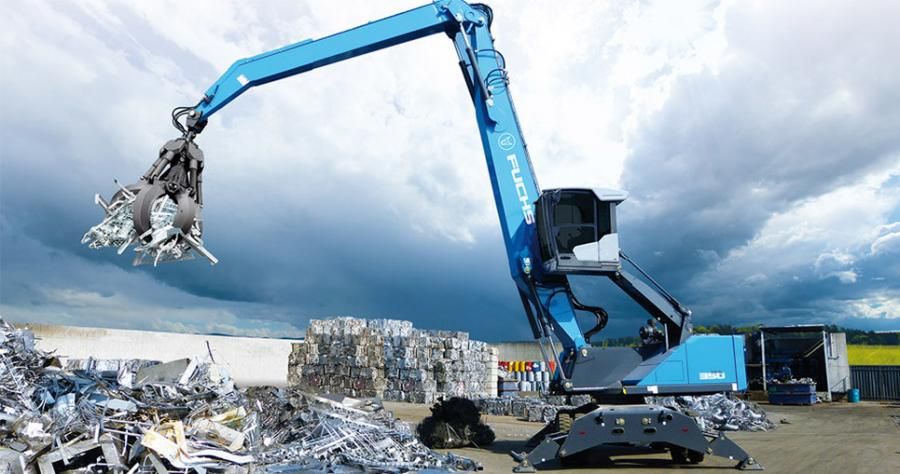
They are commonly used in heavy industries including steel plants, ports, recycling facilities, power plants, and large manufacturing yards. Their design typically includes longer reach arms, reinforced structures, and attachments such as grapples, magnets, or clamshell buckets.
Material handling excavators exist because manual handling or basic machinery is often too slow, unsafe, or inefficient for modern industrial operations. As production volumes increased and safety standards improved, industries required machines that could handle repetitive, heavy-duty material movement with greater precision and consistency.
Today, these excavators play a central role in industrial logistics by supporting continuous operations and reducing dependency on manual labor.
Importance
Material handling excavators are important because they directly influence productivity, safety, and operational efficiency in heavy industries.
Why this topic matters today
-
Industrial operations handle large material volumes daily
-
Downtime in material movement affects production schedules
-
Worker safety standards are becoming stricter
-
Industries aim to reduce operational delays and waste
Efficient material flow is essential for maintaining output levels and meeting delivery timelines. Material handling excavators help achieve this by enabling faster and more controlled movement of materials.
Who it affects
Material handling excavators are relevant for:
-
Steel and metal processing plants
-
Recycling and waste management facilities
-
Ports and logistics terminals
-
Power generation plants
-
Mining and bulk material handling sites
They also impact operators, maintenance teams, safety officers, and production managers.
Productivity challenges these machines help address
| Industrial Challenge | How Excavators Help |
|---|---|
| Slow material transfer | Faster lifting and loading |
| Manual labor risks | Reduced physical handling |
| Equipment congestion | Optimized material flow |
| Inconsistent output | Continuous operation support |
| Workplace accidents | Improved control and visibility |
By addressing these challenges, material handling excavators support stable and predictable industrial operations.
Recent Updates
Material handling equipment has evolved over the past year due to technological advancements and industrial modernization efforts.
Key developments in the past year
-
2024–2025: Increased adoption of electric and hybrid models
Some industrial facilities have started using electric or hybrid excavators to reduce emissions and operating noise. -
2025: Improved operator assistance systems
New models include enhanced cameras, sensors, and load monitoring systems to improve precision and safety. -
Late 2024: Focus on recycling and circular economy operations
Growth in recycling infrastructure has increased demand for specialized material handling machines. -
Ongoing: Integration with digital monitoring tools
Excavators are increasingly connected to fleet management systems for performance tracking.
Technology trend overview
| Area | Recent Trend |
|---|---|
| Power systems | Electric and hybrid options |
| Safety features | Better visibility and alerts |
| Data usage | Remote monitoring |
| Application focus | Recycling and ports |
These updates show how material handling excavators are adapting to modern industrial needs.
Laws or Policies
Material handling excavators are subject to industrial safety, labor, and environmental regulations. In India, several legal frameworks influence their use.
Relevant laws and regulations in India
-
Factories Act, 1948
Regulates worker safety, machinery operation, and workplace conditions in industrial settings. -
Occupational Safety, Health and Working Conditions Code
Covers equipment safety standards and operator protection. -
Motor Vehicles Act (for site transport use)
Applies when excavators are moved or used in designated transport areas. -
Environmental protection guidelines
Encourage emission control and responsible fuel use in industrial machinery.
Regulatory impact overview
| Regulation Area | Impact |
|---|---|
| Worker safety | Mandatory safety practices |
| Equipment operation | Operator training requirements |
| Emissions | Cleaner technology adoption |
| Industrial compliance | Regular inspections |
Compliance with these rules helps industries operate responsibly and reduce accident risks.
Tools and Resources
Several tools and resources support the effective use and management of material handling excavators in heavy industries.
Helpful tools and services
-
Fleet management software
Tracks machine usage, fuel consumption, and maintenance schedules -
Operator training programs
Improve safe and efficient machine handling -
Maintenance planning tools
Support preventive servicing and downtime reduction -
Load calculation guides
Help ensure safe lifting and material handling -
Government safety portals
Provide guidelines on industrial equipment use
Common attachments used in material handling
| Attachment | Purpose |
|---|---|
| Hydraulic grapple | Sorting and lifting bulk materials |
| Magnet | Handling scrap metal |
| Clamshell bucket | Bulk loading |
| Log grab | Timber handling |
| Orange peel grab | Waste and recycling |
These tools allow excavators to adapt to different industrial tasks without major equipment changes.
FAQs
What is a material handling excavator used for?
It is used to lift, move, sort, and load bulk materials in industrial environments such as ports, steel plants, and recycling facilities.
How is it different from a standard excavator?
Material handling excavators are designed for reach, stability, and repetitive lifting rather than digging or earthmoving.
Do these machines improve workplace safety?
They can reduce manual handling and improve control, which supports safer working conditions when operated properly.
Are material handling excavators suitable for continuous operations?
Yes. They are designed for high-duty cycles and are commonly used in round-the-clock industrial operations.
Do operators need special training?
Yes. Operators typically require training to handle specialized controls, attachments, and safety systems.
Final Thoughts
Material handling excavators play a critical role in improving productivity across heavy industries by enabling faster, safer, and more consistent movement of materials. Their specialized design supports high-volume operations while reducing reliance on manual labor and minimizing operational delays.
As industries continue to modernize and prioritize safety, efficiency, and environmental responsibility, these machines are becoming an essential part of industrial infrastructure. Understanding how material handling excavators work, where they are used, and the regulations that govern them helps organizations make informed decisions about their operational strategies.
When integrated with proper training, maintenance, and compliance practices, material handling excavators support smoother workflows and long-term industrial efficiency.