Explore Label Printing Machines: Types, Features, and Industrial Applications
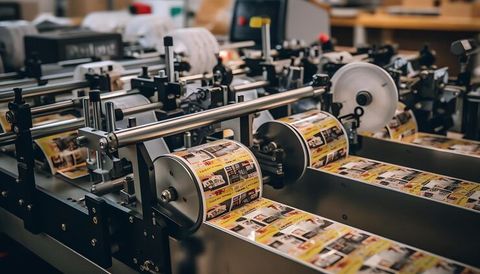
Label printing machines are specialized devices designed to produce printed labels for products, packages, containers, equipment, and logistics operations. These machines transfer text, graphics, symbols, barcodes, and product information onto different materials, including paper, plastic films, synthetic substrates, and adhesive-backed sheets.
Labels play an important role in identifying products and communicating essential information throughout manufacturing, distribution, retail, and transportation. They help organizations maintain product identification, provide instructions, display ingredient details, and support inventory management.
Modern industrial label printing machines combine printing technology, digital controls, material handling systems, and finishing equipment. Depending on their configuration, they can produce small batches of customized labels or large quantities for continuous production environments.
How Do Label Printing Machines Work?
The operating process generally begins with a digital design or printing template. The design contains information such as product names, identification numbers, logos, instructions, barcodes, and other required details.
The machine transfers this information onto a selected label material using a specific printing method. Some systems use heat, while others use ink, toner, or pressure-based printing processes.
A typical production process includes:
Preparing the label design using specialized software.
Selecting the appropriate printing material.
Configuring the printing resolution and dimensions.
Transferring the design onto the label substrate.
Cutting, winding, or separating completed labels.
Inspecting the finished output for readability and accuracy.
The final labels can then be applied manually or through automated labeling equipment.
Importance of Label Printing Machines in Modern Industries
Supporting Product Identification
Product identification is essential across industries that manufacture, package, transport, and distribute physical goods. Label printing machines help create consistent identification information for individual products and packaging units.
Manufacturers use product identification labels to display details such as:
Product names and descriptions.
Manufacturing and expiration dates.
Batch and serial numbers.
Barcode and QR code information.
Storage and handling instructions.
Manufacturer and packaging details.
Accurate labels help businesses and consumers distinguish between different products and product variations.
Improving Manufacturing and Packaging Operations
Industrial label printing machines support organized manufacturing processes by producing labels that correspond with production schedules and packaging requirements.
Automated printing systems can connect with manufacturing software, barcode databases, and warehouse management platforms. This integration reduces repetitive manual activities and helps maintain consistency across production batches.
For example, a food processing facility may use variable data printing to generate different batch numbers and expiration dates for products moving through the packaging line.
Supporting Logistics and Inventory Management
Shipping labels, warehouse identification labels, and asset tracking labels help organizations monitor products as they move between manufacturing facilities, distribution centers, and retail locations.
Barcode printing technology supports faster scanning and identification. RFID-enabled label systems can also support automated inventory monitoring when compatible tags, readers, and software are used.
Industries That Use Label Printing Equipment
| Industry | Common Label Applications |
|---|---|
| Food and beverages | Ingredients, expiration dates, product details |
| Pharmaceuticals | Medicine identification and safety information |
| Automotive | Component identification and tracking |
| Electronics | Serial numbers and technical specifications |
| Retail | Product identification and pricing information |
| Logistics | Shipping and warehouse labels |
| Chemicals | Hazard warnings and handling instructions |
| Cosmetics | Ingredients and packaging information |
Major Types of Label Printing Machines
Different printing technologies support different production requirements.
Digital Label Printing Machines
Digital label printers transfer designs directly from digital files onto label materials. They are commonly used for customized graphics, variable information, and shorter production runs.
They can support multiple designs without requiring traditional printing plates.
Thermal Transfer Label Printers
Thermal transfer printers use heat to transfer ink from a ribbon onto a label substrate. They are frequently used for barcode labels, industrial identification, asset tracking, and product information.
These printers can work with suitable paper and synthetic materials.
Direct Thermal Label Printers
Direct thermal printers create images through heat-sensitive label materials. They do not require an ink ribbon, making them useful for shipping labels, receipts, and temporary identification applications.
However, printed images may become less readable when exposed to heat, sunlight, or certain environmental conditions.
Flexographic Label Printing Machines
Flexographic printing uses flexible printing plates and fast-moving printing systems. It is widely used in large-scale packaging and label production.
These machines can accommodate different materials, including paper, films, and certain flexible packaging substrates.
Industrial Inkjet Label Printers
Industrial inkjet printers use small droplets of ink to produce text, graphics, and variable information. They are frequently integrated into packaging lines for product identification and production coding.
Laser Label Printing Machines
Laser printers use toner and controlled heat to create printed images. They are commonly used for office labels, document identification, and selected commercial printing applications.
Recent Developments and Trends in Label Printing Technology
Increasing Adoption of Digital Label Printing
Digital printing continues to influence the packaging and label printing industry. Manufacturers are increasingly considering digital and hybrid printing systems for customized designs, shorter production runs, and variable product information.
A Fall 2025 industry report from PRINTING United Alliance identified customized short-run digital printing and environmental regulations as major anticipated industry disruptors. Its survey also highlighted growing interest in smart labels and automation.
The report projected that the digital share of package and label printing could increase from an average of 39.3% at the time of the survey to 53.5% within five years.
Growth of Smart Labels and 2D Barcodes
Smart labels are becoming increasingly relevant to product traceability and supply chain visibility.
Technologies include:
QR codes.
RFID labels.
NFC-enabled labels.
GS1 DataMatrix codes.
Digital product identification systems.
The GS1 Sunrise 2027 initiative is encouraging retailers and manufacturers to prepare for wider acceptance of two-dimensional barcodes at retail checkout. These codes can support additional product information and improved traceability.
Label printing equipment must therefore support suitable barcode dimensions, print quality, and data accuracy.
Automation and Connected Printing Systems
Automation is another important development in industrial label manufacturing. Modern equipment can integrate with production software, barcode verification systems, and automated packaging lines.
Some systems include:
Automatic label dispensing.
Digital job management.
Production monitoring.
Print inspection technology.
Variable data integration.
Remote equipment monitoring.
These developments help organizations manage complex labeling requirements while reducing manual handling.
Sustainability and Material Innovation
Environmental considerations are influencing label design and printing materials. Manufacturers are exploring recyclable label substrates, thinner materials, alternative adhesives, and printing processes that support packaging recovery.
The compatibility of labels, adhesives, inks, and packaging materials is important when evaluating the recyclability of finished products.
Laws, Regulations, and Industry Policies
Label printing machines are not generally regulated through one universal international law. Instead, the requirements depend on the destination market, product category, packaging material, and information displayed on the label.
European Union Packaging Regulations
The European Union's Packaging and Packaging Waste Regulation (EU) 2025/40 entered into force on February 11, 2025, and began applying on August 12, 2026.
The regulation introduces requirements concerning packaging sustainability, waste prevention, recyclability, and labeling. It also establishes a framework for harmonized packaging-related information.
Manufacturers and packaging organizations operating in European markets should assess how label materials, printing inks, adhesives, and packaging designs relate to applicable requirements.
United States Product Labeling Requirements
In the United States, different federal agencies oversee labeling requirements for specific product categories.
For example:
The Food and Drug Administration (FDA) regulates labeling for many food, pharmaceutical, medical device, and cosmetic products.
The Federal Trade Commission (FTC) oversees certain advertising and product representation matters.
Other regulatory authorities establish requirements for chemicals, transportation, and industrial products.
Label printing systems used in regulated industries should produce clear, accurate, and readable information.
India Legal Metrology Requirements
In India, the Legal Metrology Act, 2009, and the Legal Metrology (Packaged Commodities) Rules, 2011, establish declaration requirements for applicable prepackaged commodities.
Depending on the product and applicable exemptions, package declarations may include:
Manufacturer, packer, or importer details.
Common or generic product name.
Net quantity.
Relevant manufacturing or packaging information.
Consumer-related declarations.
Maximum retail price where applicable.
Manufacturers using automatic labeling machines should ensure that printed declarations follow the applicable requirements and amendments.
Barcode and International Identification Standards
GS1 standards provide internationally recognized frameworks for product identification and barcode use.
Relevant technologies include Global Trade Item Numbers (GTINs), EAN/UPC barcodes, GS1 DataMatrix, and GS1 Digital Link.
Organizations should verify barcode quality and confirm that their printing and scanning systems support the required standards for their markets.
Tools and Resources for Label Printing Operations
Label Design Software
Label design software helps users create layouts containing text, images, product details, and machine-readable codes.
Commonly used platforms include:
BarTender: Label design and data-driven printing.
NiceLabel: Label management and enterprise printing workflows.
ZebraDesigner: Label creation for compatible Zebra printers.
Adobe Illustrator: Graphic design and detailed label artwork.
Microsoft Excel: Organizing variable product and inventory information.
Barcode and QR Code Tools
Barcode generation and verification tools help organizations create and inspect machine-readable labels.
Useful capabilities include:
EAN and UPC barcode generation.
QR code creation.
DataMatrix code generation.
Barcode readability testing.
Print quality verification.
Equipment Evaluation Tools
Organizations can evaluate printing equipment through technical specifications and production assessments.
Important factors include:
| Evaluation Factor | What to Examine |
|---|---|
| Printing resolution | Clarity of text and barcode details |
| Printing speed | Output per minute or hour |
| Material compatibility | Supported label substrates |
| Printing width | Maximum label dimensions |
| Connectivity | USB, Ethernet, wireless, or network support |
| Software integration | Compatibility with existing systems |
| Maintenance | Cleaning and component replacement requirements |
Helpful Industry Resources
Industry organizations and regulatory platforms provide information about printing standards, packaging policies, and product identification.
Examples include GS1, PRINTING United Alliance, the European Commission, the FDA, and India's Department of Consumer Affairs.
These resources can help manufacturers understand technology developments and relevant regulatory requirements.
Frequently Asked Questions
What Are Label Printing Machines Used For?
Label printing machines produce identification, barcode, packaging, shipping, ingredient, and product information labels. They are used across manufacturing, retail, pharmaceuticals, food processing, electronics, and logistics.
Which Type of Label Printer Is Suitable for Industrial Applications?
The appropriate machine depends on production volume, material compatibility, printing durability, and information requirements. Thermal transfer, industrial inkjet, flexographic, and digital label printing machines are commonly used in industrial environments.
What Is the Difference Between Direct Thermal and Thermal Transfer Printing?
Direct thermal printing uses heat-sensitive materials to create images without an ink ribbon. Thermal transfer printing uses a heated printhead and ribbon to transfer ink onto a label. Thermal transfer is generally suitable for applications requiring greater resistance to environmental exposure.
Can Label Printing Machines Print QR Codes and Barcodes?
Yes. Many modern label printing machines support QR codes, EAN/UPC barcodes, DataMatrix codes, and other identification formats. The final print must maintain sufficient clarity and contrast for reliable scanning.
What Factors Should Be Considered When Selecting a Label Printing Machine?
Important considerations include printing technology, production volume, resolution, label dimensions, material compatibility, software integration, maintenance requirements, and applicable industry regulations.
Conclusion
Label printing machines play an important role in modern manufacturing, packaging, retail, and logistics operations. They help organizations produce accurate product information, maintain identification systems, and support efficient inventory management.
Developments in digital printing, industrial automation, smart labels, and two-dimensional barcodes are expanding the capabilities of modern labeling technology. At the same time, packaging sustainability initiatives and product labeling regulations are influencing equipment requirements and material selection.
Understanding the different types of label printing machines, their applications, and relevant industry standards can help organizations make informed decisions about printing technology and develop reliable labeling processes.

Related Post...
Varnishing Units: A Complete Guide to Their Types and Industrial Applications
Updated: November 24, 2026
Read More
Explore Modern Paper Recycling Plants and Their Role in Sustainable Manufacturing
Updated: November 25, 2026
Read More
Beginner’s Guide to Battery Assembly Machines and Their Role in Manufacturing
Updated: November 04, 2026
Read More