Varnishing Units: A Complete Guide to Their Types and Industrial Applications
Varnishing units are industrial systems designed to apply protective or decorative varnish coatings to different materials, including paper, cardboard, wood, metal, and plastic. These systems are widely used in printing, packaging, furniture manufacturing, automotive production, and other industrial environments.
Varnish is a liquid coating that forms a protective layer after drying or curing. Depending on its formulation, it can create a glossy, matte, satin, or textured finish. It can also improve resistance to moisture, abrasion, handling, and certain environmental conditions.
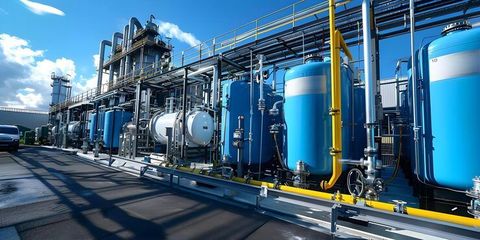
A typical varnishing unit contains several interconnected components that control coating application, material movement, and drying. The exact configuration depends on the material being processed and the required surface finish.
How Do Varnishing Units Work?
Most varnishing units follow a sequence of preparation, coating, and curing. The material moves through the equipment while a controlled quantity of varnish is distributed across its surface.
The general operating process includes:
Surface preparation: The material is cleaned and prepared to support coating adhesion.
Varnish application: Rollers, spray systems, or other application mechanisms distribute the coating.
Coating control: Equipment regulates coating thickness and distribution.
Drying or curing: Heat, ultraviolet light, or air circulation helps the coating become stable.
Inspection: The finished surface is checked for consistency, appearance, and coating defects.
Automation helps maintain consistent application and reduces variations between production batches.
Main Types of Varnishing Units
Different varnishing technologies are designed for particular production requirements.
Type | Main Application | Key Characteristic |
|---|---|---|
Roller varnishing units | Paper and cardboard | Controlled coating distribution |
Spray varnishing units | Furniture and metal | Flexible surface coverage |
UV varnishing units | Printing and packaging | Rapid ultraviolet curing |
Water-based varnishing units | Paper and packaging | Water-based coating formulations |
Industrial wood varnishing units | Furniture and wood products | Protective surface finishing |
In-line varnishing units | Printing production | Integrated coating operations |
Each system has different operating requirements, and selecting an appropriate configuration depends on the substrate, coating formulation, production volume, and desired finish.
Importance of Varnishing Units in Modern Industries
Why Are Varnishing Units Important?
Varnishing units play an important role in modern manufacturing because product appearance and surface protection influence quality, durability, and usability. Different industries use these systems to protect materials from everyday wear and improve their finished appearance.
In printing and packaging, varnishing helps protect printed surfaces from scratches, fingerprints, and handling damage. In furniture production, it enhances the appearance of wooden surfaces while providing a protective layer against moisture and abrasion.
Key benefits include:
Surface protection: Helps reduce damage caused by friction, moisture, and regular handling.
Improved appearance: Produces different finishes, including gloss, matte, and satin.
Production consistency: Supports uniform coating application across multiple products.
Material durability: Helps extend the useful life of coated surfaces.
Manufacturing efficiency: Automated systems can integrate coating into continuous production processes.
Quality improvement: Controlled application helps reduce uneven coating and visible surface defects.
Industries That Use Varnishing Equipment
Varnishing equipment supports several manufacturing activities.
Industry | Application | Purpose |
|---|---|---|
Printing | Books, magazines, labels | Surface protection and appearance |
Packaging | Cartons and product boxes | Improved handling resistance |
Furniture | Wooden tables and cabinets | Surface protection and finishing |
Automotive | Selected vehicle components | Protective and decorative coatings |
Electronics | Electrical components | Insulation and surface protection |
Metal manufacturing | Metal components | Corrosion protection |
Paper manufacturing | Printed paper products | Improved surface characteristics |
Factors Affecting Varnishing Performance
The final coating quality depends on several operating conditions. Understanding these factors helps manufacturers maintain consistent production standards.
Important considerations include:
Viscosity: Determines how easily varnish flows through application equipment.
Coating thickness: Influences appearance, protection, and curing requirements.
Temperature: Affects coating flow, drying, and curing.
Humidity: Can influence drying conditions, particularly for water-based formulations.
Application speed: Must match the coating system's operating capabilities.
Surface condition: Dust, oil, and other contaminants can affect adhesion.
Curing method: The selected method influences production speed and final coating properties.
High-Value Technical Areas in the Varnishing Equipment Industry
Industrial research frequently focuses on specialized equipment and processes rather than varnish application alone.
Relevant technical subjects include:
Industrial coating equipment
Automated varnishing machines
UV coating systems
Industrial surface finishing technology
Protective coating equipment
Wood finishing machinery
Industrial coating application systems
High-performance coating technologies
Automated spray coating equipment
Industrial curing systems
These subjects are relevant to manufacturing engineering, production planning, equipment selection, and industrial process development.
Recent Developments and Industry Trends
Developments During 2025–2026
The industrial coatings sector has continued to focus on improved production efficiency, lower environmental emissions, and advanced coating performance. These developments influence how manufacturers select varnishing units and configure their production facilities.
A 2025–2026 industry outlook highlights the growing importance of water-based coatings, high-solids formulations, UV-curable coatings, automation, and improved material efficiency.
Some notable developments include:
1. Growth of Water-Based Coating Technology
Water-based varnishes are receiving greater attention because they can reduce dependence on conventional solvent-based formulations. Their performance depends on substrate compatibility, drying conditions, and formulation characteristics.
2. Advancements in UV Curing Systems
UV curing technology uses ultraviolet radiation to initiate rapid coating hardening. It is particularly relevant to printing, packaging, and selected industrial finishing processes.
Modern UV systems are also being evaluated alongside LED-based curing technologies, which can provide different energy and operating characteristics.
3. Increased Industrial Automation
Manufacturers are integrating automated coating equipment, robotic application systems, and digital monitoring technologies. These developments help regulate coating thickness, application speed, and production consistency.
4. Development of High-Solids Coatings
High-solids formulations contain a greater proportion of coating material relative to volatile components. They can help reduce VOC emissions and support efficient coating application.
5. Greater Attention to Sustainable Materials
Coating manufacturers are exploring formulations with reduced hazardous ingredients, improved resource efficiency, and alternative raw materials. Research also focuses on reducing waste and improving the environmental performance of industrial finishing.
A November 20, 2025 industry discussion highlighted the growing importance of waterborne and high-solids protective coatings in response to environmental and regulatory pressures.
Comparison of Emerging Varnishing Technologies
Technology | Main Advantage | Important Consideration |
|---|---|---|
Water-based varnishing | Reduced solvent dependence | Drying conditions |
UV curing | Rapid curing | UV equipment compatibility |
LED UV curing | Targeted curing technology | Formulation compatibility |
High-solids coatings | Lower volatile content | Viscosity management |
Robotic application | Repeatable coating patterns | Programming and maintenance |
Digital monitoring | Better process visibility | Sensor calibration |
Laws, Environmental Regulations, and Industrial Policies
Environmental Regulations Affecting Varnishing Units
Varnishing operations can release volatile organic compounds (VOCs), particularly when solvent-based coatings are used. VOC emissions contribute to air pollution and can participate in atmospheric reactions that produce ground-level ozone.
Consequently, industrial facilities may need to follow environmental requirements covering coating formulations, emissions, ventilation, workplace exposure, waste management, and equipment operation.
Regulations differ between countries and sometimes between individual states or regions.
United States Environmental Requirements
In the United States, the Environmental Protection Agency (EPA) regulates various coating categories under the Clean Air Act and related environmental standards.
The National VOC Emission Standards for Architectural Coatings, under 40 CFR Part 59, Subpart D, include requirements for varnishes and conversion varnishes. The applicable limits depend on the coating category and regulatory definitions.
Industrial facilities may also be subject to additional requirements for stationary coating operations, depending on their processes and emissions.
European Environmental Requirements
European manufacturers and industrial operators must consider applicable VOC emission requirements, chemical safety rules, and industrial environmental regulations.
Relevant regulatory frameworks include:
Industrial Emissions Directive requirements for covered installations.
REACH regulations concerning chemical registration, evaluation, and restrictions.
VOC-related requirements governing certain coating activities.
Workplace health and safety requirements for chemical handling.
The applicable requirements depend on the installation, coating formulation, and type of industrial activity.
Environmental Regulations in India
In India, industrial varnishing activities may fall under environmental requirements administered by the Central Pollution Control Board (CPCB) and respective State Pollution Control Boards (SPCBs).
Important regulatory frameworks include:
Air (Prevention and Control of Pollution) Act, 1981.
Environment (Protection) Act, 1986.
Applicable air-emission standards and consent requirements.
Hazardous and Other Wastes (Management and Transboundary Movement) Rules, 2016, where relevant.
Depending on the facility and its operations, manufacturers may need appropriate environmental permissions, emission-control arrangements, and waste-handling procedures.
Workplace Safety and Equipment Compliance
Industrial varnishing facilities should also consider worker protection and operational safety.
Important practices include:
Maintaining suitable ventilation and exhaust systems.
Providing appropriate personal protective equipment.
Following chemical storage and handling instructions.
Managing fire and ignition risks associated with flammable formulations.
Maintaining curing equipment and electrical systems.
Training operators in equipment operation and emergency procedures.
Compliance should always be assessed against the applicable national and regional requirements.
Tools and Resources for Varnishing Units
Equipment Selection and Technical Resources
Selecting appropriate varnishing equipment requires an understanding of production requirements, coating properties, material compatibility, and environmental conditions.
The following resources can help engineers, manufacturers, and production managers understand industrial coating processes.
Tool or Resource | Main Purpose |
|---|---|
Coating thickness gauge | Measures applied coating thickness |
Viscosity measurement equipment | Checks varnish flow characteristics |
Gloss meter | Measures surface gloss levels |
UV radiometer | Measures ultraviolet curing intensity |
Temperature monitoring systems | Monitors drying and curing conditions |
Humidity meters | Measures environmental humidity |
Adhesion testing equipment | Evaluates coating adhesion |
Digital production monitoring | Tracks equipment performance |
Useful Software and Technical Resources
1. CAD and Equipment Design Software
Computer-aided design applications help engineers develop equipment layouts, mechanical components, and industrial production configurations.
2. Industrial Process Monitoring Software
Manufacturing execution systems (MES) and supervisory control and data acquisition (SCADA) platforms help monitor production operations, equipment conditions, and process performance.
3. Coating Formulation Databases
Technical formulation databases provide information about coating ingredients, material compatibility, application characteristics, and curing requirements.
4. Environmental Compliance Resources
Government environmental agencies publish information about emissions, chemical handling, industrial permissions, and waste management.
5. Quality Control Templates
Manufacturers can maintain standardized inspection records covering:
Coating thickness measurements.
Surface appearance assessments.
Adhesion test results.
Curing temperature records.
Equipment maintenance schedules.
Production quality observations.
These resources support better documentation and help identify production inconsistencies.
Frequently Asked Questions
1. What Is the Main Purpose of a Varnishing Unit?
A varnishing unit applies a protective or decorative coating to a material's surface. It helps improve appearance, surface durability, and resistance to environmental or handling-related damage. These systems are commonly used in printing, packaging, furniture, and manufacturing industries.
2. What Is the Difference Between UV and Water-Based Varnishing?
UV varnishing uses ultraviolet radiation to cure specially formulated coatings, often within a short processing period. Water-based varnishing uses water as the primary carrier and generally relies on controlled evaporation and drying. Both technologies have different equipment, formulation, and operating requirements.
3. Which Industries Commonly Use Industrial Varnishing Machines?
Printing, packaging, furniture, automotive, electronics, paper processing, and metal manufacturing are among the industries that use varnishing equipment. The specific application depends on the material, required protection, and desired surface appearance.
4. How Is Coating Quality Measured in Varnishing Units?
Coating quality can be evaluated through several measurements and inspection procedures, including:
Coating thickness measurement.
Gloss and surface appearance testing.
Adhesion testing.
Drying and curing assessments.
Scratch and abrasion resistance testing.
The appropriate testing method depends on the coating formulation and the intended application.
5. How Can Manufacturers Improve the Environmental Performance of Varnishing Operations?
Manufacturers can evaluate water-based and high-solids coatings, improve ventilation and emission-control systems, minimize coating waste, and maintain efficient curing equipment. They should also monitor chemical handling practices and follow applicable environmental regulations.
Conclusion
Varnishing units are an important part of modern industrial surface finishing. They help manufacturers apply consistent protective and decorative coatings to materials used in printing, packaging, furniture, automotive production, electronics, and other sectors.
Technological developments during 2025–2026 highlight the growing importance of automated application, UV curing, water-based formulations, high-solids coatings, and digital production monitoring. These technologies are influencing equipment design and industrial manufacturing practices.
Environmental compliance, coating performance, equipment maintenance, and workplace safety remain important considerations when operating varnishing systems. Understanding these areas helps manufacturers make informed technical decisions and maintain reliable production processes.
As industrial requirements continue to evolve, varnishing technology is expected to remain an important area of development in manufacturing, material protection, and advanced surface finishing.

Related Post...
A Complete Guide to Plastic Recycling Machines and Their Working Processes
Updated: November 03, 2026
Read More
Threshers Explained: Key Insights Into Modern Grain Processing Equipment
Updated: November 03, 2026
Read More
3D Printing Filament Extruders Guide: Components, Processes, and Applications
Updated: November 04, 2026
Read More