3D Printing Filament Extruders Guide: Components, Processes, and Applications
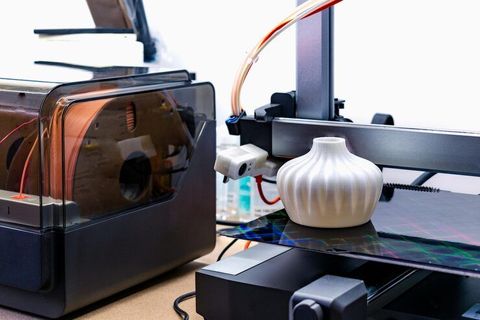
3D printing filament extruders are specialized machines that convert plastic raw materials into continuous strands of filament used by fused deposition modeling (FDM) and fused filament fabrication (FFF) 3D printers. These machines play an important role in additive manufacturing because filament quality directly influences printing accuracy, material consistency, and the performance of finished objects.
The extrusion process generally involves feeding plastic pellets or granules into a heated barrel, melting the material, and pushing it through a precisely sized nozzle or die. The resulting strand is cooled, measured, and collected onto a spool.
Filament extruders are used in industrial manufacturing facilities, research laboratories, educational institutions, and small-scale production environments. They support the development of different filament materials, including polylactic acid (PLA), acrylonitrile butadiene styrene (ABS), polyethylene terephthalate glycol (PETG), thermoplastic polyurethane (TPU), and specialized engineering polymers.
How Does a Filament Extruder Work?
A typical filament extrusion system operates through several connected stages:
Material feeding: Plastic pellets or granules enter the machine through a hopper.
Heating and melting: Heating elements soften the polymer inside a temperature-controlled barrel.
Screw conveying: A rotating screw moves the melted material toward the extrusion die.
Filament formation: The molten polymer passes through a precision opening to form a continuous strand.
Cooling: Cooling fans or water-based systems stabilize the filament shape.
Diameter measurement: Sensors monitor filament thickness to maintain dimensional consistency.
Spooling: A winding mechanism collects the finished filament for storage and later use.
The entire process requires coordination between temperature, screw speed, cooling rate, and pulling speed. Small variations can affect the filament diameter, surface finish, and printing characteristics.
Main Types of Filament Extruders
Different extrusion systems are designed for different production requirements.
Extruder Type | Main Characteristics | Common Applications |
|---|---|---|
Single-screw extruder | Simple construction and continuous processing | PLA and PETG filament |
Twin-screw extruder | Improved mixing and material processing | Composite and specialty polymers |
Desktop extruder | Compact design and smaller production capacity | Laboratories and educational projects |
Industrial extruder | Automated controls and continuous operation | Commercial-scale filament manufacturing |
Recycled plastic extruder | Processes suitable recovered plastic materials | Material recycling and research |
Each configuration has different operating requirements. Selecting an appropriate system depends on polymer characteristics, production volume, dimensional accuracy, and material development objectives.
Importance of 3D Printing Filament Extrusion Technology
Supporting Additive Manufacturing
Filament extrusion is an essential part of the additive manufacturing supply chain. It enables consistent production of the materials used by FDM and FFF printers across industries.
Manufacturers rely on dependable filament dimensions and material properties to produce components with predictable mechanical performance. Inconsistent filament can cause under-extrusion, over-extrusion, nozzle blockages, and uneven surface finishes.
Improving Material Flexibility
Filament extrusion technology supports experimentation with different polymers and material combinations.
Examples include:
PLA for educational models, prototypes, and decorative components.
ABS for applications requiring impact resistance and thermal stability.
PETG for durable components and general-purpose engineering applications.
TPU for flexible parts, protective components, and wearable prototypes.
Carbon-fiber-reinforced polymers for selected lightweight engineering applications.
Wood-filled and metal-filled composites for specialized appearance and material characteristics.
The ability to adjust polymer formulations makes extrusion technology relevant to research organizations and industrial material developers.
Supporting Plastic Recycling
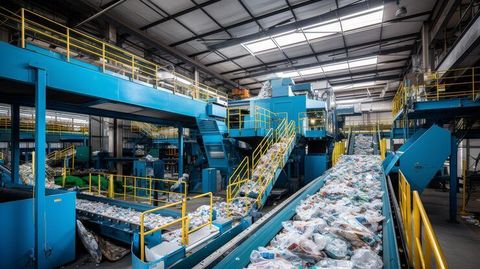
Plastic waste management is another important application. Suitable thermoplastic waste can be processed into pellets or flakes and converted into filament through controlled extrusion.
However, recycled material requires careful preparation. Contamination, moisture, polymer degradation, and inconsistent particle sizes can affect the final filament.
Recycling-based extrusion systems can support material recovery experiments and reduce dependence on newly manufactured polymer feedstock when the recovered material is suitable for the intended application.
Industries That Use Filament Extruders
Industry | Application |
|---|---|
Automotive | Prototypes, fixtures, and selected functional components |
Aerospace | Research models and lightweight component development |
Healthcare | Anatomical models and specialized prototypes |
Education | Engineering experiments and technical training |
Architecture | Scale models and structural visualization |
Electronics | Enclosures, prototypes, and component housings |
Research laboratories | Polymer testing and composite development |
These applications demonstrate how filament extrusion connects material science with practical manufacturing requirements.
Recent Developments and Industry Trends
Developments During 2025–2026
Filament extrusion technology has continued to develop through research into recycling, automated production, material consistency, and multi-material manufacturing.
Several developments are particularly relevant to the industry:
1. Improved extrusion systems – January 2026
Researchers at Oak Ridge National Laboratory in the United States reported a new extrusion system that combines multiple smaller extruders into a single high-output stream. The design aims to improve production flexibility, precision, and multi-material processing.
2. Recycling-focused filament equipment – January 2026
A research paper published on January 4, 2026, described a modular polymer filament extruder designed to process waste from 3D printing. The system combines shredding, extrusion, and winding components, demonstrating how discarded thermoplastics can be converted into new filament.
3. Research into multi-material extrusion – 2025
A review published on June 19, 2025, examined advances in multi-material material extrusion. This research area focuses on combining materials with different mechanical, thermal, and functional characteristics within printed components.
4. Greater attention to material recycling – 2026
Research published in February and May 2026 explored the potential of using recycled thermoplastics and biomass-based materials in additive manufacturing. These studies highlight the importance of material preparation, polymer compatibility, and extrusion stability.
Important Trends in Filament Extruder Technology
Several broader trends are influencing equipment development:
Automation: Digital temperature controls, automatic winding, and diameter sensors help improve production consistency.
Recycled polymer processing: Extrusion systems are increasingly being studied for converting suitable plastic waste into usable filament.
Composite materials: Carbon fiber, glass fiber, wood, and other additives are expanding filament development opportunities.
Process monitoring: Sensors and software can help identify variations in temperature, pressure, and filament diameter.
Multi-material production: Research is exploring equipment capable of handling different polymer compositions within connected extrusion systems.
Energy efficiency: Manufacturers are examining heating systems, motor controls, and insulation to improve energy management.
These developments indicate that filament extrusion is moving beyond basic plastic processing toward more controlled, data-supported material manufacturing.
Laws, Standards and Industrial Policies
International Manufacturing Standards
3D printing filament extruders operate within a broader framework of manufacturing, material quality, workplace safety, and environmental requirements. Applicable rules depend on the country, intended material, and final application.
Several international standards are relevant:
Standard or Regulation | Main Focus |
|---|---|
ISO/ASTM 52900 | Additive manufacturing terminology and general principles |
ISO/ASTM 52903-1 | Feedstock materials for polymer material extrusion |
ISO 5425:2023 | Specifications for PLA-based additive manufacturing filament |
ISO/ASTM 52933:2024 | Testing hazardous substances emitted by material extrusion 3D printers |
REACH | Chemical safety requirements in the European Union |
RoHS | Restrictions on certain hazardous substances in applicable electrical and electronic equipment |
The ISO/ASTM 52933:2024 standard received a corrected version in June 2025. It provides a testing framework for assessing potentially hazardous emissions from material extrusion 3D printers in non-industrial environments.
Environmental and Recycling Regulations
Environmental regulations can influence the handling of plastic pellets, production waste, and recycled polymers.
In the European Union, Regulation (EU) 2025/351 introduced amendments concerning plastic materials and food-contact applications. These requirements are particularly relevant when recycled plastic is intended for food-contact products. Ordinary 3D printing filament should not automatically be considered suitable for food-contact applications.
The EU also introduced additional rules addressing plastic pellet losses during handling and transportation. The regulation entered into force in December 2025, with most provisions scheduled to apply from December 2027.
Country-Specific Considerations
United States: Manufacturers may need to consider Occupational Safety and Health Administration (OSHA) workplace requirements, applicable environmental rules, chemical safety documentation, and electrical equipment standards.
European Union: REACH, applicable machinery safety requirements, workplace exposure controls, and waste management legislation may be relevant depending on the equipment and production activities.
India: The Plastic Waste Management Rules, 2016, and subsequent amendments establish requirements relating to plastic waste management and extended producer responsibility for applicable producers, importers, and brand owners. Industrial facilities should also consider applicable factory safety, pollution control, and electrical safety requirements.
Compliance depends on the actual business activity and product application. A filament extruder manufacturer, a plastic recycling facility, and a laboratory may face different obligations.
Tools and Resources for Filament Extrusion
Equipment and Measurement Tools
Accurate measurement and process monitoring are important for maintaining filament quality. The following tools are commonly used in extrusion environments.
Tool or Equipment | Purpose |
|---|---|
Digital caliper | Measures filament diameter |
Laser diameter gauge | Monitors filament thickness continuously |
Moisture analyzer | Measures moisture content in plastic materials |
Temperature controller | Maintains barrel and heating-zone temperatures |
Digital weighing scale | Measures polymer feedstock and output |
Filament winder | Collects and organizes finished filament |
Plastic shredder | Prepares suitable plastic waste for recycling |
Melt flow index tester | Evaluates polymer flow characteristics |
Software and Digital Resources
Several software platforms and technical resources can support filament extrusion research and production planning.
Ultimaker Cura: Slicing software used to prepare 3D printing models and configure material-related printing parameters.
PrusaSlicer: Provides slicing, material profiles, and print configuration features.
Autodesk Fusion: Supports mechanical design, equipment components, and extrusion system development.
SolidWorks: Used for designing screws, barrels, dies, and mechanical assemblies.
MATLAB: Supports mathematical modeling, process analysis, and experimental data evaluation.
ISO and ASTM standards databases: Provide technical information about additive manufacturing materials, processes, and safety requirements.
Important Parameters to Monitor
The following parameters influence the performance of a filament extrusion machine:
Parameter | Why It Matters |
|---|---|
Extrusion temperature | Controls polymer melting and flow |
Screw speed | Influences material movement and output |
Filament diameter | Affects 3D printer material feeding |
Cooling rate | Influences dimensional stability |
Pulling speed | Controls filament thickness |
Moisture content | Can affect surface quality and material properties |
Monitoring these parameters helps manufacturers identify production variations and maintain repeatable results.
Frequently Asked Questions
1. What is the primary purpose of a 3D printing filament extruder?
A 3D printing filament extruder converts thermoplastic raw materials into continuous plastic strands used by FDM and FFF 3D printers. It controls heating, melting, shaping, cooling, and winding to produce filament with consistent dimensions.
2. Which materials are commonly processed using filament extruders?
Common materials include PLA, ABS, PETG, TPU, and selected engineering polymers. Some extrusion systems can also process composite materials containing carbon fibers, glass fibers, or other additives. Material compatibility depends on the machine's temperature range and processing capabilities.
3. What filament diameter is commonly used in 3D printing?
The two widely used filament diameters are 1.75 mm and 2.85 mm. The appropriate diameter depends on the specifications of the 3D printer. Consistent diameter is important for accurate material feeding and predictable extrusion during printing.
4. Can filament extruders process recycled plastic?
Yes. Suitable thermoplastic waste can be sorted, cleaned, dried, shredded, and processed through an extrusion system. However, recycled material must be evaluated for contamination, moisture, thermal degradation, and polymer compatibility before it is used for printing.
5. What factors determine filament extrusion quality?
Important factors include polymer composition, moisture content, barrel temperature, screw speed, cooling conditions, pulling speed, and diameter measurement. Consistent monitoring of these variables helps improve dimensional accuracy and material performance.
Conclusion
3D printing filament extruders are an important part of the additive manufacturing industry. They transform thermoplastic raw materials into usable filament through controlled heating, melting, shaping, cooling, and winding processes.
Their applications extend across automotive manufacturing, healthcare research, education, aerospace development, electronics, and industrial prototyping. Advances in automation, composite materials, recycling systems, and multi-material extrusion are creating new opportunities for material development and manufacturing research.
At the same time, manufacturers must consider material quality, workplace safety, environmental responsibilities, and relevant international and national standards. Understanding these technical and regulatory requirements helps organizations evaluate filament extrusion processes more effectively.
As additive manufacturing continues to develop, filament extrusion technology is expected to remain an important area of research, particularly in material consistency, recycled polymer processing, and efficient production methods.

Related Post...

Coffee Filling Machines: Key Insights Into Efficiency and Production
Updated: November 02, 2026
Read More

pH Neutralization Systems: Key Insights Into Processes, Benefits, and Applications
Updated: November 02, 2026
Read More