Shaft Coupling: Types, Applications, Benefits, and Selection Guide
Shaft couplings are essential mechanical components used in industrial machinery and power transmission systems.
They connect two rotating shafts, allowing mechanical power and torque to transfer from one shaft to another. These components are widely used in pumps, motors, compressors, conveyors, gearboxes, turbines, and various manufacturing machines.
A properly selected shaft coupling helps maintain reliable equipment operation, reduces unnecessary mechanical stress, and accommodates specific installation requirements. Depending on the application, couplings can also compensate for shaft misalignment, absorb vibration, and reduce the transmission of shock loads.
With different designs, materials, and operating characteristics available, understanding shaft coupling types and their applications is important for engineers, maintenance professionals, and industrial equipment manufacturers.
What Is a Shaft Coupling?
A shaft coupling is a mechanical device that joins two shafts together to transmit rotational motion and torque.
It is commonly installed between a driving shaft and a driven shaft. The driving shaft receives power from a motor or another power source, while the driven shaft transfers that power to the connected equipment.
Shaft couplings are designed to support different mechanical requirements, including:
Transmitting torque between connected shafts.
Accommodating angular, parallel, or axial misalignment.
Reducing vibration transmission.
Absorbing mechanical shocks.
Connecting shafts with different dimensions.
Supporting reliable mechanical power transmission.
The appropriate coupling depends on operating speed, torque requirements, shaft alignment, temperature, environmental conditions, and maintenance expectations.
How Does a Shaft Coupling Work?
A shaft coupling works by creating a mechanical connection between two rotating shafts.
When a motor rotates the driving shaft, the coupling transfers torque to the connected driven shaft. This allows the attached machine or equipment to operate using the supplied mechanical power.
The working process generally involves three stages:
Power generation: A motor, engine, or other power source rotates the driving shaft.
Torque transmission: The coupling transfers rotational force between the connected shafts.
Equipment operation: The driven shaft operates the connected machine, such as a pump, compressor, or conveyor.
Some couplings create a rigid connection, while others include flexible components that accommodate limited movement or misalignment.
Main Types of Shaft Couplings
Shaft couplings are available in different designs to meet specific mechanical and industrial requirements.
1. Rigid Shaft Coupling
Rigid couplings connect two shafts firmly and are designed for applications where accurate shaft alignment can be maintained.
They provide a strong mechanical connection and are commonly used in machinery with minimal alignment variation.
Common types include:
Sleeve or muff coupling.
Split-muff coupling.
Flange coupling.
Applications:
Industrial machinery.
Vertical pumps.
Mechanical drive systems.
Precision equipment.
Heavy-duty power transmission.
Rigid couplings are generally unsuitable for applications requiring significant flexibility or misalignment compensation.
2. Flexible Shaft Coupling
Flexible couplings connect shafts while allowing limited movement between them.
They are designed to accommodate certain types of misalignment and may help reduce vibration and mechanical shock.
Common types include:
Jaw coupling.
Elastomeric coupling.
Disc coupling.
Grid coupling.
Tyre coupling.
Oldham coupling.
Applications:
Electric motors.
Industrial pumps.
Compressors.
Conveyors.
Machine tools.
General manufacturing equipment.
Flexible couplings are widely used where minor shaft alignment variations may occur during equipment operation.
3. Gear Coupling
Gear couplings transmit high torque through specially designed gear teeth.
They typically consist of two hubs with external gear teeth that engage with internal gear teeth in a sleeve.
Their compact construction and high torque capacity make them suitable for heavy industrial applications.
Key features:
High torque transmission capacity.
Compact mechanical design.
Suitable for demanding industrial conditions.
Accommodates limited angular misalignment.
Requires appropriate lubrication and maintenance.
Applications:
Steel manufacturing plants.
Rolling mills.
Heavy-duty conveyors.
Industrial compressors.
Large rotating machinery.
4. Jaw Coupling
Jaw couplings generally consist of two metal hubs with interlocking jaws and an elastomeric element positioned between them.
The elastomer transmits torque while providing some flexibility and vibration damping.
Key benefits:
Simple construction.
Easy installation.
Reduced vibration transmission.
Minimal maintenance for suitable designs.
Availability in different sizes and elastomer materials.
Applications:
Pumps.
Fans.
Blowers.
Small industrial motors.
General-purpose machinery.
5. Disc Coupling
Disc couplings use thin flexible metal discs to transmit torque between connected shafts.
They are commonly selected for high-speed applications that require precision and reliable torque transmission.
Key features:
High torsional stiffness.
Low backlash.
No sliding components in the flexible disc element.
Suitable for high-speed operation.
Can accommodate specified shaft misalignment.
Applications:
Turbines.
Compressors.
Precision machinery.
Industrial pumps.
High-speed rotating equipment.
6. Oldham Coupling
An Oldham coupling is designed to connect two parallel shafts with a small amount of offset.
It typically uses two hubs with slots and a central sliding disc that transfers rotational motion.
Key benefits:
Accommodates parallel misalignment.
Simple construction.
Compact design.
Easy component replacement in suitable configurations.
Applications:
Automation equipment.
Robotics.
Small motors.
Printing machines.
Precision motion systems.
7. Universal Joint Coupling
Universal joint couplings connect shafts operating at an angle to one another.
They allow rotational motion to transfer between shafts that are not positioned along the same straight axis.
Applications:
Automotive drivetrains.
Agricultural machinery.
Industrial drive systems.
Steering mechanisms.
Mechanical transmission equipment.
Comparison of Different Shaft Coupling Types
Coupling Type | Main Characteristic | Typical Application |
|---|---|---|
Rigid coupling | Firm shaft connection | Precision-aligned machinery |
Flexible coupling | Accommodates limited misalignment | Pumps and motors |
Gear coupling | High torque capacity | Heavy industrial equipment |
Jaw coupling | Elastomeric flexibility | General machinery |
Disc coupling | High torsional stiffness | High-speed equipment |
Oldham coupling | Parallel offset accommodation | Automation systems |
Universal joint | Connects angled shafts | Automotive and industrial drives |
Materials Used in Shaft Couplings
Material selection influences coupling strength, durability, corrosion resistance, and operating performance.
1. Carbon Steel
Carbon steel is commonly used in industrial couplings because of its strength, machinability, and availability.
It is suitable for many general-purpose and heavy-duty power transmission applications.
2. Stainless Steel
Stainless steel offers improved corrosion resistance and is suitable for equipment exposed to moisture, chemicals, or demanding hygiene conditions.
It is frequently used in food processing, pharmaceutical, marine, and chemical industries.
3. Cast Iron
Cast iron is used in certain coupling designs because of its casting properties, strength, and cost-effectiveness.
It is commonly found in general industrial machinery.
4. Aluminum
Aluminum couplings are lightweight and can be useful in applications where reducing rotating mass is important.
They are often used in automation, instrumentation, and smaller mechanical systems.
5. Elastomers
Flexible coupling elements may use rubber, polyurethane, or other engineered elastomeric materials.
These components provide flexibility, vibration damping, and shock absorption.
Industrial Applications of Shaft Couplings
Shaft couplings are used in numerous industries because they provide a practical connection between rotating equipment.
1. Manufacturing Industry
Manufacturing facilities use couplings in production machinery, conveyor systems, processing equipment, and automated production lines.
They help transfer mechanical power between motors and driven components.
2. Pumping Systems
Industrial pumps rely on couplings to connect motor shafts with pump shafts.
Flexible couplings are often selected to accommodate specified alignment variations and reduce vibration transmission.
3. Automotive Industry
Universal joints and other coupling arrangements are used in automotive drivetrains to transfer rotational power between components positioned at different angles.
4. Oil and Gas Industry
Shaft couplings are used in compressors, pumps, drilling equipment, and other rotating machinery.
These applications may require specialized designs capable of handling demanding operating conditions.
5. Power Generation
Power generation facilities use couplings in turbines, generators, pumps, and auxiliary machinery.
High-performance coupling designs are selected according to torque, speed, alignment, and reliability requirements.
6. Mining and Heavy Engineering
Mining operations use heavy-duty couplings in crushers, conveyors, mills, and material-handling systems.
These applications often require high torque capacity and resistance to demanding operating environments.
7. Marine Industry
Marine machinery uses shaft couplings in propulsion systems, pumps, generators, and auxiliary equipment.
Material selection and corrosion resistance are particularly important in marine environments.
Benefits of Using High-Quality Shaft Couplings
Selecting a suitable shaft coupling can improve the performance and reliability of mechanical systems.
Important benefits include:
Efficient power transmission: Transfers torque between connected rotating shafts.
Misalignment accommodation: Flexible designs support specified alignment variations.
Vibration reduction: Certain couplings reduce the transmission of vibration.
Shock absorption: Elastomeric components can help manage mechanical shock loads.
Equipment protection: Suitable coupling selection can reduce unnecessary stress on connected machinery.
Installation flexibility: Different designs accommodate various shaft arrangements.
Operational reliability: Properly selected and maintained couplings support consistent machine operation.
How to Select the Right Shaft Coupling
Choosing the right coupling requires careful evaluation of operating conditions and equipment specifications.
1. Determine Torque Requirements
Identify the operating torque and any additional loads associated with starting, stopping, acceleration, or changing operating conditions.
The coupling should have an appropriate rated torque capacity and service factor.
2. Check Shaft Dimensions
Consider shaft diameter, keyway dimensions, mounting arrangements, and available installation space.
The coupling bore must match the connected shaft specifications.
3. Evaluate Shaft Misalignment
Determine whether the shafts experience angular, parallel, or axial misalignment.
Select a coupling designed to accommodate the expected misalignment within its specified limits.
4. Consider Operating Speed
Rotational speed affects coupling performance, vibration, balance, and mechanical stress.
High-speed applications may require precision balancing and specialized coupling designs.
5. Evaluate Environmental Conditions
Consider exposure to temperature variations, moisture, dust, chemicals, and corrosive materials.
Choose suitable materials and protective features for the operating environment.
6. Review Maintenance Requirements
Some couplings require periodic lubrication, inspection, or replacement of flexible elements.
Consider maintenance accessibility and expected service intervals when selecting a design.
7. Check Manufacturer Specifications
Review technical drawings, torque ratings, maximum speeds, permissible misalignment, temperature limits, and installation instructions.
Always select a coupling that meets the equipment manufacturer's requirements.
Shaft Coupling Maintenance and Troubleshooting
Regular inspection helps identify problems before they cause equipment failure.
Common Maintenance Practices
Inspect couplings for visible cracks and damage.
Check shaft alignment periodically.
Examine bolts, fasteners, and mounting connections.
Inspect elastomeric elements for wear or deterioration.
Verify lubrication requirements for applicable coupling types.
Monitor unusual vibration and operating noise.
Check for corrosion and surface damage.
Follow recommended inspection intervals.
Common Shaft Coupling Problems
Problem | Possible Cause | Recommended Action |
|---|---|---|
Excessive vibration | Misalignment or imbalance | Inspect alignment and balance |
Unusual noise | Worn or damaged components | Inspect coupling parts |
Overheating | Excessive friction or incorrect installation | Check operating conditions |
Elastomer damage | Aging, heat, or excessive torque | Replace the flexible element |
Bolt loosening | Improper tightening or vibration | Inspect and secure fasteners |
Premature wear | Incorrect coupling selection | Review load and operating specifications |
Maintenance should always follow the manufacturer's instructions and applicable machinery safety procedures.
Frequently Asked Questions (FAQs)
1. What is the main function of a shaft coupling?
The main function of a shaft coupling is to connect two rotating shafts and transmit mechanical power and torque between them.
2. What are the two main types of shaft couplings?
The two broad categories are rigid couplings and flexible couplings. Rigid couplings provide a firm connection, while flexible couplings accommodate specified movement and misalignment.
3. Which shaft coupling is best for high torque?
Gear couplings are commonly used in high-torque industrial applications. However, the best choice depends on operating speed, load conditions, misalignment, and manufacturer specifications.
4. What is the difference between rigid and flexible couplings?
Rigid couplings connect accurately aligned shafts without significant flexibility. Flexible couplings can accommodate limited misalignment and may reduce vibration or shock transmission.
5. Where are shaft couplings commonly used?
They are widely used in pumps, motors, compressors, conveyors, turbines, automotive systems, industrial machinery, and power generation equipment.
6. Which materials are commonly used in shaft couplings?
Common materials include carbon steel, stainless steel, cast iron, aluminum, and engineered elastomers.
7. How often should shaft couplings be inspected?
Inspection frequency depends on the coupling type, operating environment, equipment criticality, and manufacturer recommendations. High-load or critical machinery may require more frequent inspections.
8. Can shaft couplings reduce vibration?
Certain flexible couplings can reduce vibration transmission and absorb mechanical shocks. However, they do not eliminate the need for proper alignment and machine balancing.
Conclusion
Shaft couplings are essential components in mechanical power transmission systems. They connect rotating shafts, transfer torque, and help industrial machinery operate efficiently. Different coupling designs provide specific advantages, including high torque capacity, flexibility, misalignment accommodation, vibration damping, and precision motion transmission.
From rigid and flexible couplings to gear, jaw, disc, and universal joint designs, selecting the correct type depends on the application's mechanical requirements and operating environment.
By considering torque capacity, shaft dimensions, alignment, speed, material quality, and maintenance needs, engineers and equipment manufacturers can choose suitable shaft couplings for reliable operation.

Related Post...

Plastic Manufacturers: A Complete Guide to Plastic Production, Products, and Industrial Applications
Updated: November 16, 2026
Read More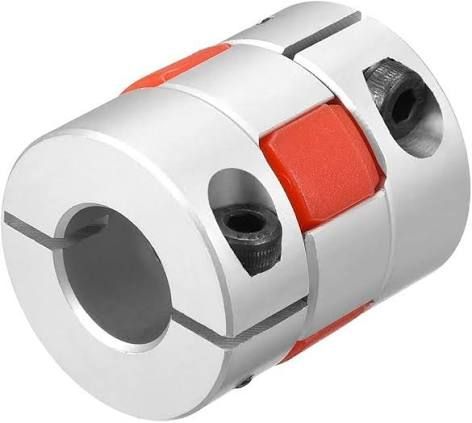
Shaft Coupling: Types, Applications, Benefits, and Selection Guide
Updated: November 18, 2026
Read More
Industrial Spare Parts: A Complete Guide to Types, Selection, and Maintenance
Updated: November 16, 2026
Read More