Lab-grown Diamonds Guide: Understanding Modern Diamond Production
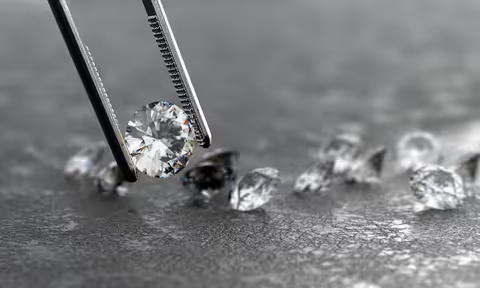
Lab-grown diamonds are diamonds created in controlled laboratory environments using advanced technology that replicates the natural conditions under which diamonds form deep within the Earth. Although they are produced differently from mined diamonds, they share the same chemical composition, crystal structure, hardness, and many physical characteristics.
Scientists began developing methods to create synthetic diamonds during the mid-20th century, initially for industrial applications such as cutting, drilling, and manufacturing. Over time, improvements in production techniques made gem-quality lab-grown diamonds more widely available for jewelry, research, and technology.
The two primary manufacturing methods are High Pressure High Temperature (HPHT) and Chemical Vapor Deposition (CVD). HPHT recreates the intense heat and pressure found within the Earth's mantle, while CVD grows diamond crystals from carbon-rich gases inside specialized chambers. Both methods produce genuine diamond crystals rather than imitation gemstones.
As public awareness of diamond origins has increased, lab-grown diamonds have become a widely discussed topic in the jewelry and materials science industries. Their growing availability has encouraged conversations about manufacturing processes, sustainability, certification, and consumer education.
Importance
Understanding Modern Diamond Production
Lab-grown diamonds demonstrate how scientific innovation can recreate a naturally occurring material in a controlled environment. This development has expanded knowledge about crystal growth while creating additional sources of diamond materials for multiple industries.
Uses Beyond Jewelry
Although many people associate diamonds with jewelry, lab-grown diamonds are also valuable in industrial and scientific applications because of their exceptional hardness, thermal conductivity, and durability.
Common applications include:
- Precision cutting and drilling equipment
- Electronics research
- Heat management components
- Optical instruments
- Scientific laboratories
- Medical imaging equipment
- Quantum technology research
Consumer Awareness
Many people want to understand the differences between mined and lab-grown diamonds before choosing jewelry or learning about gemstones. Understanding how diamonds are produced helps readers recognize the terminology used in grading reports, certification documents, and educational materials.
Environmental and Ethical Discussions
Lab-grown diamonds have contributed to ongoing discussions about environmental impact, resource use, and supply chains. Since production methods differ from traditional mining, comparisons often focus on energy consumption, land use, manufacturing processes, and traceability.
Because production methods, energy sources, and manufacturing facilities vary, environmental impacts may differ between producers. As a result, many researchers encourage evaluating individual production practices rather than making broad assumptions.
Recent Updates
Continued Improvements in Production Technology
Between 2024 and 2026, manufacturers have continued improving HPHT and CVD production methods. These improvements have focused on producing larger diamond crystals with fewer internal imperfections while increasing manufacturing efficiency.
Greater Transparency Through Certification
Certification organizations have continued refining grading procedures for lab-grown diamonds. Modern grading reports generally identify whether a diamond is laboratory-grown while evaluating characteristics such as cut, clarity, color, and carat weight using recognized grading standards.
Growth in Industrial Applications
Research organizations have expanded the use of lab-grown diamonds in advanced electronics, quantum computing research, semiconductor development, and high-performance thermal management because of their unique physical properties.
Increased Consumer Education
Educational materials from gemological institutions, academic organizations, and jewelry associations have become more detailed, helping readers understand manufacturing methods, grading terminology, and differences between natural and laboratory-grown diamonds.
Laws or Policies
Laws relating to lab-grown diamonds vary by country, but several common principles guide their identification and labeling.
Product Disclosure
Many consumer protection authorities require that laboratory-grown diamonds be clearly identified when presented alongside natural diamonds. Accurate labeling helps consumers understand the origin of the gemstone.
Advertising Standards
Advertising regulations generally require factual descriptions that avoid misleading statements regarding origin, rarity, or production methods. Businesses are expected to distinguish laboratory-grown diamonds from mined diamonds.
Certification Requirements
Independent gemological laboratories issue grading reports for many lab-grown diamonds. These reports describe characteristics such as:
| Characteristic | Description |
|---|---|
| Origin | Laboratory-grown |
| Cut | Quality of proportions and finish |
| Color | Degree of colorlessness or color presence |
| Clarity | Internal and external characteristics |
| Carat Weight | Measurement of weight |
| Growth Method | HPHT or CVD, when applicable |
Country-Specific Regulations
Different countries maintain their own consumer protection laws regarding gemstone labeling. Jewelry trade organizations also publish guidance for accurate product descriptions and ethical marketing practices.
Tools and Resources
Several educational resources help readers understand lab-grown diamonds and gemstone grading.
Useful resources include:
- Gemological institute educational websites explaining diamond grading.
- Diamond grading report verification portals.
- Jewelry terminology glossaries.
- Crystal structure learning resources.
- Educational videos explaining HPHT and CVD production.
- Measurement conversion calculators for carat weight.
- Government consumer protection websites covering product labeling.
- Scientific publications discussing diamond manufacturing technology.
These resources help readers understand terminology without requiring specialized technical knowledge.
FAQs
What are lab-grown diamonds made of?
Lab-grown diamonds consist of carbon atoms arranged in the same crystal structure found in natural diamonds. Their physical and chemical properties are essentially the same, although their origins differ.
How are lab-grown diamonds created?
Most lab-grown diamonds are produced using either High Pressure High Temperature (HPHT) technology or Chemical Vapor Deposition (CVD). Both methods recreate conditions that allow diamond crystals to grow from carbon.
Are lab-grown diamonds real diamonds?
Yes. Lab-grown diamonds are genuine diamonds because they have the same chemical composition and crystal structure as natural diamonds. They differ primarily in how they are formed.
How can lab-grown diamonds be identified?
Specialized gemological laboratories use advanced instruments to identify growth patterns and microscopic characteristics that distinguish laboratory-grown diamonds from naturally formed diamonds. These findings are documented in grading reports.
Do lab-grown diamonds have industrial uses?
Yes. Besides jewelry, lab-grown diamonds are widely used in manufacturing, electronics, scientific research, optical systems, heat management technologies, and precision engineering because of their exceptional hardness and thermal conductivity.
Conclusion
Lab-grown diamonds are genuine diamonds created through advanced scientific processes that replicate natural diamond formation. They have become increasingly important in jewelry, manufacturing, electronics, and scientific research.
Continued improvements in production technology, certification, and consumer education have expanded public understanding of this topic. Learning about manufacturing methods, grading standards, and applicable regulations helps readers better understand how lab-grown diamonds fit within the broader field of modern materials science.

Related Post...
Pear Shaped Diamonds Facts About Shape, Structure and Jewelry Applications
Updated: July 16, 2026
Read More