Explore Solitaire Engagement Rings: Styles, Designs, and Timeless Beauty
Solitaire engagement rings feature a single prominent gemstone held in a setting, making them one of the most recognizable styles of engagement jewelry. The central stone is usually a diamond, although other gemstones, including sapphires and emeralds, can also be used. The design emphasizes the individual stone rather than a collection of surrounding gems.
The solitaire style has remained popular because it combines a simple appearance with many options for customization. Ring designs can differ in metal type, gemstone shape, setting height, band width, and decorative details. These variations allow individuals to explore different styles while retaining the defining feature of a single central gemstone.
Common Diamond Shapes
The shape of a diamond influences the overall appearance of a solitaire engagement ring. It can also affect how large the stone appears from above and how it interacts with light.
Round brilliant: Designed to maximize light reflection through carefully arranged facets.
Oval: An elongated shape that creates a graceful appearance and can make the finger appear longer.
Princess: A square or rectangular shape with a modern geometric appearance.
Emerald cut: Features a rectangular outline and broad step-cut facets that emphasize clarity and structure.
Pear: Combines a rounded end with a pointed tip, creating a distinctive teardrop shape.
Cushion: Has a square or rectangular outline with rounded corners.
Marquise: Features two pointed ends and an elongated outline.
Each shape has different visual characteristics. The choice depends on personal preference, finger proportions, setting design, and the desired appearance of the finished ring.
Popular Solitaire Ring Settings
The setting holds the gemstone securely and influences the ring's appearance, durability, and maintenance requirements.
A prong setting uses small metal claws to hold the diamond in place. Four-prong and six-prong designs are common, with the number and arrangement of prongs affecting both security and the amount of metal visible around the stone.
A bezel setting surrounds the gemstone's edge with a rim of metal. This design can provide additional protection around the stone's perimeter and has a clean, contemporary appearance.
A cathedral setting uses raised shoulders that extend toward the center stone, creating an elevated structure. A low-profile setting places the stone closer to the finger, which may be more practical for people who frequently use their hands.
Why Solitaire Engagement Rings Remain Important
Engagement rings can represent commitment, personal identity, family traditions, and important life events. Solitaire engagement rings are widely recognized across different jewelry traditions because their central-stone design is adaptable to both classic and contemporary preferences.
The style also provides a useful framework for comparing diamonds. Since the central gemstone is the main visual feature, its shape, proportions, color, clarity, and cut quality become particularly important when evaluating the ring.
Understanding the Four Cs of Diamond Quality
The Four Cs are an established framework for evaluating diamond characteristics.
Cut: Describes how well a diamond's proportions, symmetry, and finish contribute to its interaction with light. For round brilliant diamonds, cut grading can be particularly important to overall visual performance.
Color: Measures the degree of colorlessness in diamonds graded on the conventional D-to-Z scale. Differences may be subtle, depending on the stone and setting.
Clarity: Assesses internal characteristics called inclusions and external characteristics called blemishes.
Carat weight: Measures the diamond's weight, not its dimensions or visual quality.
No single characteristic determines the complete appearance of a diamond. Two diamonds with the same carat weight may look different because of their cut, shape, proportions, and setting.
Choosing the Right Metal
The ring's metal influences its color, maintenance, durability, and compatibility with the gemstone.
Platinum: A naturally white metal commonly used in fine jewelry. It is dense and durable, although it can develop surface scratches with use.
White gold: A gold alloy with a white appearance, often finished with rhodium plating that may require periodic renewal.
Yellow gold: Offers a traditional warm color and is available in different gold purities.
Rose gold: Uses copper in the alloy to create a pinkish tone.
Metal selection should consider everyday wear, skin sensitivity, maintenance preferences, and the design of the ring. People with metal allergies may benefit from checking the exact alloy composition before making a decision.
Recent Trends in Solitaire Engagement Rings
Solitaire engagement ring designs continue to evolve as jewelry preferences shift toward personalization, distinctive gemstone shapes, and different metal finishes. Trends reported during 2025 and 2026 indicate continued interest in classic solitaire settings alongside more individual design choices.
Lab-Grown and Natural Diamonds
Lab-grown diamonds have become a more visible part of the engagement ring market. They share the same basic crystal structure and chemical composition as natural diamonds, although their origins differ.
Natural diamonds form through geological processes over long periods, while lab-grown diamonds are created using controlled technological processes. Both can be evaluated using the Four Cs, but their origin, grading documentation, market characteristics, and personal significance may differ.
Popular Design Directions
Recent design discussions highlight several notable preferences:
Oval and elongated diamond shapes that create a distinctive outline.
Vintage-inspired cuts, including Old Mine and Old European styles.
Yellow gold bands paired with contrasting diamond tones.
Bezel settings and sculptural bands that emphasize craftsmanship.
Minimalist solitaire designs with subtle personalized details.
These are market trends rather than universal preferences. A classic round brilliant solitaire remains a practical option for people who prefer a traditional appearance.
Engagement Ring Trend Overview
Feature | Established preference | Emerging design direction |
|---|---|---|
Diamond shape | Round brilliant | Oval, elongated cushion, and emerald |
Metal | White gold and platinum | Yellow gold and mixed tones |
Setting | Four- or six-prong solitaire | Bezel and sculptural settings |
Diamond origin | Natural diamonds | Greater visibility of lab-grown diamonds |
Overall design | Traditional and minimalist | Personalized and vintage-inspired |
Laws and Consumer Protection Policies
Engagement rings are affected by jewelry identification, precious-metal purity requirements, gemstone disclosure practices, and consumer protection laws. The applicable rules vary by country.
Jewelry Regulations in India
India has specific standards for gold jewelry and consumer protection.
Bureau of Indian Standards (BIS) hallmarking: Applicable hallmarking requirements help establish the purity of gold jewelry. Hallmarked gold articles carry identifying marks that indicate conformity with the relevant purity standard.
Hallmark Unique Identification (HUID): The six-character alphanumeric identification number allows consumers to verify details of eligible hallmarked gold jewelry through the BIS Care application.
Consumer protection: India's consumer protection framework addresses misleading representations and unfair trade practices. Jewelry descriptions should accurately represent material composition, gemstone characteristics, and relevant product details.
Diamond Certification and Disclosure
Diamond grading reports can help consumers understand the characteristics of a particular gemstone. Independent gemological laboratories may document diamond identity, measurements, color, clarity, and other relevant characteristics.
Before evaluating a solitaire engagement ring, consider checking:
Whether the diamond is natural or laboratory-grown.
Whether the grading report corresponds to the actual gemstone.
Whether the stated carat weight and metal purity are documented.
Whether the ring includes a clearly described setting and gemstone.
Whether applicable return, repair, resizing, and warranty terms are provided in writing.
Diamond grading reports and gold hallmarking serve different purposes. A diamond grading report evaluates gemstone characteristics, while a gold hallmark concerns precious-metal purity. Neither should be assumed to guarantee every aspect of a ring's quality.
Tools and Resources for Ring Selection
Several practical tools can help individuals compare solitaire engagement rings and understand their characteristics.
Useful Jewelry Resources
Diamond grading reports: Help explain a diamond's documented characteristics and grading details.
Ring size charts: Provide a starting point for understanding ring measurements, although professional sizing may be more accurate.
Diamond proportion diagrams: Illustrate how table size, depth, and other measurements influence a diamond's appearance.
Gemstone comparison worksheets: Help organize information about shape, carat weight, clarity, color, and certification.
Jewelry care guides: Explain cleaning, storage, inspection, and maintenance practices.
BIS Care application: Supports verification of HUID details for eligible hallmarked gold jewelry in India.
A simple comparison worksheet can record the ring's gemstone origin, shape, grading documentation, metal type, setting style, band width, and maintenance needs. This makes it easier to compare designs using consistent criteria.
Frequently Asked Questions
What makes a solitaire engagement ring different?
A solitaire engagement ring features one central gemstone as its main decorative element. Unlike halo or three-stone designs, it does not rely on a surrounding circle or multiple prominent stones to create its defining appearance.
Which diamond shape is best for a solitaire ring?
There is no single best shape for everyone. Round brilliant diamonds are known for their light performance, while oval, emerald, pear, and cushion shapes offer different visual characteristics. Personal preference, proportions, and setting compatibility should guide the choice.
Are lab-grown diamonds real diamonds?
Yes. Lab-grown diamonds have essentially the same chemical composition and crystal structure as natural diamonds. Their principal difference is their origin. They should be clearly identified according to applicable disclosure requirements.
How can someone check the quality of a solitaire diamond?
Review the diamond's grading report, cut characteristics where applicable, color, clarity, carat weight, and physical condition. The setting should also be examined for secure prongs, proper alignment, and signs of damage.
How should a solitaire engagement ring be maintained?
Clean the ring according to the metal and gemstone care instructions, avoid exposing it to harsh chemicals, and arrange periodic inspections of the setting. Remove the ring during activities that could expose it to impacts or damage, and store it separately to reduce scratching.
Conclusion
Solitaire engagement rings combine a single central gemstone with a design that can range from traditional to contemporary. Their appearance depends on the diamond's shape and characteristics, the setting, and the chosen metal.
Understanding the Four Cs, comparing natural and lab-grown diamonds, reviewing grading documentation, and checking relevant hallmarking requirements can help people make informed decisions. Current design trends also demonstrate that classic solitaire settings can accommodate individual preferences through different shapes, metals, and craftsmanship.
Ultimately, the most suitable solitaire engagement ring is one that reflects personal style, fits comfortably, and meets the wearer's expectations for durability and maintenance.

Related Post...
Explore Akoya Pearls: Origins, Unique Luster, and Timeless Beauty
Updated: October 26, 2026
Read More
Discover How Prong Settings Shape Jewellery Design and Enhance Gemstone Appearance
Updated: October 27, 2026
Read More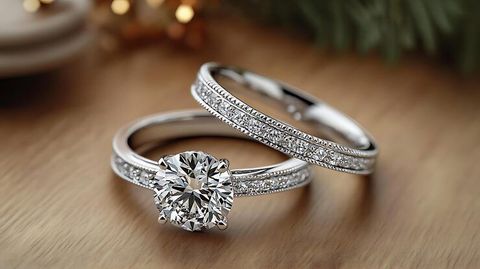
Explore Solitaire Engagement Rings: Styles, Designs, and Timeless Beauty
Updated: October 27, 2026
Read More