The technology exists to meet the demand for precision, repeatability, and scalability in metal shaping. Traditional press-based shaping methods can create stress points and material deformation when applied repeatedly. Roll forming distributes shaping forces gradually, allowing stable geometry, consistent thickness, and improved surface quality.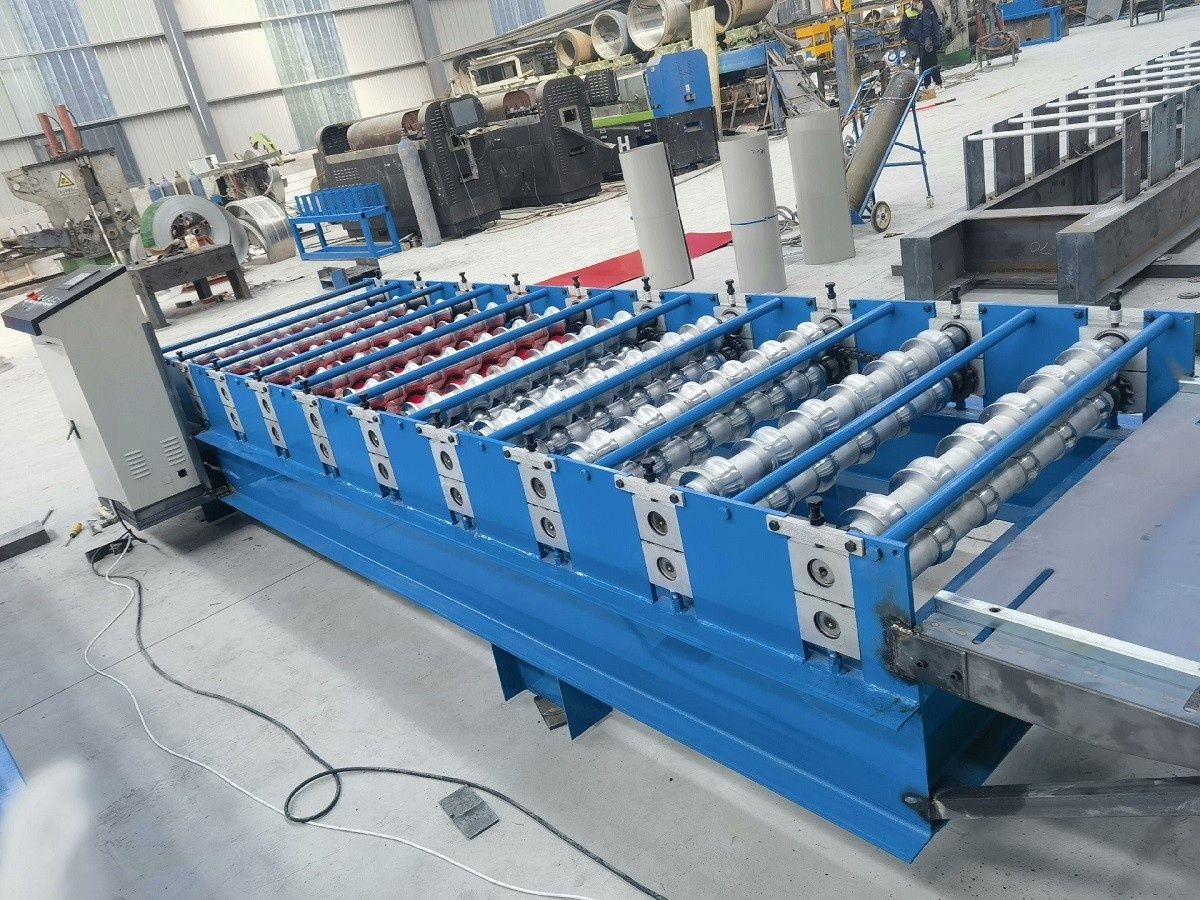
Roll forming machines are commonly integrated into automated manufacturing lines where feeding, cutting, punching, and stacking occur in a synchronized workflow. The result is high consistency across large production volumes while maintaining dimensional stability.
Understanding the Core Working Principle
A roll forming system typically includes:
-
Decoiler unit that feeds metal coil material
-
Entry guides to align the strip
-
Multiple roller stations that progressively shape the profile
-
Straightening and calibration rollers
-
Length control and automated cutting module
-
Control panel for speed, torque, and profile settings
The strip moves continuously through the rollers. Each station introduces a small bend until the final geometry is achieved. This gradual approach prevents cracking, distortion, and internal stress accumulation.
Why Roll Forming Machines Matter Today
Manufacturing sectors increasingly require reliable component consistency, tighter tolerances, and faster output cycles. Roll forming machines support these objectives through continuous processing and predictable quality outcomes.
Industries influenced by roll forming technology include:
-
Construction and infrastructure frameworks
-
Automotive structural components
-
Renewable energy mounting systems
-
Storage and racking structures
-
Electrical enclosures and cable pathways
-
Transportation and logistics frameworks
Key benefits delivered by roll forming technology:
-
Uniform profile accuracy across long production runs
-
High dimensional repeatability for standardized components
-
Efficient material utilization with minimal scrap generation
-
Stable surface finish suitable for downstream processing
-
Compatibility with automation and digital monitoring
The process solves challenges associated with inconsistent bending, batch variability, and manual dependency. For engineers and production planners, roll forming delivers reliability and predictable output scalability.
Operational Advantages in Industrial Manufacturing
Roll forming machines provide technical advantages compared with batch-based forming methods:
-
Continuous flow production rather than intermittent cycles
-
Reduced mechanical stress on material
-
Stable tolerance control across length and width
-
Smooth curvature transitions across profiles
-
Simplified integration with CNC monitoring platforms
-
Predictable throughput rates
These advantages support high-precision manufacturing environments where deviation control and output consistency remain critical.
Table: Comparison of Metal Forming Methods
| Feature Area | Roll Forming | Press Bending | Extrusion |
|---|---|---|---|
| Production Flow | Continuous | Batch-based | Continuous |
| Dimensional Consistency | High | Medium | High |
| Material Stress | Low | Moderate | High |
| Profile Complexity | Moderate to High | Low to Medium | High |
| Surface Uniformity | Consistent | Variable | Consistent |
| Automation Compatibility | Strong | Moderate | Moderate |
Recent Developments and Technology Trends
Over the past year, several trends have influenced roll forming system development and industrial deployment.
Digital automation integration
Manufacturers increasingly integrate programmable logic controllers, sensor arrays, and data dashboards. These systems enable real-time monitoring of torque load, roller alignment, temperature variation, and output accuracy.
AI-assisted quality inspection
Machine vision systems now detect micro-deviations in profile geometry, surface alignment, and edge symmetry without manual sampling.
Energy optimization frameworks
Servo-driven motors and adaptive speed control reduce idle energy consumption and improve operational efficiency.
Modular tooling systems
Quick-change roller assemblies allow faster profile switching while maintaining alignment accuracy.
Expanded lightweight alloy compatibility
Modern roll forming lines handle high-strength steel, aluminum alloys, and coated metals with improved surface protection.
Remote diagnostics adoption
Secure cloud dashboards support remote monitoring, diagnostics review, and predictive maintenance modeling.
These trends indicate a strong shift toward intelligent manufacturing environments and higher process transparency.
Regulatory and Policy Awareness
Roll forming machines operate within industrial safety and machinery compliance frameworks. Regulatory requirements vary by country but typically include:
-
Electrical safety compliance for control panels and motors
-
Machine guarding and emergency stop mechanisms
-
Noise exposure management standards
-
Operator safety training documentation
-
Structural integrity validation for high-speed rollers
-
Environmental compliance related to lubricant handling
-
Energy efficiency labeling programs
In India and many industrial regions, machinery guidelines align with industrial safety standards governed by national manufacturing regulations and workplace safety codes. Compliance supports injury prevention, equipment reliability, and operational accountability.
Manufacturing facilities often implement internal audit procedures to ensure continuous alignment with updated safety norms and electrical certifications.
Tools and Knowledge Resources
Understanding roll forming technology benefits from specialized planning tools and reference materials. Commonly used resources include:
-
Profile design calculators for bend radius and material thickness
-
Load estimation tools for roller torque planning
-
CAD modeling platforms for profile simulation
-
CNC configuration templates for speed calibration
-
Tolerance mapping charts for dimensional validation
-
Material behavior databases for alloy deformation
-
Maintenance scheduling templates for roller inspection
-
Digital dashboards for production analytics
These tools enhance accuracy, planning efficiency, and long-term system reliability.
Practical Insights and Technical Guidance
Consistent roll forming performance depends on setup precision and ongoing monitoring.
Helpful operational guidance
-
Maintain accurate strip alignment before entry
-
Verify roller spacing calibration periodically
-
Monitor lubrication consistency to prevent surface wear
-
Track vibration patterns to detect bearing imbalance
-
Validate cutting synchronization with feed speed
-
Store tooling in controlled environments to prevent corrosion
-
Maintain uniform coil tension for stable feeding
-
Review profile measurements regularly against specification
Structured documentation of production parameters improves traceability and process optimization.
Table: Typical Roll Forming Output Profiles
| Profile Type | Common Characteristics | Application Example |
|---|---|---|
| C-Channel | Open structural section | Framing systems |
| U-Channel | Load distribution channel | Cable pathways |
| Z-Profile | Overlapping alignment | Roofing structures |
| Hat Section | High rigidity geometry | Automotive panels |
| Tubular Profile | Closed geometry | Structural frameworks |
Frequently Asked Questions
What materials can roll forming machines process?
Common materials include carbon steel, stainless steel, aluminum alloys, galvanized sheet, and coated metals depending on roller configuration and thickness limits.
How accurate are roll formed profiles?
Dimensional tolerance typically remains within narrow limits when tooling alignment and feed stability are properly maintained.
Can roll forming handle complex geometries?
Yes. Multi-station configurations allow gradual shaping of intricate cross-sections with consistent repeatability.
What determines production speed?
Feed motor capacity, profile complexity, material thickness, roller count, and cutting synchronization influence throughput rate.
Is roll forming suitable for long-length profiles?
Yes. Continuous feed design supports extended profile lengths with stable dimensional control.
Conclusion
Roll forming machines play a vital role in modern industrial manufacturing by enabling continuous, precise shaping of metal profiles. Their gradual forming approach minimizes material stress, supports consistent geometry, and integrates smoothly into automated production lines.
Recent advancements in digital monitoring, intelligent inspection, modular tooling, and energy optimization further strengthen operational reliability and manufacturing efficiency. Regulatory compliance ensures safe operation and structured accountability within industrial environments.
With appropriate tooling calibration, data monitoring, and structured maintenance practices, roll forming systems deliver predictable output quality and scalable production capability. Understanding the fundamentals, trends, tools, and operational guidance allows engineers, planners, and technical learners to apply roll forming technology confidently within evolving manufacturing ecosystems.