Explore Industrial Plastic Molding Manufacturers and Processes
Industrial plastic molding transforms raw plastic materials into components used in manufacturing, construction, automotive, electronics, packaging, and other industries. The process involves heating or preparing plastic material, shaping it inside a mold, and allowing it to form a required design.
Industrial plastic molding manufacturers use different production methods depending on the component's shape, material, size, and intended application. Plastic injection molding companies, for example, commonly produce detailed parts in repeated quantities, while other molding methods support larger or hollow components.
Importance of Industrial Plastic Molding
Plastic molding is an important manufacturing process because it allows industries to produce components in different shapes, sizes, and material properties. It supports the development of both simple products and complex industrial parts.
Its importance can be understood through several applications:
Component production: Manufacturers use molding processes to create housings, covers, connectors, containers, and machine components.
Design flexibility: Different mold designs allow plastic materials to take specific shapes and dimensions.
Material selection: Thermoplastics and other molding materials provide different properties, including flexibility, strength, and heat resistance.
Industrial applications: Molded components are used in automotive systems, electrical equipment, medical devices, household products, and industrial machinery.
Repeatable manufacturing: Controlled production processes help manufacturers produce multiple components with consistent design requirements.
Types of Industrial Plastic Molding Processes
Different molding methods are used according to product design, material characteristics, and manufacturing requirements. Understanding these processes helps explain how plastic components are produced.
Injection Molding
Injection molding involves heating plastic material until it becomes suitable for processing and injecting it into a closed mold under pressure. The material cools inside the mold and takes its required shape.
Plastic injection molding manufacturers use this method for producing components such as electrical housings, automotive parts, connectors, caps, and machine fittings. It is commonly used when detailed shapes and repeated production are required.
Blow Molding
Blow molding is used to produce hollow plastic products. A heated plastic tube or preform is placed inside a mold and expanded using air pressure until it follows the mold's internal shape.
This process is commonly associated with bottles, containers, tanks, and other hollow products. The method can be selected according to the product's dimensions and material requirements.
Compression Molding
Compression molding involves placing a measured amount of molding material into a heated mold cavity. Pressure is applied to shape the material, which then hardens or cures according to its composition.
This process is used for selected industrial components, electrical parts, automotive products, and molded products made from thermosetting materials.
Rotational Molding
Rotational molding produces hollow plastic products by heating material inside a rotating mold. The rotation distributes the material along the internal surfaces of the mold.
It is used for products such as storage tanks, containers, large hollow components, and selected industrial enclosures.
Thermoforming
Thermoforming involves heating a plastic sheet until it becomes flexible and shaping it over or into a mold. The formed sheet is then cooled and trimmed to achieve the required dimensions.
This process is used for packaging trays, equipment covers, protective panels, and various product enclosures.
Materials Used in Plastic Molding
The choice of plastic material influences the component's strength, flexibility, durability, appearance, and resistance to environmental conditions. Industrial plastic molding suppliers work with different materials depending on the manufacturing application.
Common materials include:
Polypropylene (PP): Used in containers, automotive components, packaging products, and household items.
Polyethylene (PE): Commonly used in bottles, pipes, tanks, and packaging applications.
Acrylonitrile Butadiene Styrene (ABS): Used for housings, equipment covers, electronic enclosures, and automotive components.
Polycarbonate (PC): Selected for applications requiring impact resistance and dimensional stability.
Polyamide (Nylon): Used in mechanical components, gears, connectors, and selected industrial parts.
Polyvinyl Chloride (PVC): Used in pipes, fittings, cable insulation, and construction-related products.
Material selection depends on operating conditions, design specifications, processing requirements, and applicable industry standards.
Industrial Plastic Molding Machines and Equipment
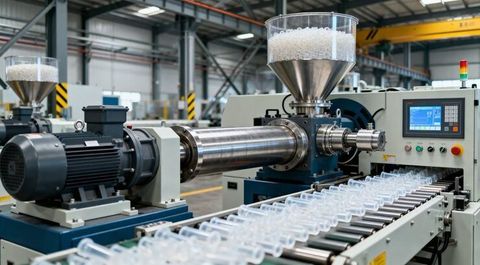
Plastic molding machinery includes the machines and supporting systems required to prepare materials, form components, and manage production. Plastic molding machine manufacturers develop equipment for different processes and production requirements.
| Equipment | Main Function |
|---|---|
| Injection molding machine | Melts and injects plastic into a mold |
| Blow molding machine | Forms hollow plastic products |
| Compression molding press | Shapes material using heat and pressure |
| Rotational molding machine | Distributes material inside a rotating mold |
| Plastic granulator | Reduces plastic scrap into smaller pieces |
| Material dryer | Removes moisture from selected plastic materials |
| Mold temperature controller | Regulates mold temperature during production |
| Industrial chiller | Supports temperature control in manufacturing systems |
Industrial plastic molding machines may include automated controls, material feeding systems, hydraulic or electric drives, and safety mechanisms. Equipment configuration depends on the production method and component requirements.
Applications of Industrial Plastic Components
Industrial plastic components are used across several sectors because different polymers can provide specific physical and processing characteristics.
Automotive Industry
Plastic molding is used to produce dashboards, interior panels, clips, connectors, protective covers, and selected under-the-hood components. The required material depends on temperature, mechanical, and environmental conditions.
Electrical and Electronics
Molded plastic components include switch housings, cable connectors, insulation parts, control panel covers, and electronic enclosures. Electrical properties and dimensional requirements influence material selection.
Construction Industry
Plastic components are used in pipes, fittings, wall panels, window profiles, cable management products, and protective equipment. Their applications depend on design and relevant performance standards.
Packaging Industry
Containers, caps, closures, trays, and bottles are produced using different plastic molding processes. Product design and material properties determine which method is suitable.
Industrial Machinery
Industrial plastic components manufacturers produce machine covers, protective guards, fittings, rollers, gears, and selected mechanical parts. These components are designed according to the operating environment and equipment specifications.
How to Choose Industrial Plastic Molding Manufacturers
Selecting an industrial plastic molding manufacturer requires an understanding of the component, material, manufacturing process, and production requirements. The following factors can help organize the evaluation.
Manufacturing capabilities: Review whether the manufacturer works with the required molding process, component dimensions, and production volume.
Material knowledge: Check experience with the plastic materials needed for the intended application.
Mold and tooling capabilities: Consider mold design, tooling development, maintenance, and dimensional requirements.
Quality procedures: Understand how components are inspected and how production consistency is monitored.
Equipment and technology: Review the machinery, automation, and process controls used in production.
Technical documentation: Examine product drawings, material specifications, testing records, and relevant compliance documentation.
Custom plastic molding manufacturers may also work with product drawings and specialized tooling requirements. Clear technical specifications help define the expected component design and manufacturing process.
Frequently Asked Questions
What do industrial plastic molding manufacturers produce?
They produce molded plastic components such as housings, containers, connectors, fittings, covers, machine parts, and automotive components.
What is the difference between injection molding and blow molding?
Injection molding forces heated plastic into a mold cavity to create a shaped component. Blow molding uses air pressure to expand plastic inside a mold, generally producing hollow products.
What are industrial plastic molding machines?
These are machines used to shape plastic materials through processes such as injection, compression, blow, and rotational molding.
What factors influence plastic mold design?
Mold design depends on component geometry, material properties, dimensions, cooling requirements, production method, and manufacturing tolerances.
What industries use custom plastic injection molding?
Automotive, electronics, construction, packaging, consumer products, and industrial machinery sectors use custom plastic injection molding for different components.
Conclusion
Industrial plastic molding supports the production of components used across a wide range of industries. Processes such as injection molding, blow molding, compression molding, rotational molding, and thermoforming serve different product requirements.
Understanding molding materials, machinery, tooling, and manufacturing applications helps readers evaluate industrial plastic molding manufacturers and their capabilities. The appropriate process depends on component design, material characteristics, production needs, and required quality standards.

Related Post...