Broaching Machines: Types, Working Principles, Uses & Benefits
Broaching machines are industrial metal-cutting machines used to remove material from a workpiece with the help of a specialised cutting tool called a broach. They are commonly used in manufacturing industries where components require accurate shapes, grooves, slots, keyways, and internal profiles.
Unlike conventional machining processes that remove material through several individual cutting operations, broaching uses a tool containing multiple cutting teeth arranged progressively. Each tooth removes a small amount of material, allowing the machine to produce the required shape in a controlled operation.
Broaching technology is widely used in automotive manufacturing, aerospace engineering, heavy machinery production, agricultural equipment manufacturing, and precision engineering.
These machines are available in different configurations, including vertical broaching machines, horizontal broaching machines, internal broaching machines, and surface broaching machines.
Modern broaching systems also incorporate hydraulic drives, automated workpiece handling, precision controls, and CNC technology to support consistent industrial production.
Why Broaching Machines Are Important in Modern Manufacturing
Manufacturing industries require components with accurate dimensions, consistent surface quality, and specific geometric features. Producing these features through conventional machining can involve several operations.
Broaching machines help simplify certain manufacturing processes by completing complex profiles through a specialised cutting operation.
Their importance can be understood through several applications:
- Precision machining: Produces accurately shaped slots, keyways, splines, and internal profiles.
- Production efficiency: Performs multiple cutting stages during a single broaching stroke.
- Consistent quality: Helps maintain repeatable component dimensions during production.
- Automotive manufacturing: Supports the production of gears, transmission components, and engine-related parts.
- Heavy engineering: Processes components used in industrial machinery and equipment.
- Aerospace manufacturing: Supports the production of selected precision metal components.
- Reduced secondary operations: Certain profiles can be completed without multiple separate machining stages.
Broaching machines are particularly relevant to manufacturers producing large quantities of components with similar geometric requirements.
How Broaching Machines Work
Broaching machines operate through a cutting tool that contains a series of teeth with gradually increasing heights.
As the tool moves across or through the workpiece, each successive tooth removes a small amount of material. The final teeth produce the required profile and surface finish.
The machine generally consists of several important components.
1. Broach Tool
The broach is the main cutting component. It contains multiple teeth arranged in a specific sequence.
Different tooth sections perform different functions:
- Roughing teeth remove the majority of unwanted material.
- Semi-finishing teeth refine the component profile.
- Finishing teeth help achieve the required dimensions and surface quality.
2. Machine Frame
The machine frame provides structural support for the cutting system and workpiece arrangement.
It must withstand the forces generated during machining while maintaining stability.
3. Drive System
Broaching machines may use hydraulic, mechanical, or servo-driven systems.
Hydraulic systems are common in industrial broaching because they provide controlled movement and substantial cutting force.
4. Workpiece Fixture
The fixture holds the workpiece in the correct position during machining.
Proper workpiece positioning is important for maintaining dimensional accuracy and repeatability.
5. Control System
The control system manages machine movement, operating sequences, and other machine functions.
Modern systems may include programmable controls and automated monitoring features.
6. Coolant and Lubrication System
Cutting fluids help manage heat, reduce friction, and remove machining chips.
Appropriate coolant management can also improve tool performance and component surface quality.
Types of Broaching Machines
Different broaching machines are designed for specific component geometries, production requirements, and machining applications.
1. Horizontal Broaching Machines
Horizontal broaching machines move the cutting tool in a horizontal direction.
They are commonly used for long workpieces and internal machining applications.
Typical applications include:
- Internal keyways.
- Splines.
- Gear-related profiles.
- Industrial mechanical components.
2. Vertical Broaching Machines
Vertical broaching machines operate with a vertically moving cutting tool.
They are widely used in industrial manufacturing because their design can support different internal and surface broaching applications.
They are commonly found in automotive and precision engineering facilities.
3. Internal Broaching Machines
Internal broaching machines are designed to produce shapes inside a workpiece.
Common applications include machining internal keyways, splines, square holes, and other specialised profiles.
4. Surface Broaching Machines
Surface broaching machines remove material from the external surface of a component.
They can produce flat surfaces, grooves, contours, and other external shapes.
These systems are used in manufacturing components that require specific surface geometries.
5. Continuous Broaching Machines
Continuous broaching machines are designed for production environments where multiple workpieces move through a continuous machining arrangement.
They are useful for high-volume manufacturing applications involving repeated component designs.
6. CNC Broaching Machines
CNC broaching machines incorporate computer-based controls to manage selected machining functions and automated production operations.
Depending on their design, they may support programmable positioning, process monitoring, and integration with automated manufacturing systems.
Industrial Applications of Broaching Machines
Broaching technology is used in several industries because of its ability to produce specialised component profiles with repeatable accuracy.
- Automotive industry: Used for manufacturing transmission components, gears, steering components, and keyways.
- Aerospace industry: Supports the machining of selected structural and mechanical components.
- Agricultural machinery: Used for producing shafts, splines, gears, and mechanical assemblies.
- Heavy engineering: Processes industrial machine components requiring specialised internal or external profiles.
- Electrical equipment manufacturing: Used for selected mechanical parts and precision components.
- Tool and die manufacturing: Supports the production of specialised metal profiles and components.
- General engineering: Helps manufacture shafts, couplings, bushings, and other mechanical parts.
The choice of broaching process depends on material hardness, component dimensions, required profile, production quantity, and surface finish specifications.
Broaching Machines Compared With Other Machining Processes
Different machining technologies are suitable for different manufacturing requirements.
The following table explains some general differences.
| Feature | Broaching | Milling | Shaping |
|---|---|---|---|
| Cutting method | Multi-tooth broach | Rotating cutter | Reciprocating tool |
| Production suitability | High-volume repetitive work | Flexible production | General machining |
| Tool design | Specialised | Different cutter types | Single-point cutting tool |
| Profile accuracy | High for suitable applications | Depends on machine and setup | Depends on machine and setup |
| Common applications | Keyways, splines, profiles | Slots, pockets, surfaces | Flat surfaces and grooves |
| Process flexibility | Relatively limited | High | Moderate |
Broaching is particularly useful when the same specialised profile must be produced repeatedly. Milling and shaping may be more appropriate for components requiring greater design flexibility.
Recent Developments and Trends in Broaching Technology During 2025–2026
The machine tool industry is experiencing changes driven by automation, digital manufacturing, advanced materials, and precision engineering.
Although recent developments are generally related to the wider machine tool industry rather than broaching machines alone, they influence the environment in which broaching technology is used.
1. Growth in India's Machine Tool Industry
According to the Indian Machine Tool Manufacturers' Association's Annual Report 2025–26, India's machine tool production increased by 19% to ₹17,387 crore during FY2025–26.
Machine tool consumption increased by 15% to ₹36,419 crore during the same period.
These figures indicate expanding activity in India's manufacturing equipment ecosystem, which includes machining technologies used in precision engineering.
2. Increasing Adoption of Automation
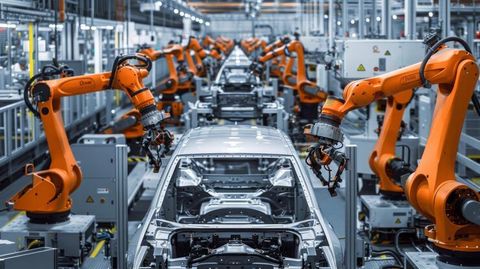
Manufacturers are integrating automated loading systems, robotic material handling, and digital machine controls into production environments.
Broaching machines can be integrated into automated production cells to improve material movement and production consistency.
3. Development of Advanced Cutting Tools
Cutting tool development continues to focus on improved wear resistance, tool life, and machining consistency.
Advanced tool materials and coatings can help broaching systems process suitable engineering materials under controlled operating conditions.
4. Digital Monitoring and Predictive Maintenance
Industrial manufacturers are increasingly using sensors and machine monitoring systems to track operating conditions.
These technologies can help identify unusual vibration, temperature changes, hydraulic system variations, and maintenance requirements.
5. CNC and Precision Manufacturing
CNC-based production systems are supporting better integration between digital component designs and manufacturing operations.
This trend is encouraging greater use of automated positioning, process documentation, and quality monitoring across modern machine tool facilities.
Laws, Policies, and Safety Standards in India
Broaching machines operate in industrial environments involving moving mechanical parts, cutting tools, hydraulic pressure, electrical systems, noise, and metal chips.
Manufacturers and factory operators must consider applicable machinery safety and workplace regulations.
1. Occupational Safety, Health and Working Conditions Code, 2020
The Occupational Safety, Health and Working Conditions Code, 2020, came into effect on November 21, 2025.
It establishes a consolidated legal framework covering workplace safety, employee health, and working conditions.
Factories using broaching machines should consider applicable requirements relating to machine guarding, employee training, workplace risk assessment, and safe operating conditions.
2. Occupational Safety, Health and Working Conditions (Central) Rules, 2026
The Central Government notified the Occupational Safety, Health and Working Conditions (Central) Rules, 2026, on May 8, 2026.
These rules provide additional requirements relating to workplace health, safety, welfare, and regulatory compliance.
Applicable state rules should also be considered depending on the location and type of manufacturing establishment.
3. Machinery Safety Standards
Indian Standards concerning machinery safety provide guidance for identifying mechanical hazards and reducing operational risks.
IS 16819:2018, aligned with ISO 12100:2010, addresses general principles for machinery design, risk assessment, and risk reduction.
Its principles are relevant when evaluating the safety of industrial machining equipment.
4. Electrical Safety Requirements
Broaching machines that use electrical drives, control panels, and hydraulic systems require appropriate electrical protection.
Industrial facilities should follow applicable electrical safety requirements, equipment inspection procedures, and preventive maintenance practices.
5. Environmental Regulations
Manufacturing facilities must consider applicable environmental requirements relating to used cutting fluids, industrial waste, oil disposal, and workplace pollution control.
Proper handling of machining waste is important for maintaining a safe and environmentally responsible production environment.
Tools and Resources for Broaching Machines
Several technical tools and resources support the planning, operation, inspection, and maintenance of broaching machines.
- CAD Software: Helps prepare component drawings and define the required machining geometry.
- CAM Software: Supports manufacturing planning and integration with suitable automated machining systems.
- Broach Design Software: Helps engineers evaluate cutting tool geometry and machining requirements.
- Cutting Force Calculators: Assist in estimating machining forces based on material and process parameters.
- Surface Roughness Testers: Measure the surface finish of machined components.
- Coordinate Measuring Machines (CMM): Help inspect component dimensions and geometric accuracy.
- Tool Life Monitoring Systems: Track broach usage and identify potential maintenance requirements.
- Preventive Maintenance Checklists: Help monitor hydraulic systems, lubrication, fixtures, and machine condition.
Useful technical references include the Bureau of Indian Standards, International Organization for Standardization, Indian Machine Tool Manufacturers' Association, and machine tool manufacturers' technical documentation.
Frequently Asked Questions About Broaching Machines
1. What is a broaching machine used for?
A broaching machine is used to remove material from a workpiece and produce specific shapes, profiles, slots, keyways, splines, and internal or external surfaces. It is commonly used in automotive, aerospace, and precision engineering industries.
2. What are the main types of broaching machines?
The main types include horizontal broaching machines, vertical broaching machines, internal broaching machines, surface broaching machines, continuous broaching machines, and CNC broaching machines.
3. What materials can be machined using broaching machines?
Broaching machines can process suitable metals such as carbon steel, alloy steel, stainless steel, aluminium, brass, and certain other engineering materials. Material suitability depends on hardness, machinability, tool design, and machine capacity.
4. What is the difference between internal and surface broaching?
Internal broaching produces profiles inside a workpiece, such as keyways and splines. Surface broaching removes material from external surfaces to create flat areas, grooves, and specialised contours.
5. What factors should be considered when evaluating a broaching machine?
Important factors include workpiece dimensions, material properties, required profile, cutting force, machine capacity, production volume, tool design, surface finish requirements, maintenance, and workplace safety.
Conclusion
Broaching machines are important industrial machining systems used to produce accurate internal and external profiles in metal components.
Their multi-tooth cutting tools make them particularly suitable for repetitive manufacturing operations involving keyways, splines, grooves, and specialised shapes.
Different machine configurations, including horizontal, vertical, internal, surface, and CNC broaching systems, support different production requirements.
Recent developments in automation, digital monitoring, advanced cutting tools, and precision manufacturing continue to influence the wider machine tool industry.
In India, growing machine tool production and manufacturing activity highlight the importance of advanced machining technologies in industrial development.
Understanding the working principles, machine types, applications, technical requirements, and safety regulations helps manufacturers and engineering professionals evaluate broaching technology for modern production environments.

Related Post...
Modern Bottling Machines Explained: What Happens From Filling to Capping
Updated: November 27, 2026
Read More
EDM Machines: Types, Working Principles, Applications & Benefits
Updated: November 27, 2026
Read More