EDM Machines: Types, Working Principles, Applications & Benefits
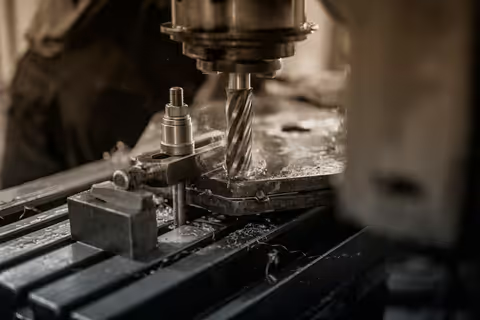
Electrical Discharge Machining (EDM) is a non-traditional manufacturing process used to remove material from electrically conductive workpieces through controlled electrical discharges. Unlike conventional machining methods that use direct contact between a cutting tool and the material, EDM removes material using electrical energy.
The process creates a series of controlled electrical sparks between an electrode and a conductive workpiece. These sparks generate intense localised heat, which melts and vaporises small amounts of material. A dielectric fluid helps control the electrical discharge and remove debris from the machining area.
EDM technology is particularly useful for machining hard metals, complex shapes, narrow slots, and intricate profiles that may be difficult to produce using conventional cutting tools.
These machines are widely used in automotive manufacturing, aerospace engineering, medical equipment production, tool and die manufacturing, and precision engineering.
Modern EDM systems include CNC controls, automatic electrode positioning, digital monitoring, and advanced process management technologies.
Why EDM Machines Are Important in Modern Manufacturing
Modern manufacturing requires components with precise dimensions, complex geometries, and high-quality surface finishes. Traditional machining methods may face limitations when processing extremely hard materials or producing complicated internal shapes.
EDM machines address some of these challenges by removing material without requiring direct mechanical contact between the electrode and the workpiece.
Their importance can be understood through several industrial applications:
- Precision machining: Produces complex shapes, narrow slots, cavities, and detailed profiles.
- Hard material processing: Machines electrically conductive materials that are difficult to process using conventional cutting tools.
- Tool and die manufacturing: Produces mould cavities, stamping dies, and specialised tooling components.
- Aerospace engineering: Supports the manufacturing of selected precision components.
- Automotive manufacturing: Helps produce injection moulds, precision dies, and mechanical components.
- Medical equipment manufacturing: Supports the production of selected intricate metal components.
- Reduced mechanical cutting forces: Minimises direct mechanical contact during material removal.
EDM technology is particularly relevant to manufacturers working with hardened steel, tool steel, titanium alloys, and other electrically conductive engineering materials.
How EDM Machines Work
EDM machines operate through controlled electrical discharges between two conductive surfaces separated by a small gap.
The electrode and workpiece are connected to an electrical power supply. A dielectric fluid fills the machining area and helps regulate the discharge process.
The general process involves the following components.
1. Power Supply
The power supply generates controlled electrical pulses required to produce sparks between the electrode and the workpiece.
Electrical parameters influence material removal, surface finish, and machining stability.
2. Electrode
The electrode is responsible for transferring electrical energy to the workpiece through controlled discharges.
Common electrode materials include copper, graphite, and copper-tungsten, depending on the machining application.
3. Workpiece
The workpiece is the electrically conductive material being processed.
EDM can machine several conductive materials, including hardened steel, stainless steel, aluminium, titanium, and selected metal alloys.
4. Dielectric Fluid
The dielectric fluid acts as an insulating medium under normal conditions and helps control electrical discharge behaviour.
It also removes machining debris and helps regulate temperature within the machining area.
5. Servo Control System
The servo system maintains the appropriate gap between the electrode and the workpiece.
It adjusts the electrode position to maintain stable machining conditions.
6. CNC Control System
Modern CNC EDM machines use computer-based controls to manage machining movements, positioning, and programmed operations.
These systems support repeatability and the production of complex component geometries.
Types of EDM Machines
Different EDM machine configurations are designed for specific machining requirements and component geometries.
1. Die-Sinking EDM Machines
Die-sinking EDM, also known as sinker EDM, uses a shaped electrode to create a corresponding cavity in the workpiece.
It is commonly used for:
- Injection mould cavities.
- Stamping dies.
- Forging dies.
- Complex industrial tooling.
- Precision cavities and profiles.
2. Wire-Cut EDM Machines
Wire-cut EDM uses a continuously moving thin metallic wire as the electrode.
The wire creates precise cuts through electrically conductive materials without direct mechanical contact.
Common applications include:
- Precision punches.
- Dies and mould components.
- Complex external profiles.
- Thin metal components.
- Precision engineering parts.
3. Small-Hole EDM Machines
Small-hole EDM machines are designed to produce narrow holes in electrically conductive materials.
They are used in specialised manufacturing applications where conventional drilling may be difficult.
4. CNC EDM Machines
CNC EDM machines use computer-controlled systems to manage machining operations.
They can support complex geometries, programmable movement, and automated production processes.
5. Sinker EDM With Advanced Process Controls
Modern sinker EDM systems may include digital process monitoring, automatic electrode changing, and programmable machining functions.
These features help maintain consistent operating conditions in precision manufacturing environments.
EDM vs Conventional Machining Methods
EDM differs from conventional machining because it uses electrical energy rather than direct mechanical cutting.
The following table explains the general differences.
| Feature | EDM | CNC Milling | Drilling |
|---|---|---|---|
| Material removal | Electrical discharges | Mechanical cutting | Rotating cutting tool |
| Tool contact | No direct mechanical contact | Direct contact | Direct contact |
| Hard materials | Suitable for conductive materials | Depends on tool and material | Depends on material |
| Complex cavities | Highly suitable | Suitable with limitations | Limited |
| Cutting force | Very low mechanical cutting force | Mechanical cutting force | Mechanical cutting force |
| Material suitability | Electrically conductive materials | Conductive and non-conductive materials, depending on process | Depends on material and tool |
| Common applications | Dies, moulds, intricate profiles | Slots, surfaces, pockets | Holes |
EDM is not a replacement for every conventional machining process. The appropriate technology depends on material properties, component design, production requirements, and dimensional specifications.
Industrial Applications of EDM Machines
EDM technology is used across industries that require accurate metal components and specialised manufacturing processes.
- Automotive industry: Used for producing injection moulds, precision dies, and selected engine and transmission components.
- Aerospace industry: Supports machining of selected turbine-related components and specialised conductive alloys.
- Medical equipment manufacturing: Used for selected precision metal instruments and intricate components.
- Tool and die industry: Helps manufacture moulds, punches, dies, and complex cavities.
- Electronics manufacturing: Supports the production of precision tooling used in selected electronic component manufacturing processes.
- General engineering: Used for machining hardened metal components, narrow slots, and specialised profiles.
- Research and development: Supports experimental machining and precision component development.
The suitability of EDM depends on the electrical conductivity of the workpiece, required machining accuracy, surface finish, and production conditions.
Recent Developments and Trends in EDM Technology During 2025–2026
The machine tool industry is experiencing changes driven by digital manufacturing, automation, advanced materials, and precision engineering.
Several developments are influencing the wider EDM manufacturing environment.
1. Growth of India's Machine Tool Industry
According to the Indian Machine Tool Manufacturers' Association Annual Report 2025–26, India's machine tool production increased by 19% to ₹17,387 crore during FY2025–26.
Machine tool consumption increased by 15% to ₹36,419 crore during the same period.
The Ministry of Heavy Industries also identifies electrical discharge machining among the machine tool technologies manufactured in India.
These developments highlight the importance of precision machining technologies within the country's manufacturing sector.
2. Increasing CNC Automation
Modern EDM systems increasingly incorporate computer-controlled machining, automatic electrode positioning, and programmable process management.
These developments support repeatable production and improved integration with digital manufacturing systems.
3. Advanced Electrode Materials
Research and industrial development continue to focus on electrode materials that provide suitable electrical conductivity, wear resistance, and machining performance.
Copper, graphite, and specialised electrode materials remain important in different EDM applications.
4. Digital Monitoring and Process Control
Modern manufacturing increasingly uses digital monitoring to evaluate machine performance and operating conditions.
EDM systems can incorporate monitoring features that help identify process variations and support preventive maintenance.
5. Micro-EDM and Precision Manufacturing
Micro-EDM is an important development for applications requiring very small features and intricate geometries.
It is relevant to specialised manufacturing areas such as miniature components, medical devices, and precision engineering.
Laws, Policies, and Safety Standards in India
EDM machines operate in industrial environments involving high-voltage electrical systems, dielectric fluids, heat, moving components, and machining debris.
Manufacturers and factory operators must consider applicable workplace safety, machinery, and environmental requirements.
1. Occupational Safety, Health and Working Conditions Code, 2020
The Occupational Safety, Health and Working Conditions Code, 2020, came into effect on November 21, 2025.
It establishes a consolidated legal framework covering occupational safety, employee health, and working conditions.
Industrial facilities operating EDM equipment should consider applicable requirements concerning machinery protection, employee training, workplace risk assessment, and safe operating conditions.
2. Occupational Safety, Health and Working Conditions (Central) Rules, 2026
The Central Government notified the Occupational Safety, Health and Working Conditions (Central) Rules, 2026, on May 8, 2026.
These rules provide additional requirements concerning workplace safety, employee welfare, and regulatory compliance.
Applicable state rules should also be considered according to the location and nature of the manufacturing establishment.
3. BIS Safety Standards for EDM Machines
The Bureau of Indian Standards provides technical guidance for evaluating machinery safety.
IS 17259, aligned with ISO 28881, addresses safety requirements for electrical discharge machining equipment.
ISO 28881:2022 covers manually controlled and CNC die-sinking machines, EDM drilling machines, and CNC wire-cutting machines.
These standards address important aspects of machine design, installation, operation, and protective measures.
4. Electrical Safety Requirements
EDM machines use electrical power and controlled discharge systems.
Appropriate electrical protection, equipment inspection, earthing, maintenance, and operator training are important for reducing workplace hazards.
5. Environmental Protection Requirements
EDM operations may involve dielectric fluids, contaminated filters, metal particles, and industrial waste.
Manufacturing facilities should follow applicable environmental and waste-management requirements, including appropriate handling and disposal of used fluids.
Tools and Resources for EDM Machines
Several technical tools and resources support EDM machine planning, operation, quality inspection, and maintenance.
- CAD Software: Helps create component drawings and complex engineering designs.
- CAM Software: Supports machining preparation and integration with CNC manufacturing systems.
- EDM Programming Software: Helps prepare machining programs for compatible EDM equipment.
- Electrode Design Software: Supports the design and evaluation of electrodes for specific machining applications.
- Surface Roughness Tester: Measures the surface finish of machined components.
- Coordinate Measuring Machine (CMM): Helps inspect component dimensions and geometric accuracy.
- Dielectric Fluid Monitoring Tools: Help assess fluid condition and contamination.
- Preventive Maintenance Checklists: Support regular inspection of electrical systems, filters, fluid circulation, and machine components.
- Process Monitoring Systems: Help track machining conditions and identify operating variations.
Useful technical references include the Bureau of Indian Standards, International Organization for Standardization, Indian Machine Tool Manufacturers' Association, Ministry of Heavy Industries, and equipment manufacturers' technical documentation.
Frequently Asked Questions About EDM Machines
1. What is an EDM machine used for?
An EDM machine is used to remove material from electrically conductive workpieces through controlled electrical discharges. It is commonly used for manufacturing moulds, dies, intricate cavities, narrow slots, and precision metal components.
2. What are the main types of EDM machines?
The main types include die-sinking EDM machines, wire-cut EDM machines, small-hole EDM machines, and CNC EDM systems. Each type is designed for different machining applications.
3. Which materials can be processed using EDM?
EDM can process electrically conductive materials such as hardened steel, stainless steel, titanium, aluminium, copper, and selected metal alloys. It cannot directly machine electrically non-conductive materials through conventional EDM processes.
4. What is the difference between wire-cut EDM and die-sinking EDM?
Wire-cut EDM uses a continuously moving thin wire electrode to cut profiles through a workpiece. Die-sinking EDM uses a shaped electrode to create cavities and corresponding internal features in the material.
5. What are the main advantages of EDM technology?
EDM provides the ability to machine hard conductive materials, produce complex geometries, create narrow features, and minimise mechanical cutting forces. It is particularly useful for precision tooling and specialised manufacturing applications.
Conclusion
EDM machines are important manufacturing systems that use controlled electrical discharges to process electrically conductive materials. Their ability to produce complex shapes, intricate cavities, and precision features makes them valuable in modern industrial manufacturing.
Different technologies, including wire-cut EDM, die-sinking EDM, small-hole EDM, and CNC EDM, support a wide range of engineering applications.
Recent developments in automation, digital monitoring, advanced electrodes, and micro-machining are influencing the future of electrical discharge machining.
In India, the growth of the machine tool industry and increasing adoption of precision manufacturing technologies highlight the relevance of EDM equipment.
Understanding EDM working principles, machine types, industrial applications, technical requirements, and safety standards helps engineers and manufacturers evaluate this technology for modern production environments.

Related Post...
Glass Manufacturers in China Explained: Quality, Cost and Lead Times
Updated: November 27, 2026
Read More
EDM Machines: Types, Working Principles, Applications & Benefits
Updated: November 27, 2026
Read More
Car Body Welding Robots: Types, Working, Benefits & Applications
Updated: November 27, 2026
Read More