Beginner’s Guide to Collaborative Robots and Industrial Automation Differences
Robotics has become an important part of modern manufacturing. Factories increasingly use automated systems to improve production accuracy, maintain consistent output, and manage repetitive operations. Two important categories in industrial automation are collaborative robots, commonly known as cobots, and traditional industrial robots.
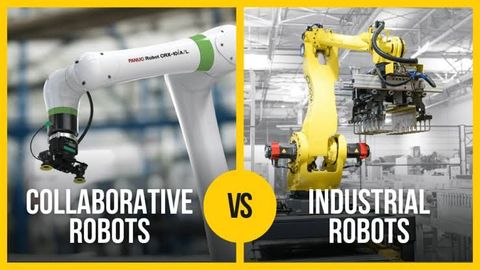
Both technologies perform automated tasks, but their designs, operating environments, and capabilities differ. Collaborative robots are developed to work alongside people under appropriately designed safety conditions. Traditional industrial robots generally operate within designated workspaces, often separated from employees by physical barriers or other protective systems.
Collaborative robots typically feature force and speed monitoring, sensors, and programmable safety functions. These capabilities help manage certain human-robot interactions when the complete application has been properly assessed.
Industrial robots generally focus on high-speed operations, heavy payload handling, and continuous production activities. They are commonly used in automotive manufacturing, metal processing, electronics production, and large-scale assembly facilities.
Understanding these differences helps manufacturers evaluate robotic automation based on production requirements, workplace conditions, and operational objectives.
Main Types of Robotic Systems
Common collaborative robot applications include:
Machine tending and component handling.
Small-part assembly and inspection.
Packaging and material placement.
Laboratory and electronics operations.
Traditional industrial robots are commonly used for:
Automotive welding and painting.
Heavy material handling.
High-speed palletizing.
Large-scale manufacturing and assembly.
Why Robot Selection Matters in Modern Manufacturing
The selection of an appropriate robotic system affects manufacturing productivity, workplace safety, production flexibility, and operational planning.
Modern factories often manage changing product designs, different production volumes, and increasing expectations for manufacturing consistency. Robotic automation helps address these requirements by performing repetitive activities with predictable movements.
Manufacturing Productivity and Accuracy
Industrial robots are particularly useful for operations requiring high speed, repeatability, and substantial payload capacity. They can perform the same programmed movements across extended production cycles.
Collaborative robots support smaller production environments where human workers and automated equipment may need to perform related activities within a shared workspace.
Workplace Safety and Human Collaboration
Workplace safety is an important consideration when introducing robotics.
Collaborative robots can incorporate features such as:
Force and torque monitoring.
Speed and separation monitoring.
Hand-guided programming.
Power and force limiting.
Emergency stop functions.
However, collaborative robots are not automatically safe in every environment. Risk assessments must consider the robot, its tools, workpieces, movement, and surrounding equipment.
Operational Flexibility
Cobots can be suitable for factories that frequently change production activities. Their programming interfaces and relatively compact designs can support adjustments between different tasks.
Traditional industrial robots are often more appropriate for dedicated production lines where consistent movements and higher operating speeds are important.
Recent Developments in Industrial and Collaborative Robotics
Robotic automation continues to develop through improvements in artificial intelligence, machine vision, sensors, motion control, and connected manufacturing systems.
Updated Industrial Robot Safety Standards in 2025
In February 2025, the International Organization for Standardization published updated editions of ISO 10218-1:2025 and ISO 10218-2:2025.
These standards address industrial robot safety and the integration of robotic applications. The updated framework includes requirements related to robot design, functional safety, safeguarding, commissioning, operation, and maintenance.
An important development is the incorporation of collaborative application safety considerations into the revised ISO 10218 framework.
Growth in Global Factory Automation
The International Federation of Robotics reported in September 2026 that the global operational stock of industrial robots reached approximately five million units in 2025.
The report also recorded more than 600,000 new industrial robot installations during that year.
These figures demonstrate the increasing importance of robotic automation across manufacturing industries, particularly in Asia and other major industrial regions.
Artificial Intelligence and Smart Manufacturing
AI-powered robotics is becoming more important in modern production environments.
Emerging capabilities include:
Machine vision for component identification.
AI-assisted quality inspection.
Adaptive movement and path planning.
Predictive maintenance analytics.
Integration with industrial Internet of Things platforms.
These developments can help factories improve production monitoring and respond more effectively to changing operational conditions.
Regulations, Safety Standards, and Government Policies
Industrial and collaborative robots must operate within applicable workplace safety, machinery, and electrical safety requirements. Regulations differ between countries, so manufacturers should consider the rules governing their specific production location.
International Safety Standards
Several international standards provide guidance for robotic manufacturing environments.
ISO 10218-1:2025: Addresses safety requirements for industrial robots, including their design and functional safety characteristics.
ISO 10218-2:2025: Covers industrial robot applications and robot cells, including integration, commissioning, operation, maintenance, and decommissioning.
ISO/TS 15066:2016: Provides additional technical guidance for collaborative robot applications and human-robot interaction.
These standards help manufacturers establish appropriate safety measures and assess workplace risks.
European Union Regulations
The European Union has established machinery safety requirements that affect industrial automation equipment.
Regulation (EU) 2023/1230, known as the Machinery Regulation, is scheduled to apply from 20 January 2027. It replaces the previous Machinery Directive framework.
The EU AI Act also introduces requirements for certain artificial intelligence systems. Its high-risk provisions have specific application dates, including December 2027 and August 2028 for different categories of systems.
Manufacturers should evaluate whether their robotic equipment and integrated AI functions fall within the relevant regulatory categories.
United States Regulations
In the United States, the Occupational Safety and Health Administration (OSHA) provides workplace safety requirements relevant to industrial robot installations.
Manufacturers should consider machine guarding, hazardous energy control, electrical safety, employee training, and appropriate workplace risk assessments.
India: Manufacturing and Industrial Safety
In India, factories must consider applicable occupational safety requirements, including relevant provisions under the Factories Act, 1948, and applicable state factory rules, subject to the current legal framework.
The Bureau of Indian Standards also develops national standards related to machinery safety and industrial automation.
Manufacturers should review applicable BIS standards, factory regulations, electrical requirements, and workplace safety obligations before integrating robotic systems.
Tools and Resources for Robotic Automation Planning
Several technical tools and resources help manufacturers evaluate robotic systems, design production layouts, and assess workplace safety.
Robot Simulation and Programming Software
ABB RobotStudio: Supports industrial robot simulation, programming, and virtual commissioning.
FANUC ROBOGUIDE: Helps engineers simulate robotic applications and evaluate production layouts.
Universal Robots PolyScope: Provides a programming environment for compatible collaborative robot systems.
RoboDK: Supports robot simulation, offline programming, and manufacturing workflow planning.
Engineering and Safety Assessment Tools
Manufacturers can also use:
Robot payload calculators to evaluate load requirements.
Reach and workspace calculators to assess movement boundaries.
Cycle-time calculators to estimate production throughput.
Risk assessment templates to identify workplace hazards.
Machine vision software for automated inspection.
Predictive maintenance platforms to monitor equipment conditions.
Important Evaluation Factors
| Evaluation Factor | What to Examine |
|---|---|
| Payload | Maximum supported load |
| Reach | Required working distance |
| Operating speed | Production cycle requirements |
| Safety | Risk assessment and protective measures |
| Flexibility | Ability to handle different tasks |
| Integration | Compatibility with existing equipment |
| Maintenance | Inspection and technical requirements |
Using these resources can help engineering teams evaluate different robotic configurations before introducing automation into an existing production line.
Frequently Asked Questions
What is the main difference between collaborative robots and industrial robots?
Collaborative robots are designed for applications that may involve direct interaction with human workers under appropriate safety conditions. Traditional industrial robots generally perform automated operations within designated and safeguarded workspaces. Their payload, speed, and application capabilities also differ.
Are collaborative robots safer than traditional industrial robots?
Collaborative robots include safety-related features intended to support human-robot interaction. However, their safety depends on the complete application, including tools, workpieces, operating speed, and surrounding hazards. Both robot categories require suitable risk assessments and protective measures.
Which robot is better for high-volume manufacturing?
Traditional industrial robots are generally suitable for high-volume manufacturing activities requiring high speed, repeatability, and heavy payload capacity. However, collaborative robots may also support repetitive production tasks when their technical capabilities meet the manufacturing requirements.
Can collaborative robots replace traditional industrial robots?
Collaborative robots can perform several manufacturing activities traditionally handled by industrial robots. However, they cannot replace every traditional robot application. Heavy lifting, high-speed welding, and demanding production environments may require conventional industrial robotic systems.
What industries commonly use collaborative and industrial robots?
Both technologies are used in automotive manufacturing, electronics, metalworking, food processing, pharmaceuticals, packaging, and general assembly. The appropriate system depends on production requirements, workplace conditions, and application-specific safety considerations.
Conclusion
Collaborative robots and traditional industrial robots both play important roles in modern manufacturing. Their differences are mainly related to application requirements, operating environments, payload capacity, production speed, and human interaction.
Collaborative robots are particularly useful for flexible manufacturing activities where human workers and automated equipment need to operate in close proximity under controlled conditions. Traditional industrial robots remain important for high-speed production, heavy material handling, and demanding industrial operations.
There is no universal choice that suits every factory. Manufacturers should evaluate production requirements, equipment capabilities, safety standards, integration needs, and long-term operational objectives before selecting a robotic system.
As artificial intelligence, machine vision, and connected manufacturing technologies continue to develop, both collaborative and traditional industrial robots are expected to remain important components of industrial automation.

Related Post...

Explore the Future of Smart Manufacturing: Global Trends to Watch in 2027
Updated: November 26, 2026
Read More
Discover How Smart Technologies Are Transforming Commercial Refrigeration
Updated: November 26, 2026
Read More
Understanding Physical AI: An Overview of the Next Industrial Robotics Revolution
Updated: November 26, 2026
Read More