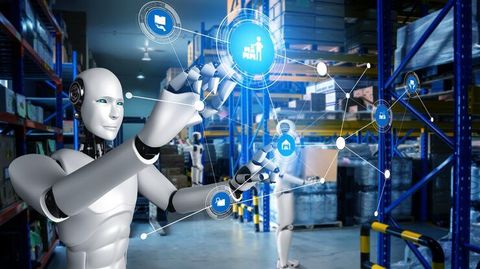
Warehouse Automation Basics: Understanding Its Role in Modern Global Logistics
Warehouse automation refers to the use of advanced technologies, computer systems, robotics, and automated equipment to manage activities inside warehouses and distribution centres. These technologies help businesses handle inventory, organize products, prepare shipments, and coordinate the movement of goods with greater accuracy.
Traditional warehouses depend heavily on manual activities, including product sorting, picking, packing, storage, and inventory counting. As international trade and online shopping continue to expand, these traditional processes face increasing pressure to handle larger order volumes and more complicated distribution networks.
Warehouse automation addresses these challenges by combining physical equipment with digital systems. Automated storage and retrieval systems (AS/RS), autonomous mobile robots (AMRs), conveyor systems, barcode scanners, and artificial intelligence (AI) are among the technologies transforming modern warehouse environments.
The purpose is not simply to replace manual activities. It is to create connected warehouse operations where equipment, employees, software, and inventory information work together.
Why Global Logistics Is Moving Toward Automation
Global logistics involves transporting and managing goods across manufacturers, warehouses, distribution centres, ports, and retailers. Delays at one stage can affect the entire supply chain.
Warehouse automation helps organizations coordinate these activities while responding to changing customer expectations, international distribution requirements, and fluctuations in product demand.
Several factors are encouraging this transformation:
Increasing order volumes: International e-commerce and omnichannel retail have created more frequent and varied order requirements.
Inventory accuracy: Automated tracking helps reduce errors in stock records and product identification.
Operational consistency: Machines can perform repetitive activities according to programmed instructions.
Faster order processing: Automated picking, sorting, and movement systems can reduce unnecessary handling.
Supply chain visibility: Connected software provides information about inventory levels and warehouse activity.
Space utilization: Automated storage systems can use vertical warehouse space more efficiently.
These developments affect manufacturers, retailers, logistics operators, wholesalers, and consumers. Smaller distribution facilities are also exploring automation technologies that can be introduced gradually rather than through complete warehouse redesigns.
Main Technologies Driving Warehouse Automation
Modern warehouse automation depends on several connected technologies. Each performs a different function, but they can operate together through warehouse management software and integrated control systems.
Automated Storage and Retrieval Systems (AS/RS)
AS/RS technology uses automated machines, cranes, lifts, and robotic equipment to store and retrieve products from designated locations. These systems are particularly useful in warehouses with high inventory volumes and limited floor space.
Common applications include:
Automated pallet storage.
High-density storage arrangements.
Robotic inventory retrieval.
Automated handling of small containers.
Autonomous Mobile Robots (AMRs)
AMRs use sensors, cameras, mapping technology, and artificial intelligence to navigate warehouse environments. They transport products, containers, and materials between different operational areas.
Unlike traditional automated guided vehicles (AGVs), which commonly follow predefined routes or guidance systems, AMRs can adapt their movement based on changing surroundings.
Artificial Intelligence and Machine Learning
AI systems analyze warehouse information to identify patterns, forecast demand, and improve inventory management. Machine learning models can use historical order information and current operational data to support better planning.
Examples include:
Predictive inventory management.
Intelligent warehouse slotting.
Automated order prioritization.
Workforce and equipment scheduling.
Identification of unusual inventory movements.
Warehouse Management Systems (WMS)
A WMS is software designed to coordinate warehouse activities. It maintains inventory records, manages product locations, tracks incoming and outgoing shipments, and connects different warehouse technologies.
Internet of Things (IoT)
IoT devices use connected sensors to collect information from warehouse equipment and storage environments. Temperature sensors, RFID readers, smart cameras, and equipment monitoring devices help organizations maintain better operational visibility.
How Automation Changes Daily Warehouse Operations
Warehouse automation transforms several activities that traditionally require repeated manual handling.
Warehouse activity | Traditional approach | Automated approach |
|---|---|---|
Inventory tracking | Manual counting | RFID and barcode scanning |
Product picking | Employee-led picking | Robotic picking assistance |
Material movement | Manual carts and forklifts | AMRs and conveyors |
Product storage | Manual placement | Automated storage systems |
Order sorting | Manual sorting | Automated sorting machines |
Warehouse monitoring | Periodic inspections | Connected sensors and analytics |
Receiving and Inventory Management
When goods arrive, barcode scanners, RFID technology, and automated identification systems can record product information. The WMS updates inventory records and identifies suitable storage locations.
This process improves inventory visibility and reduces errors associated with repeated manual data entry.
Picking, Packing, and Sorting
Automated picking systems identify the products required for an order and coordinate their movement toward packing areas. Robotic arms equipped with cameras and specialized grippers can recognize and handle different product shapes.
Automated sorting equipment then directs packages toward appropriate dispatch areas according to destination or shipment requirements.
Dispatch and Distribution
Automated conveyor networks, scanning equipment, and digital shipment management systems help coordinate outgoing products. When connected with transportation management systems (TMS), warehouse information can also support distribution planning and shipment tracking.
Recent Developments in Warehouse Automation During 2025–2026
Warehouse automation has entered a period of rapid technological development. Recent developments demonstrate a shift from individual automated machines toward intelligent systems that coordinate multiple warehouse activities.
Artificial Intelligence Is Moving Beyond Forecasting
On September 16, 2026, Gartner identified four important AI trends transforming warehousing: advanced optimization, operational generative AI, semiautonomous agents, and physical AI agents.
These developments indicate that warehouse AI is increasingly being used to support operational decisions, generate work instructions, coordinate activities, and interact with physical equipment.
Robotic Systems Are Becoming More Adaptive
On November 9, 2026, DHL Supply Chain announced pilots involving adaptive AI-powered robotics and AI orchestration in warehouse operations.
The company reported that its global network had deployed more than 9,000 robots and that advanced digitalization solutions were present in over 95% of its warehouses. These figures illustrate the growing integration of robotics and digital technologies in large logistics networks.
New Generation Warehouse Robots
In June 2026, Amazon presented developments involving its Proteus warehouse robot, STARK robotic tote-handling system, and Vulcan robot equipped with tactile capabilities.
The announcement highlighted growing interest in robots that can navigate warehouse environments, handle containers, and respond to more complicated operational instructions. Some of these developments remain subject to testing and future deployment plans.
Emerging Trends for the Coming Years
Other important developments include:
Physical AI: Combining artificial intelligence with robotic equipment and environmental sensors.
Multi-agent systems: Coordinating multiple intelligent software agents across warehouse processes.
Computer vision: Identifying products, packaging conditions, and handling requirements.
Digital twins: Creating virtual representations of warehouse operations to evaluate different operational scenarios.
Humanoid robotics: Exploring robots capable of handling different physical tasks in environments designed primarily for people.
These technologies are developing at different speeds. Purpose-built robotic equipment is already used in many facilities, while more flexible humanoid systems remain at earlier stages of adoption.
Regulations, Workplace Safety, and Government Policies
Warehouse automation is influenced by machinery regulations, workplace safety requirements, data protection rules, and national industrial policies. There is no single worldwide regulation covering every automated warehouse. Requirements depend on the country where equipment is manufactured, installed, and operated.
European Union Machinery Regulation
Regulation (EU) 2023/1230 establishes health and safety requirements for machinery and related products in the European Union. It includes provisions concerning machinery with AI-based safety functions and cybersecurity aspects of safety-related control systems.
The regulation is scheduled to apply from January 20, 2027, replacing the previous Machinery Directive framework. Organizations preparing automated warehouse equipment for the European market should consider these requirements during system design and conformity assessment.
United States Workplace Safety Requirements
In the United States, the Occupational Safety and Health Administration (OSHA) provides workplace safety requirements relevant to warehouses and robotic equipment.
Important areas include:
29 CFR 1910.178 for powered industrial trucks.
29 CFR 1910.212 for general machine guarding.
29 CFR 1910.147 for control of hazardous energy.
Appropriate employee training and workplace hazard assessments.
OSHA also highlights risks associated with automated conveyors, robotic equipment, and interactions between people and machinery.
India's Industrial and Workplace Framework
In India, warehouse automation is influenced by applicable factory, occupational safety, electrical safety, fire protection, and state-level regulatory requirements. Organizations must identify which provisions apply to their particular facility and activities.
Government initiatives supporting manufacturing modernization and industrial infrastructure also contribute to the wider environment in which logistics automation is developing.
Important Compliance Considerations
Organizations introducing automated warehouse equipment should evaluate:
Machine guarding and emergency stop systems.
Safe movement of robots and employees.
Electrical installation and equipment maintenance.
Employee training and operating procedures.
Cybersecurity for connected warehouse systems.
Protection of inventory and operational information.
Regulatory compliance should be considered throughout installation, testing, daily operations, and equipment maintenance.
Useful Tools and Resources for Warehouse Automation
Organizations evaluating warehouse automation can use several digital platforms, technical resources, and planning tools to understand their operational requirements.
Warehouse Management Software
WMS platforms help coordinate inventory, storage, picking, and dispatch activities.
Examples include:
SAP Extended Warehouse Management (SAP EWM).
Oracle Warehouse Management.
Manhattan Active Warehouse Management.
Blue Yonder Warehouse Management.
Warehouse Robotics and Automation Platforms
These technologies support automated material handling, robotic picking, and warehouse movement.
Examples include:
AutoStore.
Dematic.
Geekplus.
ABB.
Planning and Analytical Resources
Several resources can help organizations understand automation requirements:
Warehouse layout planning: Digital warehouse modelling tools help evaluate storage arrangements, aisle dimensions, and equipment placement.
Inventory forecasting: Analytical software helps estimate future stock requirements using historical data.
Digital twin platforms: Virtual warehouse models help examine equipment movement and operational scenarios.
Safety assessment resources: OSHA publications and ISO machinery safety standards help identify potential workplace hazards.
Performance dashboards: Operational dashboards track inventory accuracy, picking productivity, equipment availability, and order processing times.
Frequently Asked Questions
1. What is warehouse automation in global logistics?
Warehouse automation involves using robotics, software, sensors, and automated equipment to manage warehouse activities. It supports inventory tracking, product storage, picking, sorting, and shipment preparation across international supply chains.
2. How does artificial intelligence improve warehouse operations?
Artificial intelligence analyzes inventory information, order patterns, and operational data. It helps organizations forecast demand, identify suitable storage locations, coordinate warehouse activities, and support decision-making.
3. What is the difference between AGVs and AMRs?
Automated Guided Vehicles generally follow predefined routes or guidance systems. Autonomous Mobile Robots use sensors and mapping technology to navigate changing environments and adjust their movement when obstacles appear.
4. Does warehouse automation eliminate the need for employees?
No. Automation changes how warehouse activities are performed but does not eliminate the need for human involvement. Employees remain important for supervision, maintenance, technical support, safety management, and handling unusual operational situations.
5. What are the main challenges of implementing warehouse automation?
Common challenges include infrastructure requirements, software integration, equipment maintenance, cybersecurity, employee training, and workplace safety. Organizations must also evaluate whether their existing warehouse layout and inventory processes are suitable for automation.
Conclusion
Warehouse automation is becoming an important part of modern global logistics. Robotics, artificial intelligence, automated storage systems, and warehouse management software are changing how products move through distribution networks.
These technologies help organizations improve inventory visibility, coordinate material handling, reduce repetitive activities, and respond to changing supply chain requirements. Their growing adoption also introduces new responsibilities involving equipment safety, cybersecurity, employee training, and regulatory compliance.
Future warehouse environments are likely to combine intelligent software, connected equipment, and human expertise. Although automation will continue to develop, successful implementation will depend on selecting appropriate technologies, maintaining reliable systems, and ensuring that people and machines can work safely together.
Understanding these developments provides valuable insight into the future of warehouse automation, industrial robotics, supply chain management, and global logistics.

Related Post...
Warehouse Automation Basics: Understanding Its Role in Modern Global Logistics
Updated: November 26, 2026
Read More
Key Insights Into Global Industrial Equipment Demand From Data Centre Growth
Updated: November 26, 2026
Read More
A Guide to Understanding Humanoid Robots and the Future of Manufacturing Jobs
Updated: November 26, 2026
Read More