Understanding Physical AI: An Overview of the Next Industrial Robotics Revolution
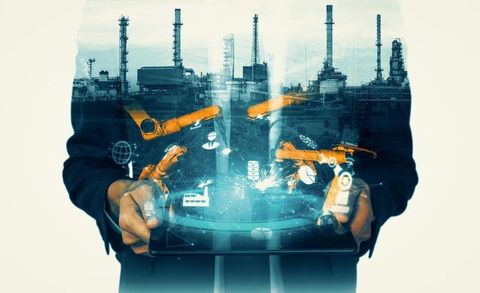
Physical AI refers to artificial intelligence systems that can understand, interact with, and respond to the physical world. Unlike traditional AI, which mainly processes digital information, Physical AI connects intelligent software with machines, sensors, robotic arms, autonomous mobile robots, and other physical equipment.
In industrial robotics, this technology allows machines to observe their surroundings, interpret information, make decisions, and perform physical actions. It combines machine learning, computer vision, robotics engineering, sensor technology, and real-time computing.
Traditional industrial robots generally follow programmed instructions to complete specific activities. Physical AI introduces greater adaptability by allowing robots to respond to changes in their environment.
For example, an AI-powered robotic arm can identify different objects, understand their positions, and adjust its movements when an object is placed differently. This capability is particularly relevant in modern manufacturing environments where production requirements can change frequently.
How Does Physical AI Work?
Physical AI connects several technologies to create intelligent robotic systems.
Computer Vision: Cameras and image-processing systems help robots identify objects, recognize patterns, and understand their surroundings.
Machine Learning: Algorithms allow robotic systems to learn from operational data and improve their decision-making.
Sensor Technology: Cameras, force sensors, depth sensors, and proximity detectors provide information about the physical environment.
Motion Planning: Intelligent algorithms calculate suitable movements while considering obstacles, distance, and positioning.
Edge Computing: Local computing hardware processes information close to the robot, supporting faster responses.
Simulation Technology: Virtual environments allow engineers to test robotic movements and operational scenarios before physical deployment.
These technologies work together to create robots that can perform more complex activities with less dependence on fixed instructions.
Why Physical AI Matters for Modern Manufacturing
Improving Industrial Productivity
Manufacturing facilities operate under continuous pressure to maintain production quality, improve operational efficiency, and manage complex production processes.
Physical AI can help address these requirements by allowing robots to perform repetitive and physically demanding activities with greater adaptability.
Intelligent robotic systems can also monitor their surroundings and respond to unexpected changes. This reduces dependence on manual adjustments during certain manufacturing activities.
Supporting Workplace Safety
Industrial environments may involve heavy materials, high temperatures, hazardous substances, and repetitive movements.
Physical AI can support workplace safety through:
Detecting nearby workers and unexpected obstacles.
Adjusting robotic movements when environmental conditions change.
Identifying unusual machine behaviour.
Supporting automated inspection in potentially hazardous areas.
Improving coordination between human workers and collaborative robots.
However, AI-based decision-making does not automatically guarantee safety. Proper equipment design, risk assessment, protective systems, and human supervision remain essential.
Applications Across Different Industries
Physical AI has applications across several industrial sectors.
Industry | Potential application |
|---|---|
Automotive | Intelligent assembly and material handling |
Electronics | Precision component placement and inspection |
Warehousing | Autonomous transportation and sorting |
Food manufacturing | Automated packaging and quality inspection |
Pharmaceuticals | Robotic handling and controlled production |
Heavy machinery | Equipment inspection and automated operations |
Aerospace | Precision assembly and component positioning |
Physical AI and Traditional Industrial Robotics
Feature | Traditional robotics | Physical AI robotics |
|---|---|---|
Instructions | Mainly predefined | AI-assisted decisions |
Environment | Structured | Greater adaptability |
Object recognition | Limited or separately programmed | Advanced computer vision |
Learning | Usually requires reprogramming | Can learn through data and training |
Movement | Predetermined paths | Adaptive motion planning |
Decision-making | Rule-based | AI-assisted reasoning |
Physical AI does not make every traditional robot unnecessary. Instead, it introduces additional intelligence that can improve the capabilities of existing robotic platforms.
Recent Developments and Emerging Trends in Physical AI
Physical AI has gained considerable attention during 2026 as technology companies, robotics manufacturers, and industrial automation developers have introduced new models, simulation platforms, and intelligent robotic systems.
Advanced Robotics Models and Foundation Models
On January 5, 2026, NVIDIA announced new Physical AI technologies at CES, including updates to its Cosmos model family and Isaac GR00T N1.6. These developments focus on helping robots understand their surroundings, reason about physical situations, and perform more complex movements.
The technologies also support simulation-based training, allowing developers to prepare robotic systems for different physical environments.
Industrial Robotics Partnerships
On March 9, 2026, ABB Robotics announced an integration of NVIDIA Omniverse technologies into RobotStudio. The collaboration focuses on connecting virtual simulation with real-world industrial robotics applications.
This development highlights the growing importance of digital twins, virtual commissioning, and AI-assisted manufacturing environments.
On March 16, 2026, NVIDIA also announced collaborations involving industrial robotics companies such as FANUC, KUKA, YASKAWA, and ABB. The developments focused on physical AI models, robotic simulation, and intelligent automation across industrial environments.
New Developments in Robotics Safety
On June 22, 2026, NVIDIA announced Halos for Robotics, a safety architecture designed for physical AI systems. It focuses on integrating computing, sensor connectivity, and safety-related software to support responsible robotic deployment.
This development reflects the growing recognition that intelligent machines need reliable safety mechanisms when operating around people and industrial equipment.
Expansion Across Manufacturing Markets
On July 15, 2026, NVIDIA announced developments involving Japanese robotics and manufacturing companies, including FANUC, Fujitsu, Hitachi, Kawasaki Heavy Industries, and Yaskawa.
The collaboration highlighted applications of physical AI in manufacturing, industrial automation, infrastructure, and intelligent machinery.
Global Industrial Robot Adoption
According to the International Federation of Robotics, its September 24, 2026 report recorded approximately five million industrial robots operating in factories worldwide during 2025. More than 600,000 new industrial robots were installed during that year.
This demonstrates the expanding foundation for AI-enhanced industrial automation, although conventional industrial robots and Physical AI robots are not the same category.
Key Technology Trends
Emerging trend | Industrial significance |
|---|---|
Humanoid robotics | Human-like movement for selected industrial tasks |
Autonomous mobile robots | Intelligent movement across factories |
Digital twins | Virtual testing of production environments |
Vision-language-action models | Connecting visual understanding with physical actions |
Edge AI computing | Faster local processing |
Collaborative robotics | Improved human-robot coordination |
These developments suggest that the next stage of industrial robotics will involve more intelligent, connected, and adaptable machines. However, widespread adoption will depend on reliability, technical validation, safety, and practical manufacturing requirements.
Laws, Regulations, and Government Policies
Physical AI in industrial robotics is influenced by machinery safety regulations, workplace protection requirements, industrial standards, and emerging artificial intelligence legislation.
Because industrial robotics operates internationally, manufacturers must understand the regulatory requirements of the countries where their equipment is designed, installed, and operated.
International Robotics Safety Standards
The International Organization for Standardization (ISO) develops standards that support the safe design and operation of industrial robots.
Two important standards are:
ISO 10218-1:2025: Establishes safety requirements for industrial robot design and manufacturing.
ISO 10218-2:2025: Addresses safety requirements for industrial robot applications and robot-cell integration.
The revised 2025 standards are particularly relevant to modern industrial environments, including applications involving collaborative robots.
European Union Regulations
The European Union has introduced regulatory frameworks relevant to AI-powered industrial machinery.
Important regulations include:
EU AI Act: Regulation (EU) 2024/1689 establishes requirements for artificial intelligence systems, including risk management, transparency, and human oversight where applicable.
EU Machinery Regulation: Regulation (EU) 2023/1230 establishes machinery safety requirements and is scheduled to apply from January 20, 2027.
Workplace Safety Requirements: Employers must assess workplace risks and maintain appropriate protective measures when introducing robotic equipment.
AI systems that function as safety components of machinery may fall into high-risk regulatory categories, depending on their intended purpose and applicable legislation.
United States Regulations
In the United States, industrial robotics is influenced by Occupational Safety and Health Administration (OSHA) workplace safety requirements.
Manufacturers and industrial operators should consider:
Machine guarding requirements.
Industrial robot cell safety.
Emergency stop mechanisms.
Risk assessment and employee training.
Applicable ANSI/RIA industrial robot safety standards.
India and Industrial Automation
In India, industrial robotics is influenced by workplace safety legislation, machinery requirements, and government manufacturing initiatives.
Relevant considerations include:
The Occupational Safety, Health and Working Conditions Code, 2020, subject to its applicable commencement and implementation provisions.
Factory safety requirements and applicable state-level rules.
Government initiatives such as Make in India and the Production Linked Incentive (PLI) schemes, which support selected manufacturing sectors.
Industrial safety standards and relevant technical requirements for machinery and automation.
Regulatory obligations depend on the specific equipment, workplace, application, and applicable national or state legislation. Businesses should verify current requirements before deploying autonomous robotic systems.
Tools and Resources for Physical AI Development
Developers, manufacturing engineers, robotics researchers, and automation specialists can use several technology platforms to understand, develop, simulate, and evaluate Physical AI applications.
Robotics Development Platforms
1. NVIDIA Isaac
NVIDIA Isaac provides robotics development frameworks, simulation environments, and AI technologies. It supports robotic perception, navigation, manipulation, and simulation-based training.
2. ROS 2 (Robot Operating System 2)
ROS 2 is an open-source framework used to develop robotic applications. It provides tools for communication between robotic components, sensor integration, navigation, and motion control.
3. NVIDIA Omniverse
Omniverse supports physically accurate simulation and digital twin development. Engineers can use virtual environments to evaluate industrial layouts, robotic movements, and manufacturing processes.
4. Gazebo Simulation
Gazebo provides simulation capabilities for testing robotic systems, sensors, environments, and movement without immediately requiring physical equipment.
5. MATLAB and Simulink
These engineering platforms support robotic modelling, control system development, simulation, and analysis of intelligent industrial systems.
Helpful Learning and Research Resources
Resource | Main purpose |
|---|---|
NVIDIA Developer | Robotics AI development resources |
ROS Documentation | Robotics programming and integration |
ISO | Industrial safety standards |
IFR | Global robotics industry research |
IEEE Xplore | Robotics and AI research papers |
MATLAB Documentation | Robotics modelling and simulation |
Hugging Face | AI models and development resources |
These resources can help professionals understand robotics technologies, evaluate emerging applications, and develop technical knowledge about intelligent manufacturing systems.
Frequently Asked Questions
1. What Is Physical AI in Industrial Robotics?
Physical AI is the integration of artificial intelligence with physical machines and robotic systems. It enables robots to perceive their surroundings, interpret information, make decisions, and perform physical activities based on changing conditions.
2. How Is Physical AI Different From Traditional Robotics?
Traditional industrial robots generally follow predefined instructions and programmed movements. Physical AI introduces advanced perception, machine learning, and adaptive decision-making, allowing robots to respond more effectively to different situations.
3. Which Industries Can Benefit From Physical AI?
Automotive manufacturing, electronics, aerospace, pharmaceuticals, food processing, warehousing, and heavy machinery are among the industries that can benefit from Physical AI. Its applications include automated inspection, material handling, assembly, and intelligent equipment monitoring.
4. Can Physical AI Robots Work Alongside Humans?
Yes. Physical AI can support collaborative robotics through environmental awareness, obstacle detection, and adaptive movement. However, appropriate safety systems, risk assessments, protective equipment, and human supervision are necessary to support safe operations.
5. Will Physical AI Replace Traditional Industrial Robots?
Physical AI is more likely to enhance many existing robotic systems rather than completely replace them. Traditional robots remain useful for predictable, repetitive activities, while AI-enhanced systems can provide additional flexibility for more complicated manufacturing environments.
Conclusion
Physical AI represents an important development in industrial robotics by combining artificial intelligence, machine learning, computer vision, sensor technology, and advanced motion control. It is changing how manufacturers approach automation, production planning, equipment monitoring, and workplace safety.
Recent developments in robotics foundation models, digital twins, autonomous machines, and simulation technologies indicate growing interest in intelligent industrial systems. These innovations could help factories manage changing production requirements and perform increasingly complex activities.
However, successful implementation requires more than advanced AI algorithms. Manufacturers must consider equipment reliability, cybersecurity, workforce training, regulatory compliance, and physical safety. Human supervision will also remain important, particularly in environments where robotic decisions can affect people and critical manufacturing operations.
As the technology matures, Physical AI is expected to become an increasingly important part of smart factories and next-generation industrial automation. Its long-term influence will depend on how effectively intelligent robotic systems can combine adaptability, precision, reliability, and safety in real-world manufacturing environments.

Related Post...
Key Insights Into Precision Engineering and Advanced Machine Tool Technology
Updated: November 26, 2026
Read More
Understanding Physical AI: An Overview of the Next Industrial Robotics Revolution
Updated: November 26, 2026
Read More
Warehouse Automation Basics: Understanding Its Role in Modern Global Logistics
Updated: November 26, 2026
Read More