A Guide to CNC Milling Tools: Technology, Parts, and Applications
Computer Numerical Control (CNC) milling machines are integral to modern manufacturing, playing a critical role in the production of complex parts and components.
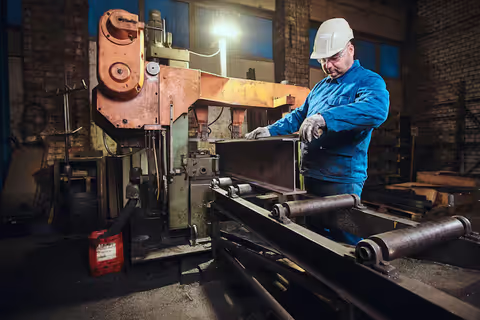
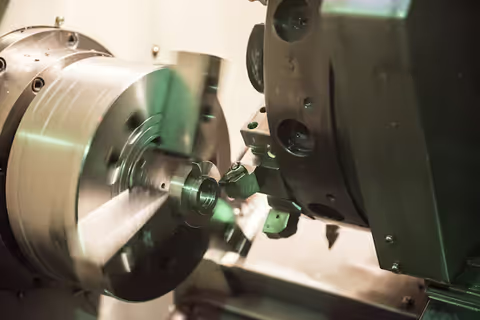
By automating the control of milling tools and machinery through programmed computer directives, CNC milling machines enhance precision and efficiency in the manufacturing process. This article delves into the technology, components, and diverse applications of CNC milling machines, offering an educational overview for those interested in the mechanics and usage of these sophisticated devices. At the core of CNC milling technology is the ability to create precise and intricate parts by following a digital design, usually prepared through CAD (Computer-Aided Design) software. These designs are interpreted by the CNC system to guide the cutting tools in shaping materials such as metal, plastic, and wood. The precision offered by CNC milling translates to high-quality production outcomes, which is why these machines are prevalent in industries ranging from aerospace to automotive and consumer electronics. The CNC milling process is facilitated by an array of components that work in unison. Essential parts include the spindle, which rotates at high speeds to drive the milling cutters; the worktable, where the material is secured; and the control panel, from which operators manage the machine. The movement of the spindle and the worktable along the X, Y, and Z axes is controlled by stepper or servo motors, allowing for intricate three-dimensional shaping. One of the key components of CNC milling machines is the tool changer, which automatically switches between different cutting tools to perform various operations without manual intervention. This flexibility significantly reduces setup time and enhances productivity. Additionally, modern CNC milling machines incorporate advanced features such as coolant systems to maintain optimal temperatures during cutting, and feedback systems to monitor and adjust operations in real time. CNC milling machines are categorized based on the orientation of their spindles, which fundamentally affects their capabilities and applications. Vertical milling machines, where the spindle is oriented vertically, are widely used due to their versatility and ease of operation. They are particularly suited for tasks involving the face and end milling of parts. In contrast, horizontal milling machines, with their spindles fixed parallel to the worktable, are preferable for cutting grooves and slots, and for working with heavy or large volume materials. Multi-axis CNC milling machines offer additional capabilities, allowing for enhanced movement of the spindle and table beyond the traditional three axes. Four-axis machines add a rotary axis that permits rotation of the workpiece, enabling more complex cutting angles. Five-axis machines introduce an additional rotary axis, providing unparalleled flexibility and enabling the creation of highly complex parts with fewer setups and transitions. The integration of CNC milling in manufacturing extends beyond mere cutting. Advanced CNC systems are developing continuously, incorporating AI and machine learning to predict and adapt to tool wear and changing conditions, thus maximizing efficiency and reducing errors. Additionally, with the increasing focus on automation, CNC machines are often paired with robotic arms to automate material handling and post-processing steps, further streamlining the production line. In terms of application, CNC milling machines are instrumental in prototyping and small-batch production due to their versatility and rapid turnaround times. They are equally critical in mass production settings, where precision and consistency are paramount. Aerospace components, for instance, benefit from CNC milling due to the high precision required in the production of engine parts and airframe components. Similarly, in the automotive industry, CNC milling is used for crafting engine blocks, transmission components, and intricate body parts. Medical manufacturing also leverages CNC milling for producing surgical instruments, prosthetics, and implants with the precision necessary for patient compatibility and safety. The electronics industry uses CNC milling for creating circuit boards and housings, highlighting the machine's capability in handling a variety of material types and complex geometries. Education and training in CNC milling have become increasingly important, as operating these machines requires a combination of computer programming skills and knowledge of machining processes. Vocational schools and industry programs offer specialized courses to train operators and technicians, ensuring that they are adept at managing and maintaining CNC milling systems. The future of CNC milling technology is poised to evolve alongside advancements in digital manufacturing, such as the integration of IoT devices for real-time monitoring and control, and the use of cloud-based platforms for data storage and sharing. Additive manufacturing, or 3D printing, is also being combined with CNC processes to produce hybrid manufacturing systems that leverage the strengths of both subtractive and additive techniques. In conclusion, CNC milling machines are a cornerstone of modern manufacturing, with wide-ranging applications across various industries. Their ability to produce detailed and precise parts from various materials makes them indispensable tools in both large-scale production and bespoke fabrications. As technology advances, CNC milling machines are likely to become increasingly sophisticated, offering even more capabilities and efficiencies in the realm of manufacturing.

Related Post...
A Guide to CNC Milling Tools: Technology, Parts, and Applications
Updated: November 27, 2026
Read More
Modern Spinning Machines: Insights Into Spinning Technology, Yarn Production and Textile Applications
Updated: September 29, 2026
Read More