Understanding Digital Twins: A Beginner’s Guide to Industrial Applications
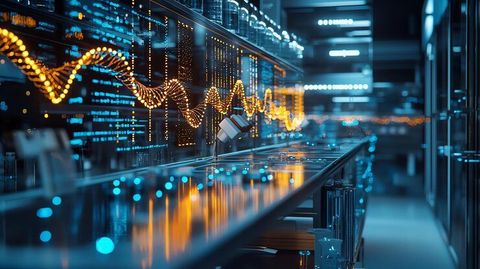
Digital twin technology is an advanced digital approach that creates a virtual representation of a physical object, machine, process, or complete industrial facility. It uses real-time data, sensors, software, and analytical models to reflect the condition and performance of its physical counterpart.
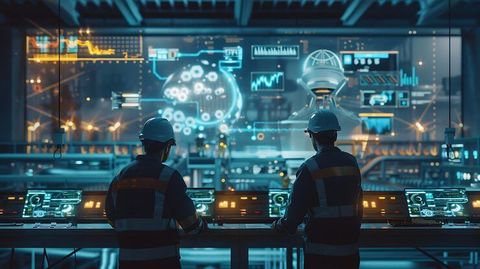
In simple terms, a digital twin works like a virtual version of an actual industrial asset. When a machine changes its operating condition, connected sensors can transmit information to its digital representation. This allows engineers and operators to understand how the physical system is performing without relying entirely on manual inspections.
Digital twins are becoming an important part of Industry 4.0, industrial Internet of Things (IIoT), artificial intelligence (AI), and smart manufacturing. These technologies work together to improve operational visibility, equipment monitoring, and industrial decision-making.
How Does a Digital Twin Work?
A digital twin combines information from physical equipment with digital models and analytical systems. Its operation generally involves several connected elements:
Physical Asset: A machine, production line, building, vehicle, or industrial system being monitored.
Sensors and IoT Devices: Collect information such as temperature, vibration, pressure, speed, and energy consumption.
Data Integration: Transfers information from connected equipment into a digital environment.
Digital Model: Represents the structure, behaviour, and operating characteristics of the physical asset.
Analytics and AI: Examine information to identify patterns, detect unusual conditions, and estimate possible outcomes.
Visualization: Presents equipment performance through dashboards, simulations, and interactive digital environments.
For example, a manufacturing company can create a digital twin of an industrial motor. The model can display operating temperature, vibration levels, energy consumption, and performance changes. Engineers can examine this information to identify potential maintenance requirements.
Types of Digital Twins
Different digital twin models support different industrial requirements.
Type | Main Purpose | Industrial Example |
|---|---|---|
Component Twin | Represents an individual part | Industrial motor |
Asset Twin | Monitors a complete machine | CNC machine |
System Twin | Studies connected equipment | Production line |
Process Twin | Represents operational workflows | Assembly process |
Facility Twin | Models an entire facility | Manufacturing plant |
The appropriate model depends on the complexity of the industrial environment and the information required for operational analysis.
Why Digital Twin Technology Matters in Industrial Operations
Digital twin technology is becoming increasingly relevant as industrial organisations manage more complex machinery, interconnected production systems, and demanding quality requirements. Traditional monitoring methods often depend on periodic inspections and historical reports. A digital twin provides a more continuous view of equipment and operational conditions.
Predictive Maintenance and Equipment Reliability
One of the most important applications is predictive maintenance. Instead of relying only on fixed maintenance schedules, industrial operators can examine equipment data to identify unusual patterns that may indicate developing faults.
For example, changes in vibration, pressure, or temperature may indicate mechanical wear. A digital twin can compare these measurements with expected operating conditions and help maintenance teams investigate potential problems.
This approach can support:
Industrial equipment monitoring.
Predictive maintenance analytics.
Machine failure detection.
Reduced unplanned downtime.
Better maintenance planning.
Smart Manufacturing and Production Optimisation
Digital twins allow manufacturers to examine production processes in a virtual environment. Engineers can simulate different operating conditions and evaluate potential changes before implementing them on an actual production line.
This is particularly useful in automotive manufacturing, electronics production, aerospace engineering, and industrial machinery operations.
For example, a factory can simulate production-line changes to understand how machine speed, material movement, and equipment availability might affect overall production performance.
Energy Management and Operational Efficiency
Industrial facilities consume energy through machinery, heating, cooling, compressed air, and other operations. Digital twin models can combine energy consumption information with equipment performance data.
This helps operators identify inefficient operating patterns and examine possible improvements.
Important applications include:
Industrial energy management.
Electricity consumption analysis.
Smart building monitoring.
Resource utilisation.
Environmental performance tracking.
Industries Using Digital Twin Technology
Industry | Application | Potential Benefit |
|---|---|---|
Automotive | Vehicle and production simulation | Improved engineering analysis |
Aerospace | Aircraft system modelling | Performance monitoring |
Manufacturing | Production-line simulation | Better process planning |
Energy | Power plant monitoring | Operational visibility |
Construction | Building information modelling | Lifecycle coordination |
Healthcare | Medical equipment modelling | Equipment monitoring |
Logistics | Warehouse simulation | Workflow optimisation |
Digital twin technology also supports industrial asset management, supply chain visibility, and product lifecycle management. Its value depends on accurate data, suitable models, and integration with existing operational systems.
Recent Developments and Emerging Digital Twin Trends
Digital twin technology has continued to develop during 2025 and 2026. Recent research and standards activities increasingly focus on connecting multiple digital models, improving cybersecurity, and making industrial simulations more reliable.
Artificial Intelligence Integration
AI and machine learning are becoming important components of industrial digital twin platforms. These technologies can analyse large volumes of operational data and identify patterns that may be difficult to recognise through conventional monitoring.
In 2026, industrial technology discussions increasingly emphasised AI-supported predictive quality control, production analytics, and real-time decision-making. A 2026 KPMG industrial manufacturing report identified AI and machine learning for predictive quality control as a planned digital upgrade among 52% of surveyed organisations.
New Developments in Manufacturing Standards
A notable development occurred in July 2026, when ISO 23247-6:2026 was published as part of the digital twin framework for manufacturing.
The standard addresses digital twin composition, including methods for connecting and coordinating multiple digital twins. It describes integrated, unified, and federated approaches to help different models work together.
This development is important for manufacturers that want to connect equipment-level models with production systems and broader industrial environments.
Greater Attention to Cybersecurity
As digital twins connect machinery, industrial networks, cloud platforms, and operational databases, cybersecurity has become an important consideration.
In February 2025, the National Institute of Standards and Technology (NIST) published its report on security and trust considerations for digital twin technology. It discusses the need for reliable models, interoperable systems, and security measures throughout digital twin development and operation.
Digital Twin Research and Industrial Interoperability
On July 21, 2026, NIST published a report summarising workshops focused on digital twins in manufacturing. The discussions identified interoperability, model verification, cybersecurity, uncertainty measurement, and workforce readiness as important areas for future development.
These priorities highlight the importance of building digital twin systems that can exchange information reliably and produce trustworthy results.
Laws, Regulations, and Industrial Technology Policies
Digital twin technology does not operate under one universal law. Its regulatory requirements depend on the country, industry, type of information collected, and purpose of the system.
However, organisations implementing industrial digital twin technology should consider several international regulatory and standards frameworks.
Data Protection and Privacy Regulations
Digital twins may process information about employees, production activities, equipment locations, and connected industrial environments.
Where personal information is collected or processed, applicable data protection legislation becomes relevant.
Important examples include:
General Data Protection Regulation (GDPR): Applies to relevant personal data processing within its territorial scope, including certain organisations outside the European Union.
India's Digital Personal Data Protection Act, 2023: Establishes a framework for processing digital personal data in India, subject to its applicable provisions and implementation.
Other national privacy laws: Countries may have additional requirements covering data collection, storage, processing, and disclosure.
Industrial organisations should identify whether their digital twin platforms process personal information and establish appropriate data governance practices.
Cybersecurity and Critical Infrastructure
Digital twin platforms connected to industrial control systems may create cybersecurity risks if access controls and network protections are inadequate.
Relevant frameworks include:
NIST Cybersecurity Framework.
IEC 62443 industrial automation and control system security standards.
ISO/IEC 27001 information security management.
Applicable national critical infrastructure cybersecurity requirements.
These frameworks help organisations establish security controls, manage vulnerabilities, and protect operational information.
Manufacturing Standards and Government Initiatives
ISO 23247 provides an internationally recognised framework for digital twins in manufacturing. It addresses areas such as architecture, information exchange, and manufacturing data integration.
Government-supported advanced manufacturing programmes also encourage research into industrial automation, connected equipment, smart factories, and digital engineering.
In the United States, NIST's Digital Twins for Advanced Manufacturing programme focuses on improving measurement methods, interoperability, validation, and trustworthy industrial models.
Organisations should evaluate the regulations and technical standards applicable to their location rather than assuming that every digital twin deployment follows identical requirements.
Digital Twin Tools and Resources for Industrial Applications
Selecting suitable digital twin software depends on the type of machinery, available operational data, engineering requirements, and existing industrial infrastructure.
Popular Digital Twin Platforms
The following platforms support different aspects of industrial digital twin development.
1. Siemens Xcelerator
Supports industrial digitalisation, engineering simulation, product lifecycle management, and connected manufacturing environments.
2. Microsoft Azure Digital Twins
Provides a platform for creating digital representations of physical environments, connecting data sources, and modelling relationships between industrial assets.
3. Dassault Systèmes 3DEXPERIENCE
Supports product engineering, virtual simulation, product lifecycle management, and digital manufacturing processes.
4. PTC ThingWorx
Supports industrial IoT connectivity, equipment monitoring, operational data integration, and digital twin applications.
5. NVIDIA Omniverse
Provides technologies for industrial simulation, physically accurate virtual environments, and collaborative 3D workflows.
Helpful Technical Resources
Tool or Resource | Primary Application |
|---|---|
Autodesk Fusion | 3D design and engineering |
MATLAB and Simulink | System modelling and simulation |
Ansys Twin Builder | System-level digital twin development |
OpenUSD | 3D data exchange and scene description |
OPC UA | Industrial communication and interoperability |
ISO 23247 | Manufacturing digital twin framework |
Before selecting a platform, organisations should evaluate compatibility with existing equipment, data security, scalability, integration requirements, and technical support.
Frequently Asked Questions About Digital Twin Technology
What is the main purpose of digital twin technology?
Its main purpose is to create a digital representation of a physical asset or process. It helps organisations monitor equipment, analyse operational data, simulate different conditions, and improve industrial decision-making.
How is a digital twin different from a simulation?
A traditional simulation generally examines a specific scenario using defined inputs and assumptions. A digital twin can remain connected to a physical asset through continuously updated operational data, allowing it to reflect changing conditions over time.
How does digital twin technology support predictive maintenance?
It analyses equipment information, including vibration, temperature, pressure, and operating performance. Analytical models can identify unusual patterns and help maintenance teams investigate potential equipment problems before they develop into serious failures.
Which industries benefit from digital twin technology?
Manufacturing, automotive, aerospace, energy, construction, healthcare, and logistics are among the industries that use digital twins. Applications vary from production-line modelling and equipment monitoring to building management and transportation simulation.
What are the main challenges of implementing digital twins?
Common challenges include:
High-quality data collection and integration.
Compatibility between different industrial systems.
Cybersecurity and data privacy.
Accurate digital modelling and validation.
Infrastructure and implementation complexity.
Availability of specialised technical knowledge.
Organisations should address these challenges during the planning and development stages.
Conclusion
Digital twin technology is becoming an important component of modern industrial operations. By connecting physical equipment with digital models, organisations can gain better visibility into machinery performance, production activities, energy consumption, and operational processes.
Its integration with artificial intelligence, industrial IoT, cloud computing, and advanced simulation is creating new possibilities for smart manufacturing and industrial automation.
Recent developments in ISO standards, cybersecurity research, and manufacturing data interoperability demonstrate that the technology is continuing to mature. However, successful implementation requires reliable information, accurate modelling, suitable infrastructure, and appropriate security practices.
As industrial environments become increasingly connected, digital twins are likely to play a significant role in predictive maintenance, production optimisation, industrial asset management, and future manufacturing strategies.
The technology is not simply about creating virtual copies of physical machines. It is about using connected information and digital analysis to understand industrial systems and make better-informed operational decisions.

Related Post...
Understanding Digital Twins: A Beginner’s Guide to Industrial Applications
Updated: November 26, 2026
Read More
A Guide to Understanding Humanoid Robots and the Future of Manufacturing Jobs
Updated: November 26, 2026
Read More
Explore How Artificial Intelligence Is Transforming Global Manufacturing Industries
Updated: November 26, 2026
Read More