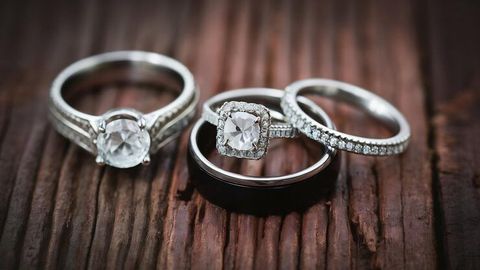
Three-Stone Engagement Rings: Meaning, Styles & Trends
Three-stone engagement rings are jewellery designs featuring three prominent gemstones arranged together on a single band. Traditionally, the central stone is larger than the two surrounding stones, creating a balanced appearance. Diamonds are commonly used, although sapphires, emeralds, rubies, and other gemstones can also form part of the design.
The three-stone arrangement has a symbolic meaning associated with a relationship's past, present, and future. The first stone represents shared memories, the centre stone represents the present relationship, and the third represents hopes for the future. Although this interpretation is widely recognised, couples can assign their own personal meaning to the arrangement.
Historically, three-stone jewellery has been associated with decorative gemstone settings and traditional diamond craftsmanship. Over time, the design became an established option for engagement jewellery because it combines visual balance, symbolism, and flexibility in gemstone selection.
Modern three-stone engagement rings are available in several configurations, including:
- Classic diamond designs: A central round diamond accompanied by two smaller diamonds.
- Oval three-stone rings: An elongated centre gemstone with complementary side stones.
- Emerald-cut designs: Rectangular gemstones that create a structured appearance.
- Mixed-gemstone arrangements: Combinations of diamonds and coloured gemstones.
- Vintage-inspired settings: Decorative bands featuring detailed metalwork and traditional patterns.
The design can be adapted to different preferences, making it relevant to both traditional and contemporary jewellery styles.
Why Three-Stone Engagement Rings Matter Today
Three-stone engagement rings remain relevant because they combine emotional symbolism with practical design flexibility. Their structure also provides an opportunity to explore different gemstone shapes, colours, and metal combinations.
These rings are relevant to engaged couples, jewellery enthusiasts, gemstone collectors, and individuals researching engagement ring styles.
Emotional and Personal Significance
The past, present, and future interpretation gives the three-stone arrangement an emotional dimension. Couples may also associate the individual gemstones with important milestones, family connections, or personal memories.
Design Flexibility
Unlike a traditional solitaire setting, which features one central gemstone, a three-stone arrangement allows several combinations.
For example, a round centre diamond can be paired with pear-shaped side stones. Similarly, an emerald-cut centre stone can be accompanied by smaller trapezoid-shaped diamonds.
Visual Balance
The two side stones create additional visual width and complement the central gemstone. Depending on their proportions and settings, they can make the overall ring appear more substantial.
Gemstone Selection and Transparency
Understanding gemstone quality is important when evaluating engagement rings. The four commonly recognised diamond grading factors are:
- Cut: How effectively a diamond interacts with light.
- Colour: The degree of colourlessness in a white diamond.
- Clarity: The presence of internal inclusions and external blemishes.
- Carat: The measurement of a diamond's weight.
These factors help explain differences between individual diamonds. However, their visual appearance also depends on the gemstone's shape, proportions, setting, and lighting conditions.
Durability and Everyday Wear
An engagement ring is often worn regularly. Therefore, the security of its gemstone settings, the durability of its metal, and the comfort of its band matter.
Prong settings allow more light to reach gemstones, while bezel settings surround the stone with a protective metal edge. Both approaches have different design and maintenance considerations.
Recent Updates and Three-Stone Engagement Ring Trends
During 2025 and 2026, engagement jewellery discussions have increasingly highlighted individual design preferences, alternative gemstone arrangements, and distinctive metalwork.
Three-stone engagement rings have continued to appear in bridal jewellery trend reports, reflecting interest in designs that combine traditional symbolism with contemporary styling.
A 2025 bridal jewellery trend report published by Brides highlighted the renewed interest in three-stone arrangements, wider bands, coloured gemstones, and alternative diamond shapes.
A 2026 bridal jewellery trend report from Stuller also identified multi-stone arrangements, including three-stone and five-stone designs, as notable design directions.
Important developments and observations include:
- January 2025: Bridal jewellery trend coverage highlighted renewed interest in three-stone settings and distinctive diamond shapes.
- 2025: Wider bands, bezel settings, and coloured centre gemstones received increased attention in engagement ring design discussions.
- Early 2026: Industry trend reporting continued to identify multi-stone jewellery as an established contemporary design direction.
- 2026: Lab-grown diamonds continued to feature in discussions about diamond selection, gemstone characteristics, and jewellery preferences.
Available industry data also illustrates the continued presence of three-stone designs.
The following figures from BriteCo's 2026 jewellery and diamond index show the reported share of engagement ring settings by style.
| Engagement ring style | 2025 | 2026 (Jan–Jun) |
|---|---|---|
| Solitaire | 29.3% | 29.4% |
| Classic | 19.7% | 19.5% |
| Halo | 10.8% | 9.6% |
| Three-stone | 10.5% | 11.2% |
| Side-stone | 10.0% | 9.1% |
| Pavé | 5.9% | 5.0% |
These figures indicate that the three-stone category increased by 0.7 percentage points between the reported periods. They represent the dataset's engagement ring style distribution rather than the entire global jewellery market.
Emerging Design Preferences
Several design characteristics are receiving attention:
- Oval, emerald, and radiant-cut centre diamonds.
- Yellow gold and mixed-metal ring settings.
- Coloured gemstone combinations.
- Low-profile settings designed for everyday comfort.
- Lab-grown and natural diamond combinations.
- Vintage-inspired details with contemporary proportions.
These developments reflect changing design preferences rather than a requirement to follow a particular fashion.
Laws and Policies Affecting Three-Stone Engagement Rings in India
In India, three-stone engagement rings are affected by jewellery quality standards, consumer protection rules, precious-metal hallmarking requirements, and advertising regulations.
The most relevant framework is administered by the Bureau of Indian Standards (BIS).
BIS Hallmarking Requirements
Under India's Hallmarking of Gold Jewellery and Gold Artefacts Order, 2020, as amended, mandatory gold hallmarking applies in notified districts, subject to specified exemptions.
The BIS hallmark identifies the purity of the gold used in a jewellery article. A genuine hallmark includes three important components:
- BIS Standard Mark.
- Purity or fineness mark.
- Six-digit Hallmark Unique Identification (HUID) code.
Common gold purity grades include 14K, 18K, 20K, and 22K. The appropriate grade depends on the jewellery's intended composition and characteristics.
For three-stone engagement rings made with gold bands, hallmark verification helps establish the declared gold purity. It does not independently certify the quality of the diamonds.
Diamond Certification and Disclosure
Diamond grading is separate from gold hallmarking. Gemological reports from recognised laboratories can provide information about a diamond's characteristics, including its cut, colour, clarity, carat weight, and whether it is natural or laboratory-grown.
Consumers should understand that a laboratory-grown diamond and a natural diamond have different origins, even though both are diamond material.
Consumer Protection Rules
The Consumer Protection Act, 2019, provides a framework against misleading representations and unfair trade practices.
Jewellery descriptions should accurately represent important characteristics, including:
- Gold purity and metal composition.
- Natural or laboratory-grown diamond identification.
- Gemstone weight and relevant grading information.
- Product specifications and documented characteristics.
Advertising Standards
The Advertising Standards Council of India (ASCI) guidelines require advertising claims to be truthful and capable of substantiation.
Descriptions of diamond quality, gemstone origin, metal purity, and certification should not create misleading impressions.
These requirements are relevant to jewellery-related educational content, digital advertising, and product descriptions.
Tools and Resources for Understanding Three-Stone Engagement Rings
Several established resources help individuals understand diamond characteristics, gold purity, gemstone certification, and jewellery documentation.
1. BIS CARE App
The BIS CARE mobile application includes a Verify HUID feature. It helps users check the identification details of hallmarked gold jewellery.
2. GIA Diamond Research Tools
The Gemological Institute of America (GIA) provides educational resources about diamond grading, gemstone identification, diamond characteristics, and jewellery terminology.
3. IGI Gemstone and Diamond Reports
The International Gemological Institute (IGI) provides grading and identification reports for diamonds and other gemstones. These documents help explain the characteristics recorded during laboratory assessment.
4. Diamond Size Comparison Tools
Online diamond size comparison calculators help users understand how different gemstone shapes and carat weights may appear when viewed from above.
These tools are useful for understanding proportions, although actual dimensions vary between individual stones.
5. Jewellery Insurance Calculators
Jewellery insurance assessment tools can help explain the information typically required when documenting valuable jewellery. Depending on the insurer, this may include invoices, gemstone reports, photographs, and independent valuations.
6. Ring Size Measurement Tools
Ring sizing charts and measurement guides help explain different international sizing systems. Professional measurement can provide additional accuracy because band width and ring design may influence comfort.
7. Jewellery Care Guides
Gemological and jewellery education resources provide guidance on cleaning, storing, and maintaining gemstone settings. They also explain why regular inspection is important for rings containing multiple stones.
Frequently Asked Questions About Three-Stone Engagement Rings
1. What do the three stones in an engagement ring represent?
The three stones traditionally represent the past, present, and future of a relationship. The arrangement symbolises shared experiences, the current relationship, and future aspirations. However, individuals can give the stones their own personal meanings.
2. Are three-stone engagement rings suitable for everyday wear?
Yes, three-stone engagement rings can be worn regularly when their design is appropriate for everyday activities. Secure gemstone settings, comfortable band proportions, and durable metal composition are important considerations. Regular inspection can help identify loose stones or damaged settings.
3. Which diamond shapes are commonly used in three-stone rings?
Round, oval, emerald, princess, and pear-shaped diamonds are commonly used. The centre stone and side stones can have matching or contrasting shapes. The final appearance depends on their proportions, arrangement, and setting style.
4. What is the difference between natural and lab-grown diamonds?
Natural diamonds develop through geological processes beneath the Earth's surface over extended periods. Lab-grown diamonds are produced using technological processes that replicate the conditions required for diamond formation. Both consist of crystalline carbon and share essential physical and chemical properties, although their origins differ.
5. Does a BIS hallmark certify all three diamonds in an engagement ring?
No. A BIS hallmark verifies the declared purity of the precious metal covered by the hallmarking system. It does not establish the quality, origin, or grading of individual diamonds. Separate gemological documentation may be used to describe gemstone characteristics.
Conclusion
Three-stone engagement rings combine traditional symbolism, gemstone craftsmanship, and contemporary jewellery design. Their association with the past, present, and future gives them a meaningful place in engagement jewellery, while their flexible arrangements allow different gemstone shapes, colours, and metal combinations.
Recent jewellery trends during 2025 and 2026 demonstrate continued interest in multi-stone settings, alternative diamond shapes, coloured gemstones, and distinctive band designs.
For individuals researching three-stone diamond engagement rings in India, understanding gold hallmarking, diamond grading, gemstone identification, and consumer protection regulations is equally important.
Reliable documentation and accurate jewellery descriptions help establish a clearer understanding of material quality and design characteristics. Ultimately, the significance of a three-stone engagement ring comes from its combination of personal meaning, thoughtful design, and enduring craftsmanship

Related Post...

Colorful Cocktail Rings: Styles, Gemstones and Jewellery Trends
Updated: November 25, 2026
Read More