Diamond Tennis Bracelets: Guide to Styles, Quality & Trends
Diamond tennis bracelets are recognised for their elegant appearance, continuous line of sparkling diamonds, and simple design. They are made by arranging individually set diamonds along a flexible metal chain, creating a consistent pattern around the wrist. Their balanced appearance makes them suitable for formal occasions, celebrations, and everyday jewellery collections.
The popularity of diamond tennis bracelets comes from their combination of traditional craftsmanship and contemporary style. They are available in different diamond shapes, metal types, settings, and lengths, allowing individuals to understand and select designs according to their personal preferences.
Understanding diamond quality, jewellery materials, manufacturing standards, and recent industry developments provides useful knowledge about this jewellery category.
What Are Diamond Tennis Bracelets?
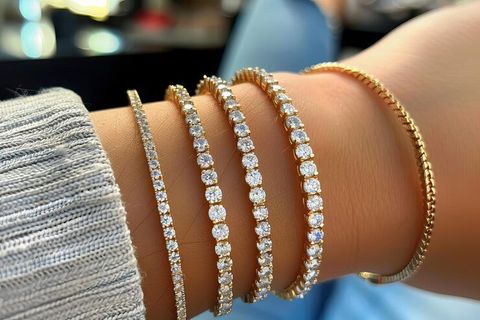
A diamond tennis bracelet is a flexible bracelet featuring a continuous arrangement of diamonds connected through individual metal settings. The diamonds are generally placed close together to create an uninterrupted appearance.
These bracelets commonly feature gold or platinum settings. Their construction allows the bracelet to follow the natural shape of the wrist while maintaining a consistent diamond pattern.
The name became widely recognised after professional tennis player Chris Evert wore a diamond bracelet during a tennis match in 1987. Her bracelet reportedly came apart during the match, leading to a search for the missing jewellery. The incident helped popularise the term tennis bracelet.
Today, the design remains an established category of fine diamond jewellery.
Importance of Diamond Tennis Bracelets
Diamond tennis bracelets remain relevant because they combine traditional jewellery design with versatility. Unlike heavily decorated accessories, their continuous diamond arrangement creates a relatively simple appearance.
Several groups have an interest in this jewellery category, including jewellery collectors, fashion enthusiasts, designers, manufacturers, and individuals researching diamond quality.
Their importance can be understood through several factors:
- Versatile styling: They complement traditional clothing, business attire, and contemporary outfits.
- Timeless design: Their symmetrical arrangement has remained popular across different fashion periods.
- Material diversity: They are available in yellow gold, white gold, rose gold, and platinum.
- Personal expression: Different diamond shapes and settings allow individual styling preferences.
- Jewellery craftsmanship: Their construction demonstrates precision in diamond selection, metalwork, and setting techniques.
Diamond tennis bracelets also help people understand important jewellery characteristics, including diamond grading, precious-metal purity, stone security, and manufacturing quality.
Diamond Quality and the Four Cs
Diamond quality is commonly assessed through four internationally recognised characteristics known as the Four Cs.
1. Cut
Cut describes how effectively a diamond interacts with light. It influences brightness, sparkle, and visual performance.
Round brilliant diamonds are particularly common in tennis bracelets because their shape produces consistent light reflection.
2. Colour
Diamond colour grading measures how much colour is visible in a diamond. The commonly used GIA scale ranges from D, representing colourless, to Z, representing noticeable light yellow or brown colour.
3. Clarity
Clarity refers to internal characteristics called inclusions and external characteristics called blemishes. The GIA clarity scale includes categories ranging from Flawless to Included.
4. Carat Weight
Carat measures the weight of a diamond. One carat equals 200 milligrams.
In tennis bracelets, total carat weight generally describes the combined weight of all the diamonds rather than the weight of an individual stone.
Common Diamond Tennis Bracelet Designs
Different designs provide variations in appearance, flexibility, and diamond visibility.
- Round brilliant tennis bracelet: Features circular diamonds arranged in a continuous pattern.
- Oval diamond tennis bracelet: Uses oval-shaped stones for an elongated visual appearance.
- Emerald-cut tennis bracelet: Features rectangular diamonds with step-cut facets.
- Bezel-set tennis bracelet: Surrounds each diamond with a protective metal rim.
- Four-prong tennis bracelet: Uses four small metal prongs to hold individual diamonds.
- Graduated tennis bracelet: Features diamonds that gradually change in size along the bracelet.
The choice of design influences the bracelet's overall appearance, movement, and setting structure.
Natural Diamonds and Lab-Grown Diamonds
Natural and laboratory-grown diamonds have essentially the same chemical composition and crystal structure. Both consist primarily of crystallised carbon.
Natural diamonds develop underground over geological periods through natural processes. Laboratory-grown diamonds are produced using controlled technological processes, primarily High Pressure High Temperature (HPHT) and Chemical Vapour Deposition (CVD).
The main differences relate to origin, production methods, market positioning, and identification.
| Characteristic | Natural Diamonds | Lab-Grown Diamonds |
|---|---|---|
| Origin | Geological formation | Controlled laboratory environment |
| Composition | Crystallised carbon | Crystallised carbon |
| Hardness | 10 on Mohs scale | 10 on Mohs scale |
| Appearance | Diamond appearance | Diamond appearance |
| Identification | Professional gem testing | Professional gem testing |
| Origin disclosure | Naturally formed | Laboratory-grown |
Clear disclosure of diamond origin is important because visual examination alone cannot reliably distinguish every natural diamond from a laboratory-grown diamond.
Recent Updates and Industry Trends (2025–2026)
The diamond jewellery industry has experienced several developments over the past year. Changing consumer preferences, laboratory-grown diamond technology, and international trade conditions have influenced the sector.
Growing interest in laboratory-grown diamonds
During 2025 and 2026, laboratory-grown diamonds continued gaining attention in the Indian jewellery market. Their production technology and increasing availability have expanded the range of diamond jewellery designs.
At the same time, natural diamonds continue to maintain a distinct position based on their geological origin and established jewellery traditions.
Changes in the Indian diamond industry
On April 10, 2026, The Economic Times reported that India had become the world's second-largest diamond jewellery market, with approximately 12% of the global market. The report highlighted growing participation from younger consumers and interest in everyday diamond jewellery.
Industry revenue developments
On November 4, 2026, CRISIL Ratings reported that India's natural diamond industry was approaching revenue stabilisation after three years of decline. Domestic demand was identified as an important supporting factor, while laboratory-grown diamonds continued influencing entry-level demand.
Greater attention to sustainability and transparency
Consumers and industry participants are increasingly interested in diamond origin, traceability, and responsible sourcing. This has encouraged greater attention to documentation and transparent product descriptions.
These developments demonstrate how traditional diamond jewellery continues to adapt to changing technology and consumer expectations.
Laws and Policies Affecting Diamond Jewellery in India
Diamond tennis bracelets are influenced by Indian consumer protection requirements, precious-metal regulations, taxation rules, and jewellery disclosure practices.
Understanding the distinction between diamond certification and metal hallmarking is particularly important.
Bureau of Indian Standards (BIS) Hallmarking
The Bureau of Indian Standards regulates hallmarking for specified precious-metal jewellery.
India introduced mandatory hallmarking requirements for gold jewellery and artefacts in notified districts in June 2021. The system identifies the purity and fineness of gold through recognised markings.
A gold tennis bracelet may therefore carry applicable BIS hallmark information for its gold components.
The standard BIS hallmarking system is not a diamond-quality grading certificate. Diamond characteristics such as cut, colour, clarity, and carat weight require separate documentation where applicable.
Hallmark Unique Identification (HUID)
The six-digit Hallmark Unique Identification code helps identify individual hallmarked gold jewellery articles.
Consumers can use the BIS CARE application to verify applicable HUID details.
Consumer Protection Act, 2019
The Consumer Protection Act, 2019, provides a framework addressing misleading representations, unfair trade practices, and consumer rights.
Accurate descriptions of diamond origin, metal purity, and product characteristics are important aspects of transparent jewellery transactions.
Diamond Certification and Grading
Independent gemological laboratories provide diamond identification and grading reports. These reports may describe the Four Cs and other relevant diamond characteristics.
A grading report should not be confused with a BIS hallmark because the two documents serve different purposes.
Goods and Services Tax (GST)
Diamond jewellery transactions in India are also subject to applicable GST provisions. The relevant classification and tax treatment depend on the nature of the transaction and current government notifications.
Tools and Resources for Diamond Jewellery Knowledge
Several established resources help individuals understand diamond characteristics, jewellery standards, and industry developments.
- GIA Diamond Grading Resources: Educational material explaining diamond grading, the Four Cs, and gem identification.
- BIS CARE Application: Helps verify applicable BIS hallmark and HUID information for gold jewellery.
- BIS Official Website: Provides information about Indian Standards, hallmarking regulations, and consumer protection.
- IGI Educational Resources: Explains diamond grading, laboratory-grown diamonds, and gemological identification.
- Diamond Weight Calculators: Help estimate individual diamond weight based on measurements and shape.
- Jewellery Measurement Guides: Explain wrist circumference, bracelet length, and appropriate fitting.
- Jewellery Maintenance Guides: Provide information about cleaning methods, storage, and routine inspection.
- GJEPC Industry Publications: Provide information about India's gems and jewellery sector, trade developments, and industry regulations.
These resources are useful for understanding the technical and regulatory aspects of diamond tennis bracelets.
Frequently Asked Questions
1. What makes a diamond tennis bracelet different from a regular diamond bracelet?
A diamond tennis bracelet generally features a continuous line of individually set diamonds arranged around a flexible chain. Other diamond bracelets may have decorative patterns, larger centre stones, or different arrangements. The continuous design is the defining characteristic of a traditional tennis bracelet.
2. Which metal is commonly used for diamond tennis bracelets?
Common metals include 14-karat gold, 18-karat gold, and platinum. Yellow gold, white gold, and rose gold are popular colour variations. The selection depends on appearance, metal composition, durability, and individual preferences.
3. Are laboratory-grown diamonds real diamonds?
Yes. Laboratory-grown diamonds have essentially the same chemical composition, crystal structure, and physical properties as natural diamonds. Their primary difference is their origin. Specialised gemological equipment can identify their growth characteristics.
4. How can diamond quality be evaluated in a tennis bracelet?
Diamond quality can be evaluated using the Four Cs: cut, colour, clarity, and carat weight. A grading report from a recognised gemological laboratory can provide additional information. It is also important to consider the consistency of the diamonds throughout the bracelet.
5. How should a diamond tennis bracelet be maintained?
Regular inspection and appropriate cleaning help maintain its appearance and condition.
Recommended practices include:
- Clean the bracelet using a gentle jewellery-safe cleaning method.
- Avoid exposing it to harsh chemicals.
- Store it separately from other jewellery to reduce scratching.
- Have the settings inspected periodically by a qualified jewellery professional.
- Avoid wearing it during activities that may expose it to impact or excessive pressure.
Conclusion
Diamond tennis bracelets represent a combination of traditional jewellery craftsmanship, diamond quality, and versatile design. Their continuous arrangement of diamonds has made them a recognised style within fine jewellery collections.
Understanding diamond grading, natural and laboratory-grown diamonds, precious-metal characteristics, and Indian hallmarking requirements helps individuals develop a more informed understanding of this jewellery category.
Developments during 2025 and 2026 also demonstrate how changing technology, consumer preferences, and industry regulations continue shaping diamond jewellery.
Whether considered from a design, educational, or gemological perspective, diamond tennis bracelets remain an important example of the relationship between traditional jewellery techniques and modern diamond technology.

Related Post...