Smart Manufacturing Systems: A Complete Guide to Industry 4.0
Smart Manufacturing Systems use connected machines, digital technologies, and automated processes to improve industrial production. They combine sensors, robotics, artificial intelligence, and data analysis to help factories monitor operations and coordinate activities. Understanding these systems explains how modern manufacturing works and why industries are adopting digital production methods.
Key Takeaways
- Smart Manufacturing Systems connect machines, software, and production processes.
- Industrial sensors collect information about equipment and manufacturing conditions.
- Artificial intelligence supports production analysis and equipment monitoring.
- Digital automation helps coordinate activities across modern manufacturing facilities.
Related Searches
What are Smart Manufacturing Systems and how do they work?
Smart manufacturing vs traditional manufacturing explained
What technologies are used in smart factories?
How does Industry 4.0 affect manufacturing?
What are the applications of smart manufacturing?
Smart manufacturing technologies in India explained
In This Guide
- Understanding Smart Manufacturing Systems
- Why Smart Manufacturing Matters in Modern Industries
- Recent Developments in Smart Manufacturing Technology
- Smart Manufacturing Laws and Policies in India
- Smart Manufacturing Systems: Comparison and Overview
- Tools and Resources for Smart Manufacturing
- Frequently Asked Questions
- Conclusion
Understanding Smart Manufacturing Systems
Smart Manufacturing Systems are industrial production environments that use digital technologies to connect machinery, collect information, and coordinate manufacturing activities. They combine physical equipment with software and communication networks to create connected production processes.
The development of smart manufacturing is closely connected to industrial automation and the Fourth Industrial Revolution, commonly known as Industry 4.0. Earlier manufacturing systems introduced computer-controlled machines and programmable equipment. Modern approaches extend these capabilities through connected sensors, cloud computing, artificial intelligence, and real-time data analysis.
In traditional factories, machines often operate independently, and production information may be recorded manually. Smart manufacturing allows equipment, software, and employees to exchange information through connected systems.
How Do Smart Manufacturing Systems Work?
Smart manufacturing follows a process in which industrial equipment collects information, digital platforms analyse it, and operators use the results to manage production.
The process generally involves five stages:
- Data collection: Sensors measure temperature, pressure, vibration, speed, and other equipment conditions.
- Data communication: Industrial networks transfer information between machines, controllers, and software platforms.
- Data processing: Computer systems organise and analyse collected information.
- Operational decisions: Operators or automated systems use the results to adjust production activities.
- Performance monitoring: Digital platforms record production information and help identify changes in operating conditions.
For example, a sensor installed on a production machine can monitor vibration levels. If readings become unusual, the monitoring platform can notify maintenance personnel so they can inspect the equipment.
What Are the Main Components of Smart Manufacturing?
Several technologies work together within smart manufacturing environments.
Industrial Internet of Things (IIoT): Connects industrial machines, sensors, and devices so they can exchange operational information.
Artificial Intelligence (AI): Analyses production data and identifies patterns that may support operational decisions.
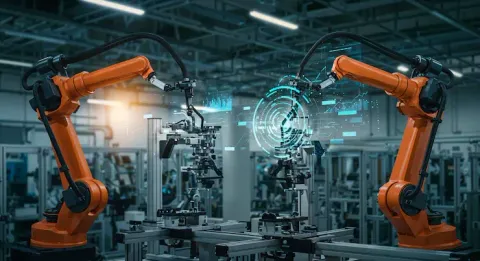
Industrial Robotics: Performs programmed activities such as assembly, material handling, packaging, and inspection.
Cloud Computing: Provides computing infrastructure for storing and processing industrial information.
Digital Twin Technology: Creates a digital representation of a physical machine, production line, or industrial process.
Manufacturing Execution Systems (MES): Monitor production activities, work instructions, manufacturing records, and operational progress.
Programmable Logic Controllers (PLCs): Control machinery and industrial processes through programmed instructions.
These components may be integrated into one production environment or introduced separately according to factory requirements.
Why Smart Manufacturing Matters in Modern Industries
Manufacturing industries must manage production schedules, equipment conditions, product quality, energy consumption, and changing customer requirements. Smart manufacturing provides digital tools that help organisations monitor these activities and make informed operational decisions.
These systems affect industries such as automotive manufacturing, electronics, pharmaceuticals, textiles, food processing, chemicals, and heavy engineering. They are also relevant to smaller factories that want to introduce selected digital technologies into existing production environments.
What Problems Can Smart Manufacturing Systems Address?
Smart manufacturing helps address several common industrial challenges.
1. Equipment downtime: Sensors and monitoring platforms identify unusual equipment conditions that may require inspection or maintenance.
2. Production delays: Digital production systems provide information about machine availability, work progress, and manufacturing schedules.
3. Quality variations: Automated inspection systems help identify differences in product dimensions, appearance, and manufacturing characteristics.
4. Resource management: Connected monitoring systems record electricity, water, raw material, and equipment consumption.
5. Limited production visibility: Integrated platforms allow operators and managers to access manufacturing information from connected systems.
6. Maintenance planning: Equipment records support preventive and predictive maintenance activities.
Smart manufacturing does not remove every production challenge. Its effectiveness depends on suitable infrastructure, accurate information, employee training, cybersecurity controls, and appropriate integration with existing equipment.
Recent Developments in Smart Manufacturing Technology
Between 2024 and 2026, smart manufacturing has increasingly focused on artificial intelligence, connected robotics, digital twins, industrial data platforms, and energy monitoring.
What Are the Latest Smart Manufacturing Trends?
Several developments are influencing modern industrial environments.
- Industrial AI: Artificial intelligence is increasingly used for quality inspection, production analysis, and maintenance planning.
- Generative AI: Manufacturers are exploring AI-based tools for technical documentation, engineering information, and operational assistance.
- Collaborative robots: Robots designed to work alongside people are being used in selected assembly and material-handling activities.
- Digital twins: Virtual representations help engineers study equipment behaviour and evaluate production changes.
- Edge computing: Local processing allows industrial devices to analyse information closer to the equipment generating it.
- Energy monitoring: Digital meters and analytical platforms help factories understand electricity consumption across production activities.
Another important trend is the integration of Information Technology (IT) and Operational Technology (OT). This allows manufacturing equipment to exchange information with business systems, while also creating additional cybersecurity requirements.
The general direction is towards connected, data-based, and adaptable manufacturing environments rather than complete automation of every industrial activity.
Smart Manufacturing Laws and Policies in India
India has introduced several initiatives and regulatory frameworks relevant to manufacturing development, industrial digitalisation, cybersecurity, and data protection.
What Government Policies Support Smart Manufacturing in India?
Make in India: This national initiative encourages manufacturing development and industrial activity across different sectors.
Production Linked Incentive (PLI) Schemes: These programmes support selected manufacturing sectors through specified incentive frameworks and eligibility conditions.
Samarth Udyog Bharat 4.0: This initiative focuses on Industry 4.0 awareness, smart manufacturing technologies, and industrial transformation.
Digital India: Supports digital infrastructure, technology adoption, and wider digital capabilities across the country.
Information Technology Act, 2000: Establishes legal provisions concerning electronic records, digital transactions, and specified computer-related offences.
Digital Personal Data Protection Act, 2023: Establishes requirements for processing digital personal data where applicable to manufacturing organisations.
CERT-In Directions, 2022: Establish cybersecurity incident reporting and specified information security responsibilities for covered organisations.
Industrial facilities may also need to follow applicable environmental regulations, workplace safety requirements, electrical standards, and sector-specific rules. The relevant obligations depend on the organisation's activities and operating environment.
Smart Manufacturing Systems: Comparison and Overview
Smart manufacturing differs from traditional manufacturing through greater digital connectivity, automated monitoring, and information sharing.
| Feature | Traditional Manufacturing | Smart Manufacturing |
|---|---|---|
| Equipment monitoring | Manual or periodic checks | Connected sensor monitoring |
| Data collection | Separate records | Integrated digital information |
| Production control | Manual coordination | Connected control systems |
| Maintenance | Scheduled or reactive | Condition-based or predictive |
| Quality inspection | Manual and mechanical | Digital and automated |
| Information sharing | Limited integration | Connected platforms |
| Decision-making | Historical reports | Data analysis and monitoring |
Smart Manufacturing vs Traditional Manufacturing
Traditional manufacturing generally relies on established machinery, manual procedures, and separate production records. Smart manufacturing introduces connected technologies that allow machines and software platforms to exchange operational information.
Both approaches can operate together. For example, a factory can retain its existing production equipment while introducing sensors, digital monitoring, and electronic production records.
The level of digital integration depends on technical requirements, available infrastructure, employee capabilities, and the nature of manufacturing activities.
Tools and Resources for Smart Manufacturing
Several platforms, standards, and technical resources support smart manufacturing research and industrial operations.
- Siemens Industrial Edge: Supports industrial data processing and applications near production equipment.
- PTC ThingWorx: Provides an industrial Internet of Things application development platform.
- Microsoft Azure IoT: Supports connected device management and industrial data applications.
- AWS IoT SiteWise: Supports industrial equipment data collection and operational monitoring.
- Autodesk Fusion: Provides computer-aided design and manufacturing capabilities.
- NIST Smart Manufacturing Systems Test Bed: Supports research and evaluation of smart manufacturing technologies.
- OPC UA: Provides a communication standard for exchanging information between industrial systems.
- ISA-95: Defines models and terminology for integrating enterprise and manufacturing operations.
These resources have different purposes, including industrial communication, equipment monitoring, production planning, technical research, and digital design.
Frequently Asked Questions
What are Smart Manufacturing Systems?
They are connected industrial production environments that use automation, sensors, software, and data analysis.
How do Smart Manufacturing Systems work?
They collect information from machines, analyse operating conditions, and support production decisions.
What is the difference between smart manufacturing and Industry 4.0?
Smart manufacturing describes digitally connected production, while Industry 4.0 represents the broader industrial transformation involving connected technologies.
Which technologies are used in smart factories?
Common technologies include artificial intelligence, robotics, IIoT, digital twins, cloud computing, and industrial automation.
Can small factories use Smart Manufacturing Systems?
Yes. Smaller factories can introduce selected technologies, including machine sensors, digital records, and automated monitoring.
Conclusion
Smart Manufacturing Systems combine connected machinery, automation, software, and data analysis to support modern industrial production. Their applications include equipment monitoring, quality inspection, production planning, and resource management. As manufacturing technologies develop, cybersecurity, workforce knowledge, and system integration remain important considerations.

Related Post...
Automotive Sensors Overview: Essential Components Behind Modern Vehicle Technology
Updated: November 27, 2026
Read More
Understanding Industrial Research Energy Systems: A Detailed Overview
Updated: November 28, 2026
Read More
Industrial Furnaces: Types, Applications, Safety Standards & Uses
Updated: November 27, 2026
Read More