Traditional manufacturing relies heavily on manual oversight and fixed automation. In contrast, smart manufacturing AI introduces adaptive intelligence into production workflows. Sensors, connected machines, and analytical platforms work together to generate insights from real-time factory data.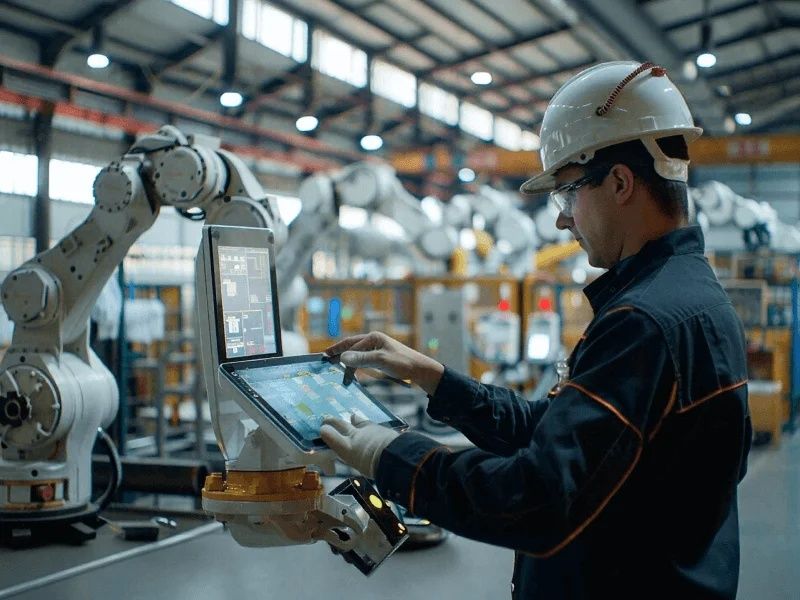
The core purpose of smart manufacturing AI solutions is to transform raw industrial data into actionable knowledge. This allows manufacturers to move beyond reactive operations and toward predictive and optimized production environments. As factories become more digitized, AI acts as the analytical layer that interprets complex data streams and supports continuous improvement.
Importance: Why Smart Manufacturing AI Matters Across Industries
Smart manufacturing AI plays an important role in helping organizations respond to rising production complexity and efficiency expectations. It impacts plant operators, engineers, quality teams, and operational planners by providing clearer visibility into manufacturing processes.
Key reasons smart manufacturing AI solutions are important include:
-
Operational clarity: AI-driven monitoring highlights performance trends and process variations
-
Automation support: Intelligent systems assist with automated inspections and workflow coordination
-
Predictive maintenance: Equipment data helps identify potential failures before disruptions occur
-
Quality consistency: AI models detect deviations in production outputs
-
Scalable operations: Digital systems adapt more easily to changing production demands
Industries such as automotive manufacturing, electronics, pharmaceuticals, food processing, and heavy machinery increasingly rely on AI-powered automation systems to maintain productivity and reduce operational uncertainty.
By combining artificial intelligence with industrial automation, manufacturers gain deeper insight into production behavior while supporting faster and more informed decisions.
Recent Updates: Evolving Trends in Manufacturing Automation and AI Analytics
Recent developments in smart manufacturing AI focus on integration, data accessibility, and advanced analytics rather than isolated automation tools.
Key trends observed in recent periods include:
-
Expanded use of industrial AI platforms that combine machine data, quality metrics, and operational dashboards
-
Greater adoption of edge analytics, allowing AI processing closer to production equipment
-
Improved interoperability between factory systems through standardized data models
-
Increased focus on digital twins, enabling virtual representations of production environments
-
Stronger cybersecurity frameworks protecting connected manufacturing infrastructure
These advancements reflect a shift toward connected manufacturing ecosystems where AI supports continuous optimization rather than one-time automation.
Laws or Policies: Regulatory Considerations for Smart Manufacturing AI
Smart manufacturing AI solutions operate within regulatory environments that address industrial safety, data governance, and digital infrastructure. While requirements vary by country, several policy areas commonly influence AI-driven manufacturing systems.
Typical regulatory considerations include:
-
Industrial safety standards governing automated equipment and robotics
-
Data protection frameworks covering machine-generated and operational data
-
Cybersecurity guidelines for connected manufacturing environments
-
National digital manufacturing initiatives promoting Industry 4.0 adoption
These policies guide how manufacturers deploy AI technologies responsibly while ensuring workplace safety and secure data practices.
Understanding regulatory expectations helps organizations align smart manufacturing AI deployments with compliance requirements and operational accountability.
Tools and Resources: Platforms Supporting Smart Manufacturing AI Solutions
A range of analytical and operational tools support smart manufacturing AI environments. These resources help factories interpret data, simulate production scenarios, and evaluate system performance.
Common tools and references include:
-
Manufacturing analytics platforms for centralized data visualization
-
AI-based monitoring systems that track machine behavior
-
Production simulation tools used to model workflow efficiency
-
Digital twin frameworks representing physical assets virtually
-
Industrial data integration software connecting sensors and control systems
These tools enable manufacturers to extract value from AI-powered automation while maintaining visibility across production operations.
Core Areas of Smart Manufacturing AI
Smart manufacturing AI typically supports several interconnected operational domains:
| Area | Primary Focus | Example Outcome |
|---|---|---|
| Production analytics | Process performance | Reduced cycle variability |
| Predictive maintenance | Equipment health | Fewer unplanned stops |
| Quality analytics | Product consistency | Lower defect rates |
| Supply coordination | Material flow | Improved scheduling |
| Energy optimization | Resource usage | More efficient consumption |
Together, these areas demonstrate how artificial intelligence in manufacturing supports both operational efficiency and strategic planning.
FAQs
What are smart manufacturing AI solutions used for?
Smart manufacturing AI solutions are used to analyze production data, automate inspections, and support decision-making across industrial environments.
How does AI improve manufacturing automation?
AI enhances automation by learning from machine data, identifying patterns, and adapting workflows to changing production conditions.
Who benefits from manufacturing AI analytics?
Plant operators, engineers, quality teams, and operations managers benefit from clearer visibility into factory performance.
Is smart manufacturing AI only for large factories?
No. Scalable platforms allow both small and large facilities to apply AI-based monitoring and analytics.
How does AI support predictive maintenance?
AI models analyze equipment behavior to detect early signs of wear or abnormal operation, enabling proactive maintenance planning.
Conclusion: The Growing Role of AI in Smart Manufacturing Systems
Smart manufacturing AI solutions are becoming central to modern industrial operations by transforming production data into actionable insights. Through automation, analytics, and intelligent monitoring, AI helps manufacturers improve efficiency, maintain quality consistency, and adapt to evolving operational demands.
As factories continue their digital transformation, artificial intelligence in manufacturing provides the analytical foundation needed to understand complex production systems. By integrating AI-powered automation with connected infrastructure, organizations gain greater control over processes while supporting continuous improvement across the manufacturing lifecycle.