Silver Toe Rings: Complete Guide to Basics, Designs, Facts, Knowledge, and Best Practices
Silver toe rings are small jewellery pieces designed to be worn around one or more toes. In India, they have a long association with traditional jewellery practices and are commonly linked with marriage customs in several communities. Today, they are also worn as decorative accessories by people who prefer simple, traditional, or contemporary jewellery.
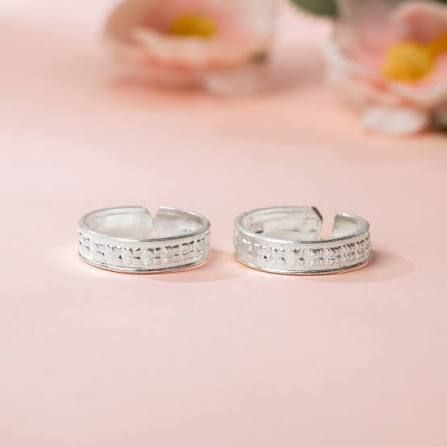
These rings are available in different shapes, metal grades, finishes, and patterns. Some have a plain circular band, while others feature floral motifs, engraved details, geometric shapes, or decorative stones.
The metal used is an important consideration. Silver jewellery may contain different proportions of silver and other metals. Sterling silver, fine silver, and silver-plated materials are not the same, and their physical characteristics can vary.
Understanding these differences helps explain why some designs are more suitable for regular wear, while others may need more careful handling.
Why Silver Toe Rings Matter Today
Silver toe rings combine cultural traditions with changing fashion preferences. Their compact size and variety of designs make them suitable for everyday clothing, festive occasions, and traditional outfits.
Their relevance today comes from several factors:
Cultural significance: Toe rings remain part of jewellery traditions in several Indian communities.
Design variety: Traditional patterns are available alongside simple, contemporary styles.
Everyday styling: Minimal designs can complement different types of clothing.
Material choices: Different silver grades allow people to understand variations in metal purity.
Fit and comfort: Adjustable and lightweight designs address some practical requirements.
Personal preference: People can choose styles according to comfort, appearance, and individual taste.
The cultural meaning of toe rings varies across regions and families. They should not be treated as a universal symbol or assumed to represent the same custom for everyone.
Popular Silver Toe Ring Designs
Silver toe ring designs range from plain bands to detailed decorative patterns. The shape, thickness, surface finish, and construction can influence both appearance and comfort.
| Design Type | Main Features | Common Appearance |
|---|---|---|
| Plain band | Smooth, simple circular shape | Minimal and traditional |
| Floral design | Flower and leaf patterns | Decorative |
| Adjustable band | Open-ended structure | Flexible fit |
| Oxidized design | Darkened surface finish | Antique appearance |
| Engraved design | Carved or stamped details | Detailed and artistic |
| Twisted band | Interwoven metal pattern | Contemporary |
| Geometric design | Lines and repeating shapes | Modern |
| Stone-studded design | Small decorative stones | Occasion-oriented |
Some commonly seen styles include:
Minimal bands: Plain or lightly textured rings with a simple appearance.
Traditional motifs: Designs featuring paisley, lotus, leaves, and other decorative patterns.
Matching pairs: Coordinated rings intended to be worn on two toes.
Open-ended patterns: Rings with a small gap that allows limited adjustment.
Decorative bands: Wider designs with raised patterns or detailed surface work.
The suitability of a design depends on its construction and the wearer's preferences.
Adjustable Silver Toe Rings
Adjustable silver toe rings generally have an open-ended or flexible structure. This allows the ring to accommodate a limited range of toe sizes.
They can be useful when an exact measurement is unavailable, but adjustable does not mean that one size fits everyone.
A few practical points deserve attention:
Check the stated size range before choosing a design.
Ensure that the opening does not pinch the skin.
Avoid repeatedly bending the same part of the ring.
Check for sharp edges or uneven finishing.
Make sure the ring does not move excessively while walking.
Remove it if it causes discomfort or irritation.
Repeated bending can weaken metal, especially around the opening. Gentle handling can help maintain the original shape.
Lightweight Silver Toe Rings
Lightweight silver toe rings usually feature thinner bands, smaller decorative elements, or open structures. Their simpler construction can make them suitable for people who prefer subtle jewellery.
However, low weight alone does not determine comfort. The ring's shape, inner surface, thickness, and fit also matter.
When examining lightweight designs, consider:
Overall weight and band thickness
Smoothness of the inner surface
Raised or projecting decorative details
Stability while walking
Compatibility with regular footwear
Resistance to bending during normal use
Very thin metal may bend more easily under pressure. A balanced design should combine a comfortable fit with suitable construction.
Understanding 925 Silver and Pure Silver Toe Rings
The terms 925 silver toe rings and pure silver toe rings refer to different levels of silver purity.
Sterling silver contains 92.5% silver and 7.5% other metals, commonly copper. These additional metals improve strength and make the material more practical for many jewellery designs.
Fine silver generally contains approximately 99.9% silver. It is softer than sterling silver and may be more susceptible to bending or surface marks.
| Silver Grade | Silver Content | General Characteristics |
|---|---|---|
| 800 | 80% | Contains a higher proportion of alloy metals |
| 900 | 90% | Lower silver content than sterling silver |
| 925 | 92.5% | Common sterling silver grade |
| 958 | 95.8% | Higher silver content than 925 |
| 990 | 99% | High-purity silver |
| 999 | 99.9% | Fine silver with relatively soft characteristics |
The figures indicate parts of silver per thousand. For example, 925 means that 925 parts out of every 1,000 parts are silver.
Descriptions such as pure, fine, or sterling should not replace a clearly stated purity grade. A hallmark or reliable metal documentation can provide more useful information about the material.
Oxidized Silver Toe Rings
Oxidized silver toe rings have a deliberately darkened surface finish. The darker areas create contrast between raised and recessed parts of a design.
This finish is often used to highlight engraved patterns, floral motifs, traditional shapes, and intricate metalwork.
Common characteristics include:
Antique-style appearance
Darkened decorative sections
Contrasting polished areas
Traditional and handcrafted patterns
Textured surface details
The darkened finish may gradually change through regular handling, polishing, and exposure to chemicals. Aggressive polishing can reduce the intended contrast, so cleaning methods should be appropriate for the particular finish.
Recent Developments in Silver Jewellery
Silver jewellery has experienced changes in consumer preferences and industry standards during the past year.
The World Silver Survey 2026, published in April 2026, discussed the effect of elevated silver prices and market volatility on Indian jewellery demand during 2025. Its analysis noted that some consumers postponed purchases or selected lighter jewellery pieces. This makes lightweight designs an important subject when examining recent jewellery preferences.
Another development concerns the traceability of silver jewellery. On 5 November 2026, the Government of India reported that more than 90 lakh silver articles had received HUID-based hallmarking since the system began in September 2025.
The report also highlighted improvements to digital verification. Since 8 June 2026, the BIS CARE App has provided access to photographs of hallmarked articles and their marks, along with recorded weight information.
These developments highlight two important areas:
Greater attention to purity identification and digital traceability.
Continued interest in practical jewellery designs, including lighter pieces.
Silver Hallmarking Rules in India
The Bureau of Indian Standards (BIS) oversees India's precious-metal hallmarking framework.
Silver hallmarking has been voluntary in India. However, from 1 September 2025, HUID-based identification became mandatory for silver articles submitted for hallmarking under the voluntary scheme. This does not mean that every silver jewellery article in India must be hallmarked.
Under the revised Indian Standard IS 2112:2025, hallmarked silver jewellery and artefacts can carry one of eight fineness grades:
800
835
900
925
958
970
990
999
A hallmarked silver article has three main identification elements:
BIS Standard Mark with the word "SILVER"
Purity or fineness grade
Six-character alphanumeric Hallmark Unique Identification (HUID) code
The HUID provides a digital identification record for an individual hallmarked article. It can be checked through the BIS CARE App.
In October 2026, BIS also announced a Silver Refinery Scheme covering silver bullion and coins. This is a separate development from jewellery hallmarking, but it forms part of the wider effort to strengthen silver purity standards in India.
Practical Checks and Care Guidelines
A few basic checks can help when assessing silver toe rings.
Purity identification: Look for a clearly stated silver grade rather than relying only on general descriptions.
Hallmark verification: For a hallmarked article, check the BIS Standard Mark, purity grade, and HUID.
Fit: The ring should not feel excessively tight or move around while walking.
Surface finish: Examine the inner surface and edges for rough areas.
Construction: Check whether thin sections or decorative parts appear vulnerable to bending.
Design suitability: Raised details may catch on socks or footwear, so consider how the ring will be worn.
Silver can gradually tarnish when it reacts with substances in its environment. Moisture, perspiration, cosmetics, and certain chemicals may affect its appearance.
Basic care practices include:
Wipe the ring with a soft, clean cloth after wearing it.
Keep it dry before storage.
Store it separately from harder jewellery.
Avoid direct contact with household chemicals.
Remove it during activities that may expose it to impact or pressure.
Use a suitable cleaning method for its particular finish.
Avoid aggressive polishing of oxidized patterns.
For rings with stones or delicate decorative settings, follow care instructions suitable for those materials.
Tools and Useful Resources
Several resources can help readers understand silver jewellery and its identification.
BIS CARE App: The app includes a HUID verification feature for hallmarked silver jewellery. It can display available information about the article, purity, registered jeweller, and assaying centre.
Bureau of Indian Standards website: The BIS website provides information about hallmarking, Indian Standards, and recognized Assaying and Hallmarking Centres.
Silver purity reference chart: A comparison of 800, 925, 958, and 999 grades can help explain differences in silver content.
Ring-size measuring guide: A measuring tape or jewellery sizing guide can help estimate toe circumference. Measurements should be taken without compressing the skin.
Jewellery care checklist: A simple record of cleaning methods, storage practices, and inspection dates can help maintain jewellery over time.
Frequently Asked Questions
What is the difference between 925 silver and pure silver toe rings?
925 silver contains 92.5% silver and additional alloy metals that improve strength. Fine silver generally contains approximately 99.9% silver and is softer, so it may bend more easily.
Are adjustable silver toe rings suitable for everyday wear?
They can be suitable when properly fitted and made with smooth edges. However, repeated bending may weaken the metal. The ring should not pinch the skin or move excessively.
What makes oxidized silver toe rings different?
They have a darkened surface finish that creates contrast in engraved and decorative areas. This gives them an antique appearance compared with bright-polished silver.
How can silver purity be checked in India?
For a hallmarked article, check the BIS Standard Mark, purity grade, and HUID. The HUID can be verified through the BIS CARE App.
Do silver toe rings require special maintenance?
Basic care includes keeping them dry, wiping them with a soft cloth, storing them separately, and avoiding harsh chemicals. Oxidized and stone-decorated designs may require more specific care.
Conclusion
Silver toe rings are a distinctive jewellery category that combines traditional Indian practices with modern design preferences. Their styles range from plain bands and lightweight patterns to adjustable, oxidized, and detailed decorative designs.
Understanding silver purity is important when comparing 925 sterling silver with higher-purity options. Fit, surface finishing, construction, and maintenance also influence comfort and long-term appearance.
India's updated silver hallmarking framework has introduced HUID-based traceability for hallmarked silver articles. The BIS CARE App provides a practical way to verify available hallmark information, while recent developments in silver standards demonstrate continued attention to purity identification.
By understanding design differences, metal grades, fit, and maintenance, readers can develop a clearer understanding of silver toe rings and the factors that influence their appearance and everyday use.
Disclaimer: This article is intended solely for general informational and educational purposes. It does not make claims or guarantees about the purity, quality, durability, health effects, or performance of any particular jewellery item or manufacturer. Its purpose is only to provide general information. It is not intended to sell, advertise, endorse, or promote any product, brand, seller, or business. Readers should independently verify product details, applicable standards, and hallmark information through appropriate official sources.

Related Post...
Bridal Kalire Designs: Explore Styles, Designs, Trends, and Useful Resources
Updated: November 06, 2026
Read More
Cocktail Rings for Parties: Explore Styles, Designs, Trends, and Useful Resources
Updated: November 06, 2026
Read More
Festive Tassel Earrings: Complete Guide to Basics, Designs, Facts, Knowledge, and Best Practices
Updated: November 06, 2026
Read More