SaaS Integration Platforms Guide: Explore APIs, Automation, Data Flow & Application Connectivity
Software as a Service (SaaS) has become an important part of modern business technology. Organizations use cloud-based applications for customer management, accounting, communication, project management, analytics, human resources and many other operational functions.
As the number of SaaS applications increases, organizations often need these applications to exchange information with one another. SaaS integration platforms help connect different applications, automate data movement and coordinate workflows across multiple software environments.
These platforms can work with APIs, webhooks, connectors, databases and other integration technologies. Depending on the platform, they may support simple application-to-application connections as well as complex enterprise integration workflows.
This guide explores SaaS integration platforms, their architecture, APIs, automation capabilities, data flow, connectivity methods, security considerations and common applications.
What Is a SaaS Integration Platform?
A SaaS integration platform is a technology layer that helps different cloud applications communicate and exchange data.
For example, an organization may use separate applications for:
- Customer relationship management
- Accounting
- Email marketing
- Customer support
- Human resources
- Project management
- Analytics
An integration platform can connect these systems so that relevant information can move between them automatically.
Instead of manually transferring information from one application to another, predefined workflows can coordinate data exchange.
Why SaaS Integration Is Important
Modern organizations often operate with a large collection of specialized applications.
Without integration, teams may encounter:
- Duplicate data entry
- Disconnected workflows
- Data inconsistencies
- Delayed information
- Manual processes
- Limited visibility
- Increased operational complexity
Integration can help create a more connected technology environment.
Major Components of SaaS Integration Platforms
A typical SaaS integration platform can contain several components.
Connectors
Connectors provide prebuilt interfaces for connecting specific applications.
Examples can include connectors for:
- CRM platforms
- ERP systems
- Marketing applications
- Databases
- Communication tools
- Cloud storage
- Payment systems
- Analytics platforms
API Management
APIs allow software applications to communicate through defined interfaces.
An integration platform may provide tools for:
- API authentication
- API requests
- Data transformation
- API monitoring
- Error handling
- Rate-limit management
Workflow Engine
The workflow engine determines when and how integration processes execute.
A workflow may contain:
- Trigger
- Data retrieval
- Transformation
- Validation
- Destination action
- Logging
Data Transformation
Applications may use different formats or field structures.
Transformation tools can convert data between formats such as:
- JSON
- XML
- CSV
- Form data
Monitoring
Monitoring features can track:
- Successful executions
- Failed workflows
- API errors
- Processing times
- Data-transfer events
SaaS Integration Architecture
A SaaS integration architecture describes how applications communicate through the integration layer.
A simplified structure can look like:
Application A → Integration Platform → Data Transformation → Application B
For more complex environments:
Application → API → Integration Layer → Transformation → Workflow → Destination Application
The integration layer can act as an intermediary that manages communication and workflow logic.
API-Based SaaS Integration
APIs are among the most common mechanisms used for SaaS connectivity.
An API provides rules and endpoints through which one application can request or submit information.
For example, an application may use an API to:
- Retrieve customer information
- Create a new record
- Update an order
- Submit a support ticket
- Retrieve analytics
- Synchronize inventory
REST APIs
REST APIs are widely used in modern SaaS applications.
They commonly use HTTP methods such as:
- GET
- POST
- PUT
- PATCH
- DELETE
REST APIs frequently exchange data using JSON.
GraphQL APIs
GraphQL allows applications to request specific data through a query structure.
Instead of retrieving a predefined response containing many fields, a client can request the information it requires.
GraphQL can be useful where flexible data retrieval is important.
Webhooks
Webhooks allow applications to send notifications when specific events occur.
For example:
New customer created → Webhook → Integration workflow → CRM/Marketing system
Webhooks can help create near-real-time workflows.
Common webhook events include:
- New user registration
- Order creation
- Payment completion
- Ticket creation
- Account update
Authentication in SaaS Integrations
Applications need secure mechanisms for verifying integration requests.
Common authentication approaches include:
- API keys
- OAuth
- OAuth 2.0
- Tokens
- Basic authentication in limited legacy scenarios
- Signed requests
OAuth is particularly common when users need to authorize an application to access another application without directly sharing their credentials.
Data Flow in SaaS Integrations
Data flow describes how information moves between systems.
A typical process may involve:
Data Source
An application generates or stores information.
Trigger
A predefined event initiates the integration.
Extraction
The integration platform retrieves the required information.
Transformation
Data is converted into the structure required by the destination.
Validation
The system checks whether the information meets required conditions.
Destination
The transformed data is sent to another application.
Confirmation
The platform records whether the operation succeeded or failed.
Data Synchronization
Data synchronization keeps information consistent across multiple applications.
Synchronization can be:
- One-way
- Two-way
- Scheduled
- Event-driven
- Near real-time
- Batch-based
One-Way Synchronization
Information moves from one system to another.
System A → System B
Two-Way Synchronization
Information can move in both directions.
System A ↔ System B
Two-way synchronization requires careful handling of conflicts and data ownership.
Batch Synchronization
Data is processed periodically rather than immediately.
For example, an integration could synchronize information every hour or once per day.
Real-Time Integration
Real-time or near-real-time integrations process events shortly after they occur.
These workflows can be useful for:
- Customer notifications
- Order processing
- Inventory updates
- Fraud monitoring
- Operational alerts
SaaS Integration Methods
Organizations can use different integration methods depending on requirements.
Point-to-Point Integration
Point-to-point integration directly connects applications.
For example:
CRM → Accounting
This approach can work for simple environments but may become difficult to manage as the number of applications increases.
Hub-and-Spoke Integration
Applications communicate through a central integration platform.
Application A → Integration Hub → Application B
This can simplify centralized workflow management.
Event-Driven Integration
Applications communicate through events.
For example:
Order Created → Event → Inventory Workflow → Shipping System
This architecture can support responsive workflows.
API-Led Integration
API-led approaches organize integration around reusable APIs.
APIs may be structured into layers for:
- Data access
- Business logic
- Application-specific functionality
SaaS Automation
Integration and automation are closely connected.
An integration establishes connectivity, while automation determines what should happen when specific conditions occur.
For example:
New Lead → CRM Record → Lead Qualification → Notification → Follow-Up Workflow
Automation can reduce repetitive manual actions.
Common SaaS Automation Examples
Lead Management
A lead submitted through a website can automatically enter a CRM system.
Customer Onboarding
A new customer record can trigger:
- Account creation
- Welcome communication
- Task assignment
- Internal notifications
Invoice Processing
An accounting workflow can retrieve transaction information from another application and create corresponding financial records.
Customer Support
A new support ticket can trigger:
- Assignment
- Notification
- Customer record lookup
- Priority classification
Employee Onboarding
HR systems can coordinate:
- Employee records
- Account creation
- Internal tasks
- Access requests
iPaaS: Integration Platform as a Service
iPaaS, or Integration Platform as a Service, is a cloud-based approach to application integration.
iPaaS platforms generally provide capabilities such as:
- Application connectors
- Workflow design
- API integration
- Data transformation
- Monitoring
- Authentication
- Error handling
iPaaS can reduce the amount of custom integration infrastructure an organization needs to build and maintain.
SaaS Integration Platforms vs Custom Integration
Organizations generally have two broad approaches.
SaaS Integration Platform
Advantages can include:
- Prebuilt connectors
- Visual workflows
- Centralized monitoring
- Faster development
- Managed infrastructure
Custom Integration
Custom development can provide:
- Greater control
- Highly specialized functionality
- Custom business logic
- Flexible architecture
However, custom integration can require more development and maintenance resources.
Low-Code Integration
Many modern integration platforms provide low-code interfaces.
Users can create workflows using:
- Visual builders
- Drag-and-drop components
- Prebuilt connectors
- Templates
- Configuration panels
Low-code integration can reduce the amount of programming required for common workflows.
No-Code Integration
No-code tools are designed to allow users with limited programming experience to build basic integrations.
Typical workflows may follow a structure such as:
Trigger → Condition → Action
For example:
New Form Submission → Check Field → Create CRM Record
Complex enterprise integrations may still require developers.
Data Transformation
Different applications frequently structure information differently.
For example:
Application A
first_name
Application B
givenName
An integration platform can map one field to another.
Transformation can also involve:
- Data type conversion
- Date formatting
- String manipulation
- Calculations
- Conditional logic
- Data filtering
Data Mapping
Data mapping defines relationships between fields in different applications.
Example:
| Source Field | Destination Field |
|---|---|
| Customer Name | Account Name |
| Email Address | |
| Phone | Contact Number |
| Order ID | Transaction ID |
Correct mapping is essential for reliable integration.
Error Handling
Integration workflows can fail for many reasons.
Possible causes include:
- Invalid authentication
- API downtime
- Incorrect data
- Rate limits
- Network problems
- Missing fields
- Invalid requests
Integration platforms can provide mechanisms such as:
- Retry policies
- Error queues
- Notifications
- Logs
- Fallback workflows
API Rate Limits
Many SaaS applications limit how many API requests can be made within a specific period.
Rate limits help providers protect system availability.
Integration platforms can manage these limits through:
- Request throttling
- Queues
- Delays
- Retry strategies
- Batch processing
Integration Monitoring
Monitoring provides visibility into integration activity.
Useful metrics can include:
- Workflow executions
- Success rate
- Failure rate
- Processing time
- API response time
- Error frequency
- Data volume
Monitoring becomes particularly important when integrations support critical business operations.
Integration Logging
Logs can help teams investigate failures.
A useful log may include:
- Timestamp
- Workflow ID
- Application
- Event
- Request status
- Error message
- Execution duration
Sensitive information should not be unnecessarily stored in logs.
SaaS Integration Security
Security is an important part of integration architecture.
Key areas include:
- Authentication
- Authorization
- Encryption
- Access controls
- Secret management
- Data minimization
- Monitoring
- Audit trails
Encryption
Data should be appropriately protected both during transmission and, where applicable, while stored.
Access Control
Integration accounts should receive only the permissions necessary for their tasks.
Secret Management
API keys, tokens and credentials should be stored securely rather than embedded directly into application code or workflows.
Audit Trails
Audit logs can help organizations understand:
- Who initiated an action
- Which workflow executed
- What system was accessed
- When an event occurred
SaaS Integration Governance
As integrations increase, organizations need governance policies.
Governance may cover:
- API ownership
- Authentication standards
- Data ownership
- Access permissions
- Naming conventions
- Monitoring
- Documentation
- Change management
Enterprise SaaS Integration
Large organizations may operate hundreds or thousands of applications.
Enterprise integration platforms can help coordinate:
- CRM
- ERP
- HR systems
- Finance
- Supply chain
- Analytics
- Customer support
- Marketing
A centralized integration strategy can improve visibility and reduce fragmented workflows.
CRM Integration
CRM systems can connect with:
- Marketing platforms
- Email systems
- Customer-support applications
- Billing platforms
- Website forms
- Analytics tools
For example:
Website Lead → Integration Platform → CRM → Marketing Workflow
ERP Integration
ERP systems often need information from other enterprise applications.
Integration can connect ERP systems with:
- CRM
- E-commerce
- Warehouse systems
- Procurement
- Finance
- Human resources
Marketing Integration
Marketing applications can exchange data with:
- CRM systems
- Websites
- Analytics platforms
- Email platforms
- Advertising systems
This can help coordinate customer data and campaign workflows.
E-Commerce Integration
E-commerce platforms can connect with:
- Inventory systems
- Payment systems
- Shipping systems
- CRM platforms
- Accounting applications
A typical workflow may be:
Order → Payment → Inventory → Fulfillment → Customer Notification
HR Integration
HR applications can exchange employee information with:
- Payroll systems
- Identity platforms
- Collaboration tools
- Benefits systems
- Workforce management applications
Analytics Integration
Organizations can connect operational applications with analytics platforms.
Data can flow from:
Business Applications → Integration Layer → Data Warehouse → Analytics
This can support centralized reporting.
Integration with Data Warehouses
SaaS data can be transferred into data warehouses for analysis.
Common activities include:
- Data extraction
- Transformation
- Loading
- Synchronization
- Incremental updates
Data warehouse integration requires careful attention to data quality and schema changes.
SaaS Integration and AI
Artificial intelligence is increasingly becoming part of integration workflows.
AI-enabled integration capabilities may assist with:
- Data classification
- Document processing
- Workflow recommendations
- Text extraction
- Natural-language interfaces
- Data enrichment
For example, an AI system could analyze an incoming support message and route it to an appropriate workflow.
AI Workflow Integration
A modern workflow might look like:
Customer Message → AI Classification → Integration Platform → CRM → Notification
This combines application connectivity with intelligent decision-making.
Integration with Large Language Models
LLM-based applications can connect with SaaS platforms through APIs.
Potential workflows include:
- Summarizing customer messages
- Classifying support requests
- Extracting information from documents
- Generating structured records
- Assisting internal knowledge workflows
Careful data governance is important when sending business information to AI systems.
SaaS Integration and RPA
Robotic Process Automation can automate repetitive user-interface tasks.
Traditional API integration is generally preferable when a reliable API is available, while RPA can be useful for systems that lack suitable integration interfaces.
API vs RPA Integration
| Factor | API Integration | RPA |
|---|---|---|
| Interface | Software/API | User interface |
| Reliability | Often high when APIs are stable | Can depend on UI changes |
| Speed | Generally efficient | Varies |
| Maintenance | API changes require updates | UI changes may require updates |
| Best suited for | Connected applications | Legacy or inaccessible systems |
Event-Driven SaaS Architecture
Event-driven architectures allow applications to respond to events.
For example:
Customer Created → Event → CRM Update → Analytics Event → Notification
This approach can reduce dependence on constant polling.
Integration Templates
Templates can accelerate common integration workflows.
Examples include:
- CRM-to-email synchronization
- Form-to-CRM automation
- Order-to-accounting workflow
- Support-ticket notifications
- Employee onboarding
- Data synchronization
Templates can provide a starting point that organizations can customize.
SaaS Integration Challenges
Integration can provide substantial benefits but also introduces challenges.
Data Quality
Incorrect or incomplete data can spread across connected systems.
Legacy Applications
Older applications may lack modern APIs.
API Changes
Changes to an API can affect integration workflows.
Security
Connecting applications creates additional pathways that need to be protected.
Complexity
As the number of applications increases, integration dependencies can become difficult to manage.
Vendor Dependency
Organizations may become dependent on particular integration platforms or application providers.
Integration Scalability
A scalable integration architecture should be capable of handling:
- Increasing data volumes
- More applications
- More users
- More workflows
- Higher event frequency
Scalability may require:
- Queuing
- Parallel processing
- Caching
- Rate-limit management
- Distributed architecture
Integration Performance
Performance can be affected by:
- API latency
- Network conditions
- Data volume
- Transformation complexity
- Workflow design
- External application limits
Monitoring helps identify bottlenecks.
Choosing a SaaS Integration Platform
Organizations can evaluate platforms based on several factors.
Connector Availability
Check whether the platform supports the applications already used by the organization.
API Support
Evaluate support for:
- REST
- GraphQL
- Webhooks
- Authentication methods
Workflow Capabilities
Consider whether the platform supports:
- Conditional logic
- Branching
- Loops
- Scheduling
- Error handling
Data Transformation
Review available mapping and transformation features.
Monitoring
Check whether the platform provides useful logs and execution visibility.
Security
Evaluate:
- Authentication
- Encryption
- Access control
- Audit capabilities
- Credential management
Scalability
Consider whether the platform can support future application and data growth.
Governance
Enterprise environments may require centralized control over users, workflows and integrations.
SaaS Integration Implementation Process
A structured implementation process can reduce integration problems.
Step 1: Identify Applications
Create an inventory of applications that need to exchange information.
Step 2: Define Data Requirements
Determine:
- What data needs to move
- Where it originates
- Where it should go
- How frequently it should synchronize
Step 3: Select Integration Methods
Choose among:
- APIs
- Webhooks
- Connectors
- Batch transfers
- RPA
Step 4: Design the Workflow
Define triggers, transformations, conditions and actions.
Step 5: Configure Authentication
Set up secure credentials and access permissions.
Step 6: Map Data
Connect source fields with destination fields.
Step 7: Test
Test:
- Normal workflows
- Invalid data
- API failures
- Authentication problems
- Duplicate records
- Rate limits
Step 8: Monitor
Track workflow performance after deployment.
Step 9: Document
Maintain documentation covering:
- APIs
- Credentials ownership
- Data mappings
- Workflow logic
- Dependencies
- Error-handling procedures
SaaS Integration Best Practices
Several practices can improve reliability.
Use Least-Privilege Access
Provide integrations only the permissions they require.
Document Workflows
Maintain clear documentation for every important integration.
Monitor Failures
Set up alerts for critical workflow failures.
Design for Retries
Temporary network or API failures may require controlled retries.
Avoid Duplicate Processing
Use unique identifiers and idempotent operations where appropriate.
Validate Data
Check data before sending it to destination systems.
Protect Credentials
Never expose API credentials unnecessarily.
Plan for API Changes
Monitor vendor documentation and version changes.
Test Before Deployment
Use development or testing environments when available.
Future of SaaS Integration Platforms
SaaS integration technology is evolving alongside cloud computing, AI and distributed applications.
Important trends include:
AI-Assisted Integration
AI can help users discover relationships between applications and build workflows using natural-language instructions.
Intelligent Data Mapping
AI-based systems may assist in identifying relationships between fields across different applications.
Event-Driven Architectures
Real-time event processing can support increasingly responsive business workflows.
API Management
Organizations are increasingly treating APIs as strategic technology assets.
Integration Observability
Advanced monitoring can provide greater visibility into complex workflows.
Composable Architecture
Organizations can combine specialized SaaS applications into flexible technology environments rather than relying on one monolithic system.
Embedded Integration
Software providers can increasingly build integration capabilities directly into their products.
SaaS Integration Checklist
Before implementing an integration, consider:
- Applications identified
- Business process documented
- Data sources identified
- Destination systems identified
- API availability checked
- Authentication configured
- Data mapping defined
- Transformation requirements documented
- Error handling designed
- Monitoring configured
- Security controls reviewed
- Rate limits considered
- Testing completed
- Documentation created
Frequently Asked Questions
What is a SaaS integration platform?
A SaaS integration platform connects cloud applications and enables data exchange, workflow automation and application-to-application communication.
What is iPaaS?
iPaaS stands for Integration Platform as a Service. It provides cloud-based capabilities for connecting applications, APIs, data sources and business workflows.
Why are APIs important for SaaS integration?
APIs provide standardized interfaces through which applications can exchange data and perform actions programmatically.
What is a webhook?
A webhook is an event-driven mechanism through which one application sends information to another when a specified event occurs.
What is the difference between integration and automation?
Integration establishes communication between applications, while automation defines actions that occur automatically based on triggers, conditions or events.
What is data mapping?
Data mapping establishes relationships between fields in one application and corresponding fields in another application.
What is data synchronization?
Data synchronization keeps information aligned between multiple systems through one-way, two-way, scheduled or event-driven processes.
Are SaaS integrations secure?
Security depends on how integrations are designed and managed. Authentication, authorization, encryption, credential protection, monitoring and least-privilege access are important considerations.
What is low-code integration?
Low-code integration allows users to create application connections and workflows through visual interfaces with limited programming.
What is no-code integration?
No-code integration uses visual configuration rather than traditional programming for creating predefined application workflows.
Can SaaS integration platforms connect with databases?
Yes. Depending on the platform, integrations can connect SaaS applications with relational databases, data warehouses and other data systems.
Can SaaS platforms be integrated with AI?
Yes. APIs and integration workflows can connect SaaS applications with AI and LLM-based systems for tasks such as classification, summarization and information extraction.
What are the biggest SaaS integration challenges?
Common challenges include data quality, API changes, security, legacy systems, integration complexity, scalability and dependency management.
Is RPA the same as API integration?
No. API integration communicates through software interfaces, while RPA generally automates actions through application user interfaces.
How should an organization choose an integration platform?
Organizations should consider connector availability, API support, workflow capabilities, data transformation, security, monitoring, scalability, governance and overall technical requirements.
Conclusion
SaaS integration platforms provide an important foundation for connecting the growing collection of cloud applications used by modern organizations. Through APIs, connectors, webhooks, data transformation and workflow engines, these platforms can help applications exchange information and coordinate business processes.
Integration can range from simple connections between two applications to complex enterprise architectures involving CRM, ERP, analytics, finance, HR, customer support and data platforms.
The growth of AI is adding another dimension to application integration. AI-powered workflows can classify information, extract data, summarize content and support automated decision-making within carefully designed business processes.
However, successful integration requires more than simply connecting applications. Security, data quality, error handling, monitoring, scalability, governance and documentation all play important roles in maintaining reliable integration environments.
A well-designed SaaS integration strategy can create a more connected technology ecosystem while reducing repetitive manual processes and improving the movement of information across business applications.
Disclaimer: This article is intended for general educational and informational purposes only. SaaS integration technologies, APIs, security standards, platform capabilities and vendor features can change over time. Organizations should evaluate their specific technical, security, compliance and operational requirements before implementing an integration architecture.

Lavit
Our content is designed to attract, persuade, and convert your audience. We help brands grow through strategic, audience-first writing.
August 12, 2026 . 8 min read
Related Post...

Manufacturing Software Explained: Explore ERP, MES, Planning, Automation & Data Management
By: Lavit
Updated: September 08, 2026
Read More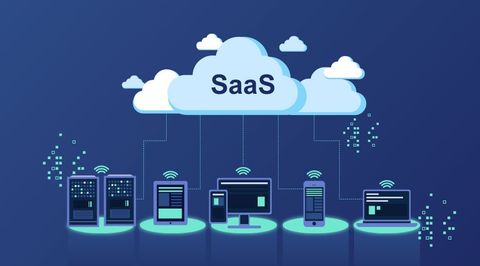
SaaS Integration Platforms Guide: Explore APIs, Automations, Data Flow & Application Connectivity
By: Lavit
Updated: September 19, 2026
Read More
Client Management Software Guide: Explore CRM Features, Automation & Expert Insight
By: Lavit
Updated: September 13, 2026
Read More