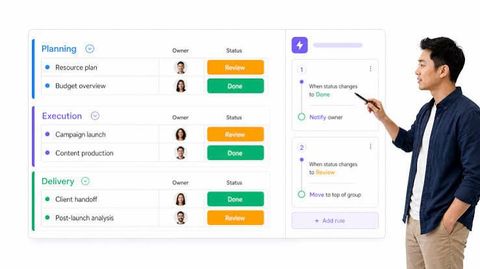
Complete Manufacturing Software Guide: Explore Production Planning, Inventory, Quality & Automation
Manufacturing has become increasingly dependent on digital systems for coordinating production, managing materials, monitoring quality, and maintaining accurate operational records. Modern manufacturing environments may involve hundreds or thousands of activities across procurement, production, inventory, maintenance, quality control, logistics, and administration.
Manufacturing software brings many of these activities into connected digital workflows. Depending on the organization, this may involve an Enterprise Resource Planning system, Manufacturing Execution System, production planning software, inventory management tools, quality management applications, maintenance platforms, or industrial automation systems.
The purpose of these technologies is generally to improve visibility, coordination, consistency, and data management across manufacturing operations.
What Is Manufacturing Software?
Manufacturing software refers to digital applications designed to support manufacturing-related activities.
Instead of relying entirely on spreadsheets, paper records, disconnected databases, and manual communication, manufacturers can use software to organize operational information in centralized or interconnected systems.
Common areas supported by manufacturing software include:
- Production planning
- Material requirements planning
- Inventory management
- Purchasing
- Work-order management
- Quality control
- Equipment maintenance
- Warehouse management
- Supply-chain coordination
- Production monitoring
- Workforce scheduling
- Cost and financial records
- Manufacturing analytics
- Automation and machine integration
The exact functionality depends on the type of software and the manufacturing environment.
Why Manufacturing Software Is Important
Manufacturing involves multiple processes that must work together. A change in one area can affect several others.
For example, a delay in receiving raw materials can affect production scheduling. A machine breakdown can change planned output. A quality issue can result in additional inspections, material holds, or production adjustments.
Manufacturing software helps organizations connect information from these activities.
Important objectives can include:
- Better production visibility
- More organized material planning
- Improved inventory tracking
- Faster access to operational information
- More consistent quality documentation
- Better equipment monitoring
- Improved coordination between departments
- More structured data analysis
- Reduced dependence on manual records
Software does not eliminate operational challenges, but it can provide a more structured way to monitor and manage them.
Major Types of Manufacturing Software
Manufacturing software is not a single category. Different systems address different operational requirements.
The most common categories include:
Enterprise Resource Planning Software
Enterprise Resource Planning, commonly called ERP, connects major business functions within one system or integrated environment.
Manufacturing ERP modules can include:
- Production
- Inventory
- Procurement
- Finance
- Sales
- Human resources
- Supply chain
- Quality
- Asset management
ERP software generally provides a broader business perspective than production-specific systems.
For example, a production order may affect inventory records, material requirements, purchasing activities, and financial information.
Manufacturing Execution Systems
A Manufacturing Execution System, or MES, focuses more closely on activities taking place on the production floor.
MES platforms can help track:
- Production orders
- Work-in-progress
- Machine activity
- Production quantities
- Operator activities
- Production times
- Quality information
- Material usage
- Production status
MES systems can connect planning information with actual production activities.
Production Planning Software
Production planning systems help organizations determine what should be produced, when it should be produced, and which resources may be required.
Planning can involve:
- Production schedules
- Machine availability
- Labor availability
- Material availability
- Production capacity
- Delivery requirements
- Manufacturing priorities
Advanced planning systems may use algorithms to identify scheduling conflicts and potential bottlenecks.
Inventory Management Software
Inventory management systems track materials, components, finished goods, and other stock items.
Typical functions include:
- Stock-level monitoring
- Warehouse locations
- Batch tracking
- Serial-number tracking
- Material movements
- Reorder planning
- Stock reconciliation
- Inventory forecasting
Accurate inventory information is particularly important when production depends on many components.
Quality Management Software
Quality Management Systems, or QMS platforms, organize processes related to quality assurance and quality control.
Features may include:
- Inspection records
- Quality checks
- Nonconformance tracking
- Corrective and preventive actions
- Audit records
- Supplier quality information
- Document control
- Product testing records
Digital quality records can make it easier to trace manufacturing issues and review historical information.
Computerized Maintenance Management Systems
Computerized Maintenance Management Systems, commonly known as CMMS platforms, focus on equipment and maintenance activities.
They can organize:
- Preventive maintenance schedules
- Maintenance work orders
- Equipment histories
- Spare-parts records
- Inspection schedules
- Maintenance personnel activities
- Downtime records
Maintenance software can be integrated with production systems to provide a broader view of equipment availability.
Production Planning and Scheduling
Production planning is one of the most important areas of manufacturing software.
The planning process typically considers several variables simultaneously.
These may include:
- Customer requirements
- Production capacity
- Available materials
- Equipment availability
- Workforce availability
- Manufacturing times
- Existing orders
- Maintenance schedules
A basic planning workflow may look like:
Demand → Material Planning → Capacity Planning → Production Schedule → Work Orders → Production Monitoring
Software can help update plans when conditions change.
For example, if a production machine becomes unavailable, planners can evaluate alternative equipment, reschedule work, or adjust production priorities.
Material Requirements Planning
Material Requirements Planning, or MRP, connects production requirements with material requirements.
The system may examine:
- Current inventory
- Production orders
- Bill of materials
- Lead times
- Existing purchase orders
- Planned production
- Safety-stock requirements
The objective is to determine which materials are required and when they may be needed.
MRP is particularly useful in manufacturing environments where finished products contain many components.
Inventory and Warehouse Management
Inventory is closely connected to manufacturing efficiency.
Too little inventory can interrupt production, while excessive inventory can increase storage requirements and tie up organizational resources.
Manufacturing software can provide visibility into:
- Raw materials
- Components
- Work-in-progress
- Finished products
- Spare parts
- Packaging materials
Barcode scanning, RFID technologies, warehouse management systems, and connected databases can further improve inventory traceability.
Batch and Serial Tracking
Certain manufacturing environments require detailed tracking of materials and products.
Batch tracking connects materials or products to specific production batches.
Serial-number tracking assigns unique identifiers to individual items.
These capabilities can be important for industries with strict traceability requirements.
Quality Management in Manufacturing
Quality management involves more than inspecting finished products.
Modern manufacturing software can support quality activities throughout the production lifecycle.
Quality workflows can include:
- Incoming material inspection
- Process inspection
- In-process testing
- Final inspection
- Nonconformance recording
- Corrective actions
- Documentation
- Trend analysis
Historical quality data can also be analyzed to identify recurring issues.
For example, repeated defects associated with a particular machine, material batch, process parameter, or production shift may indicate an area requiring further investigation.
Manufacturing Automation
Automation connects software with machines, sensors, controllers, robots, and industrial equipment.
Common technologies include:
- Programmable Logic Controllers
- Industrial robots
- CNC machines
- Sensors
- Machine vision
- Automated material-handling systems
- Supervisory control systems
- Industrial communication networks
Software can collect information from these systems and use it for monitoring, control, reporting, and analysis.
Automation can range from a single automated workstation to highly connected production facilities.
Industrial IoT and Connected Manufacturing
The Industrial Internet of Things, or IIoT, involves connecting industrial equipment and sensors to digital systems.
Connected machines can generate information such as:
- Temperature
- Vibration
- Pressure
- Production counts
- Machine status
- Energy consumption
- Operating time
This information can be transmitted to manufacturing software or industrial data platforms.
The resulting data can support production monitoring, maintenance analysis, quality investigation, and operational reporting.
Manufacturing Analytics
Manufacturing generates large amounts of operational data.
Analytics software can transform this information into dashboards, reports, and performance indicators.
Common manufacturing metrics include:
- Overall Equipment Effectiveness
- Production output
- Downtime
- Cycle time
- Scrap rate
- Defect rate
- Throughput
- Inventory turnover
- Production schedule adherence
- Equipment utilization
Analytics can help managers identify trends and compare actual performance with planned performance.
Artificial Intelligence in Manufacturing
Artificial intelligence is increasingly being incorporated into manufacturing software.
Potential applications include:
Predictive Maintenance
Machine data can be analyzed to identify patterns associated with equipment problems.
The objective is to detect potential issues earlier and support maintenance planning.
Quality Inspection
Computer vision systems can analyze images of components or products for predefined visual characteristics.
Demand Forecasting
Machine-learning models can analyze historical and external data to estimate future demand patterns.
Production Optimization
AI-based systems can evaluate multiple planning variables and identify possible scheduling alternatives.
Process Monitoring
Algorithms can analyze sensor data and identify unusual operating patterns.
AI applications still depend heavily on data quality, system integration, validation, and appropriate human oversight.
Cloud and On-Premises Manufacturing Software
Manufacturing organizations may use cloud-based, on-premises, or hybrid architectures.
Cloud-Based Systems
Cloud platforms host software and associated infrastructure in remote data centers.
Potential characteristics include:
- Remote accessibility
- Centralized updates
- Flexible infrastructure
- Easier integration with cloud applications
- Subscription-based deployment models
On-Premises Systems
On-premises systems are operated within an organization's own infrastructure.
They may provide greater control over infrastructure configuration and internal data environments.
Hybrid Manufacturing Systems
Hybrid architectures combine local industrial systems with cloud-based applications.
This approach is common when production equipment requires local processing while business analytics and enterprise applications operate in cloud environments.
Integration Between Manufacturing Systems
Integration is one of the most important considerations when implementing manufacturing software.
A manufacturing environment may contain:
- ERP
- MES
- QMS
- CMMS
- Warehouse systems
- PLCs
- SCADA platforms
- IoT devices
- Engineering systems
- Financial systems
These systems need appropriate data connections to avoid unnecessary duplication.
Common integration technologies include:
- APIs
- Industrial communication protocols
- Database integration
- Middleware
- Event-driven architectures
- Cloud integration platforms
A well-designed integration architecture allows information to move between systems while maintaining appropriate security and data controls.
Digital Twins in Manufacturing
A digital twin is a digital representation of a physical object, machine, process, or facility.
In manufacturing, digital twins can represent:
- Production equipment
- Manufacturing lines
- Factories
- Production processes
- Products
Data from physical systems can update the digital representation.
Digital twins can support simulation, performance analysis, process optimization, and maintenance planning.
Cybersecurity and Manufacturing Software
Greater connectivity also creates cybersecurity considerations.
Manufacturing systems may contain operational data, production information, intellectual property, and connections to industrial equipment.
Important cybersecurity practices can include:
- Network segmentation
- Access control
- Authentication
- Software updates
- Backup procedures
- Monitoring
- Security logging
- Incident-response planning
- Device management
- Data encryption where appropriate
Industrial cybersecurity requires consideration of both information technology and operational technology environments.
Manufacturing Software and Industry 4.0
Industry 4.0 refers broadly to the integration of digital technologies with manufacturing.
Technologies associated with Industry 4.0 include:
- IIoT
- Cloud computing
- Artificial intelligence
- Robotics
- Big-data analytics
- Digital twins
- Advanced automation
- Edge computing
- Connected production systems
Manufacturing software acts as an important coordination layer between these technologies and business processes.
Benefits of Manufacturing Software
When appropriately implemented, manufacturing software can support several operational improvements.
Improved Visibility
Managers and teams can access information about production, inventory, quality, and equipment.
Better Planning
Production plans can incorporate material, capacity, and scheduling information.
Greater Traceability
Digital records can make it easier to trace materials, production batches, and quality events.
Better Data Management
Centralized information can reduce dependence on disconnected spreadsheets and paper records.
Faster Reporting
Dashboards and automated reports can provide operational information more quickly.
Improved Coordination
Different departments can work from connected information instead of maintaining isolated records.
Challenges of Manufacturing Software
Manufacturing software also introduces challenges.
Implementation Complexity
Large manufacturing environments may have complex workflows and legacy systems.
Data Quality
Incorrect or incomplete data can produce unreliable planning and reporting.
Integration Difficulties
Older machines and systems may use technologies that are difficult to connect with modern platforms.
Employee Training
Users need appropriate training to work effectively with new software.
Cybersecurity
Connected systems increase the importance of security controls.
Change Management
Technology implementation often requires changes to established workflows and organizational processes.
How to Evaluate Manufacturing Software
Organizations evaluating manufacturing software should first identify their operational requirements.
Important questions include:
- Which manufacturing processes need digital support?
- What information needs to be tracked?
- How many production locations are involved?
- Which existing systems need integration?
- What reporting capabilities are required?
- Does the environment require batch or serial traceability?
- How will production equipment connect to the system?
- What cybersecurity requirements apply?
- What level of automation is appropriate?
- How will historical data be migrated?
A structured evaluation helps prevent unnecessary complexity.
Manufacturing Software Implementation
A typical implementation process can include several stages.
1. Process Assessment
Document current workflows, systems, data sources, and operational challenges.
2. Requirements Definition
Identify required functions and integration requirements.
3. System Architecture
Determine how ERP, MES, QMS, maintenance, warehouse, and automation systems will interact.
4. Data Preparation
Review master data such as products, materials, equipment, suppliers, and production structures.
5. Configuration
Configure workflows, permissions, reports, production structures, and other required components.
6. Testing
Test business processes, system integration, data flows, and user workflows.
7. Training
Provide appropriate training to employees who will use or administer the system.
8. Deployment
Introduce the system according to an appropriate implementation plan.
9. Monitoring and Improvement
Review system performance and user feedback and make improvements where necessary.
Manufacturing Software vs Traditional Manual Systems
| Area | Manual Approach | Digital Manufacturing Software |
|---|---|---|
| Production Planning | Spreadsheets and manual coordination | Integrated planning workflows |
| Inventory | Manual records | Digital stock tracking |
| Quality | Paper or separate records | Centralized quality information |
| Maintenance | Manual schedules | Digital work orders and maintenance history |
| Reporting | Periodic manual reports | Dashboards and automated reporting |
| Traceability | Paper-based tracking | Digital batch and serial records |
| Machine Data | Limited manual collection | Connected machine and sensor data |
| Analytics | Spreadsheet analysis | Integrated operational analytics |
The appropriate approach depends on the organization's size, complexity, regulatory environment, and digital maturity.
Future Trends in Manufacturing Software
Manufacturing software is expected to become increasingly connected with industrial equipment and advanced analytics.
Several developments are particularly important.
AI-Assisted Manufacturing
Artificial intelligence is likely to become more deeply integrated into planning, forecasting, quality analysis, and maintenance.
Edge Computing
Processing data closer to machines can reduce latency and support applications that require rapid responses.
Autonomous Planning
Advanced algorithms may increasingly assist with production scheduling and resource allocation.
Connected Supply Chains
Manufacturing systems are becoming more closely connected with suppliers, logistics networks, and enterprise platforms.
Digital Twins
Digital representations of equipment and manufacturing processes are expected to become more sophisticated.
Low-Code Manufacturing Applications
Low-code tools may allow organizations to create specialized workflows and dashboards with less conventional programming.
Greater Cybersecurity Integration
Security controls are likely to become increasingly integrated into industrial software architectures rather than treated as a separate layer.
Key Technologies to Understand
Anyone studying manufacturing software should become familiar with several related concepts:
- ERP
- MES
- MRP
- QMS
- CMMS
- WMS
- PLM
- IIoT
- SCADA
- PLC
- Industrial robotics
- Digital twins
- Cloud computing
- Edge computing
- Manufacturing analytics
- Artificial intelligence
- Industrial cybersecurity
Understanding how these technologies interact provides a stronger foundation than studying any single application independently.
Frequently Asked Questions
What is manufacturing software?
Manufacturing software consists of digital systems designed to support production, planning, inventory, quality, maintenance, automation, analytics, and other manufacturing activities.
What is the difference between ERP and MES?
ERP generally manages broader business and resource processes, while MES focuses more closely on production-floor activities and execution.
What is MRP in manufacturing?
Material Requirements Planning is a process that determines material requirements based on production plans, inventory, bills of materials, and related information.
Can manufacturing software connect with machines?
Yes. Depending on the system architecture, manufacturing software can exchange information with industrial machines, PLCs, sensors, SCADA platforms, and other production technologies.
How does manufacturing software support inventory?
It can track materials, components, work-in-progress, finished goods, locations, batches, serial numbers, and material movements.
What is MES used for?
MES is commonly used to monitor and manage manufacturing execution activities, including production orders, work-in-progress, machine activity, quality information, and production performance.
How is AI used in manufacturing software?
AI can support areas such as predictive maintenance, visual quality inspection, demand forecasting, production optimization, anomaly detection, and process analysis.
Is manufacturing software suitable for small manufacturers?
Manufacturing software can be used across organizations of different sizes. The appropriate system depends on operational complexity, production processes, data requirements, and available infrastructure.
What is Industry 4.0?
Industry 4.0 broadly describes the use of connected digital technologies, automation, data analytics, artificial intelligence, and intelligent systems within manufacturing.
Conclusion
Manufacturing software has evolved from basic production-recording applications into interconnected digital platforms supporting planning, inventory, quality, maintenance, automation, analytics, and supply-chain coordination.
ERP systems provide broad business management capabilities, while MES platforms focus on production execution. MRP supports material planning, QMS systems organize quality processes, CMMS platforms support maintenance, and IIoT technologies connect physical equipment with digital systems.
The future of manufacturing software is increasingly connected with artificial intelligence, automation, industrial IoT, edge computing, digital twins, and advanced analytics. Organizations that understand how these technologies fit together can make more informed decisions about their manufacturing information architecture and digital transformation strategies.
Disclaimer: This article is provided for general informational and educational purposes only. It does not promote or recommend any specific manufacturing software, technology provider, or implementation approach. Manufacturing requirements vary by organization, industry, production process, infrastructure, and applicable standards.

Related Post...

SaaS Integration Platforms Guide: Explore APIs, Automations, Data Flow & Application Connectivity
Updated: September 19, 2026
Read More
Complete Manufacturing Software Guide: Explore Production Planning, Inventory, Quality & Automation
Updated: September 08, 2026
Read More
Manufacturing Software Explained: Explore ERP, MES, Planning, Automation & Data Management
Updated: September 08, 2026
Read More