Robotics in Manufacturing: Insights into Applications and Production Processes
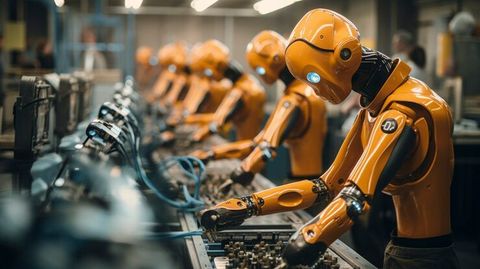
Robotics in Manufacturing refers to the use of programmable machines and automated systems to perform tasks in industrial production. These robots help factories handle activities such as welding, assembling, packaging, painting, and material movement. Understanding how industrial robots work helps readers explore modern manufacturing methods, automation technologies, and changes in production processes.
Key Takeaways
Industrial robots perform repetitive tasks with programmed movements and instructions.
Robotic automation supports manufacturing activities across several industrial sectors.
Sensors and artificial intelligence help robots respond to changing conditions.
Workplace safety remains important when humans and robots share production areas.
Related Searches
What is robotics in manufacturing and how does it work?
Industrial robots and their applications in factories
Types of robots used in manufacturing industries
Benefits and challenges of manufacturing automation
Industrial robots vs collaborative robots
Future of robotics in manufacturing
In This Guide
What Is Robotics in Manufacturing?
Why Is Robotics Important in Modern Manufacturing?
How Do Industrial Robots Work?
Recent Developments in Manufacturing Robotics
Robotics Regulations and Policies in India
Types of Industrial Robots: A Comparison
Tools and Resources for Learning About Robotics
Frequently Asked Questions
Conclusion
What Is Robotics in Manufacturing?
Understanding Industrial Robotics
Robotics in manufacturing involves using mechanical machines, electronic controls, sensors, and computer programs to perform production activities. These systems can operate independently or work alongside human employees, depending on their design and purpose.
Industrial robots are commonly used in factories where tasks require repeated movements, controlled positioning, or consistent handling of materials. They can be programmed to follow specific instructions and perform operations within defined working areas.
How Did Manufacturing Robotics Develop?
The development of manufacturing robotics began with industrial automation and the introduction of programmable machinery. Early industrial robots were mainly designed to handle repetitive and physically demanding activities, particularly in automotive production.
As computing, sensors, and control systems developed, robots became capable of performing more varied tasks. Modern systems can combine machine vision, artificial intelligence, and advanced motion controls to respond to different production conditions.
Common Applications in Factories
Manufacturing robots are used for several industrial activities, including:
Welding and metal fabrication
Painting and surface treatment
Product assembly and component fitting
Packaging and palletising
Material handling and transportation
Quality inspection and testing
The type of robot selected depends on the task, production environment, material characteristics, and required level of precision.
Why Is Robotics Important in Modern Manufacturing?
Improving Production Consistency
Manufacturing processes often involve repeating the same operation many times. Robots can follow programmed instructions to perform these operations with consistent movements and positioning.
For example, an industrial welding robot can follow a predefined path across metal components. This helps maintain consistent production methods, although final results still depend on programming, equipment condition, and material quality.
Supporting Workplace Safety
Some manufacturing activities involve high temperatures, heavy materials, chemicals, or repetitive physical movements. Robots can perform selected tasks in these environments, reducing the need for direct human involvement in certain hazardous activities.
However, robotic systems also introduce risks such as unexpected movement, mechanical contact, and equipment malfunction. Proper safety measures, protective barriers, emergency stops, and employee training remain necessary.
Addressing Industrial Production Challenges
Manufacturers use robotics to address several operational difficulties:
Repetitive production activities requiring continuous movement.
Handling heavy components and industrial materials.
Performing tasks in difficult or hazardous environments.
Maintaining consistent processes across production shifts.
Supporting inspection and component positioning.
Robotics does not remove the need for human workers. People remain important for programming, supervision, maintenance, quality decisions, and handling unexpected situations.
Recent Developments in Manufacturing Robotics
Robotics continues to develop through improvements in artificial intelligence, machine vision, connected devices, and computer processing. During 2024–2026, manufacturers have shown increasing interest in flexible automation and systems that support cooperation between people and machines.
Artificial Intelligence and Smart Robotics
AI-powered robots can process information from cameras and sensors to identify objects, recognise patterns, and adjust certain operations. Machine vision helps robots inspect products, identify component positions, and detect visible defects.
These developments are making robotic systems more adaptable to changing production requirements. However, their performance depends on training data, environmental conditions, and system configuration.
Collaborative Robots
Collaborative robots, commonly called cobots, are designed to work near human operators under specified safety conditions. They are used for activities such as assembly, material handling, and component inspection.
Digital Twins and Simulation
Digital twin technology creates virtual representations of robotic equipment and manufacturing processes. Engineers can use simulations to examine robot movements, test production layouts, and identify possible operational problems before making physical changes.
Flexible Manufacturing Automation
Manufacturers are increasingly exploring robots that can handle different products and production tasks. This approach supports manufacturing environments where product designs and production requirements change regularly.
Robotics Regulations and Policies in India
Industrial robotics in India operates within a wider framework of machinery safety, workplace regulations, and technical standards. These requirements help address risks associated with automated equipment and industrial operations.
Occupational Safety Regulations
The Occupational Safety, Health and Working Conditions Code, 2020 came into force in November 2025. It establishes workplace safety responsibilities and provisions relevant to machinery and industrial working environments.
Factories using robots must consider applicable workplace safety requirements, including equipment installation, worker protection, and hazard management.
Bureau of Indian Standards
The Bureau of Indian Standards (BIS) develops technical standards relevant to industrial machinery and robotics.
Important standards include:
IS 14530: Safety requirements for industrial robots and robotic applications.
IS/ISO 10218: Safety requirements relating to industrial robots.
IS 15296:2025: Requirements for integrating machinery into industrial systems.
Machinery and Electrical Equipment Safety Regulations
The Machinery and Electrical Equipment Safety (Omnibus Technical Regulation) Order, 2024 establishes conformity requirements for machinery and electrical equipment listed within its scope. Its implementation timeline was amended in 2025, with the specified requirements applying from September 2026.
Not every robotic system automatically falls under identical requirements. Applicability depends on equipment classification and the relevant technical provisions.
Types of Industrial Robots: A Comparison
Different robot designs support different manufacturing activities. Their movement patterns, operating areas, and mechanical structures determine their applications.
Robot Type | Main Characteristics | Common Applications |
|---|---|---|
Articulated robots | Multiple rotating joints | Welding and painting |
SCARA robots | Horizontal movement and assembly precision | Electronic assembly |
Cartesian robots | Movement along linear axes | Material positioning |
Delta robots | Lightweight parallel-arm structure | Packaging and sorting |
Collaborative robots | Designed for human collaboration | Assembly and inspection |
Autonomous mobile robots | Navigate industrial environments | Material transportation |
Selecting a robot type depends on the production task, available workspace, payload requirements, movement range, and safety conditions.
Tools and Resources for Learning About Robotics
Several software platforms and educational resources help people understand industrial robotics and automation.
ROS (Robot Operating System): A software framework used for developing robotic applications.
RoboDK: A simulation platform for industrial robot programming and offline testing.
MATLAB Robotics System Toolbox: Supports robot modelling, simulation, and algorithm development.
Gazebo: A robotics simulator used to examine robot behaviour in virtual environments.
Autodesk Fusion: Supports mechanical design and modelling of robotic components.
BIS Standards: Provides technical standards related to machinery and industrial safety.
These resources support different learning and engineering activities, from basic robot simulation to industrial system development.
Frequently Asked Questions
1. What is robotics in manufacturing?
It involves using programmable machines to perform industrial activities such as welding, assembly, packaging, and inspection.
2. How do industrial robots work?
Industrial robots use programmed instructions, mechanical components, sensors, and control systems to perform specific movements and tasks.
3. What are the main applications of manufacturing robotics?
Common applications include welding, painting, material handling, assembly, packaging, and product inspection.
4. What is the difference between industrial robots and cobots?
Traditional industrial robots often operate within restricted workspaces, while cobots are designed for human collaboration under specified safety conditions.
5. Will robotics replace human workers in manufacturing?
Robotics can automate selected tasks, but people remain important for supervision, programming, maintenance, decision-making, and production management.
Conclusion
Robotics plays an important role in modern manufacturing through automated production, material handling, assembly, and inspection. Developments in artificial intelligence, collaborative robots, and digital twins continue to expand industrial applications. Workplace safety, technical standards, and human supervision remain essential parts of robotic manufacturing systems.

Related Post...
Industrial Cybersecurity: Discover Key Threats and Safety Measures
Updated: November 28, 2026
Read More