Rigid Dump Trucks: Explore Overview, Basics, Explanation, Knowledge, and Key Details
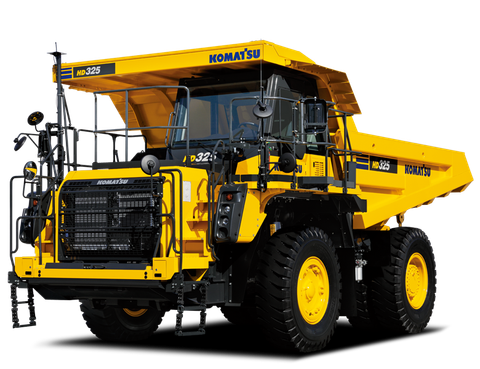
Rigid dump trucks are heavy-duty vehicles designed to transport large quantities of loose material across construction, mining, quarrying, and other industrial sites. They are built with a rigid chassis, a powerful engine, a large tipping body, and heavy-duty axles to handle demanding hauling operations.
Unlike articulated dump trucks, which use a hinged connection between the front and rear sections, a rigid dump truck has a fixed frame. This design provides structural strength and stability for carrying substantial loads on prepared haul roads.
A rigid haul truck is commonly used in open-pit mines and large quarries, where it repeatedly transports overburden, rock, ore, and other materials between loading and unloading points. Understanding its construction, operating principles, specifications, and limitations helps project teams select suitable equipment and organise safe hauling operations.
What Is a Rigid Dump Truck?
A rigid dump truck is an off-highway vehicle designed to carry and discharge bulk material using a hydraulically operated dump body. Its front and rear chassis sections are permanently connected, creating a strong frame for heavy-load operations.
A typical off highway dump truck is not primarily designed for ordinary public-road travel. It is built for controlled industrial environments, such as mining areas, quarries, and large construction projects.
A heavy duty rigid dump truck generally features:
A reinforced chassis and heavy-duty suspension.
A high-output diesel engine or another specialised powertrain.
Large tyres designed for demanding haul-road conditions.
A hydraulic hoist system for raising the dump body.
A reinforced loading body designed for bulk materials.
Braking, steering, and monitoring systems suited to heavy vehicle operation.
Rigid dump trucks are available in different payload classes. Smaller models may support construction and quarrying activities, while very large mining models are designed to move hundreds of tonnes in a single cycle. Actual capacity depends on the model and its approved operating configuration.
Main Components of a Rigid Dump Truck
A rigid dump truck contains several major systems that work together to carry heavy loads and operate on demanding haul roads.
Component | Main function |
|---|---|
Chassis and frame | Supports the engine, cab, axles, and dump body |
Engine | Supplies power for vehicle movement and auxiliary systems |
Transmission | Transfers engine power to the drive wheels |
Dump body | Holds rock, ore, soil, and other bulk material |
Hydraulic hoist cylinders | Raise the body to discharge material |
Suspension system | Absorbs shocks and supports the loaded vehicle |
Steering system | Controls the direction of travel |
Service brakes | Slow and stop the truck during normal operation |
Retarder | Helps control speed on long downhill sections |
Tyres and wheels | Support the load and provide traction |
Operator cabin | Contains driving controls, displays, and safety systems |
Monitoring systems | Track machine condition and operating information |
Chassis and Suspension
The rigid frame is designed to withstand repeated loading and unloading stresses. Heavy-duty suspension components help absorb impacts from uneven surfaces and protect the chassis and operator from excessive vibration.
Engine and Drive System
Many rigid haul trucks use diesel engines with mechanical or diesel-electric drive arrangements. In a mechanical-drive truck, power passes through a transmission and drivetrain to the wheels. In a diesel-electric design, the engine drives an alternator or generator, supplying electrical power to traction motors.
Dump Body and Hydraulic System
The dump body is designed according to the material being transported. Its shape, floor construction, liners, and volume influence loading and discharge behaviour. Hydraulic hoist cylinders raise the body to release the load at the designated tipping point.
Braking and Retarding Systems
Heavy trucks require braking systems capable of controlling substantial vehicle mass. Service brakes are used to slow and stop the truck, while retarders help manage speed during extended downhill travel. Operators must follow the manufacturer's instructions for the correct use of both systems.
How Does a Rigid Dump Truck Work?
A rigid dump truck operates through a repeated loading, hauling, dumping, and returning cycle.
Positioning: The truck approaches the loading area and positions itself according to the loading equipment operator's instructions.
Loading: An excavator, mining shovel, or wheel loader places material into the dump body. The load should be distributed according to the truck's loading guidelines.
Hauling: The operator travels along the designated haul road, maintaining safe speed and following site traffic rules.
Approaching the dump area: The truck slows down and follows the designated approach route and tipping instructions.
Discharging: Once positioned on a suitable surface, the operator raises the body using the hydraulic hoist system.
Lowering the body: After the material is discharged, the body is lowered fully before the truck returns to the loading area.
Returning: The empty truck follows the approved route for another loading cycle.
A well-organised haul cycle depends on coordination between loading equipment, truck operators, road-maintenance teams, and dump-area personnel.
Rigid Dump Truck Specifications: What Should Be Evaluated?
Rigid dump truck specifications vary considerably according to manufacturer, model, payload class, drive arrangement, and application. A truck designed for quarry operations may have different body and tyre configurations from a large mining model.
The following parameters are important when comparing machines:
Specification | What it indicates |
|---|---|
Rated payload | Maximum approved material load |
Gross vehicle weight | Total operating weight, including the truck and payload |
Empty operating weight | Weight of the truck without its payload |
Engine power | Available power for hauling and operating systems |
Body capacity | Volume of material the body can accommodate |
Maximum speed | Manufacturer-specified travel speed under defined conditions |
Drive configuration | Mechanical or electric drive arrangement |
Turning radius | Space required to complete a turn |
Tyre dimensions | Tyre size and load-carrying characteristics |
Retarding capacity | Ability to control speed during downhill travel |
Ground clearance | Clearance between the vehicle and the ground |
Understanding Payload and Body Capacity
Payload is the approved mass of material that a truck can carry. Body capacity is the volume of the dump body, often described using struck and heaped measurements.
These values are not interchangeable. A truck may reach its payload limit before its body is completely filled when carrying dense rock. With lighter material, the body may reach its volume limit before the maximum payload is achieved.
Manufacturers publish different payload classes. For example, Caterpillar lists off-highway truck models with rated payloads from approximately 38 tonnes in its 770 model to 372 tonnes in its 798 AC mining truck. These are model-specific figures, not a universal range for every manufacturer.
Types and Applications of Rigid Dump Trucks
Rigid dump trucks can be grouped by their size, powertrain, and intended working environment.
1. Construction Rigid Dump Truck
These trucks are used on large construction and earthmoving projects to transport soil, gravel, crushed stone, and other materials. They are generally matched to the capacity of the excavators, loaders, and haul roads at the site.
2. Mining Rigid Dump Truck
A mining rigid dump truck is designed for repeated high-payload hauling in open-pit mining operations. It transports ore, waste rock, and overburden between loading points, crushers, stockpiles, and dumping areas.
3. High-Capacity Dump Truck
A high capacity dump truck is designed to carry substantial payloads in large-scale mining and quarry operations. It generally requires specially designed haul roads, suitable loading equipment, planned turning areas, and dedicated maintenance arrangements.
4. Mechanical-Drive Rigid Truck
Mechanical-drive models use a transmission and mechanical drivetrain to deliver power to the wheels. They are available in different payload classes and are used in construction, quarrying, and mining.
5. Electric-Drive Rigid Truck
In diesel-electric models, an engine drives an electrical generator, which supplies power to traction motors. This arrangement is used in some large mining trucks and can provide controlled traction and electrical retarding capabilities.
6. Trolley-Assist Mining Truck
Some large electric-drive mining trucks can operate with trolley-assist systems. Overhead electrical lines supply power to the truck while it travels along designated sections of a haul road. This technology is used in selected mining operations with suitable infrastructure.
Rigid Dump Truck vs Articulated Dump Truck
Both types transport bulk material, but their chassis designs make them suitable for different site conditions.
Feature | Rigid dump truck | Articulated dump truck |
|---|---|---|
Frame | Fixed, rigid chassis | Hinged articulation between sections |
Typical application | Large mines and quarries | Construction and rough-terrain sites |
Payload | Generally higher in large mining classes | Generally lower |
Haul roads | Best suited to prepared haul roads | More adaptable to uneven terrain |
Manoeuvrability | Requires suitable turning space | Better suited to tighter working areas |
Operating environment | Large, organised hauling operations | Variable and challenging site conditions |
The right choice depends on haul-road quality, terrain, travel distance, material volume, and project layout. A larger payload does not automatically make a rigid truck the better option for every site.
Recent Developments and Technology Trends
Rigid dump trucks are increasingly incorporating digital monitoring, automation, and alternative power technologies.
Autonomous haulage: Some mining operations use automated haul trucks guided by site-control systems, sensors, and positioning technology. These systems can coordinate vehicle movement and reduce the need for direct manual driving in designated areas.
Electric-drive technology: Diesel-electric systems and trolley-assist arrangements are used in selected large mining operations to support traction and energy management.
Fleet monitoring: Telematics systems collect information about machine location, fuel consumption, operating hours, payload, and maintenance conditions.
Collision-avoidance systems: Proximity detection, cameras, and warning systems help operators identify nearby vehicles, equipment, and obstacles.
Predictive maintenance: Equipment-monitoring data can help maintenance teams identify developing problems before they cause unexpected downtime.
Operator-assistance technology: Fatigue monitoring, improved displays, and cabin ergonomics are receiving greater attention in heavy vehicle design.
These technologies are not available in every truck. Their suitability depends on the mine layout, infrastructure, equipment model, and operational requirements.
Indian Regulations and Safety Requirements
Rigid dump trucks used in Indian mines must comply with applicable mining safety regulations and directions issued by the Directorate General of Mines Safety (DGMS).
The Coal Mines Regulations, 2017, particularly Regulation 216, addresses the design, operation, and maintenance of heavy earthmoving machinery, including trucks, tippers, and dumpers. It requires appropriate safety features, authorised operators, and training with competency evaluation.
Important safety requirements and guidance include:
DGMS Circular No. 7 of 2025: Issued on 20 November 2025, it addresses safety features in heavy earthmoving machinery and auxiliary equipment used in open-cast coal and metal mines. It highlights proximity-warning systems, anti-collision arrangements, fatigue-warning systems, suitable operator cabins, and operator training.
BIS IS 17055 (Part 6):2021: Covers safety requirements for dumpers and tippers. Amendment 1 of 2024 is also referenced in DGMS guidance.
Daily vehicle inspection: DGMS guidance emphasises checking heavy vehicles before use and recording the results.
Haul-road safety: Dedicated routes, suitable road conditions, warning signs, and separation of light vehicles from heavy haul traffic are important safety measures.
Operator competency: Drivers must receive appropriate training and demonstrate competency for the equipment they operate.
DGMS+2
For construction equipment vehicles that have public-road or limited on-road capability, applicable provisions of the Central Motor Vehicles Rules, 1989, should also be checked. MoRTH notification G.S.R. 673(E), dated 27 October 2020, introduced additional construction equipment vehicle safety requirements. Purely off-highway mining trucks may fall under different vehicle classifications.
Regulatory applicability should be confirmed according to the vehicle classification, mine type, and operating location.
Best Practices for Operating and Maintaining Rigid Dump Trucks
Consistent inspection and safe operating procedures are essential for heavy-duty haul truck operations.
Conduct pre-start inspections: Check tyres, wheel assemblies, brakes, steering, lights, mirrors, alarms, and hydraulic components.
Check the payload: Avoid overloading and follow the manufacturer's approved loading limits.
Distribute material correctly: Ensure the load is placed according to the body and axle-loading requirements.
Maintain safe speeds: Follow site speed limits and adjust driving to road conditions, visibility, and load weight.
Use suitable haul roads: Keep roads graded, adequately maintained, and free from avoidable obstacles.
Follow safe tipping procedures: Use designated dumping areas and confirm ground stability before raising the body.
Use braking and retarding systems correctly: Follow the manufacturer's instructions, particularly on downhill routes.
Monitor tyre condition: Check pressure, temperature, tread condition, and signs of damage.
Maintain hydraulic systems: Inspect hoist cylinders, hoses, connections, and fluid levels.
Keep maintenance records: Document inspections, repairs, operating hours, defects, and equipment incidents.
Operators should never travel with the dump body raised. Personnel must remain clear of the vehicle during loading and tipping, and maintenance work must follow approved isolation and safety procedures.
Tools and Resources
The following resources can help equipment managers, mining engineers, and operators understand rigid dump truck requirements.
Resource | Purpose |
|---|---|
Directorate General of Mines Safety (DGMS) | Mining safety regulations and circulars |
Bureau of Indian Standards (BIS) | Indian machinery safety standards |
Ministry of Road Transport and Highways (MoRTH) | Construction equipment vehicle regulations |
Manufacturer specification sheets | Payload, dimensions, engine, and operating details |
Fleet management systems | Monitoring vehicle movement and operating performance |
Tyre pressure monitoring systems | Tracking tyre condition and pressure |
Weighing and payload systems | Monitoring material loads |
Equipment maintenance software | Recording inspections and maintenance activities |
Always compare manufacturer specifications using the same measurement basis and operating conditions.
Frequently Asked Questions
1. What is the main purpose of a rigid dump truck?
A rigid dump truck transports large quantities of material such as rock, ore, soil, and overburden across mining, quarrying, and large construction sites.
2. What is the difference between a rigid dump truck and an articulated dump truck?
A rigid dump truck has a fixed chassis, whereas an articulated dump truck has a pivoting joint between its front and rear sections. Rigid models are commonly used on prepared haul roads, while articulated models are more adaptable to uneven and challenging terrain.
3. What does payload capacity mean in a rigid haul truck?
Payload capacity is the maximum approved mass of material the truck can carry. It is different from the volume capacity of its dump body.
4. Where are mining rigid dump trucks commonly used?
They are commonly used in open-pit coal, iron ore, copper, and other mineral mining operations, as well as large quarries.
5. What safety systems are important in a rigid dump truck?
Important systems include reliable brakes, steering, reversing alarms, cameras, visibility aids, proximity-warning systems, operator protection structures, and suitable fatigue-monitoring arrangements.
Conclusion
Rigid dump trucks are essential for transporting large quantities of earth, rock, ore, and other bulk materials in mining, quarrying, and large infrastructure projects. Their fixed-frame construction, powerful drive systems, reinforced dump bodies, and high payload capabilities make them suitable for organised hauling operations on prepared roads.
Selecting the right rigid dump truck requires careful evaluation of payload, body capacity, engine power, drive configuration, tyre requirements, haul-road conditions, and project output. Modern monitoring, electric-drive systems, and safety technologies are also influencing the development of heavy-duty haul trucks.
Proper operator training, routine inspection, maintenance, and compliance with Indian mining safety requirements remain central to reliable operations.
Disclaimer
This article is intended for general educational and informational purposes only. Specifications, operating procedures, and regulatory requirements may vary by manufacturer, model, application, and location. Readers should consult equipment manuals, qualified mining professionals, and relevant authorities before making technical or operational decisions. The information does not constitute professional advice and does not guarantee any particular operating result. It is not intended to sell or promote any product, brand, or organisation.

Related Post...
Rigid Dump Trucks: Explore Overview, Basics, Explanation, Knowledge, and Key Details
Updated: November 24, 2026
Read More
MIG Welding Machines: Explore Overview, Basics, Explanation, Knowledge, and Key Details
Updated: November 24, 2026
Read More