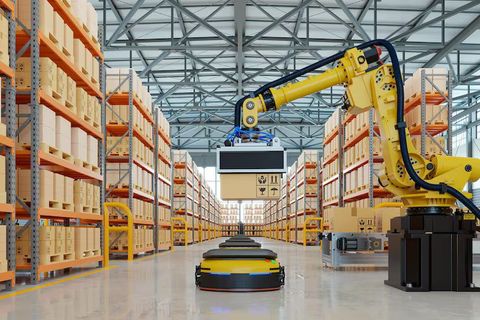
Retail Inventory Management Tools Insights for Smarter Stock Control
Retail businesses operate in an environment where product availability, customer expectations, and operational efficiency are closely connected. Whether managing a small store or a large retail network, maintaining the right inventory levels is essential for meeting customer demand while avoiding unnecessary stock-related costs. As retail operations become increasingly data-driven, inventory management software has become a valuable tool for improving visibility and control across the supply chain.
Traditional inventory tracking methods often rely on manual processes that can become difficult to manage as product catalogs grow and customer purchasing patterns change. Modern retail inventory management software helps businesses monitor stock movement, track product availability, and make more informed inventory decisions using real-time information.

For retailers seeking better stock control and operational efficiency, understanding how inventory management software works can provide valuable insights into its role within modern retail environments. This article explores the key functions, benefits, challenges, and future trends shaping inventory management technology.
Understanding Retail Inventory Management Software
Retail inventory management software is a digital system designed to help businesses track, organize, and manage inventory throughout the product lifecycle. These platforms provide visibility into stock levels, product movement, purchasing activities, and sales performance.
Rather than relying solely on spreadsheets or manual record-keeping, retailers can use software solutions to centralize inventory information and improve operational accuracy.
Inventory management software often serves as a bridge between multiple business functions, helping connect purchasing, warehousing, sales, and reporting activities within a single system.
Why Effective Inventory Control Matters
Inventory is one of the most important assets within many retail businesses. Too much inventory can increase storage costs and create inefficiencies, while insufficient inventory may result in missed sales opportunities and customer dissatisfaction.
Effective inventory control helps businesses:
- Maintain appropriate stock levels
- Improve product availability
- Reduce inventory-related waste
- Support better purchasing decisions
- Enhance customer satisfaction
As retail markets become more competitive, inventory accuracy plays an increasingly important role in operational performance.
Common Challenges in Retail Inventory Management
Retailers often face inventory-related challenges that can affect profitability and customer experience.
One common issue is inventory visibility. Without accurate information, businesses may struggle to understand what products are available, where inventory is located, or when replenishment is required.
Demand fluctuations also create complexity. Seasonal trends, promotional activities, and changing customer preferences can make forecasting more difficult.
Additional challenges may include:
- Inventory discrepancies
- Overstock situations
- Stock shortages
- Multi-location inventory tracking
- Manual data entry errors
Modern inventory management software is designed to help address many of these operational concerns.
Core Features of Inventory Management Software
Inventory management platforms typically provide a variety of tools that support stock control and operational decision-making.
Real-Time Inventory Tracking
One of the most valuable capabilities is real-time inventory visibility.
As products move through the retail environment, inventory levels can be updated automatically, helping businesses maintain more accurate records and reduce the risk of inventory inaccuracies.
Real-time tracking supports faster decision-making and improves awareness across multiple locations.
Product and Catalog Management
Retailers often manage hundreds or thousands of products.
Inventory software helps organize product information, categorize inventory, and maintain consistent records across different sales channels and locations.
This centralized approach improves operational efficiency and reduces administrative complexity.
Reporting and Analytics
Modern inventory systems generate detailed reports that help businesses understand inventory performance.
Analytics tools may provide insights into:
- Product demand patterns
- Inventory turnover rates
- Purchasing trends
- Stock movement activity
These insights support data-driven inventory planning and more informed business decisions.
How Inventory Software Supports Smarter Stock Control
Smarter stock control involves more than simply counting products. It requires understanding how inventory moves throughout the business and identifying opportunities to improve efficiency.
Inventory software helps organizations achieve this by providing greater visibility into inventory performance and operational trends.
For example, businesses can identify products that sell quickly, recognize slow-moving inventory, and monitor stock levels across multiple locations.
This information allows retailers to make proactive decisions rather than reacting to inventory issues after they occur.
As a result, inventory management becomes more strategic and less dependent on manual oversight.
The Role of Automation in Inventory Management
Automation is becoming increasingly important within retail operations.
Many inventory management systems automate routine activities that previously required manual effort.
Examples include:
- Inventory updates
- Reorder notifications
- Purchase order generation
- Stock movement tracking
- Data synchronization across locations
Automation helps reduce repetitive administrative tasks while improving consistency and accuracy.
By minimizing manual processes, retailers can often improve operational efficiency and reduce the likelihood of inventory-related errors.
Multi-Channel Retail and Inventory Visibility
Modern retailers frequently sell products through multiple channels, including physical stores, online marketplaces, direct websites, and mobile commerce platforms.
Managing inventory across these channels can become complex without centralized visibility.
Inventory management software helps synchronize inventory information so businesses can maintain consistent stock records regardless of where transactions occur.
This visibility supports better customer experiences by helping ensure that inventory information remains accurate across all sales channels.
As multi-channel retail continues to grow, integrated inventory management becomes increasingly important.
Inventory Forecasting and Demand Planning
One of the most valuable aspects of modern inventory management is the ability to support forecasting and demand planning.
Historical sales data, purchasing patterns, and inventory performance metrics can help businesses anticipate future inventory requirements.
While forecasting cannot eliminate uncertainty, it can improve planning accuracy and help retailers prepare for changing demand conditions.
Effective forecasting contributes to:
- Better inventory utilization
- Reduced excess stock
- Improved product availability
- More efficient purchasing decisions
Data-driven planning has become an important component of modern inventory management strategies.
Integration With Broader Retail Systems
Inventory management software often functions as part of a larger retail technology ecosystem.
Many businesses integrate inventory systems with:
- Point-of-sale platforms
- Accounting software
- E-commerce systems
- Warehouse management tools
- Customer relationship management platforms
Integration improves information flow across departments and reduces the need for duplicate data entry.
Connected systems help create a more unified view of retail operations, supporting both efficiency and decision-making.
Emerging Trends in Inventory Management Technology
Inventory management continues to evolve as new technologies become available.
Several trends are influencing the future of retail stock control.
Artificial Intelligence and Predictive Analytics
AI-powered tools can analyze large volumes of inventory and sales data to identify patterns and support forecasting activities.
Predictive analytics may help businesses anticipate inventory needs and respond more effectively to changing demand conditions.
Cloud-Based Inventory Management
Cloud technology allows businesses to access inventory information from multiple locations while supporting scalability and collaboration.
This flexibility has contributed to the growing adoption of cloud-based inventory solutions.
Enhanced Data Visibility
Retailers increasingly seek deeper insights into inventory performance through advanced dashboards and reporting tools.
Greater visibility helps organizations identify opportunities for process improvement and operational optimization.
Choosing an Inventory Management Approach
There is no single inventory management strategy that works for every retailer.
The most suitable approach depends on factors such as business size, product complexity, sales channels, and operational requirements.
When evaluating inventory management systems, businesses often consider:
- Ease of use
- Scalability
- Reporting capabilities
- Integration options
- Automation features
- Inventory visibility
A clear understanding of operational needs helps support more effective technology decisions.
Conclusion
Retail inventory management software has become an essential component of modern retail operations. By providing real-time visibility, automation capabilities, reporting tools, and inventory insights, these systems help businesses improve stock control and operational efficiency.
As retail environments become increasingly complex and multi-channel in nature, effective inventory management plays a critical role in maintaining product availability, supporting customer satisfaction, and improving decision-making. Organizations that leverage inventory management technology effectively are better positioned to adapt to changing demand patterns and create more efficient, data-driven retail operations.
The future of inventory management will likely involve greater automation, predictive analytics, and system integration, helping retailers gain even deeper visibility into inventory performance while supporting smarter stock control strategies.

Related Post...
Corporate Server Room Cooling Systems: Explore Precision Temperature Control
Updated: October 02, 2026
Read More
Turnkey PCB Assembly Guide to Components, Testing, and Production Steps
Updated: September 15, 2026
Read More
Virtual Data Rooms for M&A: Explore Secure Deal Documentation Processes
Updated: September 15, 2026
Read More