Industrial Robots Overview: Knowledge, Uses and Future Trends
Industrial robots are transforming modern manufacturing by improving efficiency, precision, and consistency. These automated machines are designed to perform repetitive or complex tasks with high accuracy, making them an essential part of many production environments.
From automotive assembly to electronics manufacturing, industrial robots continue to support industries that require dependable and repeatable processes.
As technology advances, industrial robots are becoming more intelligent through artificial intelligence, machine vision, and advanced sensors. Businesses, researchers, engineers, students, and policymakers are paying close attention to these developments because robotics is shaping the future of industrial production and workplace innovation.
Context – What Are Industrial Robots?
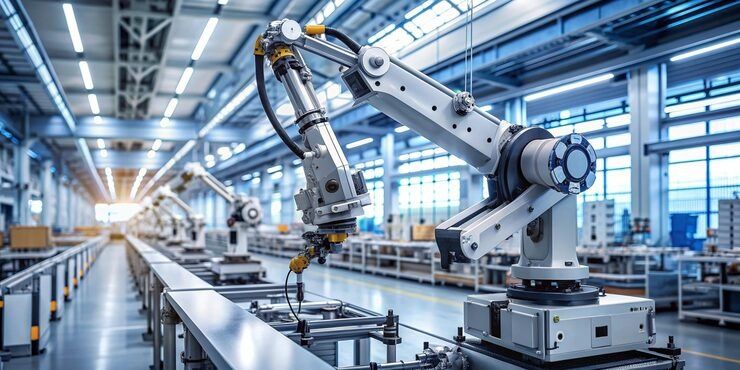
Industrial robots are programmable mechanical systems designed to perform manufacturing and industrial tasks automatically. They can move, lift, assemble, inspect, weld, paint, package, and handle materials with minimal human intervention. Unlike traditional machines that perform only one fixed function, many industrial robots can be programmed for different operations.
The concept of industrial robotics began in the mid-20th century when manufacturers sought more efficient production methods. Over time, robotics evolved from simple mechanical arms into advanced systems equipped with sensors, cameras, and intelligent software.
The main purpose of industrial robots is to improve production quality while reducing repetitive manual work. They are commonly integrated with automated manufacturing systems to support continuous production.
Common Types of Industrial Robots
| Robot Type | Typical Application | Key Characteristic |
|---|---|---|
| Articulated Robot | Welding, assembly | Multiple flexible joints |
| SCARA Robot | Electronics assembly | High-speed horizontal movement |
| Cartesian Robot | CNC operations | Linear movement on fixed axes |
| Delta Robot | Packaging, sorting | Fast lightweight movement |
| Collaborative Robot (Cobot) | Shared workspaces | Designed to work alongside people |
Importance – Why Industrial Robots Matter
Industrial robots have become important across many sectors because they improve productivity, consistency, and operational efficiency. Their ability to repeat tasks accurately helps reduce production variation and supports high-quality manufacturing standards.
Many industries now rely on industrial robots for tasks that require speed, precision, or continuous operation. They also help organizations automate processes that involve repetitive movements or hazardous environments.
Industries that commonly use industrial robots include:
- Automotive manufacturing
- Electronics production
- Food processing
- Pharmaceutical manufacturing
- Metal fabrication
- Plastic molding
- Warehousing and logistics
- Semiconductor manufacturing
Benefits of Industrial Robots
Some of the major advantages include:
- Improved manufacturing consistency
- Greater production efficiency
- Higher precision in repetitive tasks
- Better product quality control
- Reduced material waste
- Continuous operation when required
- Integration with digital manufacturing systems
Industrial robots also contribute to Industry 4.0 initiatives by connecting with sensors, cloud platforms, artificial intelligence, and industrial Internet of Things (IIoT) technologies.
Recent Updates – Trends and Developments from 2024–2026
The industrial robotics sector has experienced rapid innovation between 2024 and 2026. Manufacturers are focusing on smarter automation, improved safety systems, and better collaboration between humans and robots.
Artificial intelligence is becoming more integrated into robotic systems. AI enables robots to recognize objects, adapt to changing environments, and optimize manufacturing processes using data analysis.
Machine vision technology has also improved significantly. Modern robots can inspect products, identify defects, and perform quality checks using high-resolution cameras and image recognition software.
Several important developments include:
- Increased adoption of collaborative robots in manufacturing facilities.
- Expansion of AI-powered robotic programming.
- Better predictive maintenance using connected sensors.
- Growth of digital twins for production planning.
- Improved energy-efficient robotic systems.
- Greater integration with cloud-based manufacturing platforms.
Many manufacturers are also adopting simulation software before installing robotic systems. Virtual testing helps identify potential production issues while reducing implementation risks.
Autonomous mobile robots continue to expand in warehouses and industrial facilities. These systems transport materials between production areas and improve workflow efficiency.
Laws or Policies – Relevant Rules and Regulations
Industrial robots operate within workplace safety regulations, technical standards, and automation guidelines established by governments and international organizations.
Safety remains one of the most important aspects of robotic system implementation. Organizations must evaluate operational risks and establish appropriate safety measures before deploying robotic equipment.
Some widely recognized standards include:
- ISO 10218 for industrial robot safety requirements.
- ISO/TS 15066 for collaborative robot applications.
- IEC electrical safety standards for industrial equipment.
- Machinery safety regulations adopted by various countries.
- Occupational workplace safety regulations issued by national authorities.
Manufacturers and organizations also follow risk assessment procedures before integrating robots into production environments. These assessments help identify hazards and establish protective measures such as safety fencing, emergency stop systems, and sensor-based monitoring.
Government initiatives in several countries continue to encourage responsible adoption of advanced manufacturing technologies while emphasizing worker safety, cybersecurity, and sustainable industrial development.
Tools and Resources
Many organizations provide educational materials, standards, and technical information about industrial robotics. These resources help students, engineers, researchers, manufacturers, and technology professionals understand robotic systems and automation practices.
Useful resources include:
- International Organization for Standardization (ISO) standards library
- International Federation of Robotics (IFR) industry reports
- National manufacturing innovation programs
- Robotics research publications from universities
- Industrial automation learning platforms
- CAD and robotic simulation software
- Industrial robot programming documentation
- Machine vision educational resources
Helpful tools commonly used in robotics include:
- Robot simulation software
- CAD design applications
- Digital twin platforms
- Motion planning software
- Vision system configuration tools
- Industrial automation training materials
These resources support learning, research, planning, and implementation of industrial robotics across different sectors.
FAQs
What is an industrial robot?
An industrial robot is a programmable automated machine designed to perform manufacturing tasks such as assembly, welding, material handling, inspection, and packaging with high precision.
Where are industrial robots commonly used?
Industrial robots are widely used in automotive manufacturing, electronics production, pharmaceuticals, food processing, logistics, metal fabrication, and semiconductor manufacturing.
What is the difference between an industrial robot and a collaborative robot?
Traditional industrial robots usually operate inside protected work areas, while collaborative robots are designed with additional safety features that allow closer interaction with people under appropriate operating conditions.
How does artificial intelligence improve industrial robots?
Artificial intelligence enables robots to recognize objects, analyze data, adapt to changing environments, improve decision-making, and optimize production processes.
What skills are useful for learning industrial robotics?
Knowledge of automation, programming, electrical systems, mechanical engineering, sensors, machine vision, industrial networking, and robotics software can help build a strong understanding of industrial robotics.
Conclusion
Industrial robots continue to play an important role in modern manufacturing by improving productivity, precision, and operational efficiency. Advances in artificial intelligence, machine vision, and connected automation are expanding the capabilities of robotic systems across many industries.
As technology continues to evolve, industrial robots are expected to become more intelligent, flexible, and energy efficient. Understanding their applications, safety standards, and emerging trends helps individuals and organizations stay informed about the future of industrial automation.
Ongoing developments in robotics, digital manufacturing, and Industry 4.0 will likely shape industrial production for years to come. Staying informed through trusted technical resources and international standards supports responsible adoption and continued innovation.

Related Post...
Industrial Control Technology Insights for Modern Manufacturing and Smart Factories
Updated: October 26, 2026
Read More
Collaborative Robots Tips for Understanding Safe and Efficient Robotic Workflows
Updated: October 22, 2026
Read More
Sales and Service Management Software Basics for Business Process Management
Updated: October 21, 2026
Read More