Discover 3D Printing Applications That Are Shaping the Future of Manufacturing
Manufacturing is undergoing a significant transformation as businesses adopt innovative technologies to improve production efficiency, reduce material waste, and accelerate product development.
Among these advancements, 3D Printing Applications have emerged as one of the most influential innovations, enabling manufacturers to create complex components layer by layer with exceptional precision. From rapid prototyping to end-use production, additive manufacturing is changing how products are designed, tested, and manufactured across numerous industries.
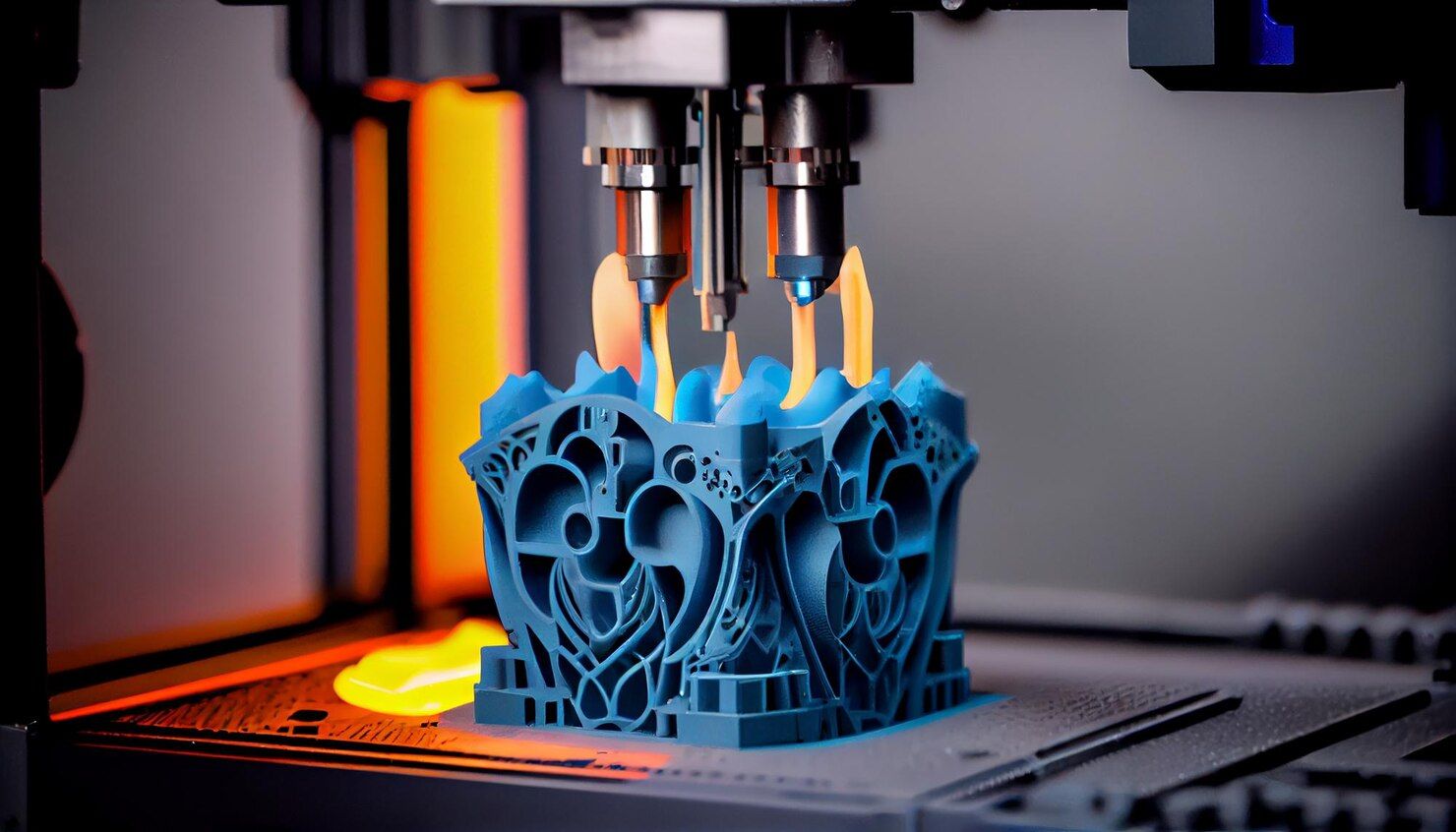
Modern 3D printing systems combine advanced materials, computer-aided design (CAD), automation, artificial intelligence (AI), and smart manufacturing technologies to support flexible production and customized manufacturing. Understanding the wide range of 3D printing applications can help organizations evaluate opportunities to improve productivity, innovation, and operational efficiency.
Note: 3D printing technologies, compatible materials, production capacity, machine specifications, software features, and industry certifications vary by manufacturer and application. This article is intended for general educational purposes only.
What Are 3D Printing Applications?
3D Printing Applications refer to the many ways additive manufacturing technology is used to design, prototype, and manufacture products by building objects layer by layer from digital models. Unlike traditional subtractive manufacturing, which removes material from a solid block, 3D printing adds material only where needed.
Common materials used in 3D printing include:
Thermoplastics
Photopolymer resins
Stainless steel
Aluminum alloys
Titanium
Carbon fiber-reinforced composites
Ceramics
Biocompatible materials
Material compatibility depends on the printing technology and intended application.
How 3D Printing Works
The additive manufacturing process follows several key steps.
Digital Design
Engineers create a three-dimensional model using Computer-Aided Design (CAD) software.
File Preparation
The design is converted into printable layers using slicing software that generates machine instructions.
Material Deposition
The 3D printer deposits or solidifies material layer by layer according to the digital model.
Post-Processing
Depending on the technology used, printed parts may require cleaning, curing, machining, or surface finishing.
Quality Inspection
Finished components are inspected to verify dimensional accuracy and performance requirements.
Benefits of 3D Printing Applications
Additive manufacturing offers several operational advantages.
Potential benefits include:
Rapid prototyping
Reduced material waste
Complex geometry production
Faster product development
Lightweight component design
Product customization
Reduced tooling requirements
Flexible low-volume manufacturing
Performance depends on material selection, printer capabilities, and production requirements.
Common 3D Printing Technologies
Several additive manufacturing methods are used in industrial production.
Fused Deposition Modeling (FDM)
Builds parts by depositing melted thermoplastic filament layer by layer.
Stereolithography (SLA)
Uses ultraviolet light to cure liquid resin into solid components with fine detail.
Selective Laser Sintering (SLS)
Fuses powdered materials using a high-powered laser to produce durable parts.
Direct Metal Laser Sintering (DMLS)
Produces high-strength metal components for demanding engineering applications.
Binder Jetting
Creates parts by selectively depositing a binding agent onto powdered materials.
Each technology offers different advantages depending on the material and production goals.
Industries Using 3D Printing
3D printing has expanded into many sectors.
Common applications include:
Aerospace manufacturing
Automotive production
Healthcare and medical devices
Dental laboratories
Consumer products
Industrial equipment manufacturing
Architecture and construction
Education and research
Each industry applies additive manufacturing according to its unique technical and regulatory requirements.
Choosing a 3D Printing Solution
Organizations often evaluate several factors before implementing additive manufacturing.
Important considerations include:
Material compatibility
Part size
Dimensional accuracy
Mechanical performance
Production volume
Surface finish requirements
Software integration
Equipment maintenance
Selecting the appropriate technology helps achieve consistent manufacturing results.
3D Printing Applications Overview
| Technology | Primary Application |
|---|---|
| FDM | Functional prototypes and production parts |
| SLA | High-detail prototypes and models |
| SLS | Durable plastic components |
| DMLS | Precision metal manufacturing |
| Binder Jetting | Complex industrial parts |
| CAD/CAM Integration | Digital product development |
Best Practices for Additive Manufacturing
Successful implementation requires careful planning and process control.
Helpful recommendations include:
Select materials based on application requirements.
Optimize digital designs for additive manufacturing.
Calibrate equipment regularly.
Monitor print quality throughout production.
Perform routine preventive maintenance.
Train operators on machine operation and safety.
Validate critical parts through quality inspection.
Maintain digital production records.
These practices support consistent product quality and operational efficiency.
Current Industry Trends
Additive manufacturing continues to evolve rapidly.
Recent developments include:
Artificial intelligence-assisted print optimization
Multi-material 3D printing
Industrial Internet of Things (IIoT) connectivity
Digital twin manufacturing
Automated post-processing systems
Cloud-based production management
Sustainable printing materials
Large-format additive manufacturing
These innovations improve productivity, flexibility, and manufacturing scalability.
Looking Ahead
The future of 3D Printing Applications is expected to include greater automation, AI-powered design optimization, expanded use of advanced engineering materials, and deeper integration with Industry 4.0 manufacturing systems. As production technologies continue to mature, additive manufacturing is likely to play an even larger role in creating efficient, customized, and sustainable manufacturing solutions.
Why Understanding 3D Printing Applications Matters
Understanding 3D Printing Applications helps manufacturers, engineers, designers, and business leaders evaluate technologies that support innovation, reduce production complexity, and improve operational flexibility. Careful selection of printing technologies and materials enables organizations to maximize the benefits of additive manufacturing across a wide range of industries.
Conclusion
3D Printing Applications have transformed modern manufacturing by enabling rapid prototyping, customized production, and efficient fabrication of complex components. Through advanced printing technologies, digital design integration, intelligent automation, and innovative materials, additive manufacturing continues to reshape industries around the world. As technology advances, 3D printing will remain a key driver of industrial innovation, product development, and sustainable manufacturing.

Related Post...

Software CRM para Empresas: Guía Completa para Mejorar la Gestión de Clientes
Updated: October 02, 2026
Read More

PayPal Competitors Complete Advice to Popular Digital Payment Platforms
Updated: September 30, 2026
Read More