Recycling Machinery Overview: Systems & Applications
Recycling machinery plays a critical role in modern waste processing and resource recovery operations.
These machines help transform discarded materials into reusable resources through sorting, shredding, separation, compaction, washing, and processing technologies. Industries, municipalities, manufacturing facilities, and recycling centers rely on advanced recycling equipment to manage increasing material volumes while supporting sustainable production practices.
Modern recycling systems combine industrial automation, material recovery technology, sensor-based sorting, conveyor systems, and monitoring tools to improve processing efficiency. Understanding recycling machinery, its components, applications, and operational considerations can help organizations evaluate solutions for material processing and resource recovery.
Recycling Machinery at a Glance
Recycling machinery refers to equipment designed to collect, sort, process, separate, compact, and prepare recyclable materials for reuse. Common systems include industrial shredders, balers, sorting equipment, granulators, magnetic separators, conveyor systems, and material recovery machines. These technologies are widely used in plastic recycling, metal recovery, paper processing, electronic waste management, and industrial recycling facilities.
Core Functions of Recycling Machinery
Modern recycling facilities use multiple machines working together as an integrated processing system.
Primary functions include:
- Material sorting
- Size reduction
- Separation of materials
- Contaminant removal
- Material washing
- Density classification
- Compaction and baling
- Resource recovery
- Automated material handling
- Quality control
Each function contributes to preparing materials for further processing or manufacturing applications.
Major Types of Recycling Machinery
Industrial Shredders
Industrial shredders reduce large materials into smaller pieces for easier handling and processing.
Common applications include:
- Plastic recycling
- Metal processing
- Wood waste reduction
- Tire recycling
- Electronic waste processing
- Packaging material recycling
Shredding is often the first stage of many recycling operations.
Recycling Balers
Balers compress recyclable materials into compact bundles that simplify storage and transportation.
Materials commonly processed include:
- Cardboard
- Paper
- Plastic containers
- Textiles
- Aluminum cans
High-density bales can improve logistics efficiency within recycling facilities.
Granulators
Granulators reduce materials into smaller uniform particles.
They are frequently used in:
- Plastic recycling systems
- Manufacturing scrap recovery
- Material preparation operations
Granulated materials can often move to additional recycling or manufacturing processes.
Magnetic Separation Systems
Magnetic separators help recover ferrous metals from mixed material streams.
These systems are widely used in:
- Scrap metal recycling
- Municipal recycling facilities
- Industrial waste processing
- Material recovery plants
Magnetic separation helps improve sorting efficiency and material recovery.
Optical Sorting Equipment
Optical sorting technology uses sensors, cameras, and artificial intelligence systems to identify different materials.
Modern systems can help distinguish:
- Plastic types
- Paper grades
- Metal categories
- Packaging materials
- Mixed recyclables
Automated sorting can improve processing accuracy and consistency.
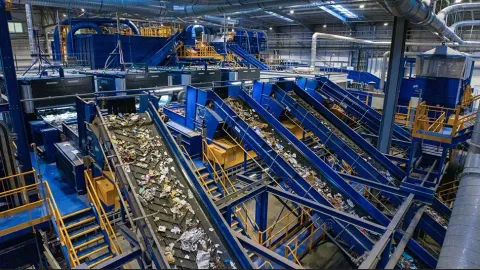
Conveyor Systems
Conveyor systems move materials between processing stages.
They support:
- Continuous operation
- Material distribution
- Automated processing
- Workflow efficiency
Conveyors often connect multiple recycling machines into a coordinated processing line.
How Recycling Machinery Works
A typical recycling operation follows several processing stages.
Step 1: Material Collection
Materials are collected from industrial facilities, businesses, residential programs, or waste management operations.
Step 2: Initial Sorting
Large contaminants and unsuitable materials are removed before processing.
Step 3: Size Reduction
Industrial shredders or granulators reduce materials into manageable dimensions.
Step 4: Material Separation
Magnetic, optical, air, or density-based systems separate materials according to their characteristics.
Step 5: Cleaning and Processing
Materials may undergo washing, drying, or additional treatment procedures.
Step 6: Compaction and Storage
Processed materials are compacted, baled, or prepared for transportation and reuse.
Applications Across Industries
Recycling machinery supports a wide range of industries and processing environments.
Plastic Recycling
Plastic recycling equipment processes containers, packaging materials, manufacturing scrap, and industrial plastics.
Systems may include:
- Shredders
- Wash lines
- Granulators
- Drying equipment
- Sorting technology
Metal Recycling
Metal recycling operations recover valuable materials from industrial scrap, construction materials, vehicles, and manufacturing waste.
Equipment may include:
- Metal shredders
- Magnetic separators
- Eddy current separators
- Sorting systems
Electronic Waste Processing
Electronic waste recycling focuses on recovering valuable materials from computers, appliances, telecommunications equipment, and electronic devices.
Advanced separation systems help process complex material streams.
Paper and Cardboard Recycling
Paper processing facilities use sorting, shredding, baling, and separation equipment to prepare paper products for reuse.
Construction Material Recovery
Construction and demolition operations use recycling machinery to process concrete, wood, metal, asphalt, and other materials.
Important Components of Recycling Systems
Material Feed Equipment
Feed systems regulate material entering the processing line.
Industrial Automation Controls
Programmable controllers coordinate equipment operation and process management.
Sensors and Monitoring Systems
Sensors provide information about material flow, machine performance, and operating conditions.
Separation Equipment
Various technologies classify materials according to size, density, magnetic properties, or composition.
Material Recovery Systems
Recovery systems collect and prepare recyclable materials for further use.
Automation in Recycling Machinery
Industrial automation has become increasingly important in recycling operations.
Modern facilities often integrate:
- Smart sensors
- Automated sorting technology
- Artificial intelligence systems
- Machine vision systems
- Process monitoring platforms
- Predictive maintenance tools
Automation can improve material identification, equipment coordination, and operational visibility.
Factors to Consider When Selecting Recycling Machinery
Choosing appropriate recycling equipment requires evaluating several factors.
Material Type
Different materials require different processing technologies.
Processing Capacity
Equipment should match expected throughput requirements.
Automation Requirements
Facilities may require varying levels of automation and monitoring.
Available Space
System layout should fit operational constraints.
Maintenance Requirements
Maintenance accessibility and service requirements influence long-term operation.
Future Expansion
Scalable systems can support future processing needs.
Maintenance Best Practices
Preventive maintenance supports reliable operation and processing consistency.
Recommended practices include:
- Inspect cutting components regularly
- Monitor motors and drives
- Check conveyor systems
- Review sensor performance
- Maintain lubrication schedules
- Clean processing equipment
- Monitor system alarms
- Document maintenance activities
Routine inspections help identify issues before they affect production.
Safety Considerations
Recycling facilities contain heavy machinery, moving components, and automated systems.
Important safety measures include:
- Machine guarding
- Emergency stop systems
- Lockout/tagout procedures
- Operator training
- Safety inspections
- Dust control measures
- Fire prevention procedures
- Material handling protocols
Safety planning should be integrated into all recycling operations.
Benefits of Recycling Machinery
Modern recycling machinery offers numerous operational advantages.
- Supports resource recovery initiatives
- Improves material processing efficiency
- Enables automated sorting operations
- Reduces manual handling requirements
- Supports industrial sustainability goals
- Processes large material volumes
- Enhances material recovery rates
- Integrates with industrial automation systems
- Supports circular economy practices
- Improves consistency in recycling operations
- Provides scalable processing capabilities
- Supports multiple material streams
Current Developments in Recycling Technology
Recycling technology continues to evolve through automation, artificial intelligence, and advanced material identification systems.
Emerging developments include:
- AI-powered sorting systems
- Machine vision technology
- Robotic material handling
- Smart monitoring platforms
- Predictive maintenance systems
- Automated quality control
- Data-driven process optimization
- Advanced material recovery techniques
These innovations are helping facilities improve operational efficiency and resource recovery performance.
Frequently Asked Questions
What is recycling machinery?
Recycling machinery consists of equipment used to sort, process, separate, compact, and prepare recyclable materials for reuse.
What materials can recycling machinery process?
Depending on the system, recycling machinery can process plastics, metals, paper, cardboard, electronic waste, wood, textiles, and construction materials.
Why are industrial shredders used in recycling?
Industrial shredders reduce material size, making sorting, handling, transportation, and further processing more efficient.
How does automated sorting work?
Automated sorting uses sensors, cameras, artificial intelligence, and material detection systems to identify and separate recyclable materials.
What industries use recycling machinery?
Manufacturing, waste management, construction, municipal recycling, electronics processing, and resource recovery industries commonly use recycling equipment.
Why is preventive maintenance important?
Preventive maintenance helps maintain equipment reliability, processing efficiency, and operational safety.
Can recycling machinery support automation?
Yes. Modern recycling systems often integrate industrial automation, smart sensors, monitoring platforms, and robotic technologies.
What factors should be considered when selecting recycling equipment?
Material type, processing capacity, automation requirements, maintenance needs, available space, and future scalability should all be evaluated.
Key Takeaways
- Recycling machinery supports material recovery and resource reuse.
- Industrial shredders, balers, granulators, and sorting systems are common equipment types.
- Automation and AI are transforming modern recycling operations.
- Material separation technology improves recovery efficiency.
- Preventive maintenance supports reliable operation.
- Recycling equipment serves multiple industries and material streams.
- Advanced recycling systems contribute to sustainable manufacturing practices.
Conclusion
Recycling machinery has become an essential component of modern resource recovery and waste processing operations. From industrial shredders and balers to advanced optical sorting systems and automated material recovery equipment, these technologies help organizations process materials more efficiently while supporting sustainability initiatives. As automation, artificial intelligence, and smart monitoring continue to advance, recycling machinery is becoming more capable, connected, and adaptable. Understanding equipment types, applications, maintenance requirements, and emerging technologies can help organizations make informed decisions when evaluating recycling systems.
Explore equipment capabilities, processing requirements, and automation options carefully to identify solutions that align with operational goals and future growth plans.

Related Post...