Motor Scraper Machines: Explore Overview, Basics, Explanation, Knowledge, and Key Details
Motor scraper machines are heavy earthmoving equipment used to cut, collect, transport, and spread soil over construction and infrastructure sites. They combine excavation and material-hauling functions in one machine, making them useful for large-scale earthwork where substantial quantities of soil must be moved across relatively long distances.
A motor scraper typically consists of a tractor unit and a scraper bowl fitted with a cutting edge. As the machine moves forward, the cutting edge removes a layer of soil and directs it into the bowl. Once the bowl is filled, the scraper transports the material to another location, where it is discharged and spread.
These machines are commonly used in road construction, airport development, land grading, mining support, and large infrastructure projects. Understanding their types, components, operating methods, and limitations helps project teams select suitable earthmoving equipment.
What Is a Motor Scraper Machine?
A motor scraper machine is a self-propelled earthmoving vehicle designed to excavate, load, carry, and discharge soil. Unlike equipment that performs excavation and transportation as separate operations, a scraper combines these functions into a coordinated cycle.
The machine cuts material from the ground using a sharp cutting edge located at the front of its scraper bowl. The removed soil enters the bowl as the vehicle advances. When the required load is collected, the operator raises or adjusts the bowl and moves the machine to the designated unloading area.
A self-propelled scraper machine has its own engine and transmission system. It does not need a separate tractor to pull it during normal operation. Its mobility makes it suitable for large sites with planned haul routes and substantial earthmoving requirements.
A wheel tractor scraper is a common configuration in which a wheeled tractor unit is connected to a scraper bowl. Depending on the design, the tractor and scraper may be integrated or connected through an articulated arrangement.
How Does a Motor Scraper Work?
Motor scrapers operate through a repeated cycle of cutting, loading, hauling, spreading, and returning. The efficiency of this cycle depends on ground conditions, haul distance, machine capacity, and site planning.
Approach and positioning: The operator moves the scraper to the excavation area and aligns the cutting edge with the planned cut.
Cutting: The bowl is lowered so the cutting edge penetrates the soil. Forward movement allows the machine to remove material from the ground.
Loading: Soil enters the bowl through the loading opening. The apron and ejector arrangements help control material movement, depending on the machine design.
Hauling: Once the bowl reaches its planned load, the operator raises it and transports the material along the designated route.
Unloading: At the fill area, the bowl is positioned for discharge. The ejector may push the soil out while the machine moves forward.
Spreading: The bowl and cutting edge are adjusted to distribute material in a relatively even layer.
Return: The scraper travels back to the excavation area for the next cycle.
The loading method varies by machine type and soil condition. Some scrapers can load material independently, while others may need assistance from a bulldozer or another machine in difficult ground.
Main Components of a Motor Scraper Machine
A heavy-duty motor scraper contains several mechanical and hydraulic systems that work together to collect and move earth.
Component | Function |
|---|---|
Tractor unit | Provides power, steering, and movement |
Engine | Supplies mechanical power for operation |
Scraper bowl | Holds excavated soil during transportation |
Cutting edge | Cuts and removes material from the ground |
Apron | Controls the opening through which material enters or leaves the bowl |
Ejector | Pushes collected material out of the bowl |
Hydraulic system | Operates the bowl, apron, and ejector |
Transmission | Transfers engine power to the wheels |
Articulation joint | Allows the tractor and scraper sections to turn |
Operator cabin | Houses driving controls, displays, and safety equipment |
Tyres and axles | Support the machine and provide traction |
The bowl, apron, and ejector form the central material-handling arrangement. In elevating models, a powered elevator assists with loading and discharging soil.
Types of Motor Scraper Machines
Motor scrapers are classified according to their loading arrangement, engine configuration, and operating design.
1. Self-Propelled Scraper Machine
A self-propelled scraper has an integrated power unit that drives the machine. It can move between excavation and unloading areas without being towed by another vehicle.
It is suitable for large earthmoving projects with established haul routes and relatively open working areas.
2. Wheel Tractor Scraper
A wheel tractor scraper combines a wheeled tractor with a scraper bowl. Its rubber tyres allow it to travel between work areas at relatively high speeds compared with crawler-based arrangements.
It is commonly used for road construction, land development, and large site preparation projects.
3. Single-Engine Motor Scraper
A single-engine scraper uses one engine to power the tractor unit. During loading, a bulldozer may push the scraper when additional traction is needed.
This arrangement is useful where loading conditions require extra force but normal hauling can be performed by the scraper itself.
4. Twin-Engine Motor Scraper
A twin-engine scraper has two power units, commonly positioned at the front and rear. The additional driven axle improves traction and assists loading in demanding ground conditions.
Some configurations work in push-pull pairs, where two compatible scrapers help each other during loading.
5. Elevating Motor Scraper
An elevating motor scraper uses a powered elevator fitted near the front of the bowl. The elevator moves cut material into the bowl as the machine advances.
Unlike a conventional open-bowl scraper, it does not rely on the same apron arrangement for loading. This configuration can be useful for handling certain loose or moderately compacted materials and may reduce dependence on a separate pushing machine.
6. Open-Bowl Scraper
An open-bowl scraper collects material through the cutting edge and bowl opening. An apron controls material entry, while a hydraulic ejector helps discharge the load.
It is commonly used for bulk earthmoving where the material and ground conditions allow effective loading.
The Indian Roads Congress classifies scrapers by loading arrangement and describes open-bowl and elevating configurations in its Pocket Book for Road Construction Equipment.
Applications of Construction Motor Scraper Machines
A construction motor scraper is useful when a project requires repeated excavation, transportation, and spreading of large quantities of earth.
Common applications include:
Highway construction: Cutting soil from higher areas and moving it to road embankments or fill sections.
Airport development: Preparing large, relatively level areas for runways, taxiways, and associated infrastructure.
Land development: Removing excess soil and redistributing it across construction plots.
Mining operations: Moving suitable overburden and loose earth in planned open areas.
Industrial site preparation: Preparing ground for factories, warehouses, and large infrastructure facilities.
Reservoir and dam projects: Supporting bulk earthwork and embankment preparation where ground conditions are suitable.
Agricultural land improvement: Carrying out large-scale land levelling and earth redistribution.
Scrapers are particularly useful when excavation and fill areas are located within a practical hauling distance. Their productivity depends on the relationship between material conditions, loading time, travel distance, and unloading arrangements.
Advantages and Limitations
Motor scrapers can improve earthmoving productivity when selected for appropriate site conditions.
Advantages
Combine excavation, loading, hauling, and spreading operations.
Move substantial quantities of earth during repeated operating cycles.
Reduce the need for separate loading equipment in suitable ground conditions.
Support relatively uniform spreading of material.
Work effectively on large sites with organised haul routes.
Can reduce equipment movement between separate excavation and loading operations.
Limitations
Hard rock and highly compacted ground may require pre-ripping or other excavation equipment.
Soft, muddy, or uneven surfaces can reduce traction and mobility.
Additional pushing equipment may be needed for some open-bowl configurations.
Large turning areas and suitable haul roads are necessary.
Machine productivity can decline when loading and unloading areas are poorly organised.
The machine may not be suitable for confined sites or small excavation areas.
Factors to Consider When Selecting a Heavy-Duty Motor Scraper
Choosing an appropriate heavy-duty motor scraper requires an assessment of the project, material, terrain, and required output.
Important considerations include:
Bowl capacity: Match the bowl volume to the quantity of material required for each cycle.
Engine power: Assess engine output and available traction for the planned cutting and hauling conditions.
Material type: Evaluate whether the ground contains loose soil, clay, gravel, or compacted material.
Haul distance: Compare loading and travelling times to determine whether a scraper is appropriate.
Loading configuration: Decide whether an open-bowl, elevating, single-engine, or twin-engine design is suitable.
Tyre and traction arrangement: Consider ground bearing capacity, surface condition, and expected wheel slip.
Operator visibility: Check cabin design, mirrors, cameras, controls, and visibility around the bowl.
Maintenance access: Examine access to the engine, hydraulic components, filters, tyres, and articulation points.
Site compatibility: Confirm that roads, turning areas, slopes, and loading zones can accommodate the machine.
Fleet coordination: Consider whether bulldozers, graders, compactors, or additional scrapers are needed to complete the earthmoving cycle.
A site assessment and production calculation can help determine whether a motor scraper is more appropriate than a combination of excavators and haul trucks.
Recent Developments and Technology Trends
Motor scraper technology continues to develop through improvements in operator controls, machine monitoring, and earthmoving accuracy.
Machine telematics: Connected monitoring systems can record machine location, operating hours, fuel use, and equipment condition.
Grade-control technology: Positioning and elevation guidance can help operators follow planned cutting and spreading levels.
Traction management: Improved drivetrain controls can help manage wheel slip under changing ground conditions.
Operator-assistance systems: Cameras, displays, alarms, and improved cabin layouts can support visibility and operating awareness.
Emission improvements: Newer engine technologies are designed to meet applicable emissions requirements while maintaining machine performance.
Fleet coordination: Digital equipment monitoring can help project managers plan machine movements, loading cycles, and maintenance intervals.
The wider construction equipment sector is also adopting connected fleet-management and machine-monitoring technologies. Their practical availability varies by manufacturer and machine generation.
Indian Safety Regulations and Operating Requirements
Motor scrapers used at Indian construction sites must be operated in accordance with applicable workplace safety requirements and equipment regulations.
The Building and Other Construction Workers' (Regulation of Employment and Conditions of Service) Central Rules, 1998 contain provisions relevant to earthmoving equipment.
Important provisions include:
Rule 88: Requires earthmoving equipment to be properly designed, maintained, inspected, and operated according to safe operating practices. It also requires weekly inspection by a responsible person and trained operators.
Rule 91: Specifically addresses scrapers. It requires a tractor and scraper to be joined by a safety line during operation, scraper bowls to be properly propped when blades are replaced, and scrapers moving downhill to remain in gear.
Rule 95: Specifies general safety provisions for construction vehicles and earthmoving equipment, including suitable brakes, reversing alarms, tail lights, and other safety equipment.
The Ministry of Road Transport and Highways also issued notification G.S.R. 673(E) on 27 October 2020 concerning safety requirements for Construction Equipment Vehicles under the Central Motor Vehicles Rules. Requirements include operator protection, access arrangements, audible travel alarms, visibility, seat belts, and protective structures. Applicability depends on the vehicle classification and relevant provisions.
Project operators should also follow the equipment manufacturer's operating instructions, site traffic-management plan, inspection schedule, and applicable state-level requirements.
Best Practices for Operating and Maintaining Motor Scrapers
Correct operation helps improve earthmoving efficiency and reduces avoidable equipment damage.
Inspect before starting: Check tyres, brakes, steering, lights, hydraulic lines, cutting edges, and safety equipment.
Assess the ground: Examine soil conditions, slopes, ground stability, and haul-route suitability before loading.
Use suitable loading methods: Select the correct cutting depth and loading technique for the material.
Avoid overloading: Keep the scraper within its rated bowl and operating limits.
Maintain safe distances: Keep other vehicles and personnel away from the loading, turning, and unloading zones.
Control downhill movement: Follow the manufacturer's instructions and applicable site safety requirements when travelling on slopes.
Check hydraulic systems: Inspect hoses, cylinders, connections, and operating functions for leakage or damage.
Maintain cutting edges: Inspect and replace worn or damaged cutting edges using approved procedures and proper bowl supports.
Keep haul routes in suitable condition: Remove obstacles and address excessive mud, loose material, and uneven surfaces.
Maintain operating records: Record inspections, operating hours, maintenance activities, and equipment defects.
Only trained and authorised operators should operate motor scrapers. Repairs and maintenance must be carried out with the machine secured and the bowl safely supported.
Tools and Resources
The following resources can help construction professionals understand scraper operation and project requirements.
Resource | Purpose |
|---|---|
Indian Roads Congress (IRC) | Road construction equipment guidance |
Ministry of Road Transport and Highways (MoRTH) | Construction Equipment Vehicle requirements |
Directorate General Factory Advice Service and Labour Institutes (DGFASLI) | Construction workplace safety guidance |
Equipment operator manuals | Machine-specific operating and maintenance instructions |
GPS and grade-control systems | Positioning and earthwork level guidance |
Fleet telematics platforms | Equipment monitoring and operating information |
Soil testing equipment | Assessment of soil properties and compaction requirements |
The IRC's Pocket Book for Road Construction Equipment includes a dedicated scraper chapter covering scraper operations and equipment classification.
Frequently Asked Questions
1. What is the main purpose of a motor scraper machine?
A motor scraper is used to cut, collect, transport, and spread soil during large-scale earthmoving projects.
2. What is the difference between a motor scraper and a wheel tractor scraper?
A motor scraper is a self-propelled earthmoving machine. A wheel tractor scraper is a configuration that combines a wheeled tractor unit with a scraper bowl. The terms are often used together in construction equipment descriptions.
3. What is an elevating motor scraper?
It is a scraper equipped with a powered elevator that assists in moving excavated material into the bowl during loading.
4. When is a motor scraper more suitable than an excavator and dump truck combination?
It may be more suitable when large quantities of soil must be cut, transported, and spread over a relatively open site with practical haul distances and suitable ground conditions.
5. Can motor scrapers work on rocky ground?
They can handle some firm materials, but hard rock and highly compacted ground may require ripping or preliminary excavation before scraper loading.
Conclusion
Motor scraper machines are important earthmoving equipment for large construction, highway, airport, mining, and land-development projects. Their ability to combine cutting, loading, hauling, and spreading makes them useful for repeated bulk earthwork operations.
Self-propelled, wheel tractor, twin-engine, open-bowl, and elevating scraper configurations serve different operating requirements. Selecting the appropriate machine depends on soil conditions, bowl capacity, engine power, haul distance, traction, and site layout.
Proper inspection, trained operation, equipment maintenance, and compliance with applicable Indian construction safety requirements are essential for productive and safe scraper operations.
Disclaimer
This article is intended for general educational and informational purposes only. Machine specifications, operating methods, and regulatory requirements may vary by manufacturer, model, project, and location. Readers should consult equipment manuals, qualified construction professionals, and relevant authorities before making technical or operational decisions. The information does not constitute professional advice and does not guarantee any particular operating result. It is not intended to sell or promote any product, brand, or organisation.

Related Post...
Tunnel Boring Machines: Complete Guide to Basics, Technologies, Processes, Facts, and Best Practices
Updated: November 24, 2026
Read More
MIG Welding Machines: Explore Overview, Basics, Explanation, Knowledge, and Key Details
Updated: November 24, 2026
Read More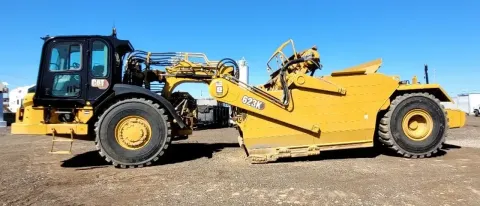
Motor Scraper Machines: Explore Overview, Basics, Explanation, Knowledge, and Key Details
Updated: November 24, 2026
Read More