Metal Roofing Installation: Complete Guide to Roof Systems, Installation Steps, Materials, and Maintenance
Metal roofing has become a popular choice for residential, commercial, and industrial buildings because of its durability, weather resistance, and modern appearance.
Available in a variety of styles, profiles, and finishes, metal roofing systems are designed to provide long-lasting protection while supporting efficient water drainage and structural performance.
Understanding the installation process is essential for achieving a secure and reliable roofing system. From selecting the right roofing panels to preparing the roof deck and installing flashing components, each step contributes to the overall performance of the roof. This guide explains the materials, installation process, essential components, maintenance practices, and common considerations involved in metal roofing installation.
Types of Metal Roofing Systems
Different roofing systems are designed to meet various building requirements.
Standing Seam Metal Roofing
Standing seam roofing features concealed fasteners and raised seams that improve weather resistance and provide a clean architectural appearance.
Corrugated Metal Roofing
Corrugated panels use a wave-shaped profile that offers strength and effective water drainage for residential, agricultural, and commercial structures.
Metal Shingle Roofing
Metal shingles replicate the appearance of traditional roofing materials while providing the durability of metal construction.
Ribbed Metal Panels
Ribbed panels are commonly used for garages, workshops, warehouses, and utility buildings because of their structural strength.
Stone-Coated Metal Roofing
Stone-coated panels combine metal construction with a textured surface that resembles conventional roofing materials.
Common Metal Roofing Materials
Several metals are commonly used in roofing systems.
- Steel roofing panels
- Aluminum roofing
- Copper roofing
- Zinc roofing
- Galvanized steel
- Galvalume steel
Each material offers different characteristics in terms of durability, appearance, and environmental performance.
Essential Roofing Components
A complete metal roofing system includes several important components.
Roof Deck
The roof deck provides the structural foundation for the roofing system.
Underlayment
Roof underlayment creates an additional protective layer beneath the roofing panels.
Metal Roofing Panels
Panels form the primary weather-resistant surface of the roof.
Flashing
Flashing protects roof joints, valleys, chimneys, skylights, and wall intersections from water intrusion.
Ridge Cap
The ridge cap seals the roof peak while allowing proper ventilation where required.
Fasteners
Specialized roofing fasteners securely attach panels to the roof structure.
Closure Strips
Closure strips help seal panel openings and improve weather protection.
Preparing for Metal Roofing Installation
Proper preparation helps ensure a successful installation.
Before beginning:
- Inspect the roof structure.
- Verify roof measurements.
- Remove damaged roofing materials if necessary.
- Check roof decking condition.
- Plan panel layout.
- Confirm ventilation requirements.
- Gather installation tools and materials.
Careful planning supports accurate installation and long-term roof performance.
Tools Required
Common roofing tools include:
- Tape measure
- Chalk line
- Roofing screws
- Screw gun
- Metal cutting shears
- Circular saw with metal-cutting blade
- Roofing hammer
- Level
- Safety harness
- Protective gloves
- Safety glasses
- Ladder
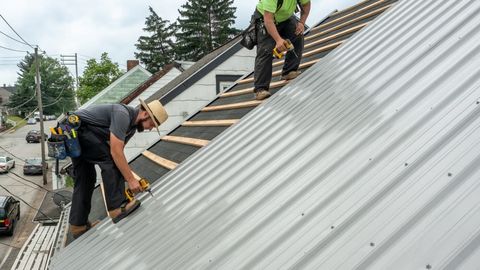
Metal Roofing Installation Process
Step 1: Prepare the Roof Deck
Inspect and repair the roof deck if needed before installing roofing materials.
Step 2: Install Underlayment
Cover the roof deck with the appropriate underlayment to provide an additional moisture barrier.
Step 3: Install Edge Flashing
Secure drip edge flashing around the roof perimeter to direct water away from the structure.
Step 4: Position the First Metal Panel
Carefully align the first panel to establish a straight reference for the remaining panels.
Step 5: Secure Roofing Panels
Attach panels using the recommended fasteners while maintaining proper spacing and alignment.
Step 6: Install Additional Panels
Continue installing panels while ensuring proper overlap and consistent alignment.
Step 7: Install Flashing Components
Secure flashing around roof penetrations, valleys, chimneys, and transitions.
Step 8: Install the Ridge Cap
Complete the roof by installing the ridge cap along the roof peak.
Step 9: Perform Final Inspection
Inspect all fasteners, flashing, panel alignment, and roof edges before completing the installation.
Important Installation Considerations
Several factors contribute to successful installation.
- Roof slope
- Local climate
- Ventilation requirements
- Panel alignment
- Expansion and contraction allowance
- Fastener placement
- Drainage design
- Building codes
Proper planning helps improve overall roofing performance.
Common Installation Challenges
Some roofing projects present additional considerations.
Common challenges include:
- Complex roof designs
- Roof valleys
- Skylight openings
- Chimneys
- Roof penetrations
- Uneven roof decks
- High-wind installation conditions
- Limited roof access
Understanding these challenges supports better installation planning.
Maintenance Tips
Routine maintenance helps preserve the appearance and performance of a metal roof.
Recommended practices include:
- Inspect the roof regularly.
- Remove leaves and debris.
- Clean gutters and downspouts.
- Check flashing connections.
- Inspect roofing fasteners.
- Remove accumulated branches.
- Monitor roof drainage.
- Examine sealants periodically.
Regular maintenance contributes to long-term roof reliability.
Benefits
Metal roofing installation offers several long-term advantages.
- Excellent durability
- Strong weather resistance
- Reliable structural performance
- Efficient water drainage
- Low maintenance requirements
- Suitable for residential and commercial buildings
- Wide range of roofing styles
- Long service life
- Improved roof protection
- Modern architectural appearance
Frequently Asked Questions
How long can a metal roof last?
The lifespan varies depending on the roofing material, environmental conditions, installation quality, and maintenance practices.
Can metal roofing be installed on different roof designs?
Yes. Metal roofing systems are available for many roof shapes, including gable, hip, shed, and complex roof configurations.
What materials are commonly used for metal roofing?
Common materials include steel, aluminum, copper, zinc, galvanized steel, and Galvalume steel.
Why is roof underlayment important?
Underlayment provides an additional protective barrier beneath the roofing panels and supports moisture management.
How often should a metal roof be inspected?
Periodic inspections help identify loose fasteners, flashing issues, debris accumulation, and drainage concerns before they become larger problems.
What maintenance does a metal roof require?
Regular cleaning, gutter maintenance, flashing inspections, and periodic fastener checks help maintain roof performance.
Conclusion
Metal roofing installation is an effective solution for creating a durable, weather-resistant, and long-lasting roofing system. Selecting the appropriate roofing materials, preparing the roof structure carefully, and following proper installation practices help ensure dependable performance for years to come. Combined with routine inspections and regular maintenance, a properly installed metal roof provides reliable protection and supports the long-term integrity of residential and commercial buildings.

Related Post...