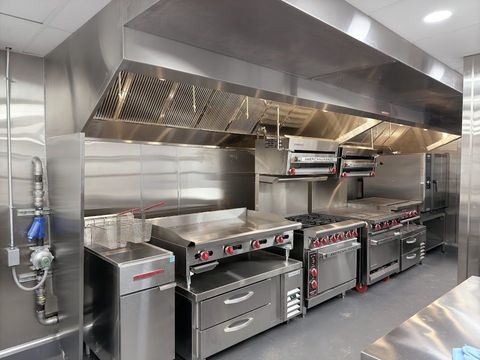
Commercial Kitchen Equipment: Types and Working Guide
Commercial kitchen equipment forms the foundation of modern food preparation environments.
Restaurants, hotels, cafeterias, catering facilities, and institutional kitchens rely on specialized equipment to prepare, cook, store, and serve food efficiently.
Unlike household appliances, commercial equipment is designed to handle larger workloads, continuous operation, and higher performance requirements. As food production demands increase, many facilities are also adopting food processing equipment, commercial refrigeration systems, kitchen automation technology, and energy-efficient kitchen systems to improve productivity and workflow.
This guide explains commercial kitchen equipment, its major categories, how it works, key benefits, applications, and future industry trends.
What Is Commercial Kitchen Equipment?
Commercial kitchen equipment refers to machines, appliances, and tools used in professional food preparation environments. These systems are designed to support large-scale cooking, food storage, cleaning, and serving operations.
The equipment helps maintain consistency, improve efficiency, and support safe food handling practices.
How Commercial Kitchen Equipment Supports Operations
Professional kitchens often manage hundreds or even thousands of meals daily. Specialized equipment helps streamline tasks such as:
- Food preparation
- Cooking and baking
- Refrigeration and storage
- Cleaning and sanitation
- Food transportation
Without proper equipment, managing large-scale food production can become difficult and time-consuming.
Main Categories of Commercial Kitchen Equipment
Commercial kitchens use different types of equipment depending on their operational needs.
Food Preparation Equipment
Food preparation equipment helps process ingredients before cooking.
Common Examples
- Food processors
- Mixers
- Slicers
- Vegetable preparation machines
- Dough preparation equipment
Benefits
- Faster ingredient preparation
- Consistent food quality
- Reduced manual effort
Cooking Equipment
Cooking equipment is used to prepare meals through heating, grilling, baking, or frying.
Common Examples
- Ovens
- Grills
- Fryers
- Steamers
- Cooking ranges
Applications
- Restaurants
- Hotels
- Institutional kitchens
Commercial Refrigeration Systems
Commercial refrigeration systems maintain food freshness and safe storage temperatures.
Common Examples
- Reach-in refrigerators
- Walk-in coolers
- Freezers
- Refrigerated preparation tables
Importance
Proper refrigeration helps preserve ingredients and supports food safety standards.
Food Holding Equipment
Food holding equipment keeps prepared food at suitable serving temperatures.
Examples
- Heated cabinets
- Food warmers
- Holding stations
Benefits
- Maintains food quality
- Supports efficient meal service
Cleaning and Sanitation Equipment
Cleanliness is essential in professional kitchens.
Common Equipment
- Commercial dishwashers
- Sanitizing stations
- Cleaning systems
Advantages
- Improved hygiene
- Faster cleaning operations
- Consistent sanitation practices
How Commercial Kitchen Equipment Works
Most commercial kitchen equipment follows a simple operational process designed for efficiency and reliability.
Step 1: Food Preparation
Ingredients are processed using preparation equipment.
Step 2: Cooking
Cooking appliances apply heat using electricity, gas, steam, or other energy sources.
Step 3: Storage
Prepared ingredients and finished food products are stored using commercial refrigeration systems.
Step 4: Serving
Food holding equipment maintains appropriate temperatures until serving.
Step 5: Cleaning
Cleaning equipment helps maintain sanitation standards after operations.
Key Components of Commercial Kitchen Systems
Several components work together to support kitchen operations.
Heating Systems
Heating systems power ovens, grills, fryers, and cooking ranges.
Refrigeration Units
Refrigeration systems maintain controlled temperatures for food storage.
Ventilation Systems
Ventilation removes heat, smoke, and airborne particles from cooking areas.
Control Panels
Modern equipment often includes digital controls that improve operational accuracy.
Safety Features
Common safety features include:
- Temperature monitoring
- Automatic shutoff systems
- Overheat protection
- Emergency controls
Comparison of Common Commercial Kitchen Equipment
| Equipment Type | Primary Function | Common Application | Key Benefit |
|---|---|---|---|
| Food Processor | Ingredient preparation | Restaurants | Faster preparation |
| Oven | Baking and roasting | Hotels and bakeries | Consistent cooking |
| Fryer | Deep frying | Fast-service kitchens | High-volume cooking |
| Refrigerator | Cold storage | All kitchen facilities | Food preservation |
| Dishwasher | Cleaning utensils | Commercial kitchens | Improved sanitation |
Benefits of Commercial Kitchen Equipment
Commercial kitchen equipment provides several operational advantages.
Improved Productivity
Specialized equipment helps staff complete tasks more efficiently.
Consistent Food Quality
Standardized cooking processes improve consistency across meals.
Better Food Safety
Commercial refrigeration systems and sanitation equipment help maintain food safety standards.
Reduced Manual Work
Automated functions reduce repetitive tasks and physical effort.
Support for High-Volume Operations
Professional equipment is designed for continuous use in busy environments.
Applications of Commercial Kitchen Equipment
Commercial kitchen equipment is used in many sectors.
Restaurants
Supports food preparation, cooking, and serving operations.
Hotels
Handles large meal volumes for guests and events.
Hospitals
Provides meal preparation for patients and staff.
Educational Institutions
Supports cafeteria and dining operations.
Catering Facilities
Helps manage food production for events and large gatherings.
Food Processing Facilities
Many operations integrate food processing equipment for ingredient preparation and packaging.
Modern Technology in Commercial Kitchens
Technology is transforming kitchen operations across the food industry.
Kitchen Automation Technology
Automation systems help streamline food preparation and cooking processes.
Benefits include:
- Improved consistency
- Better workflow management
- Reduced operational delays
Smart Monitoring Systems
Modern equipment can track performance and operating conditions in real time.
Energy-Efficient Kitchen Systems
Energy-efficient kitchen systems help reduce resource consumption while maintaining performance.
Challenges and Limitations
Despite their advantages, commercial kitchen systems also face challenges.
Maintenance Requirements
Regular maintenance is necessary for reliable operation.
Equipment Downtime
Unexpected issues can affect productivity.
Space Planning
Large equipment installations require careful layout planning.
Staff Training
Proper training helps ensure safe and efficient operation.
Future Trends in Commercial Kitchen Equipment
The industry continues to evolve with new technologies.
Increased Automation
Kitchen automation technology is becoming more common in food preparation environments.
Smart Equipment Integration
Connected systems provide real-time monitoring and operational insights.
Sustainable Operations
Many facilities are adopting energy-efficient kitchen systems to improve sustainability.
Advanced Food Processing Equipment
New technologies are improving speed, consistency, and operational flexibility.
Predictive Maintenance Technology
Monitoring systems help identify maintenance needs before equipment failures occur.
FAQs About Commercial Kitchen Equipment
What is commercial kitchen equipment?
Commercial kitchen equipment includes professional appliances and machines used for food preparation, cooking, storage, and cleaning in large-scale food service environments.
Why is commercial equipment different from household equipment?
Commercial equipment is designed for higher workloads, continuous operation, and larger production volumes.
What are commercial refrigeration systems?
These are refrigeration units designed to store food safely in professional kitchen environments.
How does kitchen automation technology help?
Automation helps improve workflow efficiency, consistency, and operational productivity.
Why are energy-efficient kitchen systems important?
They help reduce energy consumption while maintaining operational performance.
Which industries use commercial kitchen equipment?
Restaurants, hotels, hospitals, educational institutions, catering facilities, and food processing operations commonly use this equipment.
Conclusion
Commercial kitchen equipment plays a critical role in professional food preparation and service operations. From food processing equipment and commercial refrigeration systems to kitchen automation technology and energy-efficient kitchen systems, these tools support productivity, consistency, and food safety.
As technology continues to advance, commercial kitchens are becoming more efficient, connected, and capable of handling increasing operational demands. Understanding the types, functions, and benefits of commercial kitchen equipment helps provide a clearer view of its importance in modern food service environments.

Related Post...