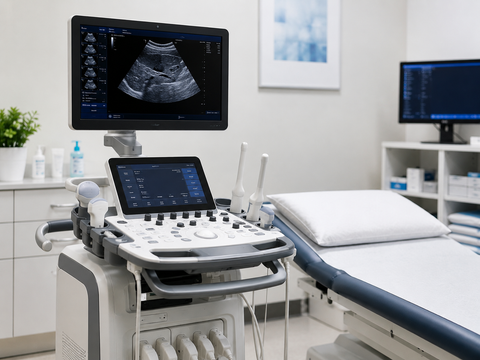
Medical Ultrasound Machines: Essential Technologies Overview
Medical ultrasound machines are among the most widely used diagnostic imaging technologies in modern healthcare.
These systems use high-frequency sound waves to create real-time images of organs, tissues, blood vessels, and other structures inside the body without the use of ionizing radiation.
From pregnancy monitoring and cardiac examinations to abdominal imaging and vascular assessments, ultrasound technology supports a broad range of medical applications. Modern ultrasound machines combine advanced imaging capabilities, digital processing, and intelligent diagnostic tools to help healthcare professionals evaluate various health conditions.
As medical imaging technology continues to evolve, ultrasound systems are becoming more portable, precise, and versatile, making them an important part of healthcare infrastructure worldwide.
Quick Facts Table
| Topic | Purpose | Key Components | Main Benefits | Common Applications |
|---|---|---|---|---|
| Medical Ultrasound Machines | Create real-time images of internal body structures | Transducer, Display Monitor, Processing Unit, Control Console, Imaging Platforms | Non-invasive imaging, real-time visualization, broad clinical use | Obstetrics, Cardiology, Radiology, Emergency Care, Vascular Imaging |
What Are Medical Ultrasound Machines?
Medical ultrasound machines are diagnostic imaging systems that use high-frequency sound waves to produce images of structures inside the body. A device called a transducer sends sound waves into the body and receives returning echoes, which are processed into visual images displayed on a monitor.
Ultrasound imaging is commonly used to examine organs, blood vessels, muscles, soft tissues, and developing fetuses. It provides real-time visualization, allowing healthcare professionals to observe movement, blood flow, and organ function during examinations.
Why Are Medical Ultrasound Machines Important?
Medical ultrasound technology supports early diagnosis, patient monitoring, and clinical decision-making across many healthcare specialties.
Key advantages include:
- Real-time imaging capabilities
- Non-invasive examination methods
- Broad clinical applications
- Dynamic blood flow assessment
- Guidance during medical procedures
- Portable imaging options
- Continuous technological improvements
- Support for preventive healthcare
Medical Ultrasound Facts
- Ultrasound imaging uses sound waves rather than ionizing radiation.
- Most diagnostic ultrasound systems operate in the megahertz frequency range.
- Ultrasound is commonly used for pregnancy monitoring, cardiac imaging, and vascular examinations.
- Doppler ultrasound can visualize blood flow within vessels and organs.
- Modern systems can generate 2D, 3D, and 4D images.
Understanding the Concept
Ultrasound imaging works by transmitting high-frequency sound waves into the body. These waves interact with tissues and organs, creating echoes that return to the transducer.
The ultrasound machine processes these returning signals and converts them into visual images. Differences in tissue density influence how sound waves reflect, allowing the system to distinguish between various anatomical structures.
Because imaging occurs in real time, clinicians can observe organ movement, blood circulation, and physiological activity during examinations.
Equipment Categories Table
| Equipment Category | Examples |
|---|---|
| Imaging Systems | Diagnostic Ultrasound Machines |
| Transducer Systems | Linear, Curvilinear, Phased Array Probes |
| Monitoring Components | Display Screens, Imaging Consoles |
| Processing Components | Signal Processing Units |
| Specialized Imaging Technologies | Doppler, 3D, 4D Imaging Systems |
| Portable Systems | Handheld and Compact Ultrasound Devices |
Key Features and Core Components
Medical ultrasound machines typically include:
- Ultrasound transducer
- Signal processing unit
- Imaging display monitor
- Control console
- Image storage capabilities
- Doppler imaging technology
- Real-time visualization systems
- Measurement and analysis tools
- Digital imaging platforms
- Portable imaging options
Main Types of Medical Ultrasound Machines
Diagnostic Ultrasound Systems
These systems create images of organs, tissues, and internal structures for diagnostic evaluation.
Doppler Ultrasound Systems
Doppler technology evaluates blood flow direction and velocity within blood vessels and the heart.
Portable Ultrasound Machines
Portable systems are designed for bedside examinations, emergency settings, and mobile healthcare environments.
3D and 4D Ultrasound Systems
These advanced imaging technologies create three-dimensional images and real-time motion visualization.
Ultrasound Technology Comparison Table
| Technology Type | Imaging Capability | Speed | Common Application |
|---|---|---|---|
| 2D Ultrasound | Standard Imaging | Fast | General Diagnostics |
| Doppler Ultrasound | Blood Flow Analysis | Fast | Vascular Studies |
| 3D Ultrasound | Three-Dimensional Imaging | Medium | Obstetrics |
| 4D Ultrasound | Real-Time 3D Imaging | Medium | Fetal Monitoring |
| Portable Ultrasound | Mobile Imaging | Fast | Point-of-Care Imaging |
How Do Medical Ultrasound Machines Work?
- The transducer emits high-frequency sound waves.
- Sound waves travel through body tissues.
- Different tissues reflect sound waves differently.
- Echoes return to the transducer.
- The transducer converts echoes into electrical signals.
- Processing systems analyze the signals.
- Images are displayed on a monitor in real time.
What Is an Ultrasound Transducer?
An ultrasound transducer is the probe placed against the body during an examination. It generates sound waves and receives returning echoes. The transducer is considered one of the most important components of an ultrasound system.
What Is Doppler Ultrasound?
Doppler ultrasound is a specialized imaging technique used to visualize and evaluate blood flow within vessels and the heart. It helps assess circulation and vascular function.
What Is 3D and 4D Ultrasound?
3D ultrasound creates three-dimensional images of anatomical structures, while 4D ultrasound adds real-time motion to those images. These technologies are commonly used in obstetric imaging and other specialized examinations.
Industry Applications
Obstetrics and Prenatal Imaging
Ultrasound is widely used to monitor fetal development during pregnancy.
Cardiology
Cardiac ultrasound, often called echocardiography, helps evaluate heart structure and function.
Vascular Imaging
Doppler ultrasound supports blood vessel examination and circulation assessment.
Emergency Medicine
Portable ultrasound systems assist clinicians in rapid bedside evaluations.
Musculoskeletal Imaging
Ultrasound can visualize muscles, tendons, ligaments, and soft tissues.
Abdominal Imaging
Clinicians use ultrasound to examine organs such as the liver, kidneys, pancreas, and gallbladder.
Real-World Examples and Applications
Example: Pregnancy Monitoring
Healthcare professionals use ultrasound imaging to observe fetal growth, development, and movement throughout pregnancy.
Example: Cardiac Assessment
A cardiologist may use echocardiography to evaluate heart chambers, valves, and blood flow patterns.
Example: Emergency Department Evaluation
Portable ultrasound devices allow clinicians to quickly assess internal structures during emergency situations.
Important Factors to Consider
Key considerations for ultrasound technology include:
- Imaging quality requirements
- Clinical application needs
- Portability requirements
- Probe selection
- Data management capabilities
- User training requirements
- Integration with healthcare platforms
- Maintenance procedures
Common Challenges and Solutions
| Challenge | Impact | Educational Solution |
|---|---|---|
| Poor Image Quality | Reduced Diagnostic Accuracy | Proper Probe Selection |
| Operator Variability | Inconsistent Results | Comprehensive Training |
| Limited Tissue Penetration | Reduced Visibility | Appropriate Frequency Selection |
| Complex Examinations | Longer Evaluation Time | Specialized Imaging Protocols |
| Equipment Maintenance | Performance Issues | Routine Inspection Programs |
Ultrasound Imaging Best Practices
- Select the appropriate transducer.
- Follow established imaging protocols.
- Maintain equipment regularly.
- Ensure proper patient positioning.
- Utilize Doppler imaging when needed.
- Monitor image quality continuously.
- Update imaging platforms when appropriate.
- Maintain proper examination documentation.
Future Trends and Industry Insights
Artificial Intelligence Integration
Artificial intelligence is increasingly assisting image analysis and workflow optimization.
Handheld Ultrasound Devices
Portable and handheld imaging systems continue to expand access to diagnostic imaging.
Advanced Imaging Resolution
Improved transducer technology is enhancing image clarity and diagnostic capabilities.
Wearable Ultrasound Technology
Researchers are developing wearable ultrasound technologies for continuous monitoring applications.
Cloud-Based Imaging Platforms
Digital healthcare infrastructure is supporting improved image storage and collaboration.
Enhanced Doppler Technologies
Advanced blood flow visualization technologies continue to improve vascular assessments.
Expert Insights
Medical ultrasound machines remain one of the most versatile imaging technologies in healthcare. Their ability to provide real-time visualization without ionizing radiation supports a wide range of diagnostic and monitoring applications.
As imaging technologies continue to evolve, advances in transducers, artificial intelligence, portable devices, and digital imaging platforms are expected to further enhance the capabilities of ultrasound systems across healthcare environments.
Key Takeaways
- Medical ultrasound machines use high-frequency sound waves for imaging.
- Ultrasound provides real-time visualization of internal structures.
- Doppler technology supports blood flow analysis.
- 3D and 4D imaging expand diagnostic capabilities.
- Portable systems increase accessibility.
- Ultrasound supports many healthcare specialties.
- Advanced transducer technology improves image quality.
- Artificial intelligence is influencing future imaging workflows.
Frequently Asked Questions (FAQ)
What is a medical ultrasound machine?
A medical ultrasound machine is an imaging system that uses sound waves to create images of internal body structures.
How does ultrasound imaging work?
Ultrasound imaging works by transmitting sound waves and processing returning echoes into visual images.
Does ultrasound use radiation?
No. Diagnostic ultrasound uses sound waves and does not involve ionizing radiation.
What is a transducer?
A transducer is the probe that sends and receives ultrasound waves.
What is Doppler ultrasound?
Doppler ultrasound evaluates blood flow and circulation within vessels and the heart.
What are 3D and 4D ultrasound systems?
These technologies create three-dimensional images, with 4D providing real-time motion.
What medical fields use ultrasound?
Obstetrics, cardiology, radiology, emergency medicine, vascular imaging, and musculoskeletal medicine commonly use ultrasound.
What are portable ultrasound machines?
Portable ultrasound systems are compact imaging devices designed for mobile and bedside use.
What organs can ultrasound examine?
Ultrasound can evaluate the heart, liver, kidneys, blood vessels, thyroid, reproductive organs, muscles, and other soft tissues.
What is the future of ultrasound technology?
Future developments include artificial intelligence integration, wearable ultrasound devices, improved imaging resolution, and advanced portable systems.
Conclusion
Medical ultrasound machines play an essential role in modern healthcare by providing real-time imaging of internal structures using high-frequency sound waves. Their versatility, non-invasive nature, and broad range of clinical applications make them valuable tools across numerous medical specialties.
As technology advances, innovations such as artificial intelligence, portable imaging systems, advanced transducers, and wearable ultrasound devices are expected to further improve diagnostic capabilities and expand the role of ultrasound in healthcare environments.

Related Post...