Learn Industrial Manufacturing: Guide to Processes and Technology
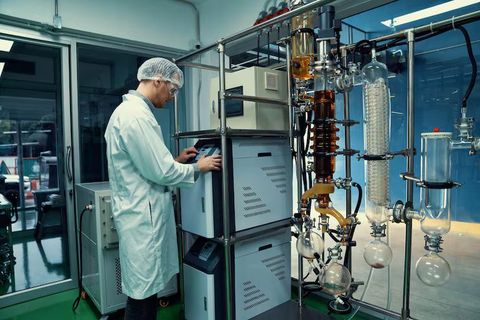
Industrial manufacturing is the process of converting raw materials, components, or unfinished products into finished goods through organized production methods.
It includes activities such as machining, casting, forming, welding, assembly, molding, fabrication, and finishing. Modern industrial manufacturing combines physical equipment with software, automation, data systems, and quality controls.
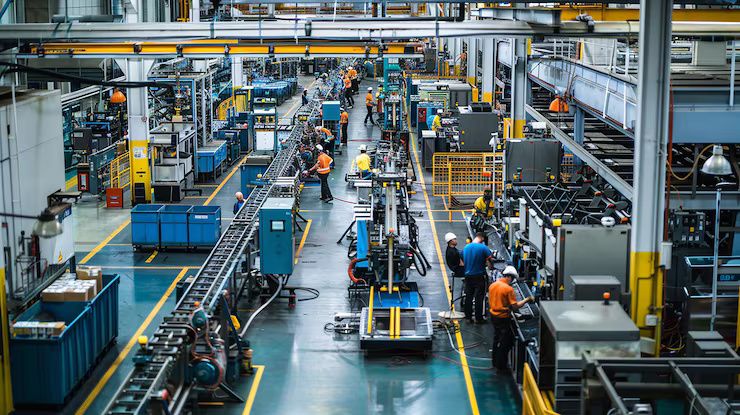
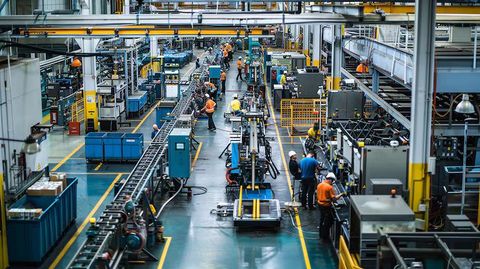
Learning industrial manufacturing provides a useful overview of how factories transform designs into consistent physical products. Manufacturing processes and technology vary by industry, product type, material, production volume, and required quality. Understanding these fundamentals can help students, professionals, business readers, and general audiences follow developments in modern production.
Context
Industrial manufacturing has developed from manually operated workshops into highly coordinated production environments. Early industrial systems relied heavily on mechanical equipment and human operation, while modern facilities increasingly use programmable machines, robotics, sensors, computer-controlled equipment, and integrated information systems.
The basic manufacturing cycle generally begins with product design and material selection. Engineers then choose suitable production processes based on the product's shape, material, strength, accuracy, and expected production quantity. The major stages can include:
- Product design and engineering
- Material preparation
- Processing or forming
- Machining and fabrication
- Assembly
- Inspection and testing
- Packaging and distribution
Different processes serve different purposes. Casting uses a mold to shape molten material, while forging forms material through controlled force. Machining removes material to achieve specific dimensions, and additive manufacturing creates parts layer by layer. Assembly combines individual components into a completed product.
Modern manufacturing also depends on production planning, maintenance, quality management, workplace safety, and data collection. These supporting activities help factories coordinate machines, materials, people, and information.
Importance
Industrial manufacturing is important because it supports the production of equipment, vehicles, electronics, construction materials, medical devices, machinery, consumer products, and many other goods. It also connects engineering, materials science, automation, logistics, quality management, and environmental practices.
Manufacturing technology affects many groups. Engineers use it to select appropriate processes and equipment. Production teams use machines and control systems to execute manufacturing operations. Quality teams inspect dimensions, materials, and performance. Managers use production data to understand capacity, efficiency, downtime, and process performance.
Automation has become particularly important. Industrial robots can perform repetitive operations, while sensors can collect information about temperature, vibration, pressure, speed, and other operating conditions. Computer numerical control systems can guide machining equipment with precise programmed instructions.
The increasing use of data also supports predictive analysis. Instead of relying only on fixed maintenance schedules, manufacturers can analyze equipment information to identify patterns that may indicate developing problems.
Recent Updates
Between 2024 and 2026, industrial manufacturing has continued moving toward smart manufacturing, artificial intelligence, digital twins, advanced robotics, connected equipment, and sustainable production. NIST's 2026 roadmap identifies industrial data analytics, advanced sensing, autonomous systems, additive and laser-based manufacturing, digital twins, robotics, supply-chain optimization, and sustainable manufacturing among important areas of development.
Digital twins are another significant development. A digital twin is a virtual representation of a physical machine, process, product, or production environment that can use operational data for monitoring, analysis, prediction, and optimization. NIST research published in 2024 describes digital twins as an important foundation for smart manufacturing and highlights the need for reliable standards and interoperability.
Artificial intelligence and machine learning are also being explored for quality inspection, predictive maintenance, process control, production planning, and anomaly detection. However, industrial AI requires reliable data, appropriate integration with existing control systems, and attention to explainability and operational safety.
| Technology | Manufacturing application | Main purpose |
|---|---|---|
| CNC systems | Precision machining | Dimensional control |
| Industrial robots | Assembly and handling | Automation |
| IoT sensors | Equipment monitoring | Data collection |
| Digital twins | Process simulation | Analysis and optimization |
| AI and ML | Inspection and prediction | Decision support |
| Additive manufacturing | Layer-based production | Complex part fabrication |
| Advanced vision systems | Automated inspection | Quality verification |
Sustainable manufacturing is also receiving greater attention. Industrial programs in the United States are supporting technologies involving electrification, energy efficiency, advanced materials, and industrial emissions reduction.
India has also placed manufacturing technology and industrial capability within its policy priorities. The National Manufacturing Mission announced in the 2025–26 Union Budget focuses on technology availability, quality manufacturing, MSME development, workforce readiness, and clean technology manufacturing.
Laws or Policies
Manufacturing regulations differ according to country, industry, product, workplace, and application. Common regulatory areas include machinery safety, worker protection, environmental controls, product conformity, electrical safety, chemical handling, and quality management.
In the United States, OSHA's machinery and machine-guarding requirements address hazards from moving parts, rotating components, point-of-operation areas, flying particles, and other machinery risks. OSHA's general industry requirements include 29 CFR 1910.212, while additional rules apply to particular equipment categories.
The European Union is preparing for broader application of Regulation (EU) 2023/1230 on machinery. The regulation covers machinery, safety components, lifting accessories, certain transmission devices, and partly completed machinery. Its main application date is 20 January 2027, with certain provisions applying earlier.
The EU Artificial Intelligence Act is also relevant when AI systems are used in regulated environments. The Act entered into force in August 2024, with different requirements becoming applicable in stages. As of August 2026, major provisions have entered their implementation phase, while certain high-risk requirements have later transition dates.
Quality management is another important area. ISO 9001:2026 is being introduced as the next edition of the quality management standard, with publication scheduled for September 2026 according to ISO's current information. Organizations using ISO 9001:2015 should follow official transition information when planning changes.
Regulatory requirements should always be checked against the specific country, product category, machinery type, and latest official guidance.
Tools and Resources
People learning industrial manufacturing can use a combination of technical references, standards information, educational materials, and digital tools. Useful resources include:
- NIST resources for advanced manufacturing, digital twins, measurement, and industrial technology research
- OSHA resources for machinery safety and workplace hazard information
- ISO materials for quality management and manufacturing-related standards
- Government manufacturing policies and industrial technology programs
- CAD and CAM software for product design and manufacturing planning
- CNC simulation and process-planning tools
- Production monitoring and maintenance platforms
- Spreadsheet templates for production schedules, inspection records, and process tracking
NIST's digital-twin research is particularly useful for understanding how connected machines, sensors, data models, and simulation can work together in advanced manufacturing environments.
FAQs
What is industrial manufacturing?
Industrial manufacturing is the organized conversion of raw materials or components into finished products using processes such as machining, casting, forming, welding, molding, fabrication, and assembly.
What are common manufacturing processes?
Common processes include casting, forging, machining, welding, molding, sheet-metal forming, additive manufacturing, heat treatment, surface finishing, and assembly.
How is technology changing industrial manufacturing?
Technology is increasing the use of automation, robotics, sensors, artificial intelligence, digital twins, connected equipment, and real-time data analysis. These technologies can support production monitoring, quality control, maintenance planning, and process improvement.
Why are digital twins important in manufacturing?
Digital twins create virtual representations of physical systems. They can combine operational data with models and simulations to support monitoring, prediction, testing, and process analysis.
What should beginners learn first?
Beginners can start with basic manufacturing processes, material properties, machine functions, measurement methods, quality principles, workplace safety, CAD fundamentals, and the role of automation and industrial data.
Conclusion
Industrial manufacturing combines materials, machines, people, processes, and technology to produce physical goods at defined levels of quality and consistency. Learning the basics of manufacturing processes provides a foundation for understanding machining, automation, robotics, digital systems, quality management, and emerging industrial technologies.
From 2024 through 2026, digital twins, artificial intelligence, advanced sensing, robotics, additive manufacturing, and sustainable production have become important areas of manufacturing development. Understanding these technologies alongside applicable safety rules, quality standards, and government policies provides a broader view of how modern factories are evolving.
For continued learning, readers can explore manufacturing standards, government technology programs, engineering references, CAD/CAM resources, and research from organizations such as NIST. Practical knowledge becomes stronger when technical concepts are studied alongside real manufacturing processes and measurable production examples.

Related Post...


Explore Leakage Repair Information, Facts, Tips, and Practical Insights
Updated: September 12, 2026
Read More
Explore Chemical Suppliers: A Complete Guide to Industry Basics
Updated: September 03, 2026
Read More