Latest Automotive Technology Guide: Explore EVs, AI, ADAS, Connected Cars & Future Mobility
Automotive technology is moving beyond traditional engines, transmissions and mechanical systems toward vehicles that combine electric powertrains, advanced electronics, artificial intelligence, connectivity, driver assistance and software-based controls.
The modern vehicle is increasingly becoming a digital platform. Electric vehicles have accelerated this transformation, while software-defined architectures are allowing manufacturers to update vehicle functions through software after production. The International Energy Agency's 2026 analysis describes this transition as a shift toward vehicles in which software determines an increasing share of functionality, supported by more centralized and zonal electronic architectures.
In India, ADAS, software-defined vehicles and automotive-electronics localization are also emerging as important themes for the industry's next phase.
This guide explores the major technologies shaping modern automobiles, from EV batteries and AI to ADAS, connected-car systems, V2X communication, software-defined vehicles and future mobility.
What Is Automotive Technology?
Automotive technology refers to the engineering, electronics, software, materials and digital systems used to design, manufacture, operate and improve vehicles.
It includes technologies associated with:
- Powertrains
- Batteries
- Electric motors
- Vehicle electronics
- Artificial intelligence
- Driver assistance
- Connectivity
- Infotainment
- Navigation
- Cybersecurity
- Vehicle software
- Autonomous driving
- Energy management
- Vehicle-to-everything communication
The industry is increasingly combining mechanical engineering with software, electronics, data science and telecommunications.
Major Automotive Technology Trends
Several technology areas are particularly important in today's automotive industry.
Electric Vehicles
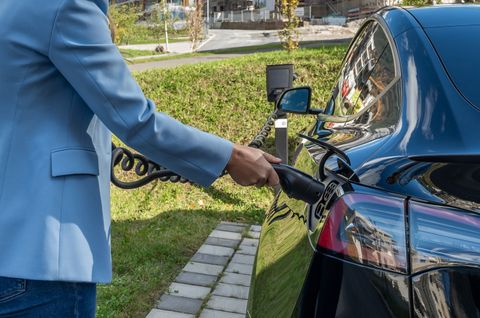
Electric vehicles use electric motors for propulsion and rechargeable battery systems for energy storage.
A typical battery-electric vehicle includes:
- High-voltage battery pack
- Electric motor
- Inverter
- Battery-management system
- On-board charger
- DC-DC converter
- Charging interface
- Thermal-management system
- Vehicle control electronics
EV technology has also contributed to the broader shift toward software-defined vehicle architectures.
Battery Technology
The battery is one of the most important components of an electric vehicle.
Modern battery development focuses on:
- Energy density
- Charging speed
- Thermal management
- Battery longevity
- Safety
- Weight reduction
- Manufacturing efficiency
- Recycling
Battery-management systems monitor parameters such as cell voltage, temperature and state of charge.
Battery Management Systems
A Battery Management System, or BMS, monitors and manages the battery pack.
Its functions can include:
- Cell monitoring
- Temperature monitoring
- State-of-charge estimation
- State-of-health estimation
- Cell balancing
- Fault detection
- Thermal protection
The BMS is particularly important because high-voltage battery packs contain many interconnected cells.
Fast Charging Technology
EV charging technology continues to develop around shorter charging times and improved charging infrastructure.
Charging systems can include:
- AC home charging
- AC public charging
- DC fast charging
- High-power charging
Actual charging speed depends on the vehicle, charger, battery condition, temperature, state of charge and electrical infrastructure.
Regenerative Braking
Regenerative braking allows an electric motor to operate as a generator during deceleration.
Instead of converting all braking energy into heat through conventional friction brakes, some kinetic energy can be converted into electrical energy and returned to the battery.
Potential benefits include:
- Energy recovery
- Improved efficiency
- Reduced friction-brake usage
- Different driving characteristics
Artificial Intelligence in Cars
Artificial intelligence is becoming an important component of automotive software.
AI can support:
- Object recognition
- Driver monitoring
- Predictive maintenance
- Traffic prediction
- Voice assistants
- Personalized vehicle settings
- Navigation
- Driver assistance
- Fleet optimization
AI systems can process information from cameras, radar, vehicle sensors, maps and other data sources.
AI-Powered Driver Assistance
AI can help vehicles interpret their surroundings and identify potential hazards.
For example, computer-vision systems can process information from cameras to identify:
- Vehicles
- Pedestrians
- Cyclists
- Road markings
- Traffic signs
- Traffic lights
- Obstacles
The resulting information can support driver-assistance functions.
Advanced Driver Assistance Systems
ADAS, or Advanced Driver Assistance Systems, refers to technologies designed to assist drivers with specific driving tasks.
Common ADAS functions include:
- Forward collision warning
- Automatic emergency braking
- Adaptive cruise control
- Lane departure warning
- Lane-keeping assistance
- Blind-spot monitoring
- Rear cross-traffic alert
- Traffic-sign recognition
- Driver monitoring
ADAS does not automatically mean that a vehicle is fully autonomous.
The driver remains responsible for the vehicle unless a legally approved automated-driving system specifically assumes the driving task.
Cameras, Radar and Other Sensors
ADAS relies on multiple types of sensors.
Cameras
Cameras can identify visual information such as:
- Lane markings
- Traffic signs
- Vehicles
- Pedestrians
- Road conditions
Radar
Radar can measure the distance and relative movement of objects.
It can be useful for:
- Adaptive cruise control
- Collision detection
- Blind-spot monitoring
- Object tracking
LiDAR
LiDAR uses laser pulses to generate information about the surrounding environment.
It can provide detailed spatial information and is being investigated and deployed in various advanced-driving applications.
Ultrasonic Sensors
Ultrasonic sensors are commonly used for short-range detection.
They can support:
- Parking assistance
- Obstacle detection
- Low-speed maneuvering
Computer Vision
Computer vision allows vehicle systems to interpret camera data.
A computer-vision system may identify objects and road features by processing large amounts of visual information.
Modern AI models can improve recognition capabilities, although performance depends on:
- Sensor quality
- Software
- Lighting
- Weather
- Road conditions
- Training data
- Processing hardware
Connected Cars
A connected car can communicate with external networks, digital services or other systems.
Connectivity can support:
- Navigation
- Remote vehicle monitoring
- Emergency assistance
- Traffic information
- Vehicle diagnostics
- Software updates
- Digital services
Connected vehicles are increasingly becoming part of broader digital ecosystems.
Vehicle-to-Everything Technology
V2X, or Vehicle-to-Everything communication, enables vehicles to exchange information with other road users and infrastructure.
Potential communication categories include:
- V2V — Vehicle-to-Vehicle
- V2I — Vehicle-to-Infrastructure
- V2P — Vehicle-to-Pedestrian
- V2N — Vehicle-to-Network
V2X can potentially provide information that a vehicle's own sensors cannot directly observe.
Recent discussion around V2V technology in India highlights its potential to share information such as vehicle speed, braking and direction with nearby vehicles.
Vehicle-to-Vehicle Communication
V2V allows nearby vehicles to exchange information.
Possible data includes:
- Position
- Speed
- Direction
- Braking status
- Road hazards
For example, a vehicle approaching a sudden braking event could potentially receive an alert from another connected vehicle before the hazard becomes directly visible.
V2V remains an evolving technology, and deployment depends on infrastructure, standards, regulation and vehicle compatibility.
Vehicle-to-Infrastructure Communication
V2I allows vehicles to communicate with infrastructure such as:
- Traffic signals
- Roadside units
- Smart intersections
- Toll systems
- Traffic-management platforms
This could support more coordinated traffic management.
Software-Defined Vehicles
A Software-Defined Vehicle (SDV) is a vehicle in which software plays a major role in determining functionality and user experience.
Traditional vehicles often use numerous individual electronic control units for specific functions.
Newer architectures increasingly move toward:
- Domain controllers
- Central computing
- Zonal architectures
- High-performance computing
- Software abstraction
- Over-the-air updates
The IEA reports that the automotive industry is shifting from distributed ECUs toward domain or zonal architectures controlled by fewer, more centralized computers.
Zonal Vehicle Architecture
In a conventional architecture, individual ECUs may control separate functions.
Zonal architecture groups electronic functions according to physical areas of the vehicle and connects them to centralized computing resources.
Potential advantages include:
- Reduced wiring complexity
- More centralized processing
- Easier software management
- Greater scalability
- Simplified vehicle architecture
These architectures are becoming an important foundation for software-defined vehicles.
Over-the-Air Updates
Over-the-air, or OTA, updates allow vehicle software to be updated remotely.
Updates can potentially improve:
- Infotainment
- Navigation
- Battery-management functions
- Driver assistance
- Vehicle controls
- Cybersecurity
- Digital services
The IEA notes that software-defined architectures can allow functions such as ADAS and battery-management systems to be improved through OTA updates.
Automotive Operating Systems
Modern vehicles increasingly use sophisticated software platforms for:
- Infotainment
- Navigation
- Connectivity
- Applications
- Voice interaction
- Digital displays
The IEA identifies increasing adoption of automotive-grade operating systems, including systems derived from consumer technology ecosystems such as Android Automotive OS.
Digital Cockpits
The traditional dashboard is being replaced or supplemented by digital cockpit systems.
Components can include:
- Digital instrument clusters
- Central infotainment displays
- Head-up displays
- Touch interfaces
- Voice controls
- Connected navigation
- Driver information systems
Head-Up Displays
A head-up display projects important information within the driver's forward field of view.
Depending on the system, information may include:
- Vehicle speed
- Navigation instructions
- Safety alerts
- Traffic information
Advanced systems can project information more directly into the driver's visual environment.
Voice Assistants
Voice-based interfaces allow drivers to interact with certain vehicle functions without manually operating controls.
Possible functions include:
- Navigation
- Media control
- Climate settings
- Phone calls
- Vehicle information
AI-based voice assistants are becoming more capable of understanding natural-language commands.
Automotive Cybersecurity
As vehicles become connected and software-driven, cybersecurity becomes increasingly important.
Potential security areas include:
- Vehicle networks
- Cloud services
- Mobile applications
- OTA updates
- Wireless communication
- Infotainment systems
- Electronic control units
Security measures can include:
- Authentication
- Encryption
- Secure boot
- Intrusion detection
- Software signing
- Access controls
The transition toward SDVs also introduces cybersecurity and data-governance challenges because more vehicle functions and information depend on software and connectivity.
Predictive Maintenance
Connected vehicles can collect operational information that may support predictive maintenance.
Potential data sources include:
- Battery temperature
- Motor condition
- Tire pressure
- Brake status
- Fault codes
- Driving patterns
- Component usage
Analytics can identify unusual patterns and potentially help maintenance teams investigate issues earlier.
Digital Twins in Automotive
A digital twin is a digital representation of a physical vehicle, component or manufacturing process.
It can be used for:
- Simulation
- Engineering analysis
- Testing
- Predictive maintenance
- Manufacturing optimization
- Product development
Digital twins are increasingly discussed alongside software-defined vehicle development and connected automotive systems.
Autonomous Driving
Autonomous driving refers to systems that can perform some or all driving tasks under defined conditions.
Automation levels are commonly described from Level 0 through Level 5.
Level 0
No sustained driving automation.
Level 1
The system assists with a specific driving function.
Level 2
The system can assist with steering and acceleration/braking under defined conditions, while the driver remains responsible for supervision.
Level 3
The system can perform the driving task under defined conditions, with specific requirements for driver availability.
Level 4
The system can operate without driver control within defined operational conditions.
Level 5
The theoretical highest level of automation, where the system can drive under all roadway and environmental conditions.
Most consumer ADAS features currently available should not be confused with unrestricted autonomous driving.
Automotive Edge Computing
Edge computing processes data closer to where it is generated.
In vehicles, edge processing can reduce the need to send every sensor input to the cloud.
It can support:
- Faster responses
- Lower communication requirements
- Local decision-making
- Privacy-sensitive processing
This is particularly relevant for ADAS and other time-sensitive vehicle functions.
Cloud Automotive Technology
Cloud platforms can support:
- Fleet management
- Vehicle diagnostics
- Navigation
- Data analytics
- OTA updates
- Connected services
- Software development
Modern automotive systems increasingly combine vehicle-side computing with cloud infrastructure.
Automotive Ethernet
As vehicles require higher data-transfer rates, automotive Ethernet is becoming increasingly important for internal vehicle networking.
It can support communication between:
- Cameras
- Displays
- Central computers
- Sensors
- Domain controllers
This is particularly relevant to software-defined vehicle architectures.
5G and Automotive Connectivity
5G and other advanced communication networks can support connected mobility applications.
Potential uses include:
- Cloud connectivity
- Traffic information
- V2X communication
- Fleet management
- Remote diagnostics
- High-bandwidth services
The actual benefits depend on network coverage, infrastructure and application requirements.
Smart Navigation
Modern navigation systems can combine:
- GPS
- Digital maps
- Traffic data
- Cloud information
- AI-based predictions
- Real-time road conditions
This can provide more dynamic route planning than conventional static navigation.
Vehicle Personalization
Software-driven vehicles can remember certain user preferences.
Depending on the vehicle, these may include:
- Seat position
- Climate preferences
- Infotainment settings
- Navigation preferences
- Display configuration
- Driving modes
Software-defined architectures can make personalization more flexible.
Smart Energy Management
Modern vehicles increasingly use software to optimize energy consumption.
EV energy-management systems can consider:
- Battery temperature
- Driving conditions
- Vehicle load
- Terrain
- Climate control
- Charging status
The goal is to use available energy efficiently.
Thermal Management
Thermal management is particularly important in EVs.
A vehicle may need to manage temperatures for:
- Battery
- Electric motor
- Inverter
- Cabin
- Charging system
Efficient thermal management can influence battery performance, charging behavior and component durability.
Lightweight Materials
Automotive manufacturers continue to explore materials that can reduce vehicle weight.
Examples include:
- Advanced high-strength steel
- Aluminum
- Magnesium
- Carbon-fiber composites
- Engineering plastics
Reducing weight can contribute to efficiency and performance, although material selection also depends on safety, durability and manufacturing considerations.
Advanced Manufacturing
Automotive production increasingly uses:
- Robotics
- Computer vision
- Automated inspection
- Digital twins
- AI-based quality control
- Additive manufacturing
- Connected production systems
These technologies can improve manufacturing consistency and provide additional production data.
Artificial Intelligence in Manufacturing
AI can analyze manufacturing information to identify:
- Production anomalies
- Quality issues
- Equipment conditions
- Process inefficiencies
AI-assisted inspection can also use cameras to detect manufacturing defects.
Robotics in Automotive Production
Robots are widely used in automotive manufacturing for tasks such as:
- Welding
- Painting
- Assembly
- Material handling
- Inspection
Modern factories can combine robotics with machine vision and connected production systems.
Advanced Safety Technologies
Modern automotive safety technology extends beyond airbags and seat belts.
It can include:
- Automatic emergency braking
- Lane-keeping assistance
- Blind-spot monitoring
- Driver monitoring
- Rear cross-traffic alerts
- Adaptive cruise control
- Electronic stability control
- Advanced pedestrian detection
These technologies can complement conventional passive safety systems.
Driver Monitoring Systems
Driver monitoring systems use cameras and other sensors to assess indicators such as:
- Driver attention
- Head position
- Eye direction
- Signs of distraction
- Possible fatigue
Such systems can provide alerts when driver attention appears insufficient.
Smart Parking Technology
Modern parking systems can use:
- Ultrasonic sensors
- Cameras
- Radar
- Automated steering
- Surround-view cameras
Some systems can automate portions of the parking maneuver under defined conditions.
360-Degree Camera Systems
A 360-degree camera system combines multiple camera views to provide a bird's-eye-style representation around the vehicle.
It can help with:
- Parking
- Low-speed maneuvering
- Obstacle awareness
Connected Fleet Technology
Commercial fleets increasingly use connected technologies to monitor:
- Vehicle location
- Fuel or energy consumption
- Driver behavior
- Maintenance conditions
- Route efficiency
- Vehicle utilization
Fleet analytics can support operational planning and maintenance.
Electric Commercial Mobility
EV technology is expanding beyond passenger cars into:
- Buses
- Delivery vans
- Trucks
- Three-wheelers
- Specialized commercial vehicles
Commercial electrification involves additional considerations around:
- Payload
- Charging infrastructure
- Route length
- Downtime
- Battery capacity
- Total operating requirements
Shared and Connected Mobility
Future mobility is not limited to private vehicle ownership.
Technology is also supporting:
- Ride sharing
- Car sharing
- Connected public transportation
- Mobility-as-a-service
- Integrated ticketing
- Fleet-based transportation
Digital platforms can connect different forms of transportation.
Vehicle-to-Grid Technology
Vehicle-to-grid, or V2G, allows compatible electric vehicles to exchange electricity with the electrical grid.
Potential applications include:
- Grid balancing
- Energy storage
- Peak-load management
- Renewable-energy integration
Implementation requires compatible vehicles, chargers, grid infrastructure and regulatory frameworks.
Vehicle-to-Home Technology
Vehicle-to-home systems can allow compatible EV batteries to provide electricity to a building under appropriate conditions.
Potential uses include:
- Backup power
- Energy management
- Load shifting
Availability depends on vehicle and charging-system compatibility.
Future Automotive Mobility
Future mobility is likely to involve greater integration between:
- Electric vehicles
- Artificial intelligence
- Connected infrastructure
- Autonomous systems
- Shared transportation
- Cloud computing
- Renewable energy
- Smart cities
Rather than developing independently, these technologies are increasingly converging into connected mobility ecosystems.
Automotive Technology in India
India's automotive technology landscape is evolving around:
- EV adoption
- ADAS
- Connected vehicles
- Automotive electronics
- Software-defined vehicles
- Battery technologies
- Digital manufacturing
Industry discussions in 2026 have highlighted ADAS, SDVs and localization of automotive electronics as significant priorities for India's mobility future.
Consumer interest is also shifting toward software-enabled vehicle experiences. Deloitte's 2026 India automotive consumer study reported that 95% of surveyed Indian consumers were willing to pay for software-defined vehicle capabilities, while 81% indicated interest in AI-enabled vehicle customization.
Current Direction of Software-Defined Vehicles
The automotive industry is increasingly moving toward centralized computing and software-based vehicle functionality.
The major architectural shift involves moving away from many independent ECUs toward domain and zonal architectures. This can reduce wiring complexity and make it easier to update and expand vehicle functionality through software.
Recent technical research also identifies OTA updates, AI, digital twins, V2X and centralized computing as important components of the SDV ecosystem.
Recent Developments in Automotive Technology
Several developments illustrate how quickly automotive technology is evolving.
Connected ADAS is increasingly incorporating cloud-based road information. For example, Mobileye announced a 2026 agreement with Stellantis involving its Road Experience Management technology, which uses crowdsourced road data to support driver-assistance capabilities.
Research is also exploring AI-assisted cooperative driving, where vehicles can combine onboard sensing with V2X information and AI-based systems to support coordinated driving functions.
These developments indicate that future vehicle intelligence may increasingly rely on a combination of onboard sensors, software, cloud data and vehicle-to-vehicle communication.
Challenges in Automotive Technology
Technological advancement also creates new challenges.
Cybersecurity
More connectivity creates more potential digital attack surfaces.
Data Privacy
Connected vehicles can generate information about:
- Location
- Driving patterns
- Vehicle usage
- User preferences
Responsible data management is therefore important.
Software Complexity
As software controls more vehicle functions, development and validation become increasingly complex.
Infrastructure
EVs, V2X and connected mobility require supporting infrastructure.
Regulatory Requirements
Advanced technologies must operate within applicable safety and transportation regulations.
Interoperability
Different manufacturers and infrastructure providers need compatible communication and software standards.
Battery Supply Chains
EV expansion increases the importance of battery materials, manufacturing capacity and recycling infrastructure.
Key Benefits of Modern Automotive Technology
Modern automotive technologies can provide potential benefits such as:
- Improved energy efficiency
- Better driver awareness
- Enhanced safety assistance
- Faster software improvements
- Better connectivity
- More personalized driving experiences
- Predictive maintenance
- Improved fleet management
- Reduced emissions through electrification
- More efficient transportation systems
The actual benefits depend on implementation, infrastructure and user behavior.
Key Considerations When Evaluating Automotive Technology
When assessing a technologically advanced vehicle, consider:
Powertrain
Understand whether it uses:
- Petrol
- Diesel
- Hybrid
- Plug-in hybrid
- Battery electric
- Other propulsion technologies
Battery
For EVs, consider:
- Capacity
- Charging capability
- Thermal management
- Battery warranty
- Charging compatibility
ADAS
Check which driver-assistance features are actually available and understand their operating limitations.
Connectivity
Review:
- Connected services
- Smartphone integration
- Navigation
- OTA capabilities
- Data requirements
Software
Consider whether the vehicle supports:
- OTA updates
- Digital personalization
- App integration
- Remote diagnostics
Cybersecurity
Connected vehicles should incorporate appropriate security mechanisms to protect software and data.
Future Compatibility
Technology platforms that support software updates and modular upgrades may have greater flexibility over their operational lifetime.
Automotive Technology Comparison
| Technology | Primary Purpose | Typical Application |
|---|---|---|
| EV | Electric propulsion | Passenger and commercial vehicles |
| AI | Intelligent data processing | ADAS, personalization, diagnostics |
| ADAS | Driver assistance | Safety and convenience |
| V2X | Vehicle communication | Connected mobility |
| OTA | Remote software updates | Vehicle software |
| SDV | Software-based functionality | Modern connected vehicles |
| IoT | Monitoring and connectivity | Vehicles and fleets |
| LiDAR | Environmental sensing | Advanced driving systems |
| Automotive Ethernet | High-speed data communication | Vehicle networks |
| Digital Twin | Simulation and monitoring | Engineering and manufacturing |
| Regenerative Braking | Energy recovery | EVs and hybrids |
| V2G | Grid interaction | EV energy management |
Future Trends
The next phase of automotive technology is likely to emphasize deeper integration rather than isolated features.
Important trends include:
- Software-defined vehicle architectures
- Centralized computing
- Zonal electrical architectures
- AI-assisted driving
- Connected ADAS
- V2X communication
- Advanced battery systems
- Improved charging technologies
- Predictive maintenance
- Digital twins
- Smart manufacturing
- Vehicle-to-grid integration
- Personalized software
- Connected mobility ecosystems
Software is becoming particularly important. The IEA describes modern vehicles as increasingly evolving into software platforms where functionality can be updated and expanded throughout the vehicle's life.
Key Insights
- Automotive technology is increasingly combining mechanical engineering with software, electronics and artificial intelligence.
- EVs are accelerating the industry's transition toward software-driven vehicle architectures.
- ADAS provides driver assistance but should not automatically be equated with full autonomous driving.
- Cameras, radar, LiDAR and other sensors provide different forms of environmental information.
- Connected cars can communicate with cloud services, infrastructure and potentially other vehicles.
- V2X can extend vehicle awareness beyond what onboard sensors can directly detect.
- Software-defined vehicles are moving toward centralized and zonal electronic architectures.
- OTA updates can allow certain vehicle functions to evolve after production.
- AI can support driver assistance, personalization, diagnostics and predictive maintenance.
- Cybersecurity and data privacy are increasingly important as vehicle connectivity expands.
- Regenerative braking and advanced battery-management systems can improve EV energy management.
- Digital twins and connected manufacturing are changing automotive development and production.
- Future mobility is likely to integrate EVs, AI, connectivity, automation and smart infrastructure.
Frequently Asked Questions
What is the latest automotive technology?
Major automotive technology trends include electric vehicles, AI, ADAS, connected cars, software-defined vehicles, OTA updates, V2X communication, advanced batteries and intelligent vehicle software.
What is a software-defined vehicle?
A software-defined vehicle is a vehicle in which software plays an increasingly important role in controlling functions, delivering features and enabling updates throughout the vehicle's operational life.
What is ADAS?
ADAS stands for Advanced Driver Assistance Systems. It includes technologies such as adaptive cruise control, lane-keeping assistance, automatic emergency braking and blind-spot monitoring.
Is ADAS the same as autonomous driving?
No. ADAS assists the driver with specific functions. Autonomous-driving systems are designed to perform progressively larger portions of the driving task under defined conditions.
How is AI used in cars?
AI can support object recognition, driver monitoring, navigation, personalization, predictive maintenance, voice interfaces and driver-assistance systems.
What is V2X?
V2X stands for Vehicle-to-Everything. It describes communication between vehicles and other entities such as infrastructure, pedestrians, networks and other vehicles.
What are software updates in cars?
Software updates can modify or improve certain vehicle functions without requiring replacement of the vehicle's physical components. OTA technology can allow some updates to be delivered remotely.
What is an electric vehicle's BMS?
A Battery Management System monitors and manages an EV battery pack, including parameters such as cell voltage, temperature, state of charge and battery health.
Why are connected cars becoming more common?
Connectivity allows vehicles to access navigation, digital services, diagnostics, software updates, traffic information and other network-based functions.
What is a digital cockpit?
A digital cockpit combines electronic displays, infotainment, navigation, vehicle information and other digital interfaces into the vehicle's driver and passenger environment.
What is regenerative braking?
Regenerative braking uses the electric motor as a generator during deceleration to recover some kinetic energy and convert it into electrical energy.
What is automotive cybersecurity?
Automotive cybersecurity involves protecting vehicle software, networks, electronic systems, connected services and data from unauthorized access or malicious activity.
What is zonal architecture?
Zonal architecture organizes vehicle electronics around physical zones and connects them with centralized computing resources, reducing reliance on numerous independent control units.
What is predictive maintenance?
Predictive maintenance uses vehicle data and analytics to identify abnormal conditions or potential component problems before they become major failures.
What is the future of automotive technology?
Future automotive technology is likely to combine electrification, AI, software-defined architectures, connected vehicles, advanced driver assistance, V2X communication, smart infrastructure and increasingly automated mobility.
Conclusion
The latest automotive technology represents a broad transformation of the automobile from a primarily mechanical machine into an increasingly connected, electrified and software-driven platform.
Electric vehicles are changing propulsion and energy management, while AI and ADAS are expanding the vehicle's ability to interpret its surroundings and assist drivers. Connected-car technologies are linking vehicles with cloud platforms, infrastructure and other road users, while V2X communication could further extend this connectivity.
At the architectural level, software-defined vehicles are becoming increasingly important. Centralized computing, zonal architectures and OTA updates can allow manufacturers to manage vehicle functionality more dynamically throughout the vehicle's life.
The next generation of mobility will likely be defined not by one individual technology, but by the integration of EVs, AI, sensors, software, connectivity, cybersecurity, intelligent infrastructure and advanced manufacturing.
As these technologies mature, automotive engineering will increasingly require collaboration between mechanical engineering, electrical engineering, software development, artificial intelligence, telecommunications and data science.
Disclaimer: This article is intended for general informational and educational purposes only. Automotive technologies, software capabilities, regulations, safety systems and vehicle specifications vary by manufacturer, market and model year. ADAS and automated-driving features have specific operational limitations and should not be treated as a replacement for attentive driving unless a system is explicitly approved and designed for that level of automation. Always refer to the relevant vehicle manufacturer and regulatory authorities for current technical and safety information.

Lavit
Our content is designed to attract, persuade, and convert your audience. We help brands grow through strategic, audience-first writing.
August 11, 2026 . 8 min read
Related Post...

Complete IASToday Master Plus Guide: Explore Program Structure, Resources & Learning Tools
By: Lavit
Updated: August 10, 2026
Read More
Complete AI Workflow Guide: Explore Automation, Architecture, Applications & Expert Insight
By: Lavit
Updated: August 10, 2026
Read More
ERP Software Knowledge Hub: Learn Enterprises Resource Planning Basic, System Details & Expert Informations
By: Lavit
Updated: August 19, 2026
Read More