Injection Molding Machines: Explore How Plastic Manufacturing Works
Injection molding is one of the most widely used manufacturing processes for producing consistent plastic parts at scale. From automotive components and medical housings to appliance panels and everyday packaging, the process allows manufacturers to create complex shapes with repeatable dimensions and controlled surface finishes.
The quality of the finished product depends on more than the molding machine itself. Material characteristics, mold design, temperature control, injection pressure, cooling conditions, and process monitoring all influence how plastic behaves during production. Small changes in any of these areas can affect part quality.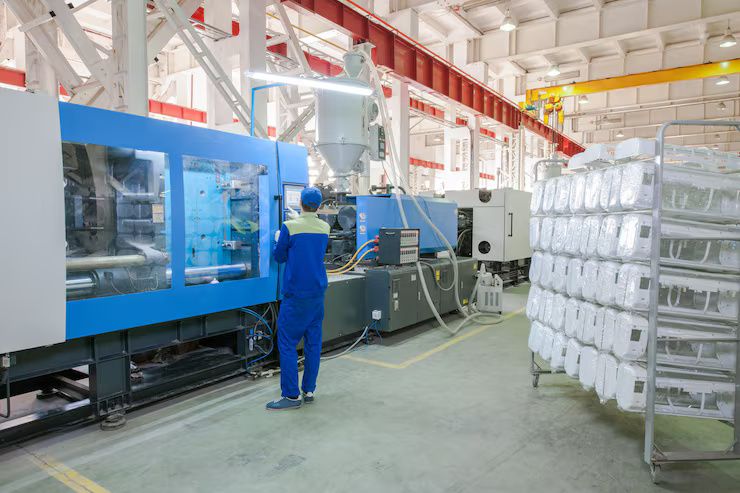
Understanding how injection molding machines work provides useful context for anyone interested in plastic manufacturing, industrial production, or machine automation. The process becomes easier to understand when viewed as a coordinated sequence involving material preparation, plasticization, injection, cooling, mold opening, and quality verification.
How Injection Molding Turns Plastic Into Finished Parts
At its core, injection molding uses heat and pressure to transform plastic pellets into molded products. The raw material is fed into the machine, heated until it becomes molten, and then forced into a specially designed mold cavity.
Once the cavity is filled, the material cools and solidifies. The mold then opens, allowing the finished part to be removed before the cycle begins again.
An injection molding machine therefore combines several mechanical, hydraulic, electrical, and control systems. Their timing must be carefully coordinated because injection speed, pressure, temperature, and cooling time all influence the final result.
The Main Parts of an Injection Molding Machine
Although machine configurations vary, most injection molding systems contain two major sections: the injection unit and the clamping unit.
The injection unit prepares and moves the plastic material. It typically includes a hopper, barrel, heater bands, screw, and nozzle. Plastic pellets enter through the hopper and move forward as the rotating screw conveys them through the heated barrel.
The screw performs several functions at once. It transports the material, mixes it, generates heat through mechanical shearing, and builds the required shot volume before injection.
The clamping unit holds the mold securely closed during injection. It must generate enough force to prevent the mold halves from separating when molten plastic enters the cavity under substantial pressure.
The Injection Molding Cycle
The manufacturing process follows a repeated sequence. While the exact settings depend on the material and product design, the basic cycle remains consistent.
Material Feeding and Plasticization
Plastic pellets are introduced through the machine's hopper. As the screw rotates, the pellets travel through the heated barrel and gradually soften.
The screw geometry and temperature profile are important because the material must reach a suitable melt condition without overheating or degrading. Different polymers require different processing conditions.
During this stage, the screw moves backward as molten material accumulates in front of it. This creates the shot that will later be injected into the mold.
Mold Closing and Clamping
Before injection begins, the mold halves close around the cavity. The clamping system applies sufficient force to keep the mold closed throughout the filling and packing stages.
Clamp force is selected according to factors such as projected part area, injection pressure, material behavior, and mold configuration. Insufficient clamping force can allow molten material to escape along the mold parting line, creating flash.
Injection and Filling
Once the mold is securely closed, the screw moves forward and pushes the molten plastic through the nozzle and into the mold cavity.
Injection speed must be controlled carefully. Excessive speed can increase shear heating or cause defects, while an overly slow fill may allow premature cooling or incomplete filling.
During filling, the molten material follows the geometry of the cavity. Mold channels called runners and gates guide the flow into the part.
Packing and Pressure Holding
After the cavity has been filled, the machine maintains pressure for a defined period. This stage is often called packing or holding.
Plastic shrinks as it cools, so additional material pressure may be needed to compensate for volumetric contraction. Proper holding conditions help control dimensions, reduce sink marks, and improve consistency.
The transition from filling to holding is a critical point in the molding cycle. Process engineers typically optimize this changeover based on material behavior and cavity response.
Cooling and Solidification
Cooling begins as soon as the molten plastic contacts the cooler mold surfaces. The mold usually contains internal cooling channels through which a controlled fluid circulates.
Cooling time can represent a significant portion of the overall cycle. The part must become rigid enough to be ejected without distortion, yet excessive cooling can reduce production efficiency.
Uniform mold temperature is especially important for products with complex geometries. Uneven cooling can contribute to warpage, dimensional variation, or internal stress.
Mold Opening and Part Ejection
After sufficient cooling, the clamping system opens the mold. Ejector pins, plates, sleeves, or other mechanisms then separate the finished part from the mold cavity.
Ejection must be controlled because the newly molded component can still be relatively delicate. Poorly positioned ejectors or insufficient cooling can cause deformation, surface marks, or sticking.
The mold closes again after ejection, beginning another production cycle.
Why Mold Design Is So Important
An injection molding machine can only perform as well as the mold and process design allow. The mold determines the shape, dimensional characteristics, gating arrangement, cooling strategy, and ejection method of the finished component.
Engineers consider wall thickness, draft angles, ribs, bosses, undercuts, material flow, and shrinkage when designing the cavity.
A well-designed mold promotes balanced filling and consistent cooling. It can also reduce cycle time and minimize common molding defects.
For complex components, computer-aided engineering tools may be used to simulate filling behavior, cooling, pressure distribution, and potential problem areas before physical production begins.
Different Types of Injection Molding Machines
Injection molding machines are commonly distinguished by their drive and operating systems.
Hydraulic machines use hydraulic power to generate clamping and injection movement. They have been widely used for decades and remain important in applications involving substantial force requirements.
Electric injection molding machines use servo-driven electric motors for major machine movements. They can provide highly controlled motion and repeatable process parameters.
Hybrid machines combine hydraulic and electric technologies. These systems are designed to balance different performance requirements depending on the application.
Machine selection depends on factors such as required clamp force, injection capacity, material, part geometry, cycle requirements, energy considerations, and production environment.
Common Plastics Used in Injection Molding
Injection molding can process a wide range of thermoplastic materials. Material selection depends on the mechanical, thermal, chemical, and visual properties required by the finished part.
Common materials include:
- Polypropylene for lightweight and chemically resistant components
- Acrylonitrile butadiene styrene for rigid molded housings and consumer products
- Polyethylene for containers and durable general-purpose components
- Polycarbonate where impact resistance and dimensional stability are important
- Nylon for mechanically demanding applications
- Polyoxymethylene for precision components requiring low friction and wear resistance
Additives, reinforcements, and colorants can further modify material behavior. Glass-filled polymers, for example, can provide greater stiffness but may also require different processing conditions.
Controlling Quality During Production
Consistent injection molding requires monitoring more than the final appearance of the product. Process variables can provide early indications of changing machine or material conditions.
Important parameters may include melt temperature, mold temperature, injection pressure, screw position, injection speed, holding pressure, cooling time, and cycle time.
Modern machines can record process data and use automated controls to maintain repeatability. Quality teams may also use dimensional inspection, visual checks, weight measurements, and functional testing to verify that molded parts remain within specified requirements.
Monitoring trends rather than isolated measurements can be particularly useful. Gradual changes in cycle time, pressure, or part weight may indicate developing issues before defects become widespread.
Common Injection Molding Defects
Even a well-controlled process can produce defects when material, mold, machine, or process conditions are not properly balanced.
Common problems include:
- Short shots, where the cavity is not completely filled
- Flash, where excess material escapes around the mold parting line
- Sink marks caused by localized shrinkage
- Warpage resulting from uneven cooling or internal stresses
- Weld lines formed when separate flow fronts meet
- Burn marks associated with trapped air and excessive localized heating
Correcting these problems usually requires identifying the underlying cause rather than simply changing one machine setting. Material drying, mold venting, gate location, cooling design, injection speed, and pressure may all influence the outcome.
Automation and Modern Process Control
Automation has expanded the capabilities of injection molding operations. Robots can remove molded parts, separate runners, inspect components, and transfer products to downstream processes.
Sensors and digital controllers can also monitor machine conditions in real time. Data from molding cycles can support process optimization, predictive maintenance, and quality analysis.
Connected production environments make it easier to compare process performance across machines and identify unusual trends. However, automation works best when supported by well-designed processes and accurate engineering data.
Frequently Asked Questions
What is the basic principle of an injection molding machine?
An injection molding machine melts plastic material and injects it under controlled pressure into a mold cavity. The plastic cools, solidifies, and is then ejected as a finished part.
How long does an injection molding cycle take?
Cycle time varies significantly depending on the material, part size, wall thickness, mold design, machine settings, and cooling requirements. Thin components may have relatively short cycles, while larger or thicker parts generally require more cooling.
Why is cooling important in injection molding?
Cooling allows the molten plastic to solidify sufficiently for safe ejection. Uneven or inadequate cooling can cause dimensional variation, warpage, internal stress, and other quality problems.
What determines the required clamping force?
Clamping force depends primarily on the projected area of the molded part, cavity pressure, material characteristics, and mold design. The machine must maintain enough force to keep the mold closed during injection.
Can one machine process different types of plastic?
Many injection molding machines can process multiple thermoplastic materials, but processing conditions must be adjusted for each polymer. Screw design, temperature settings, drying requirements, and process parameters may differ substantially between materials.
Conclusion
Injection molding machines combine material handling, heating, pressure control, mold clamping, cooling, and automation to produce plastic components with high repeatability. The manufacturing cycle depends on precise coordination between the machine, mold, material, and process settings.
Understanding each stage from plasticization and injection to packing, cooling, and ejection makes it easier to see why manufacturing performance depends on careful process control. As automation, sensors, and digital monitoring continue to advance, injection molding is becoming increasingly data-driven while retaining the fundamental principles that have made the process central to modern plastic manufacturing.

Related Post...

Commercial Construction Cranes: Explore Maintenance for Longer Lifespans
Updated: August 26, 2026
Read More
Precision CNC Milling Machines: Explore Aerospace Calibration Methods
Updated: August 26, 2026
Read More
EPS Recycling Machines and Foam Recycling Systems: Explore Recycling Methods
Updated: September 04, 2026
Read More