Industrial Powder Mixing Machines: Complete Guide to Basics, Techniques, Facts, Knowledge, and Best Practices
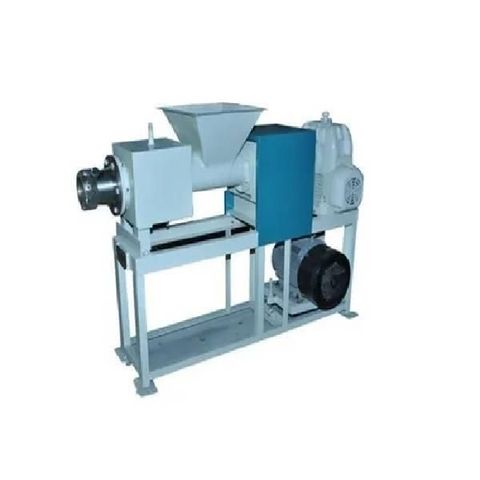
Industrial powder mixing machines are mechanical systems designed to combine two or more dry or semi-dry materials into a reasonably uniform mixture. They are used across industries where powders, granules, particles, or dry ingredients need to be combined before further processing.
An industrial powder mixing machine may be used for food ingredients, agricultural materials, construction products, chemical formulations, minerals, detergents, ceramics, and other industrial materials.
The basic objective is straightforward: distribute different materials throughout a batch while achieving the required degree of uniformity.
However, powder mixing is more complicated than simply putting materials into a container and rotating them. Particle size, density, moisture, shape, flow characteristics, static electricity, and material cohesiveness can all affect the mixing process.
A typical powder-processing sequence can be represented as:
Material preparation → Loading → Mixing → Sampling → Quality check → Discharge → Further processing
The appropriate machine depends on the material characteristics and the required production process.
Why Powder Mixing Matters
Uniform mixing can be important when the final product depends on consistent distribution of its components.
For example, one material may need to be distributed evenly throughout a carrier powder. If the mixture is inconsistent, different portions of the final batch can have different compositions.
Industrial powder mixing is therefore relevant to:
Food processing
Agricultural products
Chemical manufacturing
Construction materials
Ceramics
Detergent production
Mineral processing
Plastics and polymers
Animal-feed production
Research and development
The process can also help reduce manual handling and make repetitive batch preparation more systematic.
Main Types of Powder Mixing Machines
Different mixer designs create different movement patterns inside the mixing chamber.
| Mixer Type | General Mixing Principle | Typical Application |
|---|---|---|
| Ribbon blender | Horizontal movement through ribbon elements | Dry powders and granules |
| Paddle mixer | Paddles move material through the chamber | Granular and powder materials |
| Plough mixer | Plough-shaped tools create intensive movement | Cohesive and difficult-to-mix powders |
| V-blender | Rotating V-shaped vessel divides and recombines material | Gentle dry blending |
| Double-cone blender | Rotating vessel produces tumbling movement | Dry powders and granules |
| High-shear mixer | High-intensity mechanical movement | Materials requiring stronger dispersion |
| Vertical mixer | Mixing elements operate vertically | Selected powders and granular materials |
The choice depends on the desired mixing intensity, batch size, material properties, cleaning requirements, and process configuration.
How a Dry Powder Mixing Machine Works
A dry powder mixing machine generally works by repeatedly moving particles through different regions of the mixing chamber.
Three broad mechanisms are commonly discussed:
Convective mixing: Large groups of particles are transported from one region to another.
Diffusive mixing: Individual particles gradually move into neighboring regions.
Shear mixing: Layers or groups of particles move relative to each other, helping break up localized concentrations.
Most industrial mixers use a combination of these mechanisms.
The objective is not necessarily to mix as quickly as possible. Excessive mixing can sometimes cause segregation, particle damage, temperature increases, or other undesirable effects.
Automatic Powder Mixing Machines
An automatic powder mixing machine can incorporate sensors, programmable controls, automated material handling, timers, and recipe-based operating sequences.
Depending on the installation, automation may control:
Loading sequence
Mixing duration
Mixing speed
Material quantities
Discharge operation
Interlocks
Temperature monitoring
Batch identification
Alarm conditions
Data recording
Automation can make repetitive production processes more consistent, but it also increases the importance of correct programming and sensor calibration.
An automated system should therefore be evaluated as part of the complete process rather than as an isolated machine.
Industrial Powder Mixing Equipment Configuration
Industrial powder mixing equipment can include much more than the mixer itself.
A complete powder-handling arrangement may contain:
Storage hoppers
Feeders
Weighing systems
Conveyors
Dust-control equipment
Mixing chambers
Discharge valves
Screening equipment
Magnets or separators
Sampling points
Control panels
Sensors
Packaging or downstream processing equipment
A simplified production layout could be:
Storage → Metering → Feeding → Mixing → Inspection → Discharge → Downstream process
The configuration depends on the material and the production environment.
High-Capacity and High-Speed Mixing
A high capacity powder mixing machine is designed to handle larger batch volumes or higher material throughput.
Capacity should not be considered only in terms of the physical volume of the mixing vessel. The usable working volume can be lower than the total vessel volume because adequate space may be needed for particle movement.
A high speed powder mixing machine operates with faster mixing elements or rotational speeds.
Higher speed does not automatically mean better mixing.
Excessive speed can sometimes produce:
Unwanted heat
Particle degradation
Dust generation
Increased energy consumption
Excessive shear
Segregation after mixing
The appropriate operating speed should therefore be established through material testing and process validation.
Factors That Affect Mixing Performance
Several characteristics influence powder behavior.
| Material Factor | Potential Effect |
|---|---|
| Particle size | Can affect segregation and mixing rate |
| Particle density | Large density differences may cause separation |
| Moisture | Can influence flow and cohesion |
| Particle shape | Irregular particles may behave differently |
| Cohesiveness | Can make uniform distribution more difficult |
| Static charge | May cause particles to adhere to surfaces |
| Temperature | Can influence moisture and material behavior |
| Loading ratio | Can affect movement inside the mixer |
Two powders that appear visually similar can therefore require very different mixing conditions.
Recent Developments in Powder-Mixing Technology
Industrial mixing is increasingly connected with automation, digital monitoring, process data, and improved machine controls.
Current equipment trends include:
PLC-based controls
Touchscreen operator interfaces
Automated batch recipes
Variable-speed drives
Load-cell-based weighing
Temperature sensors
Automated discharge systems
Remote monitoring
Data logging
Improved dust containment
More accessible cleaning arrangements
Another trend is greater integration between mixing equipment and the rest of the production line. Rather than treating the mixer as an independent machine, manufacturers increasingly design connected systems where material movement, weighing, mixing, inspection, and discharge are coordinated.
BIS maintains a dedicated collection of Indian Standards related to machine safety and hazards in process industries. Its published resources include Indian Standards on machine safety, process-industry hazards, and mechanical engineering.
BIS's current Scheme-X product-specific information page, updated 1 April 2026, also lists certification guidance for selected categories of machinery and associated goods. The page does not establish that every powder mixer is automatically covered; applicability depends on the particular machine and relevant notification or standard.
Hygiene Considerations for Food Applications
When powder mixers are used for food ingredients, the requirements can be different from those for general industrial materials.
Food-processing equipment may need attention to:
Food-contact materials
Cleanability
Product residue
Cross-contamination prevention
Surface finish
Drainage where applicable
Inspection access
Cleaning procedures
BIS lists IS 14366:1996, covering safety and hygiene requirements for certain food-processing dough mixers, and notes that the standard was reviewed in 2024. Although this standard is specifically for dough mixers rather than general powder mixers, it illustrates the importance of identifying the exact machine category and applicable standard instead of assuming that one machinery standard applies to every mixer.
Food-processing operations may also be subject to applicable FSSAI requirements depending on the product and process.
Safety Considerations
Industrial mixers contain moving mechanical components and may create additional hazards when handling fine powders.
Important safety measures can include:
Guarding around moving parts
Emergency-stop arrangements
Interlocked access doors
Appropriate electrical protection
Lockout and isolation procedures
Dust-control measures
Safe loading procedures
Safe discharge arrangements
Operator training
Routine inspection
Preventive maintenance
Fine powders can create airborne dust. Depending on the material, dust may also create respiratory, combustible, or contamination hazards.
The specific hazard assessment should therefore be based on the material being processed rather than assuming all powders behave in the same way.
Laws, Standards, and Policies in India
Industrial powder mixing equipment can be affected by several regulatory areas, depending on its application and installation.
BIS standards: BIS explains that products are subject to compulsory certification only when the Central Government places them under the relevant compulsory certification framework. Therefore, manufacturers should verify whether a particular mixer or component falls under an applicable Quality Control Order rather than assuming that BIS certification is universally mandatory.
BIS also provides the Know Your Standard portal, which allows users to search Indian Standards by keyword or IS number and review standards, amendments, related documents, laboratories, and certification information.
Occupational safety: Industrial workplaces may need to comply with applicable occupational-safety and working-condition requirements, including provisions introduced through India's labour-code framework.
Environmental requirements: Manufacturing plants and powder-processing facilities can also be subject to applicable air-emission, waste-management, and State Pollution Control Board requirements. CPCB has issued classifications and notifications concerning industrial pollution-control requirements, including a 2024 notification covering specified industrial categories under the Air Act framework.
The applicable requirements depend on the industry, material, process, location, pollution category, and installed equipment.
Selecting a Powder Mixing Machine
A practical selection process begins with the material rather than the machine name.
Consider:
Powder particle size
Bulk density
Moisture content
Flowability
Cohesiveness
Required batch volume
Required mixing uniformity
Mixing duration
Desired shear level
Cleaning requirements
Material-contact surfaces
Dust-control needs
Automation requirements
Available installation space
A small laboratory batch and a continuous industrial production process may require completely different mixer configurations.
Testing representative material before finalizing a process can provide useful information about mixing behavior and achievable uniformity.
Useful Tools and Resources
Several resources can support research and process planning.
BIS Know Your Standard: Search for relevant Indian Standards using machine names, keywords, or IS numbers.
BIS product-certification database: Useful for determining whether a specific product category is covered by compulsory certification requirements.
Process calculation spreadsheet: Record batch size, loading ratio, mixing duration, rotational speed, and material characteristics.
Material-property sheet: Maintain data for bulk density, particle size, moisture, flowability, and other relevant characteristics.
Maintenance checklist: Track inspection of bearings, seals, mixing elements, drives, electrical components, guards, and discharge mechanisms.
Dust-control assessment: Identify points where powders may become airborne during loading, mixing, sampling, and discharge.
Best Practices for Operation
Good mixing performance depends on both equipment design and operating discipline.
Recommended practices include:
Keep material specifications consistent where possible.
Follow the validated loading sequence.
Avoid overfilling the mixing chamber.
Monitor mixing time rather than assuming longer is always better.
Check operating speed against the process specification.
Inspect seals and moving components regularly.
Keep guards and interlocks functional.
Follow appropriate isolation procedures before maintenance.
Clean equipment according to the material and process requirements.
Record batch information and operating parameters.
Periodically verify mixing uniformity.
Review dust-control measures for fine powders.
Frequently Asked Questions
What is an industrial powder mixing machine?
It is industrial equipment designed to combine powders or granular materials into a more uniform mixture. Different designs use tumbling, paddles, ribbons, ploughs, or other mixing elements.
What is the difference between a powder mixer and a powder blending machine?
The terms are often used interchangeably. In technical applications, "blending" can emphasize the gentle combination of materials, while "mixing" may describe a wider range of processes, including more intensive movement.
Is a high-speed powder mixing machine always better?
No. The appropriate speed depends on the material and process. Excessive speed can increase heat, dust, particle damage, energy use, or segregation.
What should be checked before selecting a high-capacity powder mixing machine?
Important factors include batch volume, usable working capacity, powder density, particle size, flowability, cohesiveness, mixing time, required uniformity, discharge arrangement, cleaning requirements, and safety features.
Is BIS certification mandatory for every industrial powder mixer in India?
Not necessarily. BIS states that compulsory certification applies to products specifically brought under the relevant government certification requirements. The exact machine category and applicable Quality Control Orders should therefore be checked before drawing a conclusion.
Conclusion
Industrial powder mixing machines are important in manufacturing environments where different dry materials need to be combined consistently. Their applications range from food and agricultural materials to chemicals, minerals, construction products, detergents, ceramics, and other industrial processes.
The most suitable equipment depends on material characteristics, batch size, mixing intensity, required uniformity, automation, cleaning requirements, and safety considerations.
Modern systems are increasingly incorporating programmable controls, sensors, data recording, variable-speed drives, automated material handling, and integration with other production equipment. At the same time, Indian standards and regulatory requirements make it important to examine machine safety, food hygiene where applicable, environmental considerations, and certification requirements for the specific application.
A well-designed powder-mixing process should therefore be evaluated as a complete system rather than on machine capacity or speed alone. Material testing, appropriate operating procedures, preventive maintenance, and documented safety practices can all contribute to more consistent and controlled processing.
Disclaimer: This article is provided for general informational and educational purposes only. It does not constitute engineering, legal, regulatory, safety, or technical advice. No specific performance, quality, compliance, or suitability claim is being made about any machine, manufacturer, equipment type, or technology. Readers should verify applicable standards, regulations, specifications, and safety requirements with the relevant authorities and qualified professionals before making technical or operational decisions. This article is not intended to sell, promote, endorse, or recommend any particular product, equipment, manufacturer, or organization.

Related Post...
Aluminum Can Making Machines: Explore Overview, Basics, Explanation, Knowledge, and Key Details
Updated: October 26, 2026
Read More
Cement Mixing Machines: Complete Guide to Basics, Techniques, Facts, Knowledge, and Best Practices
Updated: October 26, 2026
Read More
Capsule Filling Machines: Guide, Tips, Insights, Advice, and Expert Suggestions
Updated: October 26, 2026
Read More