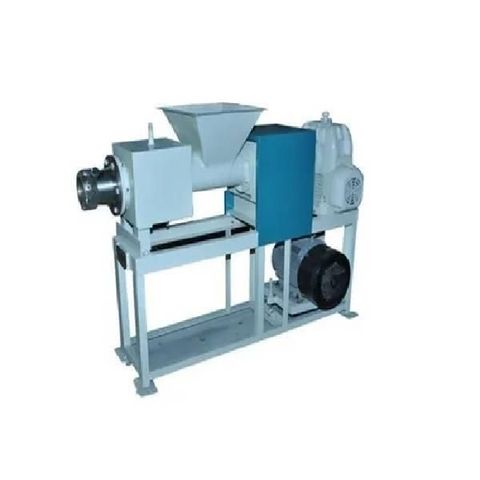
Aluminum Can Making Machines: Explore Overview, Basics, Explanation, Knowledge, and Key Details
Aluminum can making machines are industrial production systems used to manufacture lightweight metal containers for beverages, food products, and other applications.
These machines can perform different stages of can manufacturing, including forming, drawing, ironing, trimming, washing, coating, printing, inspection, and packaging.
A modern production line is usually not a single machine. Instead, it consists of multiple interconnected machines that perform specific operations in sequence.
A simplified production flow is:
Aluminum sheet or coil → Cup forming → Drawing and ironing → Trimming → Washing → Internal coating → Printing → Necking → Flanging → Inspection → Packing
The exact process depends on the can design, dimensions, material specifications, production volume, and intended application.
An aluminum can making machine therefore refers to a broad category of industrial equipment rather than one universal machine configuration.
Why Aluminum Can Manufacturing Matters
Aluminum cans are widely used because aluminum is lightweight, formable, and suitable for recycling. Beverage cans are particularly important because they can be manufactured in standardized shapes and integrated into high-speed filling and packaging systems.
Manufacturing equipment helps convert aluminum sheet or coil into containers with controlled dimensions and mechanical properties.
The technology is relevant to:
Beverage manufacturers
Food-packaging manufacturers
Metal-container producers
Recycling-oriented industries
Packaging engineers
Industrial automation teams
Quality-control laboratories
Production planners
An automated production line can coordinate several manufacturing stages and maintain consistent process conditions.
The main objective is not simply to produce a container. The finished can must also meet dimensional, strength, surface, coating, and food-contact requirements appropriate to its intended use.
Main Types of Aluminum Can Making Machines
Different machines perform different stages of production.
| Machine Type | Main Function | Typical Stage |
|---|---|---|
| Cup forming machine | Converts sheet material into cups | Initial forming |
| Drawing machine | Shapes the cup into a deeper body | Body formation |
| Ironing machine | Reduces wall thickness and extends body height | Body forming |
| Trimming machine | Creates a uniform top edge | Finishing |
| Washing system | Removes manufacturing residues | Cleaning |
| Internal coating system | Applies protective internal coating | Surface treatment |
| Printing machine | Applies graphics and identification | Decoration |
| Necking machine | Reduces the upper diameter | Final shaping |
| Flanging machine | Creates the rim used for closure | Final forming |
| Inspection system | Checks dimensions and defects | Quality control |
An automatic aluminum can making machine generally incorporates automated controls, sensors, material handling, and coordinated operating sequences.
Large facilities may combine individual machines into a continuous production line with conveyors and automated inspection systems.
Aluminum Can Body Forming
The aluminum can body forming machine is one of the most important parts of a two-piece beverage-can manufacturing process.
The process generally begins with aluminum sheet or coil being converted into a shallow cup. The cup then undergoes drawing and ironing operations.
Drawing changes the geometry of the material, while ironing can extend the body and reduce wall thickness in a controlled manner.
The resulting body is then trimmed to achieve a consistent height.
Important variables can include:
Aluminum alloy
Sheet thickness
Material temper
Cup dimensions
Drawing depth
Ironing stages
Lubrication
Forming pressure
Tool dimensions
Production speed
Precise control is important because variations in wall thickness or dimensions can affect later operations.
Understanding the Aluminum Can Production Process
A typical aluminum can production machine line can involve several stages.
Material preparation: Aluminum coil or sheet is inspected and prepared for forming.
Cup formation: A press creates circular blanks and forms them into cups.
Drawing and ironing: The cup is progressively shaped into the final cylindrical body.
Trimming: Excess material at the top is removed to achieve consistent height.
Washing: Manufacturing residues and lubricants are removed.
Internal coating: A protective coating can be applied to separate the beverage from the aluminum surface.
Printing: External graphics and product information are applied.
Necking: The upper portion is progressively reduced in diameter.
Flanging: A flange is formed so that the finished container can later be joined with its appropriate closure.
Inspection: Automated or laboratory inspection checks dimensions, coating quality, leakage resistance, and other characteristics.
This sequence can vary according to the manufacturing technology and can specification.
Aluminum Beverage Can Making Machines
An aluminum beverage can making machine is designed specifically around the requirements of beverage containers.
Beverage cans need to provide:
Appropriate dimensional accuracy
Structural strength
Reliable closure compatibility
Internal coating protection
External surface quality
Resistance to leakage
Consistent geometry
Appropriate food-contact characteristics
BIS identifies IS 14407:2023 as the Indian Standard for aluminium cans for beverages. The standard covers beverage cans and includes requirements relating to material, dimensions, strength, internal finish, external coating, and testing.
BIS documentation also identifies different can categories, including slim, stubby, fit, standard, and jumbo formats. The grouping guidelines include capacities ranging from smaller containers such as 150 ml through larger 750 ml and 1,000 ml formats.
Important Features of Industrial Aluminum Can Making Machines
An industrial aluminum can making machine needs to operate within tightly controlled manufacturing conditions.
Important features can include:
Automated material feeding
Servo-controlled mechanisms
Programmable logic controllers
Pressure monitoring
Tool-position monitoring
Automatic lubrication
Sensor-based inspection
Conveyor integration
Production counters
Fault detection
Safety interlocks
Digital control panels
Automation can also help synchronize different machines in a production line.
For example, if a forming machine operates faster than the downstream washing or coating system, material accumulation can occur. Line-control systems help coordinate production rates and material movement.
Quality Control in Can Manufacturing
Quality control is an important part of aluminum can production.
BIS testing information for IS 14407 includes examination of material composition, mechanical properties, dimensions, manufacturing characteristics, internal finish, external coating, and other requirements.
Common inspection areas include:
| Quality Area | What May Be Checked |
|---|---|
| Dimensions | Height, diameter and geometry |
| Material | Alloy composition and properties |
| Wall thickness | Consistency across the body |
| Strength | Resistance to relevant mechanical loads |
| Coating | Internal and external coating condition |
| Leakage | Container integrity |
| Surface | Scratches, dents and other defects |
| Flange | Geometry and closure compatibility |
| Printing | Registration and surface quality |
Automated vision systems can identify surface defects at high production speeds, while laboratory testing can verify characteristics that cannot be evaluated through visual inspection alone.
Recent Developments in Aluminum Can Manufacturing
Recent developments in the sector have increasingly focused on material efficiency, automation, recycling, and production monitoring.
Manufacturers are exploring ways to reduce unnecessary material use while maintaining container strength. Lightweighting can involve optimizing aluminum thickness and forming geometry rather than simply removing material.
Digital manufacturing systems are also becoming more important.
Modern production environments can incorporate:
Machine-condition monitoring
Automated visual inspection
Production-data collection
Predictive maintenance
Robotic material handling
Digital quality records
Energy monitoring
Automated process adjustments
The broader packaging industry is also paying greater attention to circular-material systems. Aluminum is particularly relevant because it can be recycled and returned to metal-product manufacturing.
These developments make the relationship between primary manufacturing and recycling increasingly important.
Recent Indian Standards and Regulatory Developments
India's standards framework has continued to evolve.
BIS currently lists IS 14407:2023 — Aluminium cans for beverages — Specification, identified as the first revision. BIS also lists IS 18285:2023 for aluminium cans used for packaged natural mineral water and packaged drinking water.
For beverage-can manufacturers, this means equipment configuration should be considered alongside the applicable product standard.
The BIS product manual and grouping guidance also indicate that manufacturers may need to demonstrate manufacturing and testing capabilities for the varieties covered by their certification scope.
Therefore, machinery selection should be connected to the dimensions, alloy, temper, coating, and testing requirements of the intended can products.
Environmental Considerations
Aluminum can manufacturing involves material use, lubricants, washing processes, coatings, printing materials, and industrial waste.
A responsible production system should therefore consider:
Aluminum scrap recovery
Process-water management
Chemical handling
Coating-material management
Energy consumption
Waste segregation
Equipment maintenance
Recycling of manufacturing scrap
India's Ministry of Environment, Forest and Climate Change maintains regulations covering solid waste and other waste-management categories. Its current rules database also lists the Solid Waste Management Rules, 2026, notified on 27 January 2026.
Not every waste stream from aluminum-can production falls under the same regulation, so manufacturers should identify each waste category and follow the applicable requirements.
Tools and Useful Resources
Several resources can help researchers and manufacturers understand this technology.
BIS Standards Database: Useful for checking Indian Standards applicable to aluminum cans and related packaging materials. BIS lists IS 14407:2023 for beverage cans and related standards.
BIS Laboratory Information Management System: Provides information about testing areas associated with IS 14407, including material, dimensions, mechanical properties, internal finish, and external coating.
Production-capacity calculator: A spreadsheet can estimate theoretical output based on machine cycle rate, operating hours, downtime, changeovers, and reject rates.
Material-utilization worksheet: Useful for tracking aluminum input, blank dimensions, scrap generation, and recovered material.
Quality-control checklist: Can record dimensions, wall thickness, coating condition, flange geometry, surface defects, and leakage tests.
Maintenance schedule: A digital or spreadsheet-based system can track lubrication, tooling inspection, sensor checks, electrical maintenance, and replacement intervals.
Practical Factors When Studying Aluminum Can Machinery
Anyone researching aluminum can making machines should evaluate the complete production process rather than focusing on one machine.
Important considerations include:
Intended can dimensions
Aluminum alloy requirements
Material thickness
Production volume
Forming technology
Tooling configuration
Automation level
Inspection requirements
Coating technology
Printing requirements
Energy consumption
Water requirements
Waste handling
Factory-floor space
Safety systems
Applicable Indian Standards
The relationship between machines is also important. A production line can contain highly capable individual machines but still experience bottlenecks if the equipment is not properly synchronized.
Frequently Asked Questions
What are aluminum can making machines used for?
They are used to manufacture aluminum containers through operations such as forming, drawing, ironing, trimming, coating, printing, necking, flanging, and inspection.
What is an aluminum can body forming machine?
It is equipment used to transform aluminum sheet or a formed cup into the cylindrical body of a can. Drawing and ironing operations can be part of this process.
What is the difference between an automatic and industrial aluminum can making machine?
"Automatic" generally describes the level of process automation, while "industrial" describes equipment intended for larger-scale manufacturing environments. An industrial machine can also be highly automated.
Which Indian Standard applies to aluminum beverage cans?
BIS lists IS 14407:2023 — Aluminium cans for beverages — Specification. It addresses requirements including material, dimensions, mechanical properties, internal finish, external coating, and testing.
Why is internal coating important in beverage cans?
Internal coatings can act as a protective barrier between the beverage and the aluminum surface. BIS information for IS 14407 includes requirements concerning internal finish and coating-related characteristics.
Conclusion
Aluminum can manufacturing is a highly coordinated industrial process involving material preparation, forming, drawing, ironing, trimming, coating, printing, necking, flanging, and quality inspection.
Automatic aluminum can making machines can use sensors, programmable controls, automated material handling, and inspection systems to coordinate these operations. The appropriate equipment configuration depends on the can format, aluminum alloy, production requirements, and applicable standards.
For beverage applications, India's IS 14407:2023 provides an important reference for aluminum cans, while BIS testing and certification information provides further guidance on product characteristics and testing.
The industry is also moving toward greater automation, material efficiency, digital monitoring, and improved recycling practices. These developments make production technology increasingly connected with quality management and environmental considerations.
Disclaimer: This article is provided for general informational and educational purposes only. It does not constitute technical, legal, regulatory, engineering, financial, or professional advice. No claim is being made regarding the performance, suitability, quality, availability, or specifications of any particular machine, manufacturer, equipment, or technology. This article does not sell, promote, endorse, or recommend any product or manufacturer. Readers should verify current standards, regulations, technical specifications, and certification requirements with the relevant authorities and qualified professionals before making any industrial or operational decision.

Related Post...